
In the fast-paced world of corporate finance and venture capital, the ability to distill a complex vision into a digestible format is often the difference between securing a multi-million dollar investment and being overlooked. While a comprehensive business plan remains the foundational blueprint for any enterprise, it is frequently too dense for initial internal reviews or external pitches. When stakeholders demand a high-level overview of a company’s trajectory, two primary documents stand out as the essential summaries: the Executive Summary and the Pitch Deck.
These documents serve as the gateway to the broader business plan. They provide the necessary context, financial projections, and strategic intent required to pique the interest of investors, lenders, and key partners. Understanding the nuances of these two summaries is critical for any entrepreneur or financial officer looking to navigate the capital markets effectively.
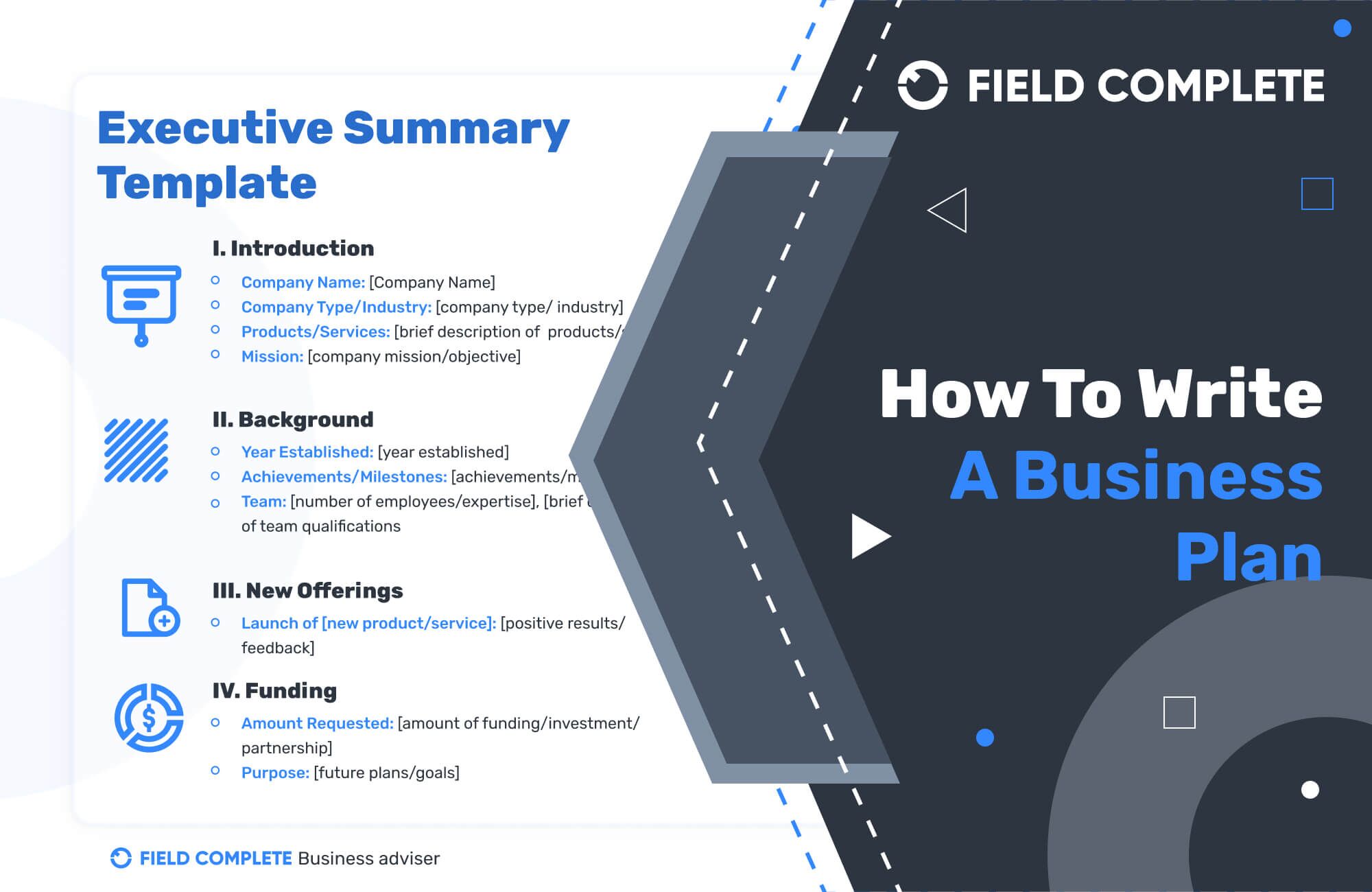
The Executive Summary: The Narrative Foundation
The Executive Summary is arguably the most important section of a formal business plan, but it also functions as a standalone document. It is a concise, written distillation of the entire business case, designed to provide a comprehensive understanding of the company’s value proposition and financial viability in two pages or less.
The Role of the Executive Summary in Financial Due Diligence
For financial analysts and venture capitalists, the Executive Summary acts as a filter. It is the first document read and often determines whether the reader will proceed to the full business plan or the data room. Its primary objective is to answer the fundamental question: Does this business represent a sound investment opportunity?
In this document, the narrative must be tight. It should outline the problem the company solves, the unique solution it offers, and the specific target market. However, from a business finance perspective, the most critical element is the “Ask” and the “Return.” The summary must clearly state how much capital is required, how it will be deployed, and what the projected exit or return on investment looks like for the stakeholder.
Key Components of an Effective Summary
A professional executive summary must go beyond mere description; it must provide hard data and strategic clarity.
-
The Mission and Vision: Briefly defining the company’s purpose and where it aims to be in five to ten years.
-
Market Opportunity: Utilizing quantitative data to demonstrate the Total Addressable Market (TAM) and the Serviceable Obtainable Market (SOM). Investors need to see that the market is large enough to support significant growth.
-
Financial Highlights: This is the core of the “Money” niche. The summary should include high-level projections for revenue, EBITDA, and net profit over a three-to-five-year period. It should also highlight the current burn rate and the path to profitability (break-even point).
-
The Competitive Advantage: A clear articulation of the company’s “moat”—whether that is proprietary technology, exclusive partnerships, or significant cost advantages.
Why It Remains a Staple in Corporate Finance
Despite the rise of visual media, the Executive Summary remains a staple because it forces precision in language. It allows for a structured argument that a slide deck sometimes lacks. In the context of securing bank loans or institutional debt, a well-drafted Executive Summary provides the qualitative evidence that supports the quantitative figures found in the financial statements.
The Pitch Deck: The Visual Catalyst for Capital
The second document that summarizes a company’s business plan is the Pitch Deck. While the Executive Summary is a written narrative, the Pitch Deck is a visual presentation—typically 10 to 15 slides—designed to capture attention and facilitate a verbal presentation or a quick digital skim. In the modern investment landscape, the Pitch Deck has become the primary vehicle for fundraising.
Structuring the Deck for Investor Impact
A Pitch Deck is not merely a collection of slides; it is a strategic storytelling tool that follows a specific logical flow. Each slide serves as a summary of a chapter in the full business plan.
-
The Problem Slide: Identifies a significant pain point in the market.
-
The Solution Slide: Introduces the company’s product or service as the remedy.
-
The Business Model Slide: This is where the financial mechanics are explained. How does the company make money? Is it through subscriptions, unit sales, or licensing? This slide summarizes the revenue architecture of the business plan.
-
The Traction Slide: Provides evidence of growth. This could include Monthly Recurring Revenue (MRR), user growth percentages, or key pilot programs. Traction is the financial proof that the business model works in the real world.
The Importance of the “Financials” Slide
In any Pitch Deck, the financials slide is the focal point for serious investors. It summarizes the detailed spreadsheets of the business plan into a few key charts. Usually, this involves a bar graph showing projected revenue growth and a line graph showing the transition from negative to positive cash flow.

By summarizing the financial projections in this way, the company demonstrates that it has a firm grasp on its unit economics. It shows that the management team understands their Customer Acquisition Cost (CAC) relative to the Lifetime Value (LTV) of a customer—a metric that is vital for determining the scalability of the venture.
Bridging the Gap Between Concept and Capital
The Pitch Deck’s primary function is to secure a second meeting. It is a summary that emphasizes “the big picture” and the scalability of the enterprise. While the Executive Summary provides the “what” and the “how,” the Pitch Deck often focuses on the “why now?”—highlighting market trends and timing that make the investment particularly lucrative at this moment.
Financial Foundations within Summarized Documents
Both the Executive Summary and the Pitch Deck must be anchored in rigorous financial reality. Even though they are summaries, any figure presented must be defensible by the underlying full-length business plan and its accompanying financial models.
Revenue Models and Unit Economics
A recurring theme in the summary of a business plan is the revenue model. Stakeholders need to see a clear path to monetization. Within these summaries, companies often categorize their revenue streams—such as direct sales, recurring service fees, or data monetization.
High-level summaries often highlight “Unit Economics,” which break down the profitability of a single unit of sale. If the unit economics are flawed—meaning it costs more to acquire and serve a customer than the customer provides in revenue—then no amount of scaling will make the company profitable. The summaries must prove that the business is fundamentally sound at the micro-level before discussing macro-expansion.
Risk Assessment and Mitigation
While summaries are meant to be persuasive, professional documents also address risk. A summary of the business plan should briefly touch upon market risks, regulatory hurdles, or execution risks. Distilling these into a SWOT analysis (Strengths, Weaknesses, Opportunities, Threats) or a brief risk-mitigation section shows financial maturity. It demonstrates to potential investors that the leadership team is not only focused on growth but is also committed to capital preservation and risk management.
Choosing the Right Summary for the Right Stakeholder
The decision to use an Executive Summary or a Pitch Deck often depends on the context of the interaction and the nature of the stakeholder involved.
Internal vs. External Utility
Internally, the Executive Summary is often used for board reporting or for aligning department heads on the company’s strategic direction. It ensures that everyone is reading from the same script. In contrast, the Pitch Deck is almost exclusively an external tool used for “selling” the company to outsiders.
However, in the context of business finance, both documents are used in tandem. An investor might ask for the Pitch Deck first to see if the “vibe” and the “vision” align with their portfolio. If they are interested, they will then request the Executive Summary and the full business plan to perform deeper due diligence on the numbers and the operational strategy.
Evolution of the Summary in a Digital Economy
As the financial world becomes increasingly digital, these two documents are evolving. We are seeing the rise of “One-Pagers”—ultra-distilled versions of the Executive Summary—and interactive “Demo Decks.” Yet, the core requirement remains: the ability to summarize the business plan’s financial essence.
In the niche of business finance, clarity is currency. The Executive Summary and the Pitch Deck are the two documents that provide this clarity. They allow a company to communicate its financial health, market potential, and strategic goals without overwhelming the reader. By mastering these two summaries, a company ensures that its business plan is not just a document sitting on a shelf, but a dynamic tool for growth and capital acquisition.

Conclusion: The Synergy of Summarization
Summarizing a business plan into an Executive Summary and a Pitch Deck is not about cutting corners; it is about refining the message. One provides the textual depth and financial logic required for serious analysis, while the other provides the visual impact and narrative momentum needed to spark interest. Together, they represent the dual pillars of business communication, ensuring that the company’s financial story is told effectively to those who have the power to fund its future.
Whether you are seeking a seed round of investment or preparing for a major corporate expansion, these two documents are your most valuable assets in the quest for capital. They distill the complexity of operations into the clarity of opportunity, making the business plan accessible, actionable, and ultimately, fundable.
aViewFromTheCave is a participant in the Amazon Services LLC Associates Program, an affiliate advertising program designed to provide a means for sites to earn advertising fees by advertising and linking to Amazon.com. Amazon, the Amazon logo, AmazonSupply, and the AmazonSupply logo are trademarks of Amazon.com, Inc. or its affiliates. As an Amazon Associate we earn affiliate commissions from qualifying purchases.