
Investing in small businesses represents a unique and often highly rewarding avenue for capital growth, distinct from the more traditional routes of public stock markets or real estate. While large-cap companies offer stability and liquidity, small businesses can provide an opportunity for significant capital appreciation, direct impact, and diversification within an investment portfolio. This niche, however, comes with its own set of complexities and risks, demanding a thorough understanding and strategic approach. For those willing to delve beyond the mainstream, investing in small businesses can unlock not only financial returns but also the satisfaction of contributing to innovation, job creation, and economic growth. This guide will navigate the intricacies of identifying, evaluating, and ultimately investing in small businesses, providing a framework for both novice and experienced investors seeking to diversify their financial footprint.
Understanding the Landscape of Small Business Investment
The decision to invest in a small business is a step into a dynamic environment, offering potential for outsized returns but also requiring careful consideration of inherent risks. Unlike publicly traded companies with readily available financial data and established market valuations, small businesses often lack this transparency, demanding a more hands-on approach to due diligence.
Why Invest in Small Businesses?
The allure of small business investment lies in several key areas. Firstly, it offers significant growth potential. Many small businesses operate in nascent markets or have disruptive technologies/models, meaning early investment can yield substantial returns as they scale. Secondly, it provides an opportunity for direct impact and involvement. Investors often have a more direct line to management, or even take an active advisory role, influencing the business’s trajectory and contributing to its success beyond capital injection. Thirdly, small businesses can offer portfolio diversification, as their performance may not always correlate with broader market trends. Finally, there’s the intrinsic reward of supporting entrepreneurship and local economies, fostering innovation and creating jobs within communities.
Types of Small Business Investments
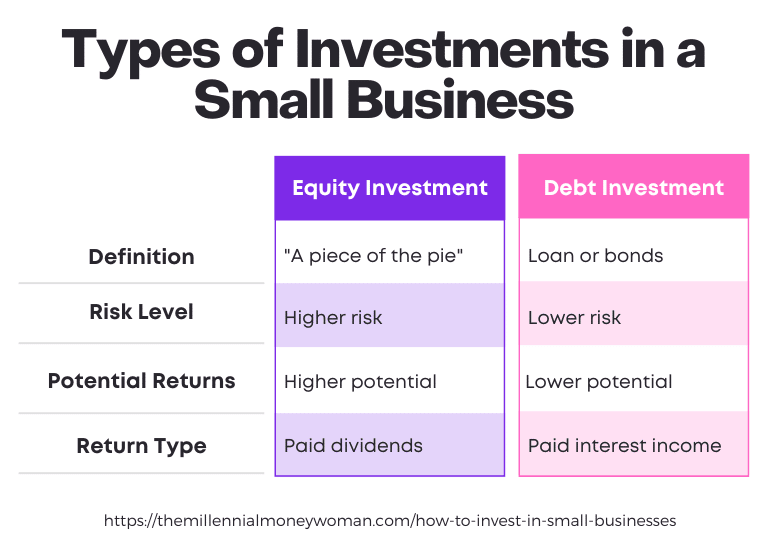
Investing in a small business isn’t a one-size-fits-all proposition. The structure of the investment largely depends on the business’s stage, capital needs, and the investor’s risk appetite. Equity investments involve purchasing a stake in the company, making you a part-owner. This offers the highest upside potential but also carries the most risk, as your return is tied directly to the business’s success and potential acquisition or public offering. Debt investments, on the other hand, involve lending money to the business, typically with a specified interest rate and repayment schedule. This is generally lower risk but also offers lower returns. Variations include convertible notes, which start as debt but can convert into equity under certain conditions, offering a blend of security and upside. Revenue share agreements allow investors to receive a percentage of the company’s gross revenue until a certain multiple of the initial investment is repaid. Understanding these structures is crucial for aligning your investment with your financial goals and risk tolerance.
The Importance of Due Diligence
Before committing any capital, thorough due diligence is paramount. This process involves a comprehensive investigation into the business’s operations, finances, market, and legal standing. You’ll need to scrutinize financial statements (income statements, balance sheets, cash flow projections) to assess profitability, liquidity, and solvency. Understanding the market size, competitive landscape, and the business’s unique selling proposition (USP) is critical. Evaluating the management team’s experience, track record, and vision is equally important, as their capability is a primary driver of success. Legal due diligence covers contracts, intellectual property, litigation history, and regulatory compliance, ensuring there are no hidden liabilities. Neglecting any of these areas can lead to significant financial loss and missed opportunities.
Identifying Promising Opportunities
Finding the right small business to invest in requires more than just capital; it demands a keen eye for potential, a strategic mindset, and the ability to differentiate between fleeting trends and sustainable growth.
Sector-Specific Analysis
Not all industries offer equal opportunities for small business growth. Identifying high-growth sectors can significantly enhance your chances of a successful investment. Industries like technology (SaaS, AI, cybersecurity), renewable energy, specialized healthcare services, e-commerce, and niche consumer goods often present fertile ground for innovative small businesses. Conversely, some traditional industries, while stable, might offer slower growth or face significant competitive pressures. It’s also wise to look at resilient sectors that demonstrate stability even during economic downturns, such as essential services or specific manufacturing niches. Staying abreast of market trends, technological advancements, and consumer behavior shifts is crucial for pinpointing sectors poised for expansion.
Assessing Business Fundamentals
Once a sector is identified, the focus shifts to the individual business’s fundamentals. A viable business model is non-negotiable; it must clearly articulate how the company creates, delivers, and captures value. Look for businesses with a clear competitive advantage, whether it’s through proprietary technology, a strong brand, unique distribution channels, or superior customer service. Scalability is another critical factor; can the business grow without a proportional increase in costs? Businesses that can leverage technology or repeatable processes to expand their reach and customer base are often the most attractive. Strong customer retention rates, demonstrable product-market fit, and a clear path to profitability are all indicators of robust fundamentals.
Evaluating the Management Team
Ultimately, the success of a small business often hinges on its leadership. Investing in a small business is, in many ways, investing in the people behind it. Evaluate the management team’s experience, expertise, and track record. Do they have a proven history of execution, even if it’s not directly within this specific venture? Look for a diverse skill set within the team, covering areas like product development, sales, marketing, and finance. Integrity, passion, and a clear vision are also crucial, as these qualities drive persistence through challenges. A strong, cohesive team that understands its market, has a clear strategy, and can adapt to unforeseen circumstances is often the best indicator of future success. Interviewing key personnel and checking references are invaluable steps in this evaluation.
Funding Pathways and Structures
Once a promising small business has been identified, the next step involves determining the most appropriate funding pathway and structuring the investment to align with both the investor’s and the business’s needs.
Angel Investors and Venture Capital
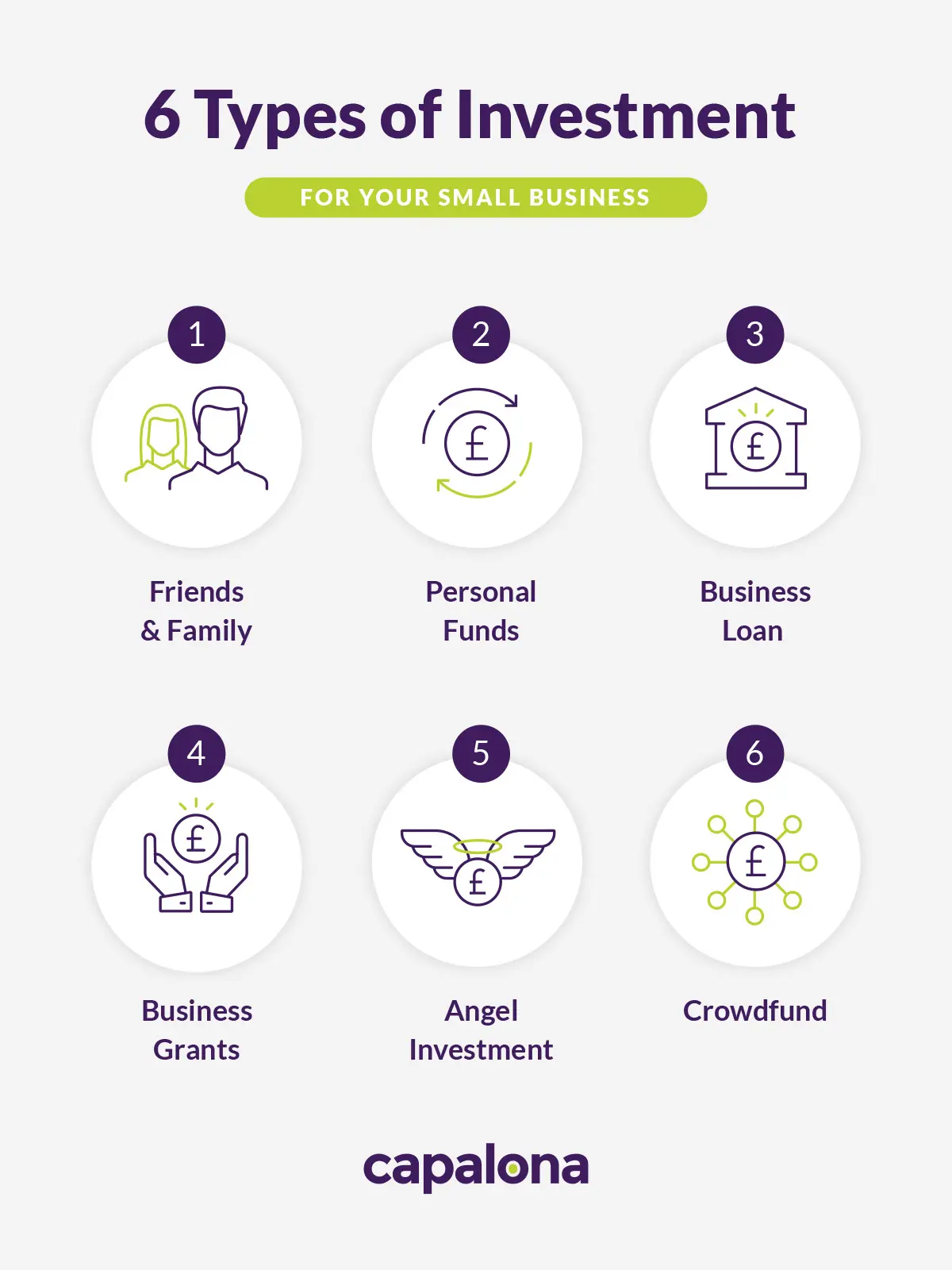
For small businesses with high growth potential, angel investors and venture capital (VC) firms are common funding sources. Angel investors are typically high-net-worth individuals who provide capital for start-ups or early-stage businesses in exchange for ownership equity. They often bring invaluable industry experience, mentorship, and connections in addition to capital. VC firms, on the other hand, manage funds from institutional investors and focus on businesses with exponential growth potential, seeking significant equity stakes in return for larger investments and hands-on strategic guidance. Approaching angels or VCs requires a well-articulated business plan, detailed financial projections, and a compelling pitch deck. They primarily look for disruptive innovation, scalable models, and strong management teams with a clear exit strategy.
Crowdfunding Platforms

The rise of crowdfunding platforms has democratized small business investment, making it accessible to a broader range of investors. Equity crowdfunding allows many individuals to invest small amounts in a private company in exchange for equity, effectively mimicking traditional angel investment on a larger, more public scale. Platforms like SeedInvest or Republic connect entrepreneurs with a community of investors. Similarly, debt crowdfunding platforms allow businesses to borrow capital from a multitude of lenders, often with more flexible terms than traditional banks. While crowdfunding offers accessibility and lower minimum investment thresholds, investors must still conduct their own due diligence, as the volume of available opportunities can be overwhelming, and not all ventures are equally vetted by the platforms themselves.
Debt Financing Options
For businesses with established operations and a need for working capital or expansion funds, debt financing remains a cornerstone. Bank loans are traditional options, often requiring collateral and a solid credit history. The Small Business Administration (SBA) in the U.S. guarantees certain loans made by lenders, making it easier for small businesses to qualify for funding with more favorable terms. Beyond traditional banks, alternative lenders (online lenders, credit unions) have emerged, offering quicker approvals and more flexible terms, though often at higher interest rates. Debt financing is suitable for businesses that prefer to retain full ownership and have predictable cash flows to service debt repayments. Understanding the various loan products, interest rates, collateral requirements, and repayment schedules is critical.
Personal Investment and Partnerships
Many small businesses are initially funded through personal investment from the founder(s) and their immediate network of friends and family. This “bootstrapping” phase is often crucial for proving the business concept. Beyond this, syndicates or investment partnerships can form, where a group of individuals pools capital to invest in a specific small business. This approach allows investors to share risk, leverage collective expertise for due diligence, and potentially access larger deal sizes than they might individually. Such partnerships require clear legal agreements outlining contributions, decision-making processes, profit sharing, and exit strategies.
Mitigating Risks and Maximizing Returns
Investing in small businesses inherently carries higher risks than investing in public equities due to factors like illiquidity, lack of information, and dependency on a limited number of key personnel. Therefore, strategic risk mitigation and a clear focus on return maximization are crucial.
Diversification Strategies
One of the most effective ways to mitigate risk in small business investing is through diversification. Instead of putting all capital into a single venture, spread investments across multiple businesses in different industries, geographical locations, and stages of development. For instance, balance a high-growth, early-stage tech startup with a more established, cash-flowing service business. This strategy helps cushion the blow if one investment fails to perform as expected, while still allowing exposure to significant upside potential across the portfolio. Diversification also applies to the type of investment; a mix of equity, debt, and convertible notes can help balance risk and return profiles.
Legal Protections and Agreements
Robust legal agreements are non-negotiable to protect your investment. Before any capital changes hands, ensure you have a comprehensive term sheet outlining key financial terms, investor rights, and business obligations. Follow this with detailed shareholder agreements (for equity investments) or loan agreements (for debt investments) that cover valuation, ownership percentages, anti-dilution provisions, voting rights, board representation, information rights, and specific exit clauses. An exit clause, for instance, might stipulate conditions under which the company must buy back your shares or be sold. Having a clear understanding of your rights and responsibilities, and ensuring they are legally binding, is paramount. Engage experienced legal counsel specializing in corporate and investment law to draft and review all documentation.
Post-Investment Engagement
Passive investing is rarely optimal in the small business arena. Active post-investment engagement can significantly impact outcomes. Depending on the size of your stake and your expertise, consider taking an advisory role, joining the board of directors, or simply maintaining regular communication with the management team. This allows you to monitor performance closely, offer strategic guidance, and identify potential issues early. Your network and experience can be invaluable assets to the business, helping it overcome challenges and capitalize on opportunities. However, be mindful of the line between helpful engagement and over-involvement, respecting the operational autonomy of the founders.
Understanding Exit Strategies
Unlike public stocks which can be sold at any time, exiting a small business investment often requires a specific event. Having a clear understanding of potential exit strategies from the outset is vital for realizing your returns. Common exit paths include acquisition by a larger company, which can provide a significant payout for shareholders. A secondary sale of your shares to another investor is another possibility, though liquidity can be limited. In rare cases, a highly successful small business might pursue an Initial Public Offering (IPO), listing its shares on a stock exchange. Lastly, a management buyback or a structured redemption of shares by the company itself might be an agreed-upon exit mechanism. The investment agreements should ideally outline potential exit scenarios and the mechanisms for valuation and distribution of proceeds, ensuring a clear path to liquidity.
The Financial and Personal Rewards
While the path to investing in small businesses is complex and demands careful navigation, the rewards — both financial and personal — can be substantial, making it a highly attractive pursuit for discerning investors.
Financial Growth and ROI
The primary driver for any investment is the potential for financial growth and return on investment (ROI). Small businesses, particularly those in high-growth sectors, can offer capital appreciation significantly higher than what might be found in more mature markets. Early-stage equity investments can multiply several times over if the business scales successfully and achieves a favorable exit through acquisition or IPO. Beyond capital appreciation, successful small businesses can generate dividends for equity holders or consistent interest payments for debt investors, providing ongoing income streams. The illiquidity premium associated with private investments also means that, when successful, the returns often compensate for the longer holding periods and reduced liquidity compared to public markets.
Impact and Community Building
Beyond monetary gains, investing in small businesses offers a unique opportunity for impact and community building. Your capital directly contributes to the creation of new jobs, the development of innovative products and services, and the overall economic vitality of local and broader communities. By supporting entrepreneurs, you help foster a culture of innovation and resilience. Many investors find profound satisfaction in watching a small business they’ve supported grow from a nascent idea into a thriving enterprise, knowing their investment played a crucial role. This social return on investment is a powerful motivator for many who choose this investment path.
Learning and Networking Opportunities
Engaging with small businesses provides unparalleled learning and networking opportunities. You gain direct insight into specific industries, market dynamics, and operational challenges that are often obscured in larger corporations. This hands-on experience and deeper understanding can enhance your own business acumen and investment strategies. Furthermore, you gain access to a network of driven entrepreneurs, industry experts, and fellow investors. These connections can lead to future investment opportunities, collaborative ventures, or valuable mentorship relationships. The continuous learning process and the expansion of one’s professional network are invaluable assets that extend well beyond the financial returns of any single investment.
Investing in small businesses is a multifaceted journey that promises significant financial and personal rewards for those who approach it with diligence, strategic foresight, and a willingness to engage. By understanding the landscape, identifying promising opportunities, structuring investments wisely, and actively mitigating risks, investors can unlock a powerful avenue for capital growth while contributing meaningfully to the entrepreneurial ecosystem. The blend of potential high returns, direct impact, and continuous learning makes small business investment an enriching and strategic component of a diversified financial portfolio.
aViewFromTheCave is a participant in the Amazon Services LLC Associates Program, an affiliate advertising program designed to provide a means for sites to earn advertising fees by advertising and linking to Amazon.com. Amazon, the Amazon logo, AmazonSupply, and the AmazonSupply logo are trademarks of Amazon.com, Inc. or its affiliates. As an Amazon Associate we earn affiliate commissions from qualifying purchases.