
The digital landscape has transformed the traditional concept of commerce, shifting the focus from brick-and-mortar limitations to the limitless potential of the global internet economy. To do online business successfully in the current era requires more than just a digital presence; it demands a strategic approach to capital allocation, a deep understanding of profit margins, and the ability to navigate complex financial ecosystems. Whether you are looking to replace a primary salary or build a secondary income stream, the path to a profitable online venture is paved with calculated financial decisions and the pursuit of high-margin opportunities.
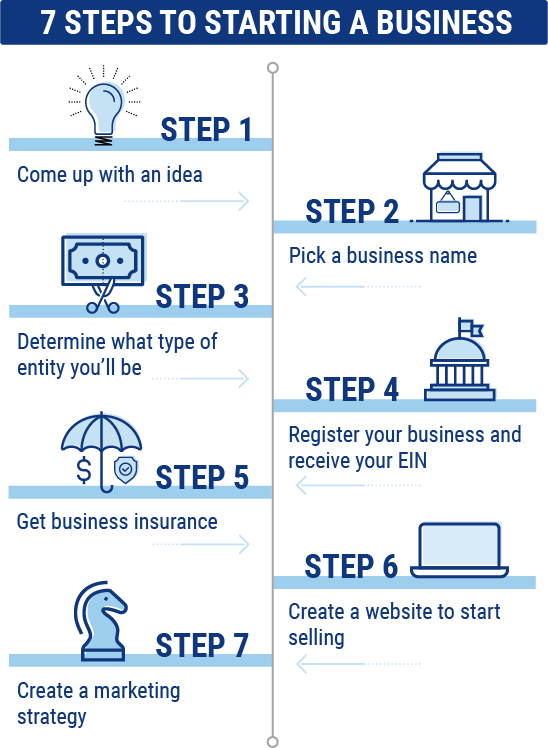
Identifying High-Margin Online Business Models for Maximum ROI
The first step in launching a successful online business is selecting a model that aligns with your financial goals and risk tolerance. Not all online businesses are created equal; some require heavy upfront investment, while others prioritize low overhead and high scalability.
The Power of Digital Products and Scalable Intellectual Property
Digital products—such as e-books, online courses, software-as-a-service (SaaS), and premium templates—represent one of the most lucrative online business models. The primary advantage here is the “create once, sell forever” dynamic. Unlike physical goods, digital products have near-zero marginal costs. Once the initial development phase is complete, every subsequent sale contributes almost entirely to the net profit margin. From a wealth-building perspective, this model offers unmatched scalability, as it allows a single entrepreneur to serve thousands of customers without a proportional increase in operational costs.
Service-Based Consulting and High-Ticket Freelancing
For those with specialized skills—ranging from financial analysis and legal consulting to high-end copywriting and digital marketing—service-based models offer the fastest route to positive cash flow. Because there is little to no inventory required, the initial investment is minimal. The key to financial success in this niche is moving away from “hourly billing” and toward “value-based pricing.” By positioning your services as a solution to a specific financial or operational pain point for other businesses, you can command high-ticket fees that far exceed the standard market rates for labor.
E-commerce and the Shift Toward Boutique Inventory Models
While traditional dropshipping has seen compressed margins due to rising advertising costs, boutique e-commerce—where a business owner curates unique products or develops a private label—remains a powerful income generator. The financial objective in e-commerce is to optimize the Customer Lifetime Value (CLV) against the Customer Acquisition Cost (CAC). By focusing on high-quality, high-margin products rather than high-volume, low-margin commodities, online business owners can build a more resilient and profitable balance sheet.
Building a Robust Financial Framework for Your Digital Venture
A common pitfall for new online entrepreneurs is the failure to treat their digital venture as a formal financial entity. To sustain long-term growth, you must establish a framework that prioritizes transparency, tax efficiency, and cash flow management.
Capital Requirements and Low-Cost Entry Points
One of the most attractive features of doing business online is the low barrier to entry. However, “low cost” does not mean “no cost.” A professional online operation requires a budget for essential infrastructure: domain hosting, secure payment processing, and basic marketing automation tools. Successful founders often use the “lean startup” methodology, reinvesting early profits back into the business rather than withdrawing them as personal income. This disciplined approach to capital allows the business to fund its own growth, reducing the need for external debt or equity dilution.
Managing Cash Flow in a Borderless Market
In the online world, revenue is often decoupled from geography. While this provides a global customer base, it also introduces complexities in currency fluctuations and varied payment settlement times. Effective cash flow management involves maintaining a liquid reserve to handle fluctuations in traffic or advertising costs. Entrepreneurs must monitor their “burn rate”—the amount of money spent each month to keep the business running—and ensure that their “runway” is sufficient to weather seasonal downturns or shifts in market demand.
Strategic Reinvestment: When to Spend for Growth
Growth in an online business is rarely linear; it often happens in stages. Once a business model is proven profitable, the focus shifts to strategic reinvestment. This might include hiring a virtual assistant to reclaim time, investing in advanced SEO strategies, or increasing the ad spend on high-performing conversion funnels. The goal is to move from “working in the business” to “working on the business,” where capital is deployed to automate processes and generate passive or semi-passive returns.

Maximizing Online Income Through Diverse Revenue Channels
The most resilient online businesses do not rely on a single source of income. Diversification is the cornerstone of financial security in the digital space, protecting the business from platform changes or shifts in consumer behavior.
Affiliate Marketing and Performance-Based Gains
Affiliate marketing allows a business to earn commissions by recommending third-party products or services. When integrated into an existing content strategy or email list, it creates a “hands-off” revenue stream. The financial beauty of affiliate marketing is the absence of customer support and fulfillment responsibilities. By partnering with high-paying affiliate programs in niches like fintech, enterprise software, or specialized hardware, an online business can add significant “top-line” revenue with zero increase in overhead.
Subscription Models and the Value of Recurring Revenue
The “Holy Grail” of online business finance is Monthly Recurring Revenue (MRR). Subscription models—whether for a membership site, a recurring software tool, or a monthly “box” service—provide a predictable financial baseline. This predictability allows for more confident long-term planning and significantly increases the valuation of the business. Investors and buyers are always willing to pay a premium for businesses that have a steady, automated influx of capital each month.
Leveraging Paid Advertising vs. Organic Content for Profitability
Achieving profitability requires a balance between organic growth (SEO, social media) and paid acquisition (PPC, social ads). Organic growth provides a high ROI over the long term because the cost of acquisition eventually drops toward zero. Paid advertising, on the other hand, is a “scalable lever.” If you can spend $1.00 on ads to generate $3.00 in revenue, you have a mathematically sound engine for wealth. The key is constant optimization of the “conversion rate” to ensure that advertising spend remains a profit center rather than a drain on resources.
Financial Operations and Global Compliance
As an online business grows, the complexity of its financial operations increases. Operating in a digital, borderless environment requires a proactive stance on payment processing and global tax obligations.
Optimizing Payment Gateways and Transaction Fees
Every transaction in an online business incurs a fee. While 2.9% plus 30 cents might seem negligible on a single sale, these costs can erode margins as volume increases. Savvy online business owners regularly audit their payment stacks, looking for ways to optimize gateway fees, minimize chargeback rates, and offer localized payment methods to reduce cart abandonment. Choosing the right merchant processor is not just a technical decision; it is a fundamental financial one that directly impacts the bottom line.
Understanding Tax Obligations for Digital Nomads and Remote Firms
Taxation in the digital age is an evolving landscape. Depending on where your business is incorporated and where your customers are located, you may be subject to various sales taxes (such as VAT or GST) and corporate income taxes. Many online entrepreneurs utilize tax-efficient structures, such as forming an LLC or an S-Corp, to protect their personal assets and optimize their tax liability. Consulting with a cross-border tax professional is often a high-return investment, as it prevents costly penalties and ensures the business remains compliant across all jurisdictions it serves.
The Roadmap to Exit: Valuing and Selling Your Online Business
For many, the ultimate goal of doing online business is not just monthly income, but the creation of an asset that can be sold. A well-structured online business is a highly liquid asset that can be traded on marketplaces for significant multiples of its annual profit.
Preparing for a Multi-Six-Figure Liquidity Event
To maximize the exit value of an online business, an owner must ensure that the business is “transferable.” This means having clean financial records, documented standard operating procedures (SOPs), and a brand that is not tied solely to the owner’s personal identity. Buyers typically value businesses based on a multiple of SDE (Seller’s Discretionary Earnings) or EBITDA. By focusing on increasing net profit and reducing owner involvement, you can command a higher multiple during the sale process.
Transitioning from Active Income to Long-Term Investment
The capital gained from a business exit can be transitioned into traditional investment vehicles—such as real estate, index funds, or dividend-paying stocks—to provide permanent financial independence. In this way, an online business serves as the “engine” for wealth creation, providing the raw capital necessary to fund a life of passive income. The journey of doing online business thus comes full circle: from a small side hustle to a profitable venture, and finally, to a substantial financial asset that secures one’s long-term future.
aViewFromTheCave is a participant in the Amazon Services LLC Associates Program, an affiliate advertising program designed to provide a means for sites to earn advertising fees by advertising and linking to Amazon.com. Amazon, the Amazon logo, AmazonSupply, and the AmazonSupply logo are trademarks of Amazon.com, Inc. or its affiliates. As an Amazon Associate we earn affiliate commissions from qualifying purchases.