
Investing in small businesses presents a unique blend of opportunity and challenge, attracting individuals and institutions seeking high-growth potential, portfolio diversification, and the satisfaction of directly fueling entrepreneurial endeavors. Unlike publicly traded companies with readily available financial data and market liquidity, small business investments often involve a higher degree of risk, require extensive due diligence, and typically demand a longer investment horizon due to their illiquid nature. However, for those willing to navigate these complexities, the rewards can be substantial, offering returns that can far outpace traditional market investments, alongside the intangible benefit of contributing to economic growth and innovation.
This guide will demystify the process, exploring various avenues for investing in small businesses, outlining the critical steps for evaluating potential opportunities, and emphasizing the importance of a robust due diligence process. Whether you are an accredited investor, an angel looking to mentor fledgling enterprises, or simply an individual keen on supporting local ventures, understanding these pathways is the first step toward making informed and impactful investment decisions.
Why Consider Small Business Investments?
The allure of small business investments extends beyond mere financial returns; it encompasses a desire for direct impact, community involvement, and the pursuit of untapped potential. While the risks are undeniable, the reasons for exploring this niche are compelling for many investors.
High Growth Potential and Returns
Small businesses, especially those in their early stages or poised for expansion, often possess immense untapped growth potential. Unlike mature corporations, a small business with an innovative product, service, or business model can experience exponential growth, leading to significant appreciation in value. Early investors can capitalize on this trajectory, realizing substantial returns as the business scales and matures. This potential for outsized gains is a primary driver for many who venture into this asset class, seeking to identify the next disruptive company or a local gem on the cusp of breakout success.
Diversification and Direct Impact
Incorporating small business investments into a broader portfolio can offer valuable diversification, reducing reliance on the performance of public markets. Private market investments often operate on different cycles and are influenced by distinct factors, providing a hedge against volatility in traditional assets. Beyond the financial mechanics, many investors are drawn to the tangible impact their capital can have. Investing in a small business often means directly supporting local economies, fostering job creation, and nurturing innovative ideas that might otherwise struggle to find funding. This direct involvement can be deeply satisfying, allowing investors to contribute to something tangible and see the real-world effects of their capital at work.
Navigating the Risks
It is crucial to acknowledge that small business investments carry inherent risks that are typically higher than those associated with public equities or bonds. Small businesses have a higher failure rate, and a significant portion may not survive beyond their initial years. Investments are often highly illiquid, meaning it can be challenging to sell your stake quickly if needed, and there is generally less regulatory oversight and transparency compared to public markets. This necessitates a thorough understanding of the business, its market, and its management team. Success in this arena demands meticulous due diligence, a clear understanding of your risk tolerance, and often a willingness to commit capital for an extended period without guaranteed liquidity.
Direct Investment Pathways
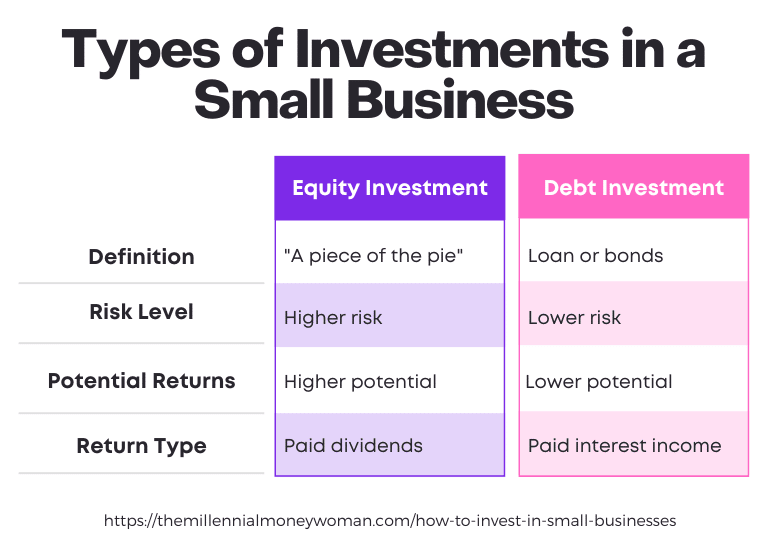
When considering a direct investment in a small business, investors typically choose between providing equity, offering debt, or exploring hybrid models like royalty or revenue sharing. Each approach carries distinct characteristics regarding risk, return potential, and level of involvement.
Equity Investments: Becoming a Co-Owner
Equity investment involves purchasing a stake in a small business, making you a co-owner. This pathway offers the highest potential for returns if the business succeeds, as your ownership percentage appreciates in value. Common forms of equity investment include:
-
Seed Funding: Provided to very early-stage businesses (often pre-revenue) to help develop a product or service.
-
Angel Investing: Individuals or small groups providing capital to startups or early-stage small businesses, often in exchange for equity. Angel investors frequently bring valuable experience and networks to the table in addition to capital.
-
Venture Capital (VC): While more commonly associated with high-growth startups aiming for significant scale, some VC firms also invest in established small businesses with strong growth trajectories. VCs typically invest larger sums and often take a more active role in governance.
As an equity investor, you share in the business’s profits (and losses), and your return is primarily realized when the company is sold, goes public, or buys back your shares. Key considerations include business valuation, negotiating term sheets, and understanding shareholder agreements that define your rights and responsibilities.
Debt Investments: Lending Capital with Returns
Debt investment involves lending money to a small business with an expectation of repayment, plus interest, over a specified period. This is generally considered less risky than equity, as you have a contractual right to be repaid, often ahead of equity holders in the event of liquidation. However, your upside is typically capped at the agreed-upon interest rate. Types of debt investments include:
-
Direct Loans: Providing a loan directly to the business, often with a defined interest rate, repayment schedule, and sometimes collateral.
-
Convertible Notes: A hybrid instrument that starts as a loan but can convert into equity at a later date, typically during a future funding round. This offers the safety of debt in the short term with the potential upside of equity.
-
Peer-to-Peer (P2P) Lending: Platforms that connect individual lenders with small businesses seeking loans, allowing for diversification across multiple small business loans.
Debt investors prioritize the business’s ability to generate consistent cash flow to service its debt. Thorough analysis of financial statements and the business’s repayment capacity is paramount.
Hybrid Models: Royalties and Revenue Sharing
Hybrid models combine elements of both debt and equity, or offer unique structures for returns. Royalty financing, for example, involves an investor providing capital in exchange for a percentage of the business’s future gross revenue for a defined period or until a certain multiple of the investment is returned. Revenue sharing agreements operate similarly, often tied to net profits or specific product sales.
These models can be attractive for businesses that want to avoid diluting equity or taking on traditional debt with fixed payments, especially if their revenue streams are somewhat predictable. For investors, they offer a direct alignment with the business’s sales performance and can provide consistent cash flow without the complexities of valuation associated with equity.
Leveraging Platforms and Pooled Capital
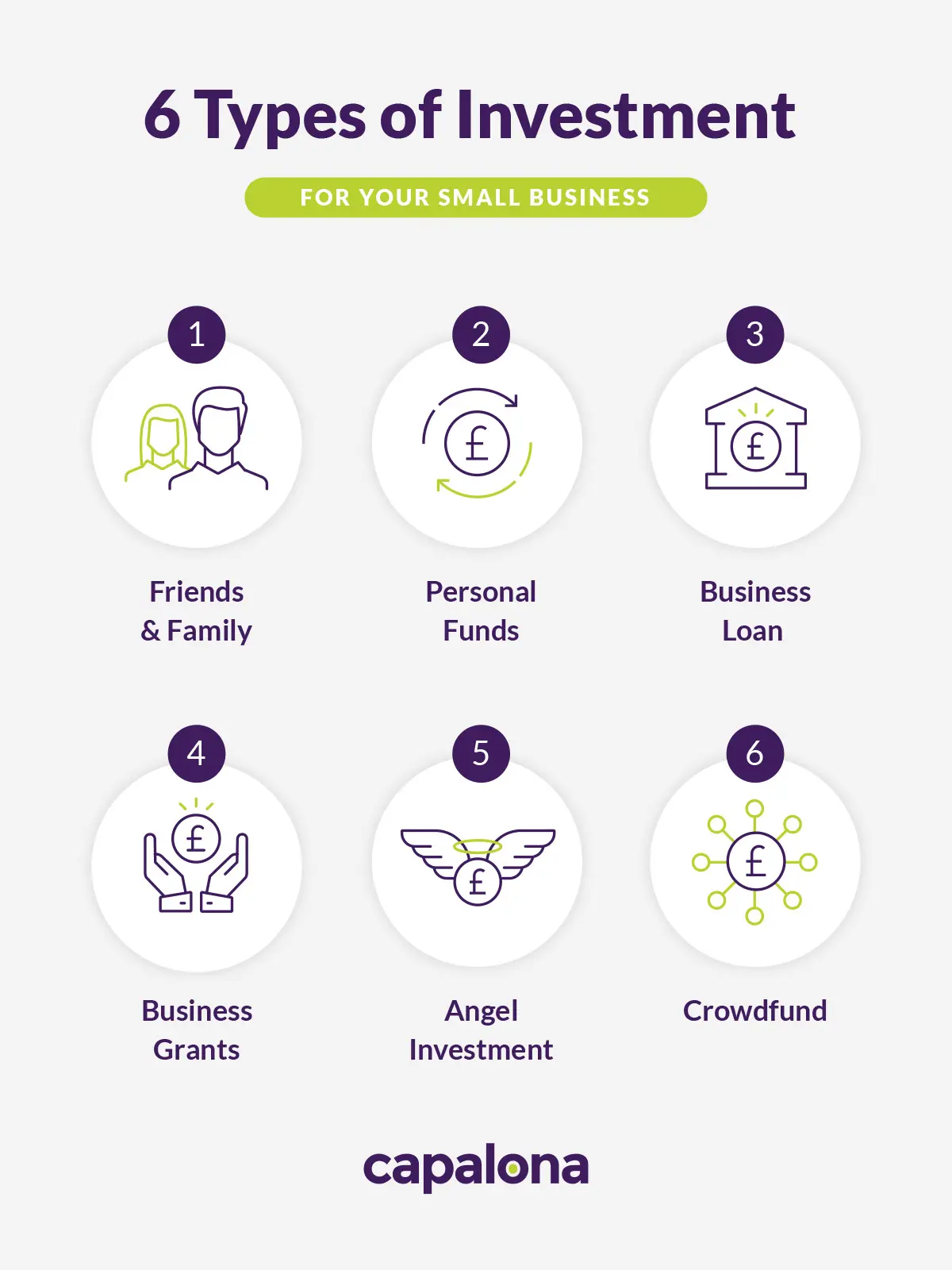
Beyond direct individual investments, several platforms and structures facilitate small business investments, offering accessibility, diversification, and professional management, particularly for those who may not have the networks or capital for large direct deals.
Crowdfunding: Democratizing Small Business Investment
Crowdfunding platforms have revolutionized small business investment by enabling a large number of individuals to invest small amounts of capital. This democratizes access, allowing both accredited and non-accredited investors to participate in private offerings.
-
Equity Crowdfunding: Platforms like SeedInvest and StartEngine allow individuals to purchase small equity stakes in startups and small businesses. Enabled by regulations like Regulation CF (Reg CF) and Regulation A+ (Reg A+) in the U.S., these platforms present a diverse array of businesses seeking capital.
-
Debt Crowdfunding/Peer-to-Peer Lending: Platforms such as Kiva and Funding Circle facilitate loans to small businesses. Investors lend money and receive principal plus interest, often with lower minimums than traditional bank loans, making it accessible for a wider pool of lenders.
Crowdfunding offers a broad selection of investment opportunities and lower entry barriers. However, investors must still perform their due diligence, as the platforms themselves do not guarantee the success of the businesses listed.
Small Business Investment Companies (SBICs): Professional Management
Small Business Investment Companies (SBICs) are privately owned and operated investment funds licensed and regulated by the U.S. Small Business Administration (SBA). SBICs use their own capital, plus funds borrowed with an SBA guarantee, to make debt and equity investments in qualifying small businesses.
Investing in an SBIC fund allows individuals and institutions to gain diversified exposure to a portfolio of small businesses that have been professionally vetted and managed. SBICs provide capital to businesses at various stages, from startups to mature companies, across a range of industries. For investors, SBICs offer a way to participate in private small business investments with the benefit of professional management expertise, extensive due diligence, and a degree of government oversight. Accessing SBICs typically involves investing directly into one of these funds.
The Due Diligence Imperative
Regardless of the investment pathway chosen, thorough due diligence is the cornerstone of successful small business investing. It is the process of critically evaluating a business to assess its viability, identify risks, and confirm all claims before committing capital. Skipping or rushing this phase significantly amplifies the already high risks.
Comprehensive Business Analysis
Start by understanding the core business model. Evaluate the products or services offered, the intellectual property, and the competitive landscape. A compelling business plan should clearly articulate the market opportunity, the target customer, and how the business intends to capture market share. Assess the scalability of the model – can the business grow without disproportionately increasing costs? Understand its unique selling proposition (USP) and what gives it a sustainable competitive advantage. Without a strong, defensible business, even the best team will struggle.
Financial and Management Scrutiny
A deep dive into the financials is non-negotiable. Review historical financial statements (income statements, balance sheets, cash flow statements) to understand past performance and identify trends. Scrutinize projections critically, ensuring they are realistic and supported by sound assumptions. Analyze cash flow carefully, as many small businesses fail due to poor liquidity, not lack of profitability. Understand the business’s debt structure and its ability to service existing obligations.
Equally important is the management team. Investors are not just backing a business idea; they are backing the people who will execute it. Assess the team’s experience, relevant skills, industry knowledge, and, crucially, their integrity and commitment. A strong, cohesive, and adaptable management team can often overcome significant challenges, while a weak team can derail even the most promising venture.
Legal and Regulatory Considerations
A thorough legal review is essential. Ensure the business is properly structured and legally compliant. Verify ownership of intellectual property (trademarks, patents, copyrights) and review all critical contracts, including customer agreements, supplier contracts, and employee agreements. Understand any regulatory hurdles specific to the industry and ensure all necessary licenses and permits are in place. Legal due diligence aims to uncover any liabilities or disputes that could impact the business’s future or your investment.
Crafting an Exit Strategy
Before investing, have a clear understanding of potential exit strategies. Unlike public market investments, small business investments are illiquid, and you cannot simply sell your shares on an exchange. Common exit avenues include:
-
Acquisition by a larger company: A strategic buyer purchases the small business.
-
Secondary sale: Another investor buys your stake.
-
Management buyout or founder buyback: The existing owners or management repurchase your shares.
-
Initial Public Offering (IPO): While rare for typical small businesses, it’s a possibility for high-growth ventures.
A well-defined exit strategy, including potential timelines and valuation triggers, should be discussed and ideally documented during the investment negotiation phase. This ensures alignment between investors and business owners regarding the long-term vision and provides a path to liquidity.

Conclusion
Investing in a small business is a multifaceted journey that combines financial analysis, strategic foresight, and a degree of entrepreneurial spirit. It offers a powerful avenue for capital growth, portfolio diversification, and the immense satisfaction of directly empowering innovation and local economies. From direct equity and debt investments to leveraging crowdfunding platforms and professionally managed SBICs, the pathways are diverse, catering to various risk appetites and levels of engagement.
However, success in this arena hinges on unwavering commitment to due diligence. Thoroughly vetting the business model, scrutinizing financials, assessing the management team, and understanding legal and regulatory landscapes are not merely steps in a checklist but critical safeguards against potential pitfalls. By approaching small business investment with a professional, insightful, and strategic mindset, investors can unlock significant financial rewards while contributing meaningfully to the vibrant ecosystem of entrepreneurship. The journey is challenging, but for those prepared, it can be profoundly rewarding.
aViewFromTheCave is a participant in the Amazon Services LLC Associates Program, an affiliate advertising program designed to provide a means for sites to earn advertising fees by advertising and linking to Amazon.com. Amazon, the Amazon logo, AmazonSupply, and the AmazonSupply logo are trademarks of Amazon.com, Inc. or its affiliates. As an Amazon Associate we earn affiliate commissions from qualifying purchases.