
In the landscape of modern entrepreneurship, the distinction between a high-revenue business and a high-profit business is often the difference between a venture that thrives and one that merely survives. While many entrepreneurs are lured by the glamour of high-growth tech startups or massive retail operations, the most sustainable and financially rewarding small businesses are often those that maintain lean operations, high margins, and recurring revenue streams.
Profitability is not just about the money coming in; it is about the money that stays in the bank after all expenses, taxes, and reinvestments are accounted for. When evaluating the most profitable small businesses today, we must look at sectors where overhead is minimal, specialized knowledge is in high demand, and the cost of customer acquisition is low relative to the lifetime value of the client.
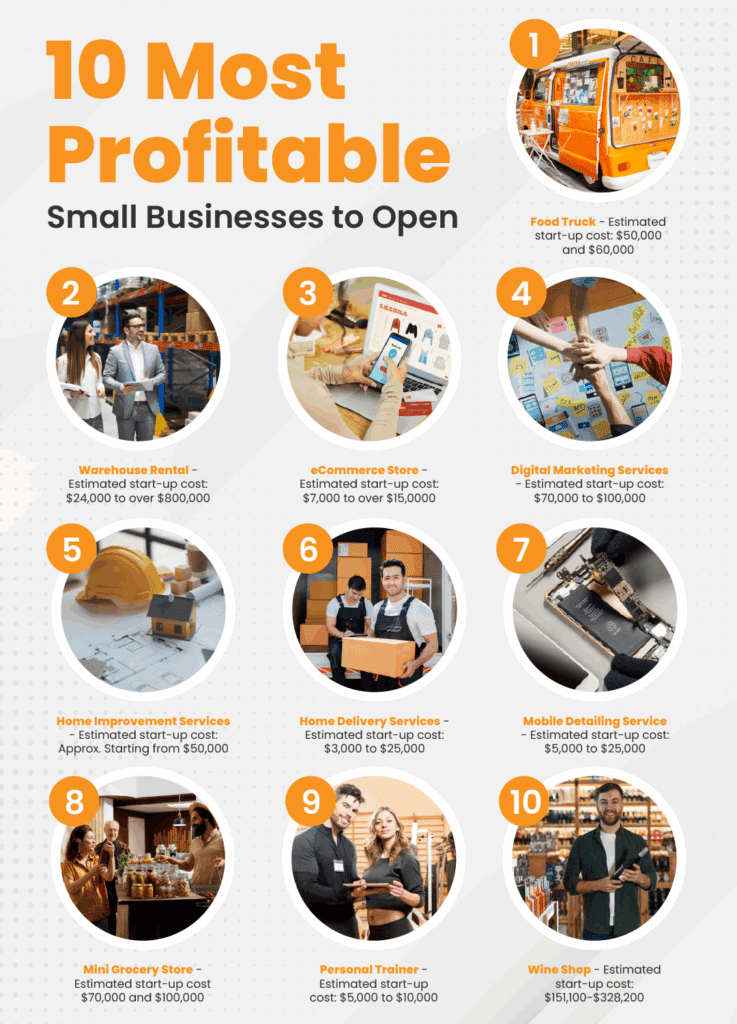
High-Margin Service-Based Models
Service-based businesses consistently rank at the top of profitability charts primarily because they lack the heavy inventory costs associated with retail or the massive research and development budgets required for hardware manufacturing. In these models, the primary “product” is time and expertise.
Specialized Accounting and Tax Services
Tax preparation and bookkeeping are perennially among the most profitable small businesses. Every individual and corporation is legally required to file taxes, making this a recession-proof industry. High profitability stems from the ability to charge significant fees for specialized knowledge while keeping overhead low—often just requiring professional software and a secure home office. As tax codes become increasingly complex, the premium for expert navigation rises, allowing accountants to maintain net profit margins that often exceed 20%.
Business Consulting and Strategy
For those with deep industry experience, business consulting offers one of the highest returns on investment. Consultants sell intellectual property and strategic foresight. Because the delivery of the service requires little more than the consultant’s time and perhaps some basic presentation tools, the profit margins can be exceptional. High-level strategy consultants can charge thousands of dollars per day, and once a reputation is established, marketing costs drop significantly as most new business arrives through referrals.
Legal Services
While the barrier to entry is high due to educational and licensing requirements, law firms—particularly those specializing in corporate law, intellectual property, or estate planning—are incredibly lucrative. Like accounting, the legal profession relies on billable hours and specialized knowledge. Small, specialized firms (often called boutique firms) can outperform larger competitors by focusing on high-margin niches where they can charge premium rates without the massive administrative overhead of “Big Law.”
The Digital Frontier: Scalable Online Income
The digital economy has birthed a new generation of small businesses that leverage the internet to achieve infinite scalability. Unlike traditional brick-and-mortar stores, digital businesses can serve a global market with nearly zero marginal cost for every additional customer.
Software as a Service (SaaS)
SaaS businesses involve creating a software tool that solves a specific problem and charging users a recurring monthly or annual fee. While the initial development phase requires an investment of time or capital, the ongoing costs are remarkably low. Once the software is built, adding a 1,000th user costs almost exactly the same as adding the 100th user. This scalability leads to exponential profit growth. Niche SaaS products—such as specialized CRM tools for dentists or project management software for interior designers—are particularly profitable because they face less competition than general-purpose tools.
E-Learning and Digital Products
The “knowledge economy” is a multibillion-dollar industry. Entrepreneurs who can package their expertise into online courses, ebooks, or membership sites enjoy some of the highest profit margins in the business world. Once the content is produced, it can be sold indefinitely. There are no shipping costs, no inventory storage fees, and no manufacturing defects. For a creator with an established audience, the profit margin on a digital course can easily exceed 80% or 90%.
Affiliate Marketing and Niche Media
Building a content-rich website or a high-traffic newsletter focused on a specific niche (such as personal finance, high-end travel, or specialized hobby gear) allows owners to monetize through affiliate commissions and premium sponsorships. These businesses are highly profitable because they act as the “middleman.” They do not create products or manage customer service; they simply provide the information that leads to a sale. The main investment is time and content creation, which can eventually be outsourced to maintain high levels of passive income.
Specialized Technical and Maintenance Services

There is a common misconception that profitability is reserved for white-collar or digital industries. In reality, some of the most consistent profit margins are found in the “unsexy” businesses that keep society functioning. These businesses often benefit from a lack of competition as younger generations have migrated toward digital roles.
HVAC and Specialized Home Repairs
Heating, Ventilation, and Air Conditioning (HVAC) services are essential. These businesses are highly profitable because they combine a necessary service with the sale of high-ticket equipment and ongoing maintenance contracts. Skilled technicians are in short supply, allowing business owners to command high labor rates. Furthermore, the emergency nature of many repairs (such as a broken furnace in winter) allows for premium “urgent care” pricing.
IT Support and Cybersecurity for Small Businesses
As even the smallest businesses become reliant on cloud computing and digital data, the need for managed IT services has skyrocketed. Small business owners often lack the expertise to manage their own networks or protect against data breaches. A small agency providing managed service provider (MSP) contracts can generate predictable, recurring revenue. The profitability comes from the ability to monitor multiple clients’ systems remotely using automated tools, allowing a small team to manage a large volume of high-paying accounts.
Commercial Cleaning Services
Commercial cleaning is a volume-based business with low startup costs and high recurring revenue. While the margins on a single residential cleaning might be slim, commercial contracts—cleaning offices, medical facilities, or warehouses—are lucrative. These contracts are usually long-term and provide a steady cash flow that allows for better financial planning and higher net profits through operational efficiency.
Real Estate and Financial Asset Management
Businesses that revolve around the management of assets rather than the sale of labor or products often find themselves in a unique position of financial stability and high profitability.
Property Management
While owning real estate is an investment, managing it is a business. Property management companies charge a percentage of the monthly rent to handle tenant relations, maintenance, and rent collection. This is a highly scalable model; once the systems are in place, adding more units to the portfolio does not linearly increase the workload. For firms that manage hundreds of units, the overhead remains relatively fixed while the revenue grows with every new contract.
Investment Advisory and Wealth Management
Small, independent registered investment advisors (RIAs) operate on a fee-based model, typically taking a percentage of assets under management (AUM). This model is exceptionally profitable because, as the clients’ assets grow through market appreciation and continued contributions, the advisor’s revenue grows without any additional effort. The cost of running an RIA is primarily comprised of compliance software and office space, leaving a significant portion of the fee as pure profit.
Optimizing for Maximum Profitability
Choosing the right industry is only half the battle. To maintain a position as one of the “most profitable” businesses, an entrepreneur must apply rigorous financial discipline.
Controlling Operational Overhead
The “lean startup” methodology should apply to all small businesses, regardless of their age. The most profitable owners are those who ruthlessly audit their expenses. This involves opting for remote work to save on rent, using automation software to replace manual administrative tasks, and outsourcing non-core functions like payroll or data entry. Every dollar saved in overhead is a dollar added directly to the bottom line.
Strategic Pricing and Value-Based Billing
Profitability is often a pricing problem rather than a sales problem. Businesses that compete on price alone often find themselves in a “race to the bottom” where margins are paper-thin. In contrast, the most profitable businesses use value-based pricing. Instead of charging by the hour, they charge based on the result they deliver. For example, a consultant who saves a company $1 million in taxes can easily justify a $100,000 fee, even if the work only took ten hours.
The Power of Recurring Revenue
The most profitable small businesses prioritize “sticky” revenue. Finding a new customer is five to ten times more expensive than keeping an existing one. By implementing subscription models, maintenance contracts, or retainer agreements, a business can ensure that a high percentage of its revenue is locked in at the start of each month. This stability reduces the marketing budget and allows the owner to focus on service delivery and upsells, both of which drive higher profit margins.
In conclusion, the most profitable small businesses are characterized by their ability to provide high-value solutions with minimal physical overhead. Whether through specialized professional services, scalable digital platforms, or essential technical maintenance, these ventures capitalize on the gap between low operational costs and the high perceived value of their expertise. For the modern entrepreneur, the path to wealth lies not in the size of the company, but in the efficiency of its margins.
aViewFromTheCave is a participant in the Amazon Services LLC Associates Program, an affiliate advertising program designed to provide a means for sites to earn advertising fees by advertising and linking to Amazon.com. Amazon, the Amazon logo, AmazonSupply, and the AmazonSupply logo are trademarks of Amazon.com, Inc. or its affiliates. As an Amazon Associate we earn affiliate commissions from qualifying purchases.