
The concept of “surviving without money” often conjures images of extreme hardship, wilderness survival, or perhaps a temporary crisis. Yet, for many, it’s a stark reality, or a philosophical pursuit of self-sufficiency. This article delves into the financial strategies, mindset shifts, and practical steps required to navigate a world where traditional currency is scarce or absent. It’s about building resilience, resourcefulness, and understanding alternative economic frameworks, moving beyond the immediate panic to embrace a sustainable, albeit unconventional, path forward.
Deconstructing the “No Money” Scenario: Immediate Actions & Mindset Shift
Facing a situation with little to no money is undoubtedly daunting, but panic is counterproductive. The first step involves a critical assessment of your situation and a deliberate shift in perspective, moving from a consumer-driven mindset to one focused on resourcefulness and resilience.

Understanding Your Current Position: Crisis vs. Lifestyle Choice
The approach to surviving without money fundamentally differs based on whether it’s a temporary crisis or a deliberate lifestyle choice. A crisis – such as job loss, an unforeseen emergency, or economic collapse – demands immediate, short-term survival tactics aimed at recovery. A lifestyle choice, like pursuing extreme minimalism, off-grid living, or participation in alternative economies, is a long-term commitment requiring systematic planning and skill development. Regardless of the trigger, understanding your position is crucial for tailoring your strategy. Are you seeking temporary reprieve or a complete paradigm shift? This distinction will guide your immediate actions and long-term vision.
The Psychological Resilience Required
The emotional and psychological toll of financial scarcity can be immense, often leading to stress, anxiety, and feelings of inadequacy. Cultivating mental fortitude is as vital as any financial strategy. This involves accepting the reality of the situation without succumbing to despair, focusing on what you can control, and embracing a problem-solving mindset. Practicing mindfulness, seeking support from trusted individuals, and maintaining a sense of purpose can help navigate the emotional turbulence. Resilience isn’t just about bouncing back; it’s about learning to adapt and grow stronger through adversity, viewing challenges as opportunities for innovation rather than insurmountable obstacles.
Inventorying Non-Monetary Assets and Skills
When cash reserves dwindle, your most valuable assets become non-monetary: your skills, your possessions, and your network. Begin by meticulously inventorying everything you own that could be repurposed, sold, or bartered. This includes tools, craft supplies, clothing, appliances, or even land if available. More importantly, assess your personal skill set. Are you proficient in carpentry, cooking, gardening, writing, repairing, teaching, or caregiving? These skills, often overlooked in a cash-based economy, become the new currency. Your ability to provide value through labor or specialized knowledge can unlock resources through bartering or community exchange networks. Similarly, your social network – friends, family, neighbors, community groups – represents a significant asset for mutual aid, information sharing, and emotional support.
The Art of Extreme Frugality and Resource Maximization
Once the immediate psychological groundwork is laid, the practical challenge shifts to drastically reducing expenses and maximizing every available resource. This is where extreme frugality transforms from a buzzword into a survival imperative.
Drastically Reducing Essential Expenses (Housing, Food, Transport)
The largest expenditures for most individuals are housing, food, and transportation. Surviving without money necessitates radical approaches to these categories.
-
Housing: This might involve seeking temporary shelter with family or friends, exploring communal living arrangements, house-sitting, or even embracing nomadic living (van life, tenting, or couch surfing) if safe and feasible. In dire circumstances, local shelters or community housing programs become essential resources.
-
Food: Food acquisition without money demands creativity and effort. This includes growing your own food (gardening), foraging for wild edibles (with expert guidance to avoid poisonous plants), gleaning (collecting leftover crops from fields), participating in food redistribution programs (food banks, community fridges), dumpster diving (ethical collection of discarded but edible food), and accepting food through community sharing initiatives. Learning basic cooking and preservation techniques will also maximize the longevity and utility of whatever food you acquire.
-
Transport: Public transportation, cycling, walking, or carpooling become the primary modes. Eliminating private vehicle ownership removes fuel, maintenance, and insurance costs. Planning routes efficiently and embracing longer travel times become part of the new normal.
Embracing Bartering and Skill Exchange
In a cashless environment, bartering resurfaces as a primary medium of exchange. Your inventory of skills and possessions becomes vital here. Offer to mend clothes in exchange for a meal, teach a language lesson for help with a repair, or garden for access to fresh produce. Local community groups, online bartering platforms (though some might require a small membership fee in cash, many operate on goodwill), and direct negotiation are avenues for exchange. The key is to clearly identify what you can offer and what you need, and to be transparent and fair in your dealings. Building a reputation as a reliable and skilled individual within your community will open more doors for bartering opportunities.
Tapping into Community and Public Resources
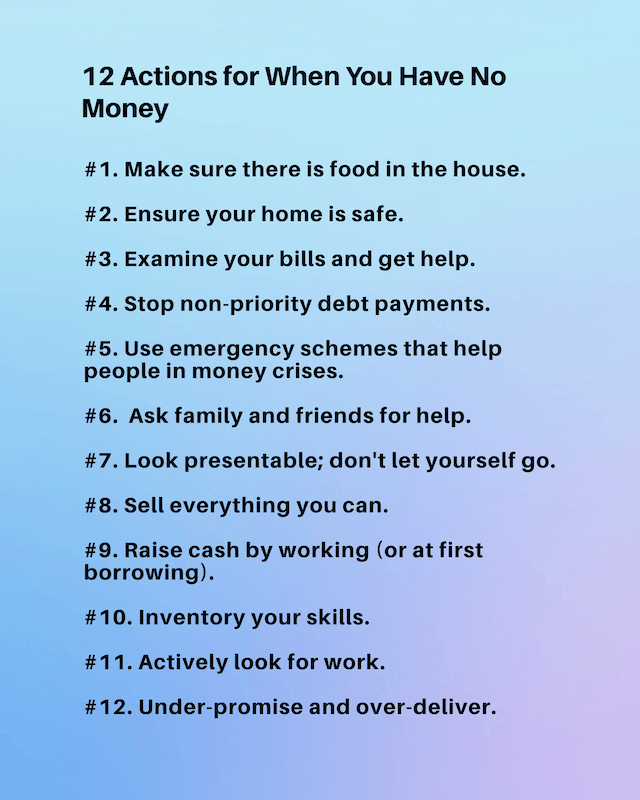
Many communities offer a safety net of resources designed to support those in need. These can include:
-
Public Libraries: Offer free internet access, books, and often workshops or community events.
-
Community Centers: Provide various services, from job training to meal programs.
-
Food Banks and Soup Kitchens: Directly address immediate food insecurity.
-
Healthcare Clinics: Offer low-cost or free medical services.
-
Mutual Aid Networks: Informal groups that operate on principles of reciprocal exchange and solidarity, providing everything from emotional support to direct assistance with food, housing, or transportation.
-
Religious Organizations: Often have outreach programs that provide meals, clothing, or shelter.
Actively researching and engaging with these resources can provide critical support during periods of financial scarcity. Remember, asking for help is not a sign of weakness but a strategic step towards survival and recovery.
Cultivating Self-Sufficiency and Alternative Economies
Beyond immediate survival, thriving without money often involves a deeper dive into self-sufficiency and participation in economic models that exist outside of conventional capitalism. This isn’t just about saving money; it’s about fundamentally rethinking how value is created, exchanged, and sustained.
Developing Practical Survival and Life Skills
The more skills you possess, the less reliant you are on purchasing goods and services. Learning to grow, preserve, and cook your own food significantly reduces grocery bills. Mastering basic repairs for clothing, appliances, or vehicles can save countless dollars. Learning to collect and purify water, generate electricity through sustainable means (e.g., solar if accessible), or build simple shelters can be invaluable. Even skills like first aid, sewing, knitting, or foraging for wild edibles (with proper training) enhance self-reliance. Invest time in learning practical skills that directly reduce your need for money. Workshops, online tutorials, and mentorship from experienced individuals are excellent avenues for skill acquisition.
Exploring Freeganism, Foraging, and Waste Reduction
“Freeganism” is a lifestyle characterized by minimal participation in the conventional economy and maximum acquisition of free resources, often by recovering discarded items. This extends beyond food from dumpsters to furniture, electronics, and clothing found in skips or via free-sharing websites. Foraging, when done responsibly and knowledgeably, can supplement food supplies with wild berries, nuts, mushrooms, and greens. A deep commitment to waste reduction, recycling, and upcycling also minimizes the need to purchase new items, conserving resources and extending the life of existing goods. These practices require diligence, ethical considerations, and often, a willingness to challenge societal norms about consumption and waste.
Participating in Gift Economies and Mutual Aid Networks
Gift economies operate on the principle of giving without an explicit expectation of immediate or direct return, fostering goodwill and social ties. This can be as simple as sharing surplus garden produce with neighbors or volunteering your time and skills for a community project. Mutual aid networks take this a step further, organizing collective support for specific needs within a community. These networks thrive on reciprocity and shared responsibility, providing a vital safety net that transcends monetary transactions. Engaging in these systems not only provides resources but also builds strong community bonds, which are invaluable assets in any “no money” scenario. It shifts the focus from individual acquisition to collective well-being.
Strategizing for Financial Re-entry and Long-Term Resilience
While survival without money is possible, a long-term goal for many is to regain some level of financial stability and security. This requires a strategic approach to re-entering the cash economy, albeit often on different terms, and building a more resilient financial future.
Identifying and Monetizing Undervalued Skills
Even in a cash-starved situation, your skills remain your most potent currency. The goal here is to identify skills you possess that have market value, even if unconventional, and find ways to monetize them. Perhaps you have a knack for restoring old furniture, a talent for storytelling, a deep knowledge of local history, or a soothing presence that makes you an excellent caregiver. Many “soft skills” like organization, communication, and problem-solving are highly transferable. Look for niches where your unique combination of skills and experiences can solve a problem for someone willing to pay, even if it’s a small amount. This could be through odd jobs, consulting, or creating handmade goods.
Crafting a Path to Sustainable Income (Micro-businesses, Gigs)
Once you’ve identified marketable skills, the next step is to build a sustainable path to income. This often starts with micro-businesses or gig work. Online platforms (if you can access them through public libraries or community centers) offer opportunities for freelance writing, virtual assistance, graphic design, or web development. Locally, you could offer services like pet sitting, gardening, house cleaning, tutoring, or running errands. The key is to start small, leverage your personal network, and build a reputation for reliability and quality. Reinvest any small earnings into improving your tools, acquiring new skills, or expanding your service offerings. The aim is not necessarily to become wealthy, but to generate enough income to cover essential needs that cannot be bartered or acquired freely.

Building a Future-Proof Financial Framework
True long-term resilience means more than just surviving; it means creating a system that protects you from future financial shocks. This involves a fundamental shift in how you view and manage any money you do acquire.
-
Emergency Fund: Even a small cash emergency fund, built through consistent saving of even tiny amounts, can provide a crucial buffer.
-
Diversified Income Streams: Relying on a single source of income is risky. Explore multiple small streams—combining gig work, selling handmade goods, bartering, and perhaps a part-time job—to create a more robust financial foundation.
-
Minimalism & Intentional Spending: Continue the frugal habits learned during the “no money” phase. Every dollar earned should be spent with extreme intentionality, prioritizing needs over wants and investing in resources that enhance self-sufficiency (e.g., tools, skill-building courses, seeds for a garden).
-
Community Integration: Maintain and strengthen your ties within gift economies and mutual aid networks. These relationships are a form of social capital that provides security and support far beyond what money alone can offer.
Surviving without money is a profound journey of self-discovery, resilience, and recalibration of values. It’s a testament to human adaptability, a forced immersion into alternative economic realities, and an opportunity to redefine what true wealth and security mean in an unpredictable world. By embracing resourcefulness, building community, and cultivating a robust set of life skills, it is possible not just to survive, but to emerge stronger, more independent, and deeply connected to the world around you.
aViewFromTheCave is a participant in the Amazon Services LLC Associates Program, an affiliate advertising program designed to provide a means for sites to earn advertising fees by advertising and linking to Amazon.com. Amazon, the Amazon logo, AmazonSupply, and the AmazonSupply logo are trademarks of Amazon.com, Inc. or its affiliates. As an Amazon Associate we earn affiliate commissions from qualifying purchases.