
The stock market’s daily fluctuations often leave investors, economists, and even casual observers pondering the myriad forces at play. A significant upward movement, particularly one that defies recent trends or expectations, inevitably sparks the question: “Why did the market go up today?” Unpacking the reasons behind such an ascent requires a deep dive into a complex interplay of economic indicators, corporate performance, central bank policies, geopolitical events, and prevailing investor sentiment. Understanding these drivers is crucial not just for short-term speculation, but for forming a robust long-term investment strategy within the realm of personal finance and investing.

Decoding the Market’s Ascent: Key Economic Indicators
The health of the broader economy is perhaps the most fundamental determinant of market direction. Positive economic data acts like rocket fuel for investor confidence, signaling a conducive environment for corporate profits and future growth. When key economic indicators surprise on the upside, markets often react with enthusiasm, pushing indices higher.
Positive Economic Data Surprises
Markets are forward-looking mechanisms, constantly discounting future expectations. When new data arrives that significantly exceeds these expectations, it can trigger a powerful rally. This could manifest in various forms: an unexpected surge in manufacturing output, a stronger-than-anticipated retail sales report, or a rebound in consumer confidence. For instance, if analysts forecast a 0.2% increase in industrial production and the actual figure comes in at 0.8%, it suggests a more robust economic momentum than previously thought, translating into optimism for corporate revenues and earnings. Such positive surprises signal resilience and potential for an accelerated economic recovery or expansion, making equities more attractive.
Favorable Inflation Reports
Inflation, the rate at which prices for goods and services are rising, is a double-edged sword for markets. While moderate inflation is a sign of a healthy, growing economy, runaway inflation erodes purchasing power and can force central banks to hike interest rates aggressively, which typically dampens economic activity and makes borrowing more expensive for businesses. Therefore, an inflation report that shows prices are moderating or stabilizing, especially after a period of concern, can be a huge positive. If, for example, the Consumer Price Index (CPI) or Producer Price Index (PPI) comes in lower than expected, or indicates a deceleration in price increases, it suggests that inflationary pressures are easing. This reduces the likelihood of aggressive monetary tightening by the central bank, which is generally bullish for stocks as it supports lower borrowing costs and sustained economic growth.
Robust Employment Figures
A strong labor market is a cornerstone of economic health, directly impacting consumer spending and overall demand. Reports detailing low unemployment rates, higher-than-expected job creation (such as Non-Farm Payrolls in the U.S.), or rising wage growth provide powerful signals to the market. When more people are employed and earning more, they tend to spend more, which boosts corporate revenues across various sectors. Furthermore, a tight labor market often reflects underlying business strength, as companies are hiring to meet demand or expand operations. While rapid wage growth can sometimes spark inflation concerns, a balanced report showing steady job gains without excessive wage inflation is almost always viewed positively by investors, signaling a robust consumer base capable of driving economic activity.
Strong Corporate Earnings
At the end of the day, stock prices are fundamentally tied to the profitability of the underlying businesses. A period of strong corporate earnings reports, or even better, earnings that significantly beat analysts’ expectations, can single-handedly drive a market higher. When companies report robust profits, healthy revenue growth, and optimistic future guidance, it demonstrates their ability to navigate economic challenges, innovate, and capture market share. This translates into higher valuations for their stocks and often lifts the broader market indices, especially if the strong performance is widespread across multiple sectors. Conversely, a general perception that corporate earnings are set to improve can also preemptively push markets up, as investors position themselves ahead of the official reporting season.
Central Bank Policies and Investor Sentiment
Central banks, through their monetary policy decisions, wield immense power over financial markets. Their actions and forward guidance can drastically alter borrowing costs, liquidity, and economic growth prospects, directly influencing investor behavior and market direction.
Dovish Stances and Interest Rate Expectations
A “dovish” stance from a central bank implies a preference for lower interest rates and looser monetary policy to stimulate economic growth, even if it risks slightly higher inflation. When a central bank signals that it intends to pause rate hikes, or even cut rates in the future, it generally leads to a positive market reaction. Lower interest rates reduce the cost of borrowing for businesses, encouraging investment and expansion. They also make it cheaper for consumers to take out loans for big-ticket items like homes and cars, boosting demand. Furthermore, lower interest rates make bonds less attractive relative to stocks, causing a shift of capital into equity markets. An unexpected dovish announcement or hint can therefore be a significant catalyst for an upward market movement, as investors anticipate an influx of liquidity and cheaper capital.
Quantitative Easing and Liquidity Injections
Beyond adjusting interest rates, central banks can employ other tools to influence the economy, most notably quantitative easing (QE). QE involves the central bank buying large quantities of government bonds or other financial assets from commercial banks. This injects liquidity into the financial system, lowering long-term interest rates and encouraging lending and investment. When markets perceive that a central bank is actively increasing the money supply or providing ample liquidity, it often fuels optimism. This “easy money” environment can push asset prices higher, as investors have more capital to deploy and the cost of holding cash decreases. A market rally could well be attributed to expectations or actual implementation of such liquidity-boosting measures.
Impact of Geopolitical Stability
While less direct than economic data or central bank actions, geopolitical events can significantly sway investor sentiment. A sudden de-escalation of a major international conflict, the signing of a favorable trade agreement, or the resolution of political instability in a key economic region can alleviate uncertainty and boost confidence. Markets inherently dislike uncertainty and risk. When these risks diminish, investors become more willing to allocate capital to riskier assets like stocks. Conversely, an uptick in geopolitical stability can lead to a “risk-on” environment where capital flows out of safe-haven assets (like gold or government bonds) and into equities, propelling the market higher.
Sectoral Performance and Market Leadership
Not all stocks move in lockstep. Often, a strong market day is driven by outstanding performance in specific sectors, which then pull the broader indices higher. Identifying these leading sectors provides insight into the underlying drivers of the market’s ascent.
Tech Sector Resilience and Innovation
The technology sector, encompassing everything from software and semiconductors to e-commerce and artificial intelligence, frequently plays a dominant role in market movements due to its sheer size and transformative potential. Days when tech giants report groundbreaking innovations, strong earnings, or announce new products can inject significant positive momentum into the entire market. The perception of ongoing technological advancement and the ability of tech companies to generate substantial future cash flows, even in challenging economic environments, can make them attractive investment vehicles. If major tech stocks experience a strong upward swing, their heavy weighting in indices like the S&P 500 can easily pull the entire market up.
Energy Sector Dynamics
The energy sector, encompassing oil, gas, and renewable energy companies, is highly sensitive to global commodity prices and geopolitical developments. A significant rise in crude oil prices, for example, can boost the profitability of energy companies, leading to an upturn in their stock prices. Similarly, government policies favoring renewable energy or infrastructure investments can provide tailwinds for companies in that segment. A market rally driven by the energy sector might reflect optimism about global demand, supply constraints, or a shift in energy policy, demonstrating how even seemingly traditional sectors can contribute to broader market gains.
Financial Sector Strength
A robust financial sector, including banks, insurance companies, and investment firms, is often a strong indicator of overall economic health. When interest rates are rising (which benefits banks’ lending margins), or when the economy is growing and businesses are expanding (leading to more demand for financial services), financial stocks tend to perform well. A surge in financial stocks can signal investor confidence in the banking system’s stability, expectations of stronger economic activity, or reduced regulatory burdens. Given the sector’s interconnectedness with the rest of the economy, its strength can often be a leading indicator of broader market health, contributing significantly to an upward market move.
Technical Factors and Market Psychology
Beyond the fundamental economic and corporate drivers, market movements are also influenced by technical trading patterns, chart analysis, and the collective psychology of millions of investors. These factors can create self-fulfilling prophecies or amplify existing trends.
Short Covering and Momentum Buying
A significant market upswing can often be fueled by a phenomenon known as “short covering.” Short selling involves borrowing and selling stocks with the expectation that their price will fall, allowing the short seller to buy them back at a lower price and profit from the difference. If a stock or the broader market unexpectedly starts to rise, short sellers may be forced to buy back shares to limit their potential losses – a process called short covering. This buying activity, in turn, can further push prices up, creating a virtuous cycle. This can then attract “momentum buyers” – investors who jump in to capitalize on the upward trend, further accelerating the rally. This combination can create a powerful, albeit sometimes short-lived, upward surge.
Retail vs. Institutional Investor Behavior
The interplay between retail (individual) investors and institutional (large funds, hedge funds) investors also shapes market direction. A sudden surge in retail trading activity, perhaps driven by social media trends or a renewed sense of optimism, can contribute to significant buying pressure, particularly in certain stocks or sectors. While institutional investors typically move larger blocks of capital, retail investors, when acting in concert, can also exert considerable influence. If institutional investors, after a period of caution, decide to increase their equity exposure, their substantial capital allocations can easily propel the market upwards. Understanding which group is driving the buying can offer clues about the sustainability and nature of the rally.
Overcoming Resistance Levels
In technical analysis, “resistance levels” are price points where a stock or index has historically struggled to move higher, often due to a concentration of sellers. When the market breaks decisively above a significant resistance level, it can be a powerful bullish signal. This breakthrough suggests that buying pressure has overcome selling pressure, and new momentum may be building. Such a break can trigger further buying from technically-minded traders and investors, who interpret it as a confirmation of an upward trend. A market rising today might have simply overcome one of these psychological and technical barriers, paving the way for further gains in the short term.
The Broader Economic Outlook and Future Implications
A strong market day is rarely an isolated event; it often reflects a broader narrative about the economic future. Investors are constantly trying to anticipate what lies ahead, and today’s market surge could be a strong indicator of their collective expectations.
Anticipation of Future Growth
Ultimately, market upturns are often rooted in the anticipation of future economic expansion. Whether it’s driven by new technological breakthroughs, government stimulus measures, or a recovery from a downturn, the market rallies when investors believe that businesses will grow, profits will increase, and the overall economy will thrive. Today’s rise might signal a collective belief that the worst is over, or that new growth engines are emerging. This forward-looking nature of the market means that current positive data points are weighed against their potential to fuel sustainable growth down the line.
Navigating Market Volatility
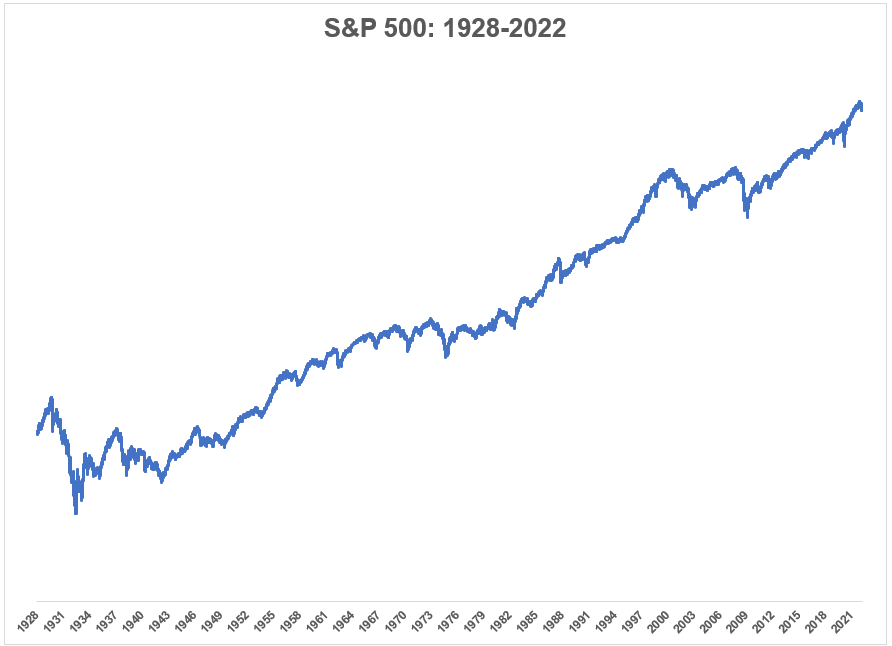
While a strong up day is welcome, savvy investors understand that markets are inherently volatile. A single day’s gain does not negate the potential for future dips or corrections. Understanding why the market went up today provides context, but it shouldn’t overshadow the importance of a well-diversified portfolio and a long-term investment horizon. Market volatility is a given, and rather than reacting to every daily swing, a sound financial strategy involves preparing for both rallies and retractions.
Strategic Investment Considerations
For individuals managing their personal finances and investing, a market surge serves as a reminder of the dynamic nature of capital markets. It underscores the importance of staying informed, continuously assessing one’s financial goals, and adjusting strategies as economic conditions evolve. Whether it’s rebalancing a portfolio, identifying new opportunities in leading sectors, or simply reaffirming one’s long-term conviction, understanding the forces behind a market’s upward trajectory is an essential part of informed decision-making in the world of money and investing.
In conclusion, a market rally on any given day is a multifaceted event, rarely attributable to a single cause. It’s a complex interplay of economic indicators, central bank policies, corporate performance, sectoral strengths, and the ever-present psychological dynamics of investors. By dissecting these various factors, we gain a clearer picture of the forces that propelled the market higher today and gather valuable insights for navigating the financial landscape moving forward.
aViewFromTheCave is a participant in the Amazon Services LLC Associates Program, an affiliate advertising program designed to provide a means for sites to earn advertising fees by advertising and linking to Amazon.com. Amazon, the Amazon logo, AmazonSupply, and the AmazonSupply logo are trademarks of Amazon.com, Inc. or its affiliates. As an Amazon Associate we earn affiliate commissions from qualifying purchases.