
For the modern investor, the rhythm of the financial world is dictated by the opening and closing bells of the major exchanges. Whether you are a day trader looking to capitalize on intraday volatility or a long-term investor checking the health of your portfolio, the question of when the stock market closes is more than just a matter of timing—it is a fundamental aspect of market liquidity, price discovery, and strategic execution.
In the United States, the primary equity markets—the New York Stock Exchange (NYSE) and the Nasdaq—operate on a synchronized schedule that provides the framework for the global economy. Understanding these hours, along with the nuances of extended trading and holiday schedules, is essential for anyone navigating the complexities of the financial landscape.
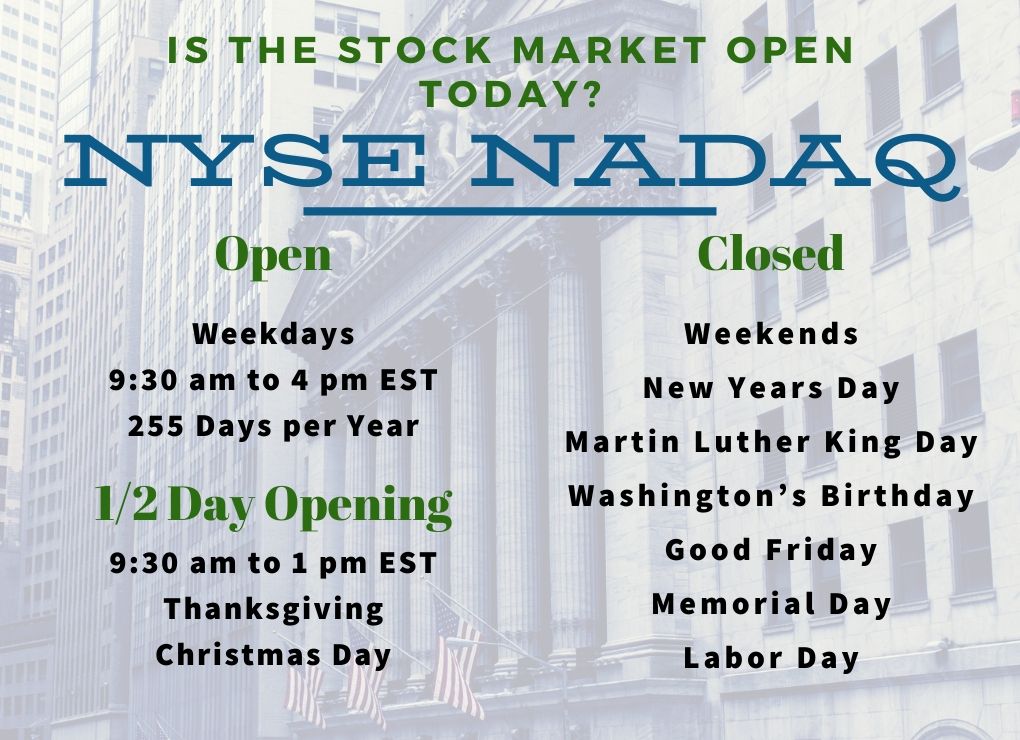
The Standard Trading Session: Navigating the 9:30 AM to 4:00 PM Window
The standard trading session for the U.S. stock market begins at 9:30 AM Eastern Time (ET) and concludes at 4:00 PM ET. This six-and-a-half-hour window represents the period of highest liquidity and the most significant volume of trades. During these hours, retail and institutional investors interact in a highly regulated environment, ensuring that prices reflect the most current information available to the public.
The Significance of the Closing Bell
The 4:00 PM ET close is perhaps the most critical moment of the trading day. This is the point at which the “closing price” of a stock is determined. For mutual funds, ETFs, and many institutional benchmarks, the closing price serves as the official net asset value (NAV) for the day. This price is not merely the last trade executed; it is often the result of a “closing auction,” a sophisticated process where buy and sell orders are matched to find a single price that clears the most volume.
Why Liquidity Peaks at the Close
As the clock nears 4:00 PM, trading volume typically surges. This phenomenon occurs because many large-scale institutional investors, such as pension funds and hedge funds, prefer to execute their trades at or near the close to minimize “market impact”—the change in a stock’s price caused by a large order. Furthermore, passive index funds must rebalance their holdings to match the index’s closing value, leading to a flurry of activity in the final thirty minutes, often referred to as the “power hour.”
Extended-Hours Trading: What Happens Before the Open and After the Close
While the core market operates from 9:30 AM to 4:00 PM, the digital nature of modern finance allows for trading to occur outside these traditional boundaries. Extended-hours trading consists of pre-market and after-hours sessions, providing flexibility for investors to react to news that breaks when the main floor is closed.
Pre-Market Trading (4:00 AM – 9:30 AM ET)
The pre-market session allows investors to trade early in the morning, often in response to overnight developments in international markets or early-morning corporate earnings releases. While some electronic communication networks (ECNs) allow trading as early as 4:00 AM ET, the majority of pre-market activity occurs between 8:00 AM and 9:30 AM. It is important to note that pre-market trading is characterized by lower volume and wider “bid-ask spreads,” which can lead to significant price volatility.
After-Hours Trading (4:00 PM – 8:00 PM ET)
When the closing bell rings at 4:00 PM, the after-hours session begins. This window is particularly crucial during earnings season, as most public companies release their quarterly financial results shortly after the market closes. Investors use this time to digest new data and adjust their positions accordingly. Like the pre-market, the after-hours session lacks the deep liquidity of the regular day, meaning prices can move drastically on relatively small trade volumes.
Risks and Considerations for Extended Trading
For the average retail investor, trading during extended hours requires caution. Most brokerages require the use of “limit orders” during these times to protect investors from executing a trade at an unfavorable price. Because there are fewer participants, the price you see on your screen may not be the price you actually get. Additionally, some news events may cause a stock to gap up or down significantly before the regular market even opens the next day.
Holiday Schedules and Early Closures: Planning Your Financial Calendar
The stock market does not follow a standard 365-day calendar. To manage your investments effectively, you must be aware of the specific holidays when the NYSE and Nasdaq are closed, as well as the days when they close early.
Standard Market Holidays
In the United States, the stock market observes nine major holidays. On these days, regular and extended trading sessions are suspended:
-
New Year’s Day
-
Martin Luther King, Jr. Day
-
Presidents’ Day
-
Good Friday
-
Memorial Day
-
Juneteenth National Independence Day
-
Independence Day (July 4th)
-
Labor Day
-
Thanksgiving Day
-
Christmas Day
If a holiday falls on a Saturday, the market usually closes on the preceding Friday. If it falls on a Sunday, the market closes on the following Monday.
Early Closing Days
There are specific instances throughout the year when the stock market closes early, typically at 1:00 PM ET. These usually occur on the day after Thanksgiving (Black Friday) and sometimes on Christmas Eve or July 3rd, depending on which day of the week the holiday falls. During an early close, the usual “power hour” dynamics are shifted to the midday period, and volume often thins out as traders depart for the holiday break.
Market Microstructure: Why the Final Hour of Trading Defines Market Sentiment
The final hour of the trading day—from 3:00 PM to 4:00 PM ET—is often the most telling period for market sentiment. Analysts and professional traders watch this window closely to gauge how “convicted” investors are in the day’s price action.
The Power Hour and Price Trends
If the market has been rallying all day and continues to push higher during the final hour, it suggests strong “buying conviction,” indicating that investors are comfortable holding their positions overnight. Conversely, if a morning rally fades into a “sell-off” during the final hour, it indicates weakness and a lack of confidence in the current price levels. This closing sentiment often sets the tone for the “gap” at the following day’s open.
The Role of Market-on-Close (MOC) Orders
A Market-on-Close order is an instruction to execute a trade as near to the closing price as possible. These orders are pooled together and executed during the closing auction. The NYSE publishes “imbalance” data starting at 3:50 PM ET, which shows whether there is a surplus of buy orders or sell orders. Professionals use this data to predict which direction the stock might move in the final seconds of the day. For the retail investor, understanding MOC orders explains why certain stocks experience a sudden “spike” or “dip” exactly at 4:00 PM.
Options Expiration and Quadruple Witching
Timing becomes even more critical on specific Fridays known as “Triple Witching” or “Quadruple Witching.” This occurs four times a year (the third Friday of March, June, September, and December) when stock options, stock index futures, and stock index options all expire on the same day. The closing hour on these days often sees record-breaking volume and heightened volatility as institutional players roll over their derivative positions.
Global Perspectives: How International Closing Times Affect Your Portfolio
While your primary focus may be on the 4:00 PM ET close in New York, the global financial system is interconnected. The closing times of international markets can create “ripples” that affect U.S. stock prices before the NYSE even opens.
The European and Asian Influence
The London Stock Exchange (LSE) generally closes at 11:30 AM ET. Because the LSE and NYSE overlap for several hours in the morning, the European close can often trigger a shift in momentum for U.S. stocks, particularly for multinational corporations. Similarly, the performance of the Tokyo Stock Exchange (Nikkei) and the Hong Kong Stock Exchange (Hang Seng) overnight provides the “lead-in” for the U.S. pre-market session.
24-Hour Trading and the Future of Market Hours
In recent years, there has been a push toward 24/7 trading, driven by the rise of cryptocurrency markets which never close. Some retail brokerages have begun offering “24/5” trading for select ETFs, allowing investors to trade certain assets throughout the night from Sunday evening through Friday evening. While this provides unparalleled access, it also challenges the traditional concept of a “closing price” and requires investors to be more vigilant than ever about global news cycles.

Conclusion: Mastering the Clock for Financial Success
Knowing when the stock market closes is the first step in mastering the mechanics of investing. The 4:00 PM ET deadline is not just a cessation of activity; it is a concentrated moment of valuation that dictates the wealth of millions. By understanding the regular session, the risks of extended hours, the holiday calendar, and the technicalities of the closing auction, you can make more informed decisions about when to enter or exit the market.
In the world of finance, time is as valuable as capital. Whether you are placing a trade at 10:00 AM or watching the closing imbalance at 3:59 PM, being aware of the market’s internal clock ensures that you are trading with the flow of liquidity rather than against it. Stay informed, monitor the schedule, and use the structure of the trading day to your strategic advantage.
aViewFromTheCave is a participant in the Amazon Services LLC Associates Program, an affiliate advertising program designed to provide a means for sites to earn advertising fees by advertising and linking to Amazon.com. Amazon, the Amazon logo, AmazonSupply, and the AmazonSupply logo are trademarks of Amazon.com, Inc. or its affiliates. As an Amazon Associate we earn affiliate commissions from qualifying purchases.