
In the fast-paced world of global finance, timing is often as critical as the assets themselves. For the average investor, the question “what does the stock market close at” might seem like a simple inquiry into a clock setting. However, the answer is a multi-layered ecosystem of schedules, time zones, and electronic trading sessions that dictate the flow of trillions of dollars. Understanding the closing mechanisms of the stock market is essential for anyone looking to manage a portfolio, execute timely trades, or simply understand why their account balance fluctuates at specific times of the day.
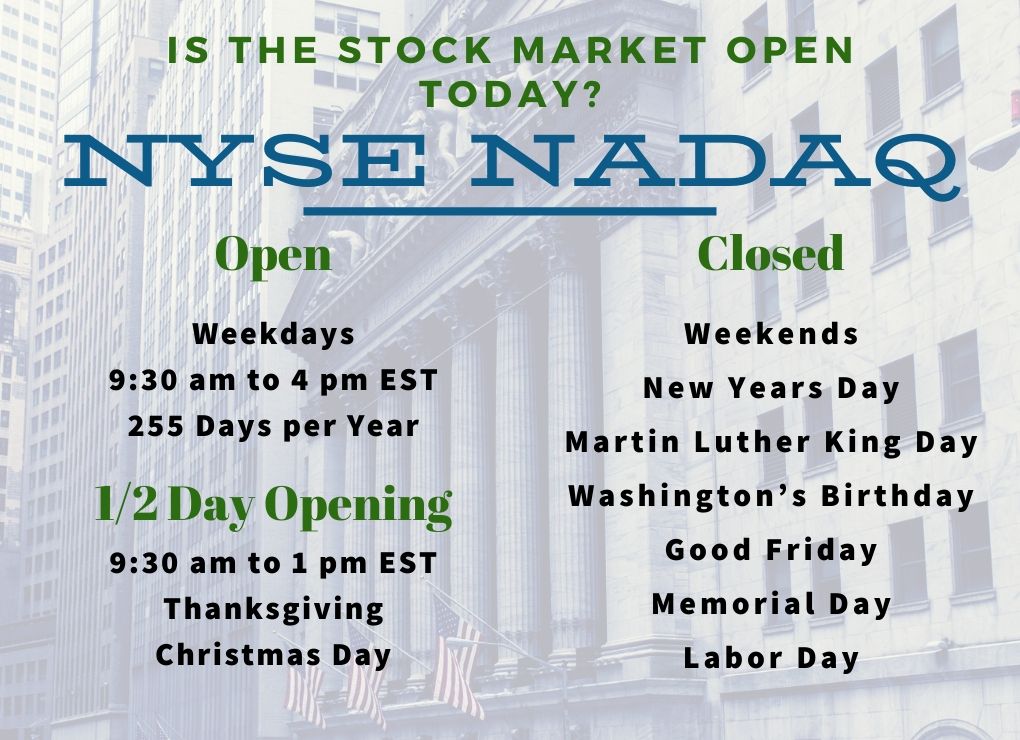
Standard Operating Hours: The Rhythm of the Major Exchanges
The backbone of the American financial system consists of the New York Stock Exchange (NYSE) and the Nasdaq. Both of these major exchanges operate on a synchronized schedule that defines the “regular” trading day. For these primary hubs, the market closes at 4:00 PM Eastern Time (ET), Monday through Friday.
The Significance of the Closing Bell
The 4:00 PM ET close is more than just a timestamp; it is a ritualized event known as the “Closing Bell.” Historically, this signaled the end of floor trading, where human brokers would cease their shouting and hand signals. Today, while the majority of trading is handled by high-frequency algorithms and electronic servers, the physical ringing of the bell remains a symbol of market liquidity and daily finality. The closing price established at 4:00 PM is the “official” price used to calculate mutual fund Net Asset Values (NAVs), index performance, and historical data points.
Time Zone Variations
While the financial world revolves around Wall Street’s clock, investors across the globe must adjust. For an investor in Los Angeles, the market closes at 1:00 PM PT. For those in London, the US market close occurs at 9:00 PM GMT. This geographical displacement is a primary driver of the 24-hour news cycle, as international markets often react to the US closing prices before their own sessions begin the following morning.
Holidays and Early Closures
It is important to note that the stock market does not follow a standard corporate holiday calendar. While it is closed on major holidays like Christmas Day, New Year’s Day, and Thanksgiving, it also observes specific financial holidays such as Good Friday. Additionally, the market frequently observes “early closes,” typically at 1:00 PM ET, on the day before or after certain holidays (such as the day after Thanksgiving or Christmas Eve). For the disciplined investor, keeping a market calendar is the first step in avoiding the frustration of a “frozen” order.
Beyond the Bell: The World of Extended-Hours Trading
Just because the physical and primary electronic sessions end at 4:00 PM ET does not mean trading ceases entirely. The modern financial era has introduced “Extended-Hours Trading,” which allows participants to buy and sell stocks outside of the traditional 9:30 AM to 4:00 PM window.
After-Hours Trading Sessions
The after-hours session typically begins immediately at 4:00 PM ET and can run as late as 8:00 PM ET. This session is primarily facilitated by Electronic Communication Networks (ECNs), which match buyers and sellers automatically. Many individual investors use this time to react to “after-the-bell” news, such as quarterly earnings reports or sudden geopolitical events. If a major tech giant releases disappointing earnings at 4:15 PM, the stock price will often move significantly during after-hours trading before the general public can access the market the next morning.
The Risks of Trading After the Close
While the ability to trade until 8:00 PM provides flexibility, it comes with heightened risks that every investor must acknowledge:
-
Lower Liquidity: Far fewer people are trading after 4:00 PM. This means there are fewer buyers and sellers, which can make it difficult to enter or exit a position at a desired price.
-
Wider Spreads: Due to lower liquidity, the “bid-ask spread” (the difference between what a buyer will pay and what a seller will accept) is often much wider than during the day. This can result in “slippage,” where you pay more or receive less than the quoted price.
-
Increased Volatility: With fewer shares changing hands, a single large order can cause a disproportionate move in the stock price.
Pre-Market Trading
Conversely, the market “opens” long before the 9:30 AM bell. Pre-market trading can start as early as 4:00 AM ET, though most volume occurs between 8:00 AM and 9:30 AM. This session allows traders to price in news that occurred overnight in European or Asian markets. For the retail investor, the pre-market and after-hours sessions are tools for reaction, but the standard 4:00 PM close remains the benchmark for stability and volume.
The Mechanics of the Closing Auction

One of the least understood aspects of the market close is the “Closing Auction.” The price you see on a news ticker at 4:00 PM isn’t just the last trade that happened to occur; it is often the result of a highly sophisticated batch-processing mechanism designed to ensure a fair and orderly final price.
Market-on-Close (MOC) Orders
Institutional investors, such as pension funds and ETFs, often need to trade massive blocks of shares at the exact closing price to minimize “tracking error.” To do this, they use Market-on-Close (MOC) orders. These orders are collected throughout the day and executed all at once at the very end of the session.
Resolving Imbalances
Throughout the final hour of trading, the exchanges publish “imbalance” data. This tells the market whether there is an excess of buy orders or sell orders waiting for the close. Designated Market Makers (DMMs) use this information to find a single price point that will clear the maximum number of shares. This process prevents the extreme volatility that would occur if billions of dollars in orders were dumped into the market in the final seconds of trading.
Why the “Final Price” Might Change
You may notice that a stock’s price fluctuates for a few minutes after 4:00 PM. This is due to the reconciliation of the closing auction. It can take several minutes for the exchanges to process the massive volume of MOC orders and post the “Official Closing Price.” For those tracking their net worth to the penny, the price displayed at 4:05 PM is generally a more accurate reflection of the day’s end than the price displayed at 3:59:59 PM.
Global Market Interconnectivity
In the modern age, “what the stock market closes at” is a question that spans the globe. The US market does not exist in a vacuum; its close often sets the tone for the rest of the world’s financial hubs.
The European and Asian Cycle
When the US market closes at 4:00 PM ET, the Asian markets are preparing to open. The Nikkei in Tokyo and the Hang Seng in Hong Kong often take their cues from the S&P 500’s closing performance. If the US market closes at a record high, it often triggers a “risk-on” sentiment in Asia. Similarly, the London Stock Exchange (LSE) closes at 11:30 AM ET. This overlap period—between 9:30 AM and 11:30 AM ET—is often the most volatile and liquid time of the day because both US and European traders are active simultaneously.
The Impact of Global Time Zones on Personal Finance
For the individual investor, this means that the “close” of the market is merely a transition point. If you hold international stocks or ETFs, your portfolio value is being influenced by “closes” happening at various times throughout a 24-hour cycle. Understanding these windows allows an investor to understand why their “International Equity Fund” might be down in the morning even if the US market is up.
Strategic Timing: Making the Close Work for You
For those engaged in active management or personal finance optimization, the closing window offers specific strategic opportunities. How you interact with the 4:00 PM deadline can impact your long-term returns.
The “Power Hour”
The final hour of trading, from 3:00 PM to 4:00 PM ET, is colloquially known as the “Power Hour.” This is typically the period of highest volume and volatility. Day traders look to capitalize on late-day trends, while institutional investors finish rebalancing their portfolios. For a long-term investor, the Power Hour is often a poor time to place “Market Orders” because the volatility can lead to unpredictable execution prices. Instead, using “Limit Orders” ensures you don’t get caught in a late-day spike or dip.
Friday Closes and the Weekend Effect
The Friday close is particularly significant. Because the market will be closed for the next 48 hours, traders must decide whether they are comfortable holding their positions over the weekend, during which news events can occur without the ability to trade. This often leads to “short covering” (where traders buy back stocks they bet against) or “de-risking” (where investors sell off volatile assets). This behavior can create artificial price movements on Friday afternoons that may reverse on Monday morning.

Settlement Cycles (T+1)
It is also vital to understand that “closing” a trade and “settling” a trade are different. As of 2024, the US market moved to a “T+1” settlement cycle. This means that if you sell a stock at the 4:00 PM close on Tuesday, the cash officially arrives in your account and the ownership transfer is finalized on Wednesday. Understanding this helps in managing cash flow, especially when moving money between different financial tools or side hustles.
The question of when the market closes is ultimately about more than just a time on a clock. It is about understanding the transition from the high-volume, regulated liquidity of the day session to the specialized, higher-risk environment of the after-hours market. By mastering the nuances of the 4:00 PM ET close, the mechanics of the closing auction, and the impact of global time zones, investors can move beyond basic observation and begin to navigate the financial markets with professional-grade precision. Whether you are a casual saver or a dedicated trader, the closing bell is a daily reminder that in the world of money, timing is everything.
aViewFromTheCave is a participant in the Amazon Services LLC Associates Program, an affiliate advertising program designed to provide a means for sites to earn advertising fees by advertising and linking to Amazon.com. Amazon, the Amazon logo, AmazonSupply, and the AmazonSupply logo are trademarks of Amazon.com, Inc. or its affiliates. As an Amazon Associate we earn affiliate commissions from qualifying purchases.