
For seasoned investors and curious newcomers alike, understanding the intricate timings of financial markets is not just a matter of convenience—it’s a critical component of strategic trading. This holds especially true for futures markets, which operate on a distinct schedule that can significantly impact trading decisions, risk exposure, and potential profitability. Unlike traditional stock exchanges that adhere to a more conventional daily open and close, US futures markets largely embrace a near 24-hour trading cycle, reflecting their global utility and the continuous nature of economic events.
This article delves into the operational hours of US futures markets, dissecting the specifics of their “open” times, the rationale behind their extended schedules, and the crucial implications for participants. We’ll explore how these unique timings present both opportunities and challenges, offering insights into how traders can best navigate this dynamic environment to their advantage. Grasping when and why these markets are accessible is the first step toward building a robust and responsive trading strategy in the world of futures.

Understanding Futures Markets: The Bedrock of Global Finance
Before diving into the specifics of market hours, it’s essential to establish a foundational understanding of what futures markets are and their indispensable role in the global financial landscape. Futures contracts are sophisticated yet powerful financial instruments that allow participants to agree to buy or sell an asset at a predetermined price on a specified future date. This seemingly simple mechanism underpins a complex web of hedging, speculation, and price discovery.
What Are Futures Contracts?
At its core, a futures contract is a legally binding agreement to transact a specific quantity of a commodity (like oil, gold, corn), a financial instrument (like stock indices, interest rates, currencies), or another asset at a pre-agreed price on a future date. These contracts are standardized, meaning their specifications—such as the underlying asset, quantity, quality, and delivery date—are uniform across the exchange on which they are traded. This standardization is crucial for ensuring liquidity and transparency within the market. Unlike options, futures contracts obligate both parties to fulfill the contract at expiration, unless offset before that date.
The Role of Futures in Modern Finance
Futures markets serve several vital functions. Firstly, they provide a critical mechanism for hedging against price volatility. For instance, an airline can use crude oil futures to lock in fuel costs, protecting against sudden price surges. Farmers can use agricultural futures to secure prices for their crops, mitigating the risk of market downturns. Secondly, futures facilitate speculation, allowing traders to profit from anticipated price movements without physically owning the underlying asset. A trader bullish on a particular stock index might buy E-mini S&P 500 futures, hoping to sell them at a higher price later. Thirdly, and equally important, futures markets contribute significantly to price discovery. The continuous trading of futures contracts generates real-time pricing information that helps market participants, from producers to consumers, understand the fair value of an asset. This transparent pricing is instrumental in capital allocation and economic planning.
Key Futures Exchanges in the US
The US futures market is dominated by major exchanges that provide the infrastructure for trading. The most prominent is the CME Group, which encompasses the Chicago Mercantile Exchange (CME), the Chicago Board of Trade (CBOT), the New York Mercantile Exchange (NYMEX), and the Commodity Exchange Inc. (COMEX). These exchanges collectively offer a vast array of futures products, from equity index futures (e.g., E-mini S&P 500, Nasdaq 100), interest rate futures (e.g., 10-Year Treasury Notes), and agricultural commodities (e.g., corn, soybeans) to energy products (e.g., crude oil, natural gas) and precious metals (e.g., gold, silver). Another key player is ICE Futures U.S. (part of Intercontinental Exchange), which lists various futures contracts, including those for sugar, coffee, and cotton, as well as several financial derivatives. These exchanges provide regulated, transparent, and highly liquid environments for futures trading.
The 24/5 Trading Cycle: Demystifying US Futures Market Hours
One of the defining characteristics of US futures markets is their extended trading hours, often referred to as a “nearly 24/5” operation. This continuous cycle sets them apart from the more limited hours of traditional stock exchanges and is essential for understanding when the markets “open” in a practical sense. The primary electronic trading platforms, such as CME Group’s Globex and ICE Futures’ electronic platform, are instrumental in facilitating this round-the-clock accessibility.
Core Trading Hours vs. Electronic Trading Hours
For most major US futures contracts, the market technically “opens” for the week on Sunday evening and remains open until Friday afternoon, with a brief daily maintenance break.
-
Weekly Open: Typically, US futures markets on platforms like CME Globex open at 5:00 PM Central Time (CT) on Sunday (which is 6:00 PM Eastern Time / ET). This marks the start of the trading week for electronic sessions.
-
Daily Sessions and Breaks: While trading is largely continuous throughout the week, there’s a specific daily “restart” or refresh. For many CME products, trading continues until 4:00 PM CT each day (Monday-Thursday), at which point there’s a 60-minute break for maintenance and clearing. Trading then resumes at 5:00 PM CT. This means that although the market is technically active for 23 hours a day, this 4:00 PM to 5:00 PM CT window represents a daily closure of the trading day before the next session begins.
-
Weekly Close: On Friday, trading typically concludes at 4:00 PM CT (5:00 PM ET) and remains closed until the Sunday evening open.
It’s crucial to differentiate this from the “cash market open,” which refers to the opening of the underlying equities market (e.g., 9:30 AM ET for NYSE and Nasdaq). While futures trading is continuous, activity and volatility often spike significantly around these cash market opens and closes, as institutional participants and retail investors react to real-time market data.
Specifics for Major Futures Contracts
While the 5:00 PM CT Sunday opening and the 4:00 PM CT Friday close with a daily 4:00 PM-5:00 PM CT break is a general rule, there can be slight variations depending on the specific product and exchange.
-
Equity Index Futures (e.g., E-mini S&P 500, Nasdaq 100): These are among the most liquid futures contracts and follow the general CME Globex schedule: Sunday 5:00 PM CT to Friday 4:00 PM CT, with a daily break from 4:00 PM to 5:00 PM CT. Their constant availability allows traders to react to overnight news from Asia and Europe, or to pre-position for the US cash market open.
-
Commodity Futures (e.g., Crude Oil, Gold, Corn):
-
Crude Oil (NYMEX WTI): Trades on Globex from Sunday 5:00 PM CT to Friday 4:00 PM CT, with the same daily break from 4:00 PM to 5:00 PM CT.
-
Gold (COMEX): Similar schedule, running Sunday 5:00 PM CT to Friday 4:00 PM CT, with the daily 4:00 PM-5:00 PM CT pause.
-
Agricultural Futures (e.g., Corn, Soybeans, Wheat on CBOT): While also trading electronically 24/5, these historically had specific pit trading hours, and even electronic trading has specific “halt” periods. For instance, Globex trading for many agriculture products often runs from Sunday 7:00 PM CT to Friday 1:20 PM CT, with a daily close from 7:45 AM CT to 8:30 AM CT and from 1:20 PM CT to 7:00 PM CT. It’s crucial for traders of these specific commodities to consult the exchange’s precise schedule.
-
-
Interest Rate Futures (e.g., 10-Year Treasury Notes): These also largely adhere to the 24/5 Globex schedule, running Sunday 5:00 PM CT to Friday 4:00 PM CT, with the daily 4:00 PM-5:00 PM CT maintenance period.
-
Currency Futures: Following the global forex market, currency futures also trade almost continuously, typically from Sunday 5:00 PM CT to Friday 4:00 PM CT, with the usual daily break.
Weekends and Holidays: When Markets Rest
While highly active during the week, US futures markets do observe weekends and specific national holidays. They close on Friday afternoon and reopen on Sunday evening. Additionally, markets typically close early or remain entirely shut on major US holidays such as Christmas Day, New Year’s Day, Thanksgiving, and sometimes observe modified hours on days preceding or following these holidays. These closures are crucial for traders to note, as any significant global news occurring during these off-market periods can lead to substantial price gaps upon reopening. Always refer to the specific exchange’s holiday schedule for definitive dates and times.
Beyond the Clock: Why Market Hours Matter for Traders
Understanding the exact “open” and “close” times, along with the continuous nature of futures trading, is far more than an academic exercise. For traders, market hours directly influence critical factors like liquidity, volatility, and the impact of global events, thereby shaping potential strategies and risk profiles. Ignoring these nuances can lead to suboptimal entry/exit points, increased slippage, and unexpected losses.
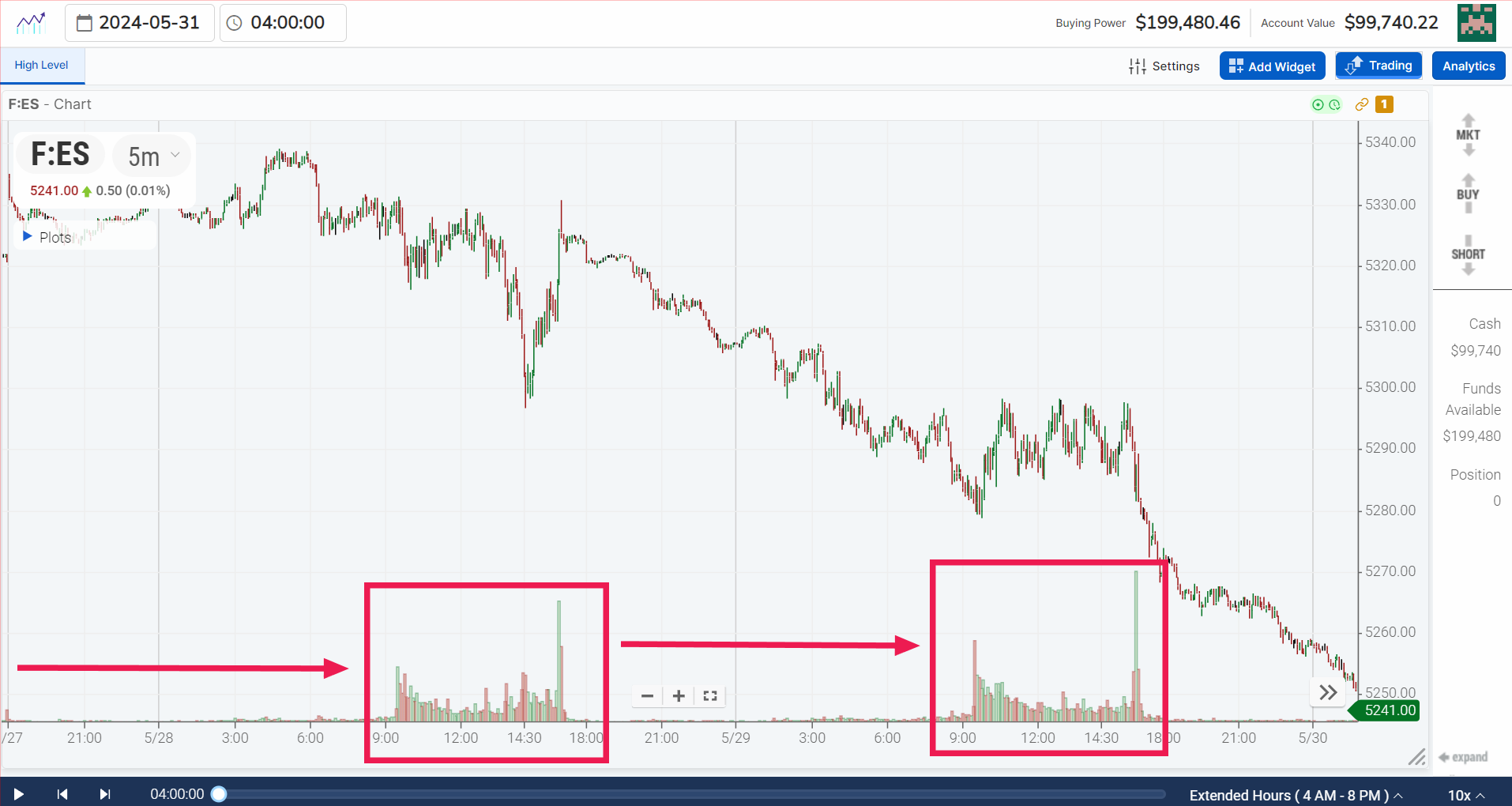
Impact on Liquidity
Liquidity refers to the ease with which an asset can be bought or sold without significantly affecting its price. In futures markets, liquidity tends to fluctuate dramatically throughout the 24/5 cycle.
-
Peak Liquidity: Generally occurs during overlapping trading hours of major financial centers, particularly when both European and US markets are open (roughly 8:00 AM ET to 12:00 PM ET). During these periods, order books are deep, spreads (the difference between bid and ask prices) are tight, and large orders can be executed with minimal price impact. This is often the preferred time for traders seeking efficient entry and exit points.
-
Lower Liquidity: Overnight sessions (e.g., late US evening, Asian hours) and during the daily maintenance breaks typically see significantly reduced liquidity. Fewer participants mean thinner order books and wider bid-ask spreads. While trading is possible, executing large orders can lead to considerable slippage, where the executed price differs substantially from the quoted price. This can erode profits or exacerbate losses, making these periods riskier for active trading.
Volatility and Global Events
The continuous nature of futures markets means they are constantly exposed to and react to global economic news, geopolitical developments, and market sentiment from around the world.
-
Reaction to Overnight News: A major economic data release from China, a central bank announcement in Europe, or a geopolitical event unfolding in the Middle East can trigger significant price movements in US futures even when US cash equity markets are closed. This allows traders to react immediately, rather than waiting for the next day’s open, but also exposes them to “gap risk” if they hold positions overnight.
-
Increased Volatility at Openings: The official US cash market open (9:30 AM ET) and the daily futures market restart (5:00 PM CT) are often characterized by heightened volatility. This is due to a surge of fresh orders as participants digest accumulated overnight news, adjust positions, and execute initial trading strategies. While this volatility can present lucrative opportunities for short-term traders, it also carries increased risk, as prices can move rapidly and unpredictably. Understanding these volatile periods is crucial for managing risk and setting appropriate stop-loss orders.
Opportunity for Global Traders
The extended hours of US futures markets are a boon for international traders. An investor in Asia or Europe can trade US equity index futures during their local daytime hours, reacting to events relevant to their time zone without needing to adjust to US business hours. This global accessibility democratizes participation and contributes to the robust liquidity of these markets, fostering a truly interconnected financial ecosystem where information and capital flow freely across borders and time zones.
Driving Forces: What Shapes Futures Market Activity
Understanding when US futures markets open and operate is only half the battle; the other half lies in comprehending what drives their activity. Futures markets are dynamic, reacting instantaneously to a broad spectrum of influences. These factors, ranging from macroeconomic indicators to geopolitical shifts and even technical chart patterns, collectively dictate price movements and trading volumes throughout the 24/5 cycle. A keen awareness of these drivers is paramount for anticipating market behavior and making informed trading decisions.
Economic Data Releases
Economic indicators are primary catalysts for significant price action across all futures segments. Reports that provide insights into the health of the US and global economies can cause swift and substantial shifts in market sentiment and, consequently, futures prices.
-
Interest Rate Futures: Highly sensitive to central bank announcements (e.g., FOMC meetings, interest rate decisions) and inflation data (e.g., Consumer Price Index – CPI, Producer Price Index – PPI).
-
Equity Index Futures: React strongly to employment figures (e.g., Non-Farm Payrolls – NFP), GDP growth, consumer confidence reports, and manufacturing indices (e.g., ISM Manufacturing PMI).
-
Commodity Futures: Energy futures like crude oil are influenced by supply/demand reports (e.g., EIA inventory reports), while agricultural futures respond to crop reports, weather forecasts, and export data.
The timing of these releases is meticulously tracked by traders, as they often coincide with periods of extreme volatility and elevated trading volumes.
Geopolitical Events and Global News
Given the interconnectedness of global finance, geopolitical developments and major news events occurring anywhere in the world can have an immediate and profound impact on US futures markets, especially during the extended trading hours.
-
Wars and Conflicts: Can trigger spikes in energy prices (e.g., crude oil, natural gas) and safe-haven assets (e.g., gold, Treasury futures).
-
Political Instability: Elections, policy changes, and social unrest in major economies can affect currency futures and global equity index futures.
-
Natural Disasters: Hurricanes in the Gulf of Mexico can impact crude oil futures; droughts can influence agricultural commodity futures.
-
Pandemics and Health Crises: As seen with COVID-19, global health emergencies can cause widespread market panic, affecting virtually all asset classes.
These events often introduce uncertainty, leading to sudden shifts in risk appetite and capital flows, which futures markets reflect in real time.
Corporate Earnings and Sector-Specific News
While direct corporate earnings news primarily affects individual stocks, it has a significant ripple effect on equity index futures. Strong or weak earnings reports from major companies can influence the sentiment towards an entire sector or even the broader market. For example, if a tech giant reports disappointing earnings, it can drag down the entire Nasdaq 100 E-mini futures contract. Similarly, sector-specific news, such as regulatory changes impacting the banking industry, can cause targeted moves in financial futures. Traders closely monitor these announcements, especially during earnings season, to gauge potential impacts on their positions in equity index futures.
Technical Analysis and Chart Patterns
Beyond fundamental news, technical analysis plays a crucial role in futures trading. Many traders utilize chart patterns, indicators, and historical price action to identify potential support and resistance levels, trend reversals, and continuation patterns.
-
Support and Resistance: Key price levels where buying or selling interest is expected to be strong.
-
Trend Lines and Channels: Visual representations of price direction over time.
-
Moving Averages and Oscillators: Indicators that help identify momentum, overbought/oversold conditions, and potential trend changes.
The continuous nature of futures markets allows technical analysts to continually monitor and apply their methods, even during overnight sessions. Price action during these less liquid periods can sometimes form significant technical levels or signals that set the tone for the upcoming more active sessions.
Mastering the Open: Strategies for Informed Futures Trading
Successfully navigating the US futures markets requires more than just knowing their hours; it demands a strategic approach, particularly around the crucial “open” periods. The blend of continuous trading, fluctuating liquidity, and concentrated volatility during these times presents both unique opportunities and heightened risks. Mastering these dynamics through diligent preparation and disciplined execution is key to informed futures trading.
Pre-Market Analysis and Planning
Preparation is paramount, especially before the weekly open on Sunday evening and the daily restart at 5:00 PM CT, as well as the US cash equity market open at 9:30 AM ET.
-
News Digestion: Before any market “open,” traders should thoroughly review all relevant overnight and weekend news. This includes major economic reports from global economies, geopolitical developments, and any corporate news that could impact specific sectors or indices. Understanding the overarching narrative helps in anticipating initial market reactions.
-
Technical Setup Identification: Analyze price charts to identify key support and resistance levels, trend lines, and potential breakout or breakdown points. Look for gaps from previous closes that might be filled, or for significant patterns that have developed during less liquid sessions.
-
Developing a Trading Plan: Based on news and technical analysis, formulate a clear trading plan. This should include potential entry and exit points, anticipated price targets, and, crucially, predefined stop-loss levels to manage risk. Consider different scenarios—bullish, bearish, and neutral—and how you would react to each.
Managing Opening Volatility
The initial moments and hours following a market “open” are often characterized by intense volatility and rapid price swings. This can be a double-edged sword.
-
Patience and Observation: For less experienced traders, it can be prudent to wait for the initial frenzy to subside. Observe the market’s direction, identify stronger trends, and allow liquidity to improve before committing to a trade. Jumping into the immediate chaos without a clear edge can lead to emotional decisions and significant losses.
-
Adjusting Position Sizing: If trading during highly volatile periods, consider reducing your position size. Smaller positions mean less capital is at risk, allowing for greater flexibility and reducing the impact of adverse price movements.
-
Strategic Stop-Loss Placement: Volatility demands wider stop-loss orders to avoid being prematurely stopped out by normal market fluctuations. However, ensure these wider stops are still within your acceptable risk tolerance. Alternatively, some experienced traders might use dynamic stops or focus on very short-term scalping with tight, precise stops, but this requires significant skill and experience.
The Importance of Liquidity
Liquidity, as discussed, is not constant throughout the 24/5 cycle. Trading in illiquid periods can have significant repercussions.
-
Avoiding Wide Spreads: During low-liquidity hours (e.g., late US evening/early Asian hours), bid-ask spreads can widen considerably. Entering or exiting trades in such conditions can incur higher transaction costs (slippage), eroding potential profits.
-
Ensuring Efficient Execution: For larger positions, attempting to trade during thin markets can lead to slippage, where your order is filled at a less favorable price than intended. Focus on periods of higher liquidity (e.g., US/European session overlap) for better execution and tighter spreads.
-
Impact on Order Types: Certain order types, like market orders, are particularly vulnerable to slippage in illiquid markets. Limit orders can help control price, but they might not be filled if there’s insufficient counter-party interest at your specified price.

Risk Management Principles
No matter when you trade, robust risk management is the bedrock of sustainable futures trading.
-
Capital Preservation: Always prioritize protecting your trading capital. Never risk more on a single trade than you are comfortable losing.
-
Position Sizing: Carefully determine the appropriate size of your trades based on your total capital and risk tolerance. Over-leveraging is a common pitfall in futures trading.
-
Defined Stop-Losses: Always use stop-loss orders. They are your primary defense against catastrophic losses, automatically closing a position if it moves against you beyond a predefined point.
-
Continuous Learning: The futures market is constantly evolving. Stay informed about market dynamics, refine your strategies, and adapt to changing conditions. Reviewing past trades, especially those around key market “openings,” can provide valuable insights for future improvements.
In conclusion, understanding when US futures markets “open” is multifaceted, extending beyond a simple clock time. It involves appreciating the continuous 24/5 electronic cycle, recognizing the specific daily and weekly restarts, and grasping how these timings influence market behavior. By combining this knowledge with diligent pre-market analysis, strategic management of volatility, awareness of liquidity, and unwavering risk management, traders can position themselves to navigate the dynamic world of futures with greater confidence and informed decision-making.
aViewFromTheCave is a participant in the Amazon Services LLC Associates Program, an affiliate advertising program designed to provide a means for sites to earn advertising fees by advertising and linking to Amazon.com. Amazon, the Amazon logo, AmazonSupply, and the AmazonSupply logo are trademarks of Amazon.com, Inc. or its affiliates. As an Amazon Associate we earn affiliate commissions from qualifying purchases.