
The S&P 500 is more than just a stock market index; it’s a benchmark of American economic strength, representing 500 of the largest U.S. publicly traded companies. For decades, it has served as a cornerstone for investors seeking broad market exposure and long-term growth. Investing in the S&P 500 isn’t about picking individual winners; it’s about owning a piece of the collective success of corporate America. This approach offers simplicity, diversification, and a track record of impressive returns, making it an attractive option for both novice and seasoned investors. However, understanding how to gain exposure to this powerful index, the various investment vehicles available, and how to integrate them into your broader financial strategy is crucial for success. This comprehensive guide will demystify the process, providing you with the insights needed to confidently invest in the S&P 500 and build wealth over time.
Understanding the S&P 500: A Foundation for Investment
Before diving into the mechanics of investing, it’s essential to grasp what the S&P 500 truly represents and why it holds such significance in the financial world. A clear understanding will equip you with the knowledge to make informed decisions about its role in your portfolio.
What is the S&P 500?
The S&P 500, or Standard & Poor’s 500, is a stock market index maintained by S&P Dow Jones Indices. It comprises 500 of the largest U.S. companies by market capitalization, selected by a committee based on factors like market size, liquidity, and sector representation. Unlike the Dow Jones Industrial Average, which is price-weighted and contains only 30 companies, the S&P 500 is market-capitalization-weighted, meaning companies with larger market values have a greater impact on the index’s performance. This weighting ensures that the index accurately reflects the health and direction of the broader U.S. stock market. The companies span across all major sectors, from technology giants like Apple and Microsoft to financial institutions like JPMorgan Chase and consumer staples like Procter & Gamble. This broad representation is a key feature that contributes to its appeal.
Why Invest in the S&P 500?
Investing in the S&P 500 offers several compelling advantages, making it a popular choice for long-term wealth accumulation. Firstly, diversification is inherent. By investing in the S&P 500, you are not putting all your eggs in one basket; you are simultaneously invested in 500 different companies across various industries. This significantly reduces company-specific risk compared to investing in individual stocks. If one company performs poorly, its impact on your overall investment is mitigated by the performance of hundreds of others.
Secondly, the S&P 500 boasts a robust historical performance. Over the long term, despite periodic market corrections and crashes, the index has shown an average annual return of approximately 10-12% since its inception. While past performance is not indicative of future results, this track record underscores its potential for wealth generation over decades.
Finally, its simplicity is unmatched. For investors who lack the time or expertise to research individual stocks, the S&P 500 offers a straightforward way to gain broad market exposure with minimal effort. You don’t need to be a stock-picking guru; you simply trust in the collective growth of the American economy.
Key Characteristics and Market Representation
The S&P 500 is dynamic, with companies entering and exiting the index as their market capitalization and other criteria change. This ensures that it remains a relevant indicator of large-cap U.S. equities. Its market-cap weighting means that movements in mega-cap companies, particularly in sectors like technology and communication services, can have a disproportionately large effect on the index’s overall performance. This characteristic, while reflecting market reality, also means investors are more heavily exposed to the largest companies, which tend to be more stable but can still experience significant volatility. It truly represents the pulse of corporate America, offering a barometer for economic health and investor sentiment.
Direct Investment vs. Indirect Exposure: Choosing Your Path
While the concept of investing in the S&P 500 might seem complex, the practical methods available to individual investors are remarkably accessible. It’s impractical, if not impossible, for most individuals to buy shares of all 500 companies directly. Instead, investors gain exposure through various pooled investment vehicles.
The Impracticality of Direct Stock Ownership
To truly “invest in” the S&P 500 by buying shares of all 500 constituent companies would require an enormous amount of capital and intricate portfolio management. You would need to purchase fractional shares of many companies, rebalance your portfolio regularly to match the index’s weighting, and account for changes in the index composition. This approach is simply not feasible for the vast majority of individual investors and defeats the purpose of the S&P 500’s inherent simplicity. The beauty of investing in the S&P 500 lies in its aggregated form, which is why financial innovation has provided elegant solutions.
The Power of Exchange-Traded Funds (ETFs)
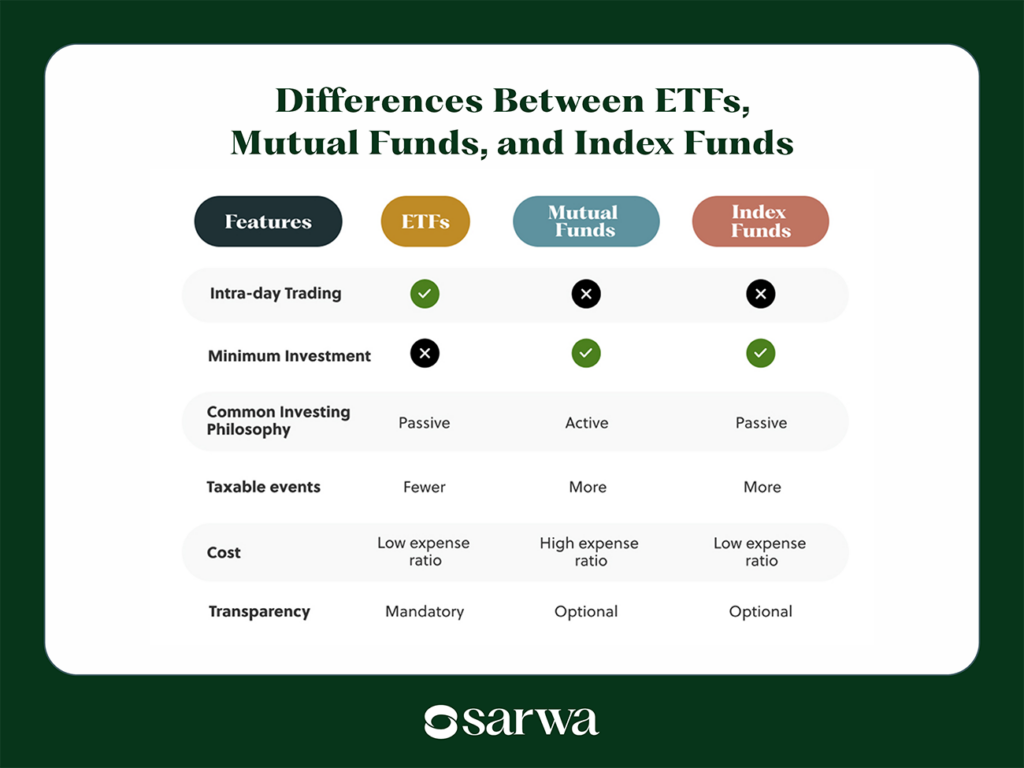
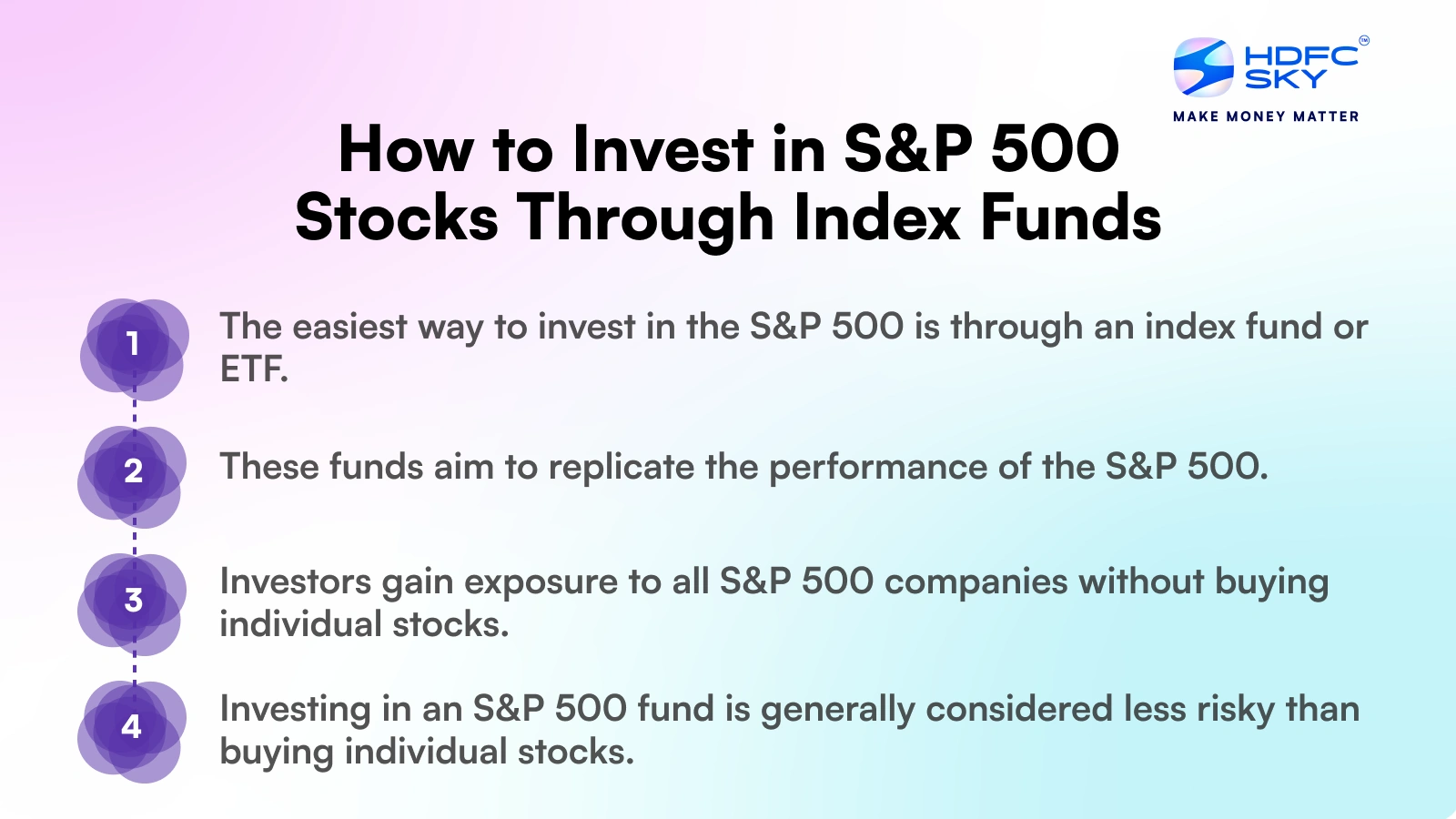
The most popular and arguably most efficient way for individual investors to gain exposure to the S&P 500 is through Exchange-Traded Funds (ETFs). An S&P 500 ETF is a type of investment fund that holds the stocks of the 500 companies in the index, typically in the same proportions as the index itself. These funds trade on stock exchanges like individual stocks, meaning you can buy and sell shares throughout the day at market prices.
Key advantages of S&P 500 ETFs include:
-
Low Expense Ratios: Because they are passively managed (they simply track the index), their operating costs are very low, often under 0.10% annually. This means more of your money goes towards actual investments rather than management fees.
-
Liquidity: They can be bought and sold easily during market hours, offering flexibility.
-
Diversification: Instant diversification across 500 companies with a single purchase.
-
Transparency: Their holdings are publicly disclosed, so you always know what you own.
Popular examples include SPDR S&P 500 ETF Trust (SPY), iShares Core S&P 500 (IVV), and Vanguard S&P 500 ETF (VOO). These are often considered interchangeable for most long-term investors, with minor differences in expense ratios and structure.
Index Funds: Mutual Funds with an S&P 500 Focus
Another excellent option is an S&P 500 index fund, which is a type of mutual fund. Like ETFs, index funds aim to replicate the performance of a specific market index, in this case, the S&P 500. The primary difference is how they trade. Mutual funds are typically bought and sold once a day at their net asset value (NAV) after the market closes, whereas ETFs trade continuously.
S&P 500 index mutual funds also offer:
-
Broad Diversification: Similar to ETFs, they provide exposure to all 500 companies.
-
Professional Management: While passively managed, the fund sponsor handles all rebalancing and adjustments to match the index.
-
Automatic Investing: Many mutual funds allow for automatic, recurring investments, which is excellent for dollar-cost averaging.
Vanguard 500 Index Fund Admiral Shares (VFIAX) and Fidelity 500 Index Fund (FXAIX) are prime examples. For long-term investors focused on regular contributions, the choice between an S&P 500 ETF and an S&P 500 index mutual fund often comes down to personal preference regarding trading flexibility and minimum investment requirements.
Other Avenues: Futures and Options (Brief Mention of Higher Risk)
While ETFs and index funds are the most common and recommended methods for most investors, it’s worth noting that institutional investors and sophisticated traders can also gain S&P 500 exposure through derivatives like futures and options contracts. These instruments offer leverage and can be used for speculation or hedging, but they come with significantly higher risk, complexity, and potential for substantial losses. They are generally unsuitable for individual investors focused on long-term wealth accumulation and should be approached with extreme caution and expert knowledge.
Practical Steps to Investing in the S&P 500
Once you’ve chosen your preferred investment vehicle (ETFs or index funds), the actual process of investing in the S&P 500 is straightforward. It involves a few key steps to get your money working for you.
Opening a Brokerage Account
The first prerequisite for investing in the S&P 500 is to open a brokerage account. This is a specialized account through which you can buy and sell securities. Major online brokerages like Fidelity, Charles Schwab, Vanguard, E*TRADE, and TD Ameritrade (now Schwab) are popular choices, offering competitive fees and user-friendly platforms. When selecting a brokerage, consider factors such as:
-
Fees: Look for commission-free trading for ETFs and low expense ratios for index funds.
-
Minimums: Some accounts or mutual funds may have minimum initial investment requirements.
-
Investment Options: Ensure they offer the specific S&P 500 ETFs or index funds you’re interested in.
-
Tools and Research: Consider if the platform offers educational resources, research tools, and customer support you might need.
The application process typically involves providing personal information, linking a bank account for funding, and setting up an investment profile. You can open a taxable brokerage account or a tax-advantaged retirement account like an Individual Retirement Account (IRA) or Roth IRA, or even contribute through an employer-sponsored 401(k) if it offers S&P 500 index options.
Researching S&P 500 ETFs and Index Funds
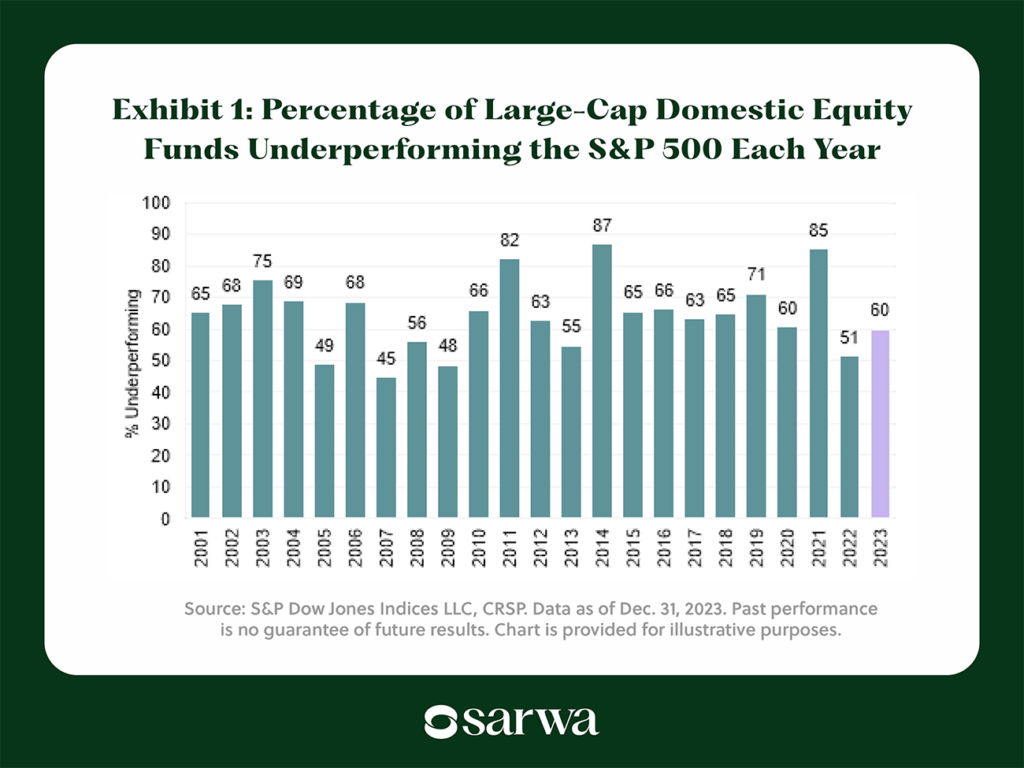
While many S&P 500 ETFs and index funds aim to track the same index, there can be subtle differences that warrant a quick comparison. The most critical factor to research is the expense ratio, which is the annual fee charged as a percentage of your total investment. Even a small difference of 0.05% can accumulate to significant savings over decades. For example, an expense ratio of 0.03% is generally better than 0.09%.
Other factors include:
-
Tracking Error: How closely does the fund’s performance match the actual S&P 500 index? Most reputable funds have very low tracking errors.
-
Assets Under Management (AUM): Larger funds often indicate higher liquidity and stability.
-
Dividend Yield: While S&P 500 funds are primarily growth-oriented, they do pay dividends from the underlying companies.
-
Brokerage Compatibility: Ensure the fund is easily accessible through your chosen brokerage.
Websites like Morningstar, Yahoo Finance, and the fund providers’ own sites (e.g., Vanguard, iShares, SPDR) offer detailed information and comparison tools for these funds.
Placing Your First Order: Buy and Hold Strategy
Once your account is funded and you’ve selected your S&P 500 investment vehicle, it’s time to place your order. For ETFs, you’ll enter the ticker symbol (e.g., VOO), the number of shares you wish to buy, and the order type (market order for immediate execution or limit order for a specific price). For mutual funds, you’ll specify the dollar amount you wish to invest.
For most S&P 500 investors, a buy and hold strategy is highly recommended. This involves purchasing shares or units of the fund and holding them for many years, ideally decades, to benefit from the power of compounding and long-term market growth. Resist the urge to constantly check daily fluctuations or time the market, as this often leads to suboptimal returns. Your goal is to accumulate shares steadily over time.
Understanding Expense Ratios and Fees
Beyond the expense ratio, be aware of other potential fees. While most online brokerages offer commission-free trading for ETFs, some might charge commissions for mutual funds, especially if they are from external providers. Transaction fees, account maintenance fees, or early redemption fees (for some mutual funds) can eat into your returns. Always review the fee schedule of your brokerage and the prospectus of your chosen fund to ensure you understand all costs involved. The goal is to minimize fees to maximize your investment returns.
Integrating S&P 500 Investments into Your Financial Strategy
Investing in the S&P 500 is a powerful step, but it’s most effective when integrated thoughtfully into a broader financial plan. Consider how it fits into your overall asset allocation, long-term goals, and tax strategy.
Dollar-Cost Averaging: Mitigating Volatility
One of the most effective strategies for long-term S&P 500 investors is dollar-cost averaging (DCA). This involves investing a fixed amount of money at regular intervals (e.g., $200 every month), regardless of the market’s current performance. When the market is down, your fixed sum buys more shares at a lower price; when the market is up, it buys fewer shares. Over time, this strategy averages out your purchase price, reduces the risk of investing a large sum at a market peak, and fosters disciplined saving. It takes the emotion out of investing and leverages market volatility to your advantage. Many brokerage accounts allow you to set up automatic recurring investments, making DCA effortless.
Long-Term Growth vs. Short-Term Speculation
The S&P 500 is primarily a vehicle for long-term growth. Its historical performance demonstrates that patience and a multi-year horizon are rewarded. Attempting to time the market or engage in short-term speculation with S&P 500 funds is generally ill-advised for individual investors. While the index can experience significant short-term fluctuations, its inherent value lies in its consistent upward trend over extended periods. Focus on accumulating shares, reinvesting dividends, and letting compounding work its magic over decades, rather than trying to predict quarterly movements.
Asset Allocation and Portfolio Diversification
While the S&P 500 provides excellent diversification within large-cap U.S. equities, it’s crucial to remember that it’s just one piece of a well-rounded portfolio. A truly diversified portfolio might also include:
-
International Stocks: To gain exposure to global growth beyond the U.S.
-
Small-Cap and Mid-Cap Stocks: For potentially higher growth, albeit with higher risk.
-
Bonds: To provide stability, income, and counterbalance volatility, especially as you approach retirement.
-
Real Estate (via REITs) or Other Alternative Investments: For further diversification.
Your ideal asset allocation (the mix of different asset classes) will depend on your age, risk tolerance, and financial goals. Younger investors with a long time horizon might have a higher allocation to stocks (including S&P 500), while those nearing retirement might shift towards a more conservative mix with a higher bond allocation. Regularly review and rebalance your portfolio to maintain your desired allocation.
Tax Implications and Account Types
The type of account you use to invest in the S&P 500 has significant tax implications.
-
Taxable Brokerage Accounts: Investments grow tax-deferred until you sell, and capital gains are taxed. Dividends are taxed in the year they are received. This offers flexibility but lacks tax advantages.
-
Traditional IRA/401(k): Contributions are often tax-deductible, growth is tax-deferred until retirement, and withdrawals are taxed in retirement. This is ideal for reducing current taxable income.
-
Roth IRA/401(k): Contributions are made with after-tax money, but qualified withdrawals in retirement are entirely tax-free. This is excellent for those who expect to be in a higher tax bracket in retirement.
Understanding the tax advantages of each account type can significantly impact your net returns over the long term. Prioritize funding tax-advantaged accounts first to maximize your long-term wealth growth, taking advantage of benefits like tax-free growth or deductions.
Potential Risks and Considerations
While investing in the S&P 500 is often recommended for its relative safety and long-term potential, it is not without risks. Understanding these can help you manage expectations and prepare for various market scenarios.
Market Volatility and Downturns
The most apparent risk is market volatility. The stock market, including the S&P 500, does not move in a straight line upward. It experiences periods of decline, corrections (a drop of 10% or more), and bear markets (a drop of 20% or more). These downturns can be unsettling and test an investor’s resolve. During such times, the value of your S&P 500 investments will decrease. The key is to remember that these are often temporary and part of the market cycle. Panic selling during a downturn can lock in losses, preventing you from benefiting from the eventual recovery. A long-term perspective and emotional discipline are vital.
Inflation and Purchasing Power
Another crucial consideration is inflation. While the S&P 500 has historically delivered strong nominal returns, the real return (after accounting for inflation) is what truly matters for your purchasing power. If inflation rates are high, the real value of your investment gains can be eroded. It’s important to monitor inflation and ensure your investment strategy aims to outperform it. Historically, equities like those in the S&P 500 have proven to be a good hedge against inflation over the long run, but there can be periods where inflation outpaces investment returns.
The Importance of Continuous Learning and Review
The world of finance is constantly evolving. While the core principles of S&P 500 investing remain stable, new investment products emerge, tax laws change, and economic conditions shift. Therefore, continuous learning and regular review of your financial plan are paramount. Stay informed about market trends, review your portfolio’s performance, assess your risk tolerance as life circumstances change, and adjust your strategy if necessary. This doesn’t mean constantly tinkering with your investments, but rather engaging in periodic, thoughtful reflection to ensure your strategy remains aligned with your goals.
In conclusion, investing in the S&P 500 offers a compelling pathway to long-term wealth creation through broad market exposure, diversification, and historical resilience. By understanding the index, selecting appropriate low-cost investment vehicles like ETFs or index funds, and employing disciplined strategies like dollar-cost averaging within a well-diversified portfolio, investors can harness the power of corporate America’s growth. While risks exist, a professional, informed, and patient approach will significantly enhance your chances of achieving your financial objectives.
aViewFromTheCave is a participant in the Amazon Services LLC Associates Program, an affiliate advertising program designed to provide a means for sites to earn advertising fees by advertising and linking to Amazon.com. Amazon, the Amazon logo, AmazonSupply, and the AmazonSupply logo are trademarks of Amazon.com, Inc. or its affiliates. As an Amazon Associate we earn affiliate commissions from qualifying purchases.