
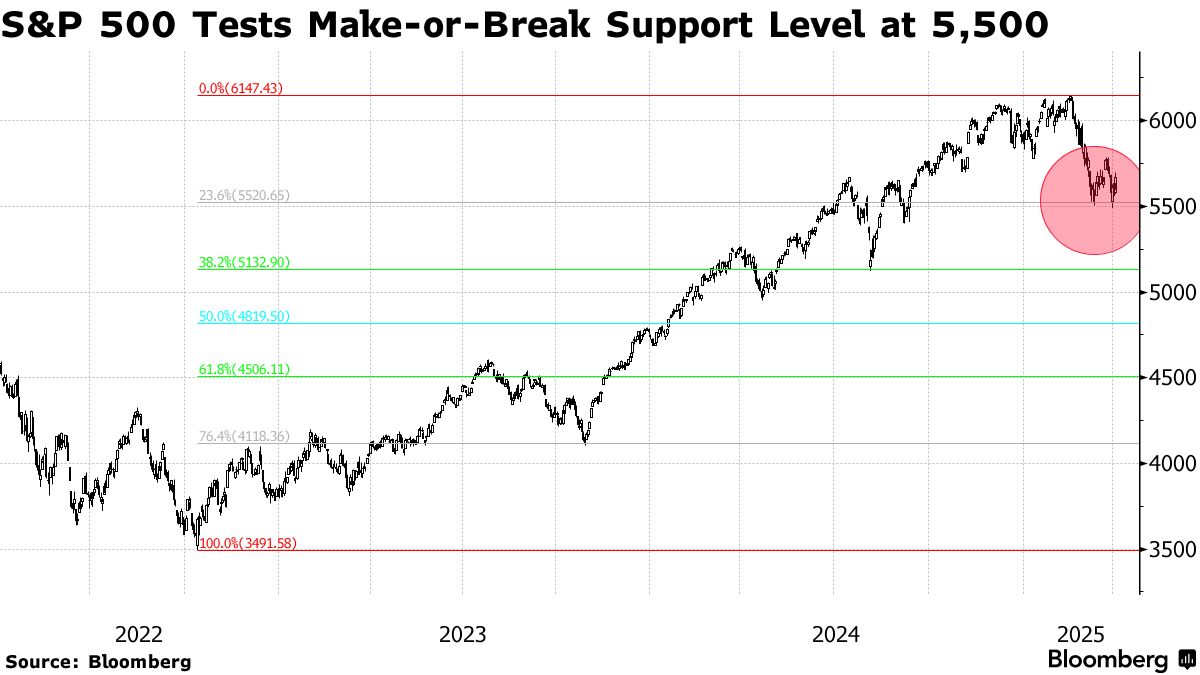
The S&P 500, a benchmark index comprising 500 of the largest U.S. publicly traded companies, serves as a vital barometer for the health of the American economy and global investor sentiment. When this bellwether index experiences a significant downturn, it naturally prompts widespread concern and a flurry of questions from investors, financial professionals, and the general public alike. Understanding the intricate web of factors contributing to a decline in the S&P 500 is crucial for informed decision-making and for maintaining a balanced perspective in volatile markets. This article delves into the primary economic, monetary, geopolitical, and psychological forces that frequently drive the S&P 500 downwards, offering insights into their mechanisms and implications.
The Weight of Macroeconomic Forces
The S&P 500’s performance is inextricably linked to the broader macroeconomic environment. A robust economy typically fosters strong corporate earnings, investor confidence, and market growth. Conversely, periods of economic contraction or uncertainty almost invariably translate into market declines.
Economic Slowdown and Recession Fears
One of the most potent drivers of an S&P 500 downturn is the specter of an economic slowdown or, more severely, a recession. A recession is typically characterized by a significant decline in economic activity spread across the economy, lasting more than a few months, normally visible in real GDP, real income, employment, industrial production, and wholesale-retail sales. When leading economic indicators—such as manufacturing new orders, housing starts, or consumer sentiment—begin to falter, investors anticipate a corresponding drop in corporate revenues and profits. This expectation leads to a repricing of equities, with share prices falling as future earnings projections are revised downwards. Companies across various sectors, from technology to industrials, face reduced demand, tighter credit conditions, and increased operational challenges, all of which directly impact their stock valuations within the S&P 500. The collective pessimism surrounding future economic growth can trigger broad-based selling, pushing the entire index lower.
Consumer Spending and Confidence
Consumer spending is the engine of the U.S. economy, accounting for roughly 70% of its GDP. A sustained decline in consumer confidence and discretionary spending can therefore have a devastating impact on corporate profitability and, by extension, the S&P 500. When consumers feel less secure about their job prospects, face rising costs of living, or become generally more pessimistic about the future, they tend to reduce spending on non-essential goods and services. This directly impacts companies in consumer discretionary sectors like retail, entertainment, and automotive, but also ripples through supply chains affecting manufacturing and logistics firms. Reduced demand translates to lower sales, shrinking profit margins, and ultimately, lower stock prices for many S&P 500 constituents. Data on retail sales, consumer sentiment surveys (like the University of Michigan Consumer Sentiment Index), and personal consumption expenditures are closely watched by analysts for clues about the market’s direction.
Labor Market Dynamics
The health of the labor market is another critical macroeconomic indicator influencing the S&P 500. A strong job market, characterized by low unemployment and steady wage growth, indicates a healthy economy with robust consumer purchasing power. Conversely, rising unemployment rates, stagnant wage growth, or widespread layoffs signal economic weakness. When companies begin to shed jobs, it not only reduces overall consumer spending capacity but also reflects a lack of confidence among businesses regarding future demand and profitability. A deteriorating labor market can quickly erode investor confidence, as it implies reduced aggregate demand and increased economic uncertainty, leading to downward revisions of earnings forecasts for S&P 500 companies and subsequent selling pressure on their stocks.
Monetary Policy and Interest Rate Impacts
Central banks, most notably the U.S. Federal Reserve, wield significant influence over financial markets through their monetary policy decisions, particularly adjustments to interest rates. These decisions have profound implications for corporate borrowing costs, investment valuations, and the attractiveness of alternative assets.
The Fed’s Tightening Cycle
When inflation rises or the economy overheats, central banks typically embark on a “tightening cycle,” raising their benchmark interest rates (like the federal funds rate in the U.S.). The primary goal is to cool down the economy by making borrowing more expensive, thereby reducing demand and curbing inflationary pressures. For the S&P 500, a rising interest rate environment presents several challenges. Higher rates increase the cost of capital for businesses, making it more expensive to borrow for expansion, mergers, or even day-to-day operations. This can reduce future earnings growth potential. Additionally, higher interest rates make fixed-income investments, such as government bonds, more attractive relative to equities, as they offer a better risk-free return. This can entice investors to shift capital out of stocks and into bonds, leading to selling pressure on the S&P 500.
Impact on Corporate Borrowing and Investment
Companies listed on the S&P 500 often rely on debt financing to fund their operations, capital expenditures, and strategic initiatives. When interest rates rise, the cost of servicing existing debt increases, directly impacting corporate profit margins. More importantly, new borrowing becomes significantly more expensive, potentially stifling investment in research and development, capacity expansion, or hiring. Reduced investment can lead to slower revenue growth and diminished future profitability. For companies with substantial debt loads, particularly those in capital-intensive industries or those that have grown rapidly through debt, rising interest rates can pose a significant financial strain, making their shares less appealing to investors and contributing to the index’s decline.
Valuation Contraction in Growth Stocks
High-growth companies, often found in technology and innovation sectors, are particularly vulnerable to rising interest rates. Their valuations are heavily dependent on future earnings potential, which is discounted back to the present value. When interest rates—the discount rate—rise, the present value of those distant future earnings decreases significantly. This phenomenon, known as “valuation contraction,” can lead to a sharp decline in the stock prices of growth companies, even if their underlying business fundamentals remain strong. Given that the S&P 500 includes a significant weighting of large technology and growth-oriented companies, this sector-specific impact can exert substantial downward pressure on the entire index during periods of monetary tightening.
Inflationary Pressures and Profit Margins
Inflation, the persistent rise in the general price level of goods and services, poses a multi-faceted threat to corporate profitability and investor confidence, often translating into a downward trajectory for the S&P 500.
Rising Costs of Goods and Services

When inflation is high, companies face increased costs across their entire supply chain. Raw materials become more expensive, energy prices surge, and transportation costs escalate. While some companies may initially be able to pass these increased costs on to consumers through higher prices, there’s a limit to how much consumers are willing or able to pay. Furthermore, in competitive markets, companies may absorb a portion of these costs, leading to a direct squeeze on their profit margins. This erosion of profitability means less money available for reinvestment, dividends, or share buybacks, all of which are typically supportive of stock prices. The collective impact on the earnings outlook for S&P 500 companies can be severe, driving down their valuations.
Eroding Corporate Earnings
Inflation directly erodes the real value of future corporate earnings. Even if nominal earnings increase, if inflation is higher, the purchasing power of those earnings declines. Investors consider the real returns on their investments, and high inflation makes the real return on equities less attractive unless companies can achieve significantly higher nominal earnings growth. Moreover, inflation can create uncertainty regarding future pricing power and demand elasticity, making it harder for analysts to accurately forecast earnings. This uncertainty often leads to a “risk premium” being applied by investors, meaning they demand a higher rate of return to hold stocks in an inflationary environment, which translates to lower stock prices.
Wage-Price Spiral Concerns
A particular concern during periods of high inflation is the potential for a wage-price spiral. This occurs when rising prices lead workers to demand higher wages, which in turn leads companies to raise prices further to cover increased labor costs, perpetuating the cycle. While wage growth can be a positive sign in a healthy economy, excessively rapid wage increases that outpace productivity gains can significantly compress profit margins for S&P 500 companies. This dynamic signals persistent inflationary pressures that might compel central banks to maintain aggressive monetary tightening, adding further headwinds to equity markets.
Geopolitical Tensions and Supply Chain Disruptions
Global events, from international conflicts to trade disputes and health crises, introduce significant unpredictability and risk into financial markets, often causing the S&P 500 to decline as investors react to increased uncertainty and potential economic fallout.
International Conflicts and Trade Wars
Major geopolitical events, such as wars, armed conflicts, or significant trade disputes between global economic powers, can send shockwaves through the stock market. Conflicts disrupt international trade routes, create uncertainty about future political stability, and can lead to sanctions or retaliatory measures that harm specific industries or entire economies. For instance, a conflict involving major energy producers can cause oil and gas prices to skyrocket, impacting everything from transportation costs to manufacturing inputs globally. Similarly, trade wars can impose tariffs, making imports more expensive for consumers and exports less competitive for domestic companies, thereby reducing corporate revenues and profitability for S&P 500 firms engaged in international commerce. The resultant increase in market volatility and risk aversion typically leads investors to pull capital from equities and seek safer assets, driving down the S&P 500.
Energy Market Volatility
Energy is a fundamental input for nearly every sector of the economy. Significant volatility in energy prices, particularly oil and natural gas, can have a pervasive impact on the S&P 500. A sharp increase in energy costs acts like a tax on both consumers and businesses. Consumers have less discretionary income, and companies face higher operational expenses for everything from manufacturing and transportation to heating and cooling facilities. This reduces profit margins across the board, affecting a wide array of S&P 500 companies. Conversely, a dramatic plunge in energy prices can signal weakening global demand, potentially indicating an impending economic slowdown or recession, which also leads to market jitters. The inherent uncertainty and financial strain caused by energy price swings make investors more risk-averse, contributing to market downturns.
Persistent Supply Chain Bottlenecks
The globalized nature of modern manufacturing and commerce means that disruptions in one part of the world can have far-reaching consequences. Persistent supply chain bottlenecks, whether caused by natural disasters, geopolitical tensions, pandemics, or labor shortages, can severely impact the ability of S&P 500 companies to source materials, produce goods, and deliver them to market. These disruptions lead to higher input costs, production delays, inventory shortages, and ultimately, missed sales opportunities. Companies may struggle to meet demand, incurring higher costs for expedited shipping or alternative sourcing, which eats into profit margins. The cumulative effect of these operational challenges across numerous industries can significantly dampen the earnings outlook for many S&P 500 constituents, prompting investors to sell off shares and contributing to a broader market decline.
Investor Sentiment, Market Psychology, and the Road Ahead
While fundamental economic and financial factors provide the bedrock for market movements, human psychology and investor sentiment play a critical role in short-to-medium term volatility, often amplifying trends.
Fear, Uncertainty, and Market Corrections
Financial markets are inherently driven by human emotions. During periods of heightened economic uncertainty, rising interest rates, or geopolitical instability, fear and panic can quickly take hold. When the S&P 500 experiences a significant decline, it can trigger a domino effect where negative news and sentiment feed on themselves. Investors, fearing further losses, may liquidate their holdings, even at a loss, to preserve capital. This capitulation selling can accelerate the market downturn beyond what fundamental analysis alone might suggest, leading to deeper corrections or even bear markets. The herd mentality and the speed of information dissemination in the digital age can amplify these psychological reactions, making market movements more dramatic. Understanding that fear often creates opportunities for long-term investors is key, but navigating these periods requires discipline and a strong conviction in one’s investment strategy.
The Importance of Long-Term Perspective
Despite the often-alarming headlines surrounding S&P 500 downturns, it is crucial for investors to maintain a long-term perspective. Historically, the S&P 500 has demonstrated a remarkable ability to recover from every bear market and economic recession, eventually reaching new all-time highs. Downturns, while painful in the short run, are an inherent part of market cycles. They often represent healthy corrections that wring out speculative excesses and reset valuations to more sustainable levels. Companies that are fundamentally sound and well-managed typically weather these storms and emerge stronger. For long-term investors, focusing on their financial goals, understanding the historical resilience of the market, and avoiding impulsive decisions driven by fear are paramount during periods of decline.
Strategies for Navigating a Downturn
For investors concerned about an S&P 500 decline, adopting proactive strategies within the “Money” niche can mitigate risk and even create opportunities. Diversification across different asset classes (equities, bonds, real estate, commodities) and geographic regions can help cushion the blow if one particular area struggles. Dollar-cost averaging, which involves investing a fixed amount of money at regular intervals regardless of market fluctuations, allows investors to buy more shares when prices are low and fewer when prices are high, potentially lowering their average cost over time. Rebalancing portfolios to maintain target asset allocations can also ensure investors don’t become overexposed to struggling sectors. Finally, maintaining a cash reserve for emergencies and avoiding investing money needed in the short term are foundational principles for enduring market volatility. Understanding why the S&P 500 is down provides crucial context, but disciplined action based on a well-thought-out financial plan is what ultimately positions investors for long-term success.
aViewFromTheCave is a participant in the Amazon Services LLC Associates Program, an affiliate advertising program designed to provide a means for sites to earn advertising fees by advertising and linking to Amazon.com. Amazon, the Amazon logo, AmazonSupply, and the AmazonSupply logo are trademarks of Amazon.com, Inc. or its affiliates. As an Amazon Associate we earn affiliate commissions from qualifying purchases.