
Investing in the S&P 500 is a popular and often recommended strategy for individuals looking to tap into the growth of the U.S. stock market. It offers a unique blend of diversification, historical stability, and a relatively straightforward approach to participating in the success of America’s largest corporations. For many, it represents a foundational element of a robust investment portfolio. However, the path to investing in this iconic index isn’t always immediately clear, especially for those new to the world of personal finance and investing. This guide will demystify the process, outlining the essential steps, strategies, and considerations for effectively investing in the S&P 500.
Understanding the S&P 500: More Than Just a Number
Before diving into the “how-to,” it’s crucial to grasp what the S&P 500 truly represents and why it holds such significance in the financial world. It’s far more than just a headline-grabbing figure; it’s a window into the health and performance of the U.S. economy.
What is the S&P 500?
The S&P 500, short for the Standard & Poor’s 500, is a stock market index that represents the performance of 500 of the largest publicly traded companies in the United States. These companies are selected by a committee at S&P Dow Jones Indices based on criteria such as market size, liquidity, and sector representation, ensuring the index is a broad and accurate reflection of the U.S. economy. Unlike the Dow Jones Industrial Average, which is price-weighted, the S&P 500 is market-capitalization-weighted. This means that companies with larger market values have a greater impact on the index’s performance. When you hear that the “market is up” or “down,” people are often referring to the S&P 500’s movement, as it is widely considered the best gauge of large-cap U.S. equities and a leading indicator of the U.S. stock market’s health.
Why Invest in the S&P 500?
The appeal of investing in the S&P 500 stems from several compelling advantages:
-
Diversification: By investing in a fund that tracks the S&P 500, you are simultaneously investing in 500 different companies across various sectors—from technology giants like Apple and Microsoft to financial powerhouses like JPMorgan Chase, healthcare innovators like Johnson & Johnson, and consumer staples brands like Procter & Gamble. This inherent diversification significantly reduces the risk associated with investing in individual stocks. If one company performs poorly, its impact on your overall portfolio is cushioned by the performance of the other 499 companies.
-
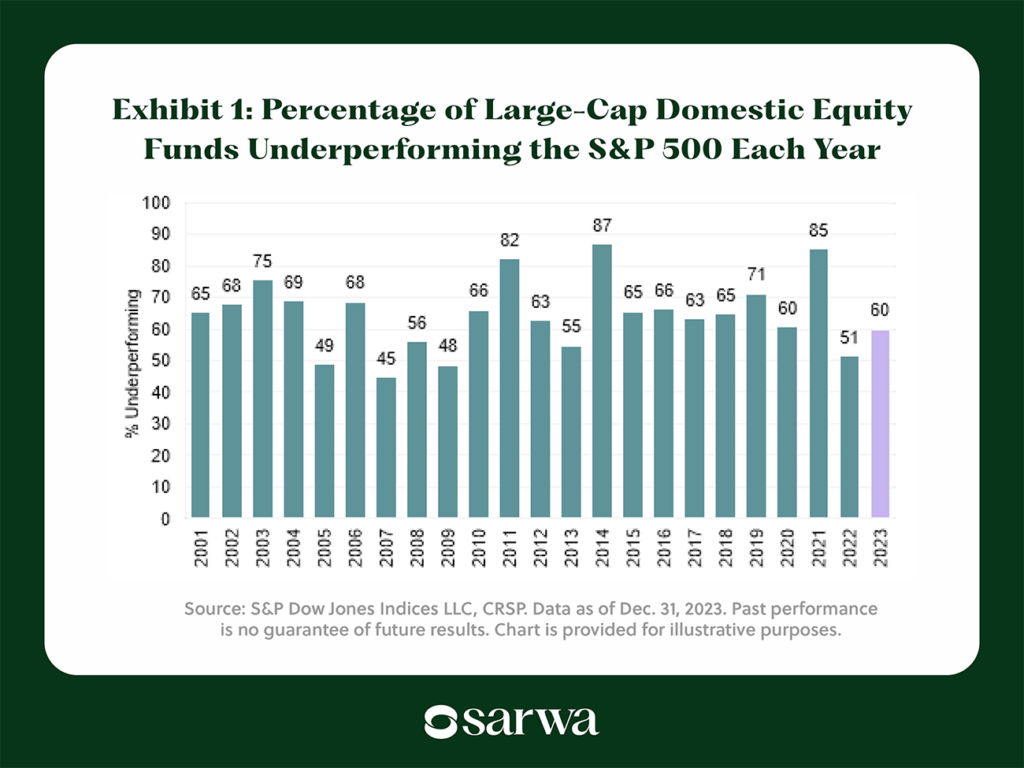
Historical Returns: Over the long term, the S&P 500 has delivered impressive average annual returns, historically around 10-12% before inflation. While past performance is not indicative of future results, this consistent growth has made it a powerful wealth-building tool.
-
Market Bellwether: The S&P 500 provides exposure to established, high-quality companies that are leaders in their respective industries. These companies often possess strong competitive advantages, robust balance sheets, and a proven track record of adapting to economic changes.
-
Simplicity and Low Cost: Investing in an S&P 500 index fund is a “set it and forget it” strategy. You don’t need to spend hours researching individual stocks or actively manage your portfolio. This passive approach often comes with lower expense ratios compared to actively managed funds, maximizing your net returns.
The Companies Behind the Index
The S&P 500 is not static; its composition evolves. Companies are added and removed as their market capitalization and other criteria change. This dynamic nature ensures that the index remains relevant and reflective of the current economic landscape. The sectors represented are diverse, including Information Technology, Healthcare, Financials, Consumer Discretionary, Communication Services, Industrials, Consumer Staples, Energy, Utilities, Real Estate, and Materials. This broad exposure across the economy is a key reason for its resilience and long-term growth potential.
Direct vs. Indirect S&P 500 Exposure: Choosing Your Path
While you cannot directly “buy” the S&P 500 index itself, you can invest in funds designed to mimic its performance. For individual investors, this almost exclusively means pursuing indirect investment strategies through financial products engineered to track the index.
Indirect Investment Through ETFs (Exchange-Traded Funds)
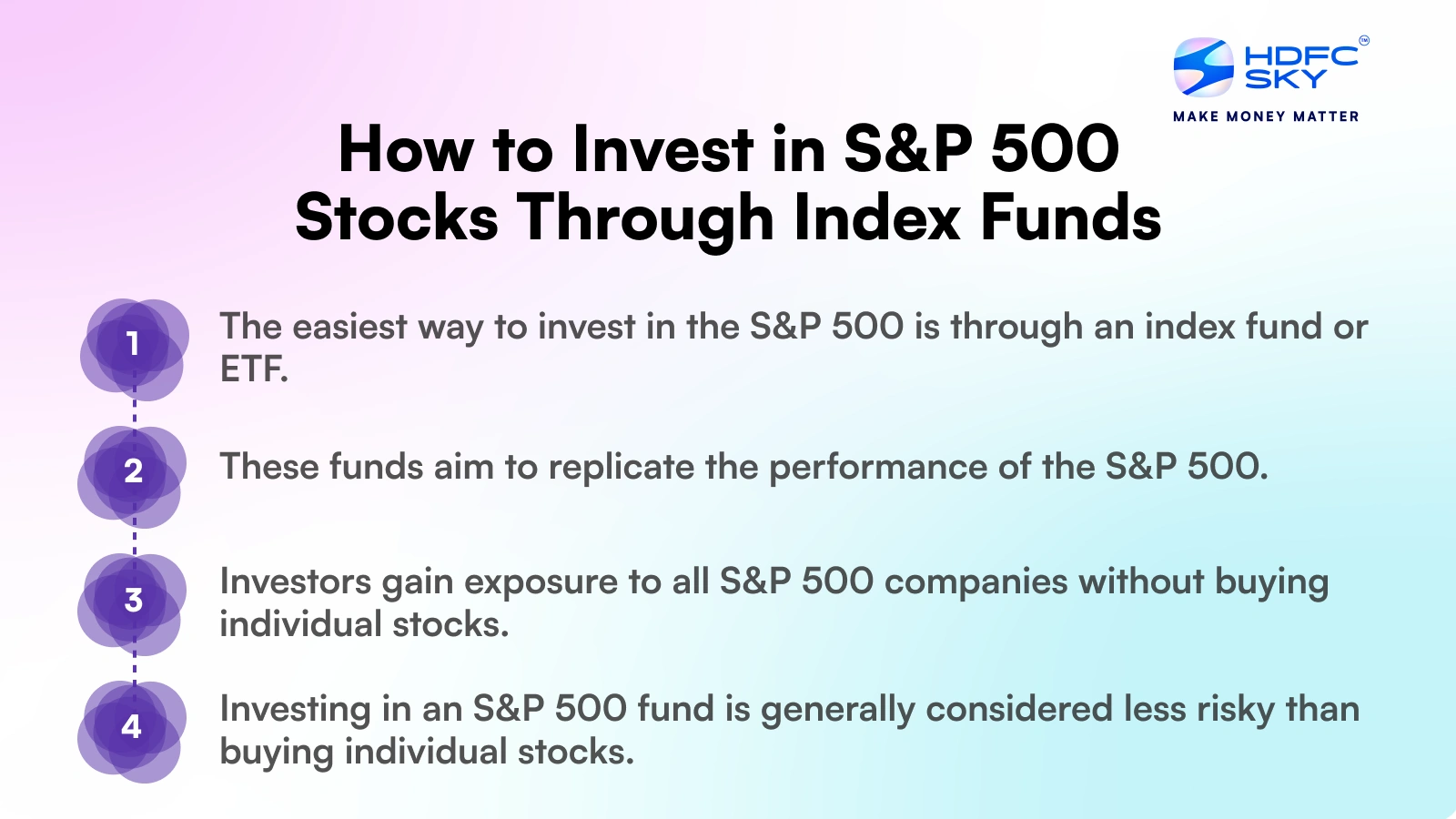
Exchange-Traded Funds (ETFs) are arguably the most popular and accessible way for individual investors to gain exposure to the S&P 500. An S&P 500 ETF is a type of investment fund that holds a basket of stocks that mirrors the S&P 500 index. When you buy shares of an S&P 500 ETF, you are essentially buying a tiny piece of all 500 companies in the index.
-
Pros of S&P 500 ETFs:
-
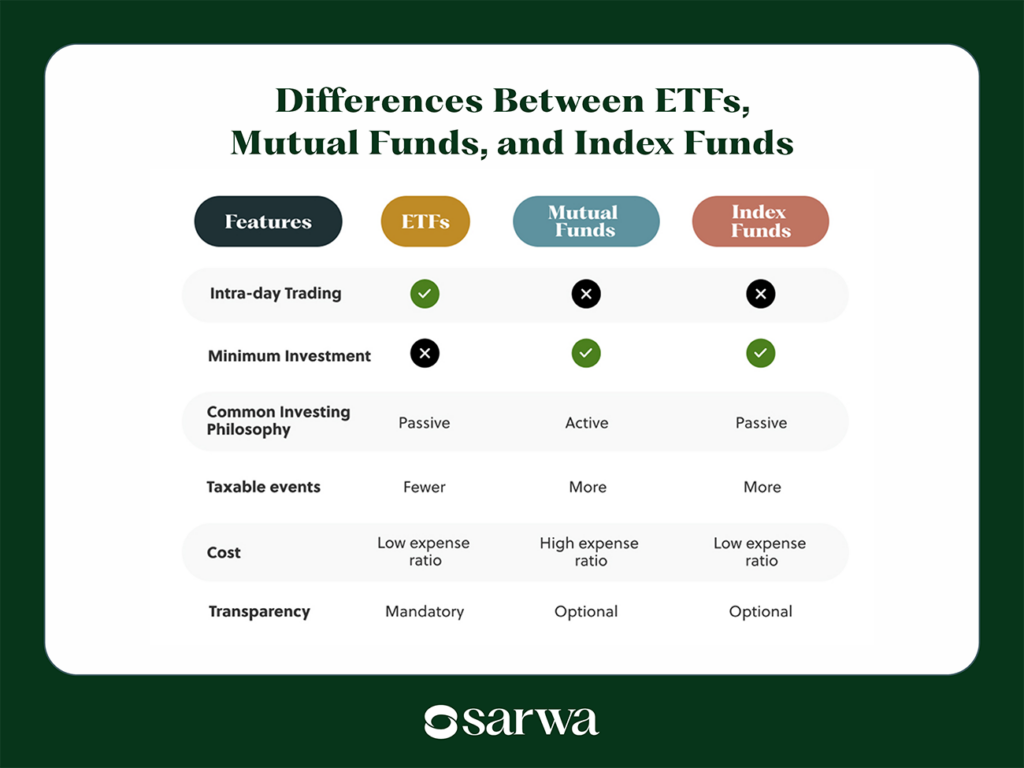
High Liquidity: ETFs trade like individual stocks throughout the day on major exchanges, allowing for real-time buying and selling.
-
Low Expense Ratios: S&P 500 ETFs are passively managed, meaning they simply track the index rather than trying to beat it. This results in very low expense ratios (annual fees), often below 0.10%.
-
Diversification: Instant diversification across 500 companies with a single purchase.
-
Tax Efficiency: ETFs are generally more tax-efficient than mutual funds due to their structure, which often results in fewer capital gains distributions.
-
Accessibility: Most brokerage firms offer commission-free trading on major S&P 500 ETFs.
-
-
Cons of S&P 500 ETFs:
-
Brokerage Account Required: You need to open a brokerage account to buy and sell ETFs.
-
Price Fluctuations: Like stocks, ETF prices fluctuate throughout the trading day, which can be an emotional challenge for new investors.
-
Trading Costs: While many are commission-free, some brokers might still charge fees, especially for less common ETFs.
-
-
Key ETF Providers: Some of the most well-known and widely used S&P 500 ETFs include:
-
SPDR S&P 500 ETF (SPY): The oldest and largest S&P 500 ETF.
-
Vanguard S&P 500 ETF (VOO): Known for its extremely low expense ratio.
-
iShares Core S&P 500 ETF (IVV): Another popular option with a low expense ratio from BlackRock.
-
Indirect Investment Through Mutual Funds
Another excellent option for S&P 500 exposure is through S&P 500 index mutual funds. Similar to ETFs, these funds pool money from many investors to buy the stocks that comprise the S&P 500.
-
Pros of S&P 500 Index Mutual Funds:
-
Automatic Reinvestment: Many mutual funds automatically reinvest dividends and capital gains, allowing for compounding growth.
-
Convenience: Ideal for setting up automated investments, making it easy to stick to a dollar-cost averaging strategy.
-
Fractional Shares: You typically invest a dollar amount, and the fund buys fractional shares, ensuring all your money is put to work.
-
-
Cons of S&P 500 Index Mutual Funds:
-
Once-a-Day Pricing: Mutual funds are priced only once per day, after the market closes, meaning you cannot trade them in real-time.
-
Higher Expense Ratios (sometimes): While index mutual funds are generally low-cost, some may have slightly higher expense ratios than comparable ETFs, particularly if they have different share classes or a minimum investment requirement.
-
Trading Restrictions: Some funds may have short-term trading fees to discourage frequent buying and selling.
-
-
Understanding Expense Ratios: This is a crucial metric for both ETFs and mutual funds. It represents the annual fee charged as a percentage of your total investment. Even a small difference (e.g., 0.03% vs. 0.10%) can compound significantly over decades, so always opt for funds with the lowest expense ratios.
Direct Investment: Is it Feasible?
For individual investors, direct investment in all 500 companies of the S&P 500 is not feasible. The capital required to purchase even one share of each company would be enormous, not to mention the logistical nightmare of managing such a portfolio. The purpose of index funds and ETFs is precisely to solve this problem, providing affordable and efficient access to the entire index.
Opening an Investment Account: Your Gateway to the Market
To invest in S&P 500 ETFs or mutual funds, you’ll first need to open an investment account. This account acts as your gateway to the stock market.
Choosing a Brokerage Account
-
Traditional Brokerage Firms: Companies like Fidelity, Charles Schwab, Vanguard, E*TRADE, and Interactive Brokers offer robust platforms with extensive research tools, customer support, and a wide range of investment products. They are suitable for investors who prefer to manage their own portfolios and make their own investment decisions. Many now offer commission-free trading for stocks and ETFs.
-
Robo-Advisors: Services like Betterment, Wealthfront, and Fidelity Go use algorithms to manage your investments based on your financial goals and risk tolerance. They often build diversified portfolios, including S&P 500 exposure, with minimal input from you. This can be a great option for beginners or those who prefer a hands-off approach, though they typically charge a small management fee (e.g., 0.25% – 0.50% annually).
When choosing, consider factors such as fees, investment minimums, available investment options, user interface, and customer service quality.
Types of Accounts
The type of account you open will have significant tax implications:
-
Taxable Brokerage Account: This is a standard investment account where your investment gains (dividends, interest, capital gains) are subject to taxes in the year they are realized. There are no contribution limits.
-
Individual Retirement Account (IRA) & Roth IRA: These are tax-advantaged retirement accounts.
-
Traditional IRA: Contributions may be tax-deductible in the current year, and investments grow tax-deferred until retirement, when withdrawals are taxed as ordinary income.
-
Roth IRA: Contributions are made with after-tax dollars, but qualified withdrawals in retirement are entirely tax-free.
-
-
Employer-Sponsored Retirement Plans (e.g., 401(k), 403(b)): If your employer offers a retirement plan, it’s often the first place to look. Many 401(k)s offer S&P 500 index funds as an investment option. Contributions are often tax-deductible, and growth is tax-deferred. Always contribute enough to get your employer’s match—it’s free money!
-
Health Savings Account (HSA): If you have a high-deductible health plan, an HSA offers a triple tax advantage: tax-deductible contributions, tax-free growth, and tax-free withdrawals for qualified medical expenses. Many HSAs allow you to invest a portion of your funds, including in S&P 500 index funds.
Funding Your Account
Once your account is open, you’ll need to fund it. Most brokerage firms allow you to transfer money via:
-
Electronic Funds Transfer (EFT): Linking your bank account for quick, usually free, transfers.
-
Wire Transfer: Faster but typically incurs a fee.
-
Check Deposit: A slower method.
-
Transfer from another brokerage account: If you’re moving existing investments.
Practical Steps to Investing in the S&P 500
With your account established and funded, you’re ready to make your first investment.
Researching Your Chosen Fund (ETFs/Mutual Funds)
Even though we’re talking about S&P 500 funds, which are designed to track the same index, it’s still wise to do a minimal amount of research. Compare:
-
Expense Ratios: Look for the lowest possible.
-
Tracking Error: How closely does the fund track the index? Reputable S&P 500 funds will have minimal tracking error.
-
Fund Size and Provider: Larger funds from established providers (Vanguard, iShares, SPDR, Fidelity, Schwab) generally offer more stability and lower costs.
-
Minimum Investment: Some mutual funds have minimums, while ETFs can be bought for the price of a single share.
Placing Your Order (Market vs. Limit Orders)
When buying an ETF (which trades like a stock):
-
Market Order: You instruct your broker to buy shares immediately at the best available price. This is simple but means you might not get the exact price you see at that instant due to market fluctuations.
-
Limit Order: You specify the maximum price you’re willing to pay per share. Your order will only execute if the ETF’s price falls to or below your specified limit. This gives you more control over the purchase price but means your order might not execute if the price never hits your limit.
For mutual funds, you typically place an order for a specific dollar amount, and the transaction is processed at the fund’s Net Asset Value (NAV) after the market closes that day.
Dollar-Cost Averaging: A Smart Strategy
Instead of investing a large lump sum all at once, consider dollar-cost averaging. This involves investing a fixed amount of money at regular intervals (e.g., $100 every month).
- Benefits: It averages out your purchase price over time, reducing the risk of buying all your shares at a market peak. When prices are low, your fixed dollar amount buys more shares; when prices are high, it buys fewer. This systematic approach takes emotion out of investing and is highly effective for long-term growth.
Reinvesting Dividends
Many S&P 500 ETFs and mutual funds pay dividends, which are portions of the companies’ profits distributed to shareholders. Most brokerage accounts allow you to automatically reinvest these dividends. This means the dividends are used to buy more shares of the fund, further accelerating your compounding returns over time. It’s a powerful strategy for building wealth without lifting a finger.
Important Considerations and Long-Term Strategy
Investing in the S&P 500 is often recommended as a cornerstone of a long-term financial plan, but it’s not without its nuances and requires a strategic approach.
Understanding Risk and Volatility
While diversified, the S&P 500 is still a stock market investment and thus subject to market risk and volatility. Its value will fluctuate, and there will be periods of decline, sometimes significant ones (market corrections or bear markets). It’s crucial to understand that investing involves risk, and you could lose money. The key to mitigating this risk, especially with S&P 500 investing, is a long-term perspective. Historically, the S&P 500 has recovered from every downturn and reached new highs over sufficiently long periods.
The Importance of Diversification Beyond S&P 500
While the S&P 500 is inherently diversified across large U.S. companies, a truly robust portfolio often includes diversification beyond just this index. Consider adding:
-
International Stocks: To gain exposure to global markets and economies.
-
Small-Cap and Mid-Cap Stocks: For potential higher growth, though with increased volatility.
-
Bonds: To add stability and reduce overall portfolio volatility, especially as you approach retirement.
-
Real Estate (REITs): For additional diversification and potential income.
This broader diversification helps to smooth out returns and reduce overall portfolio risk, ensuring you’re not solely reliant on the performance of the 500 largest U.S. companies.
Monitoring Your Investments (But Not Obsessing)
It’s wise to periodically check your investment performance, perhaps quarterly or annually, to ensure it aligns with your financial goals. However, avoid obsessively checking daily or weekly fluctuations. Short-term market movements are largely noise and can lead to emotional decisions that detract from long-term returns. The S&P 500 is designed for long-term growth, and a “buy and hold” strategy, combined with regular contributions, is typically the most effective approach.
Tax Implications of Investing
Understanding the tax implications of your investments is vital. In taxable brokerage accounts, capital gains (profits from selling shares) and dividends are taxable events. Long-term capital gains (assets held for over a year) are typically taxed at lower rates than short-term gains (assets held for less than a year). Dividends are also subject to taxes. Using tax-advantaged accounts like IRAs, Roth IRAs, or 401(k)s can significantly reduce your tax burden, allowing your investments to grow more efficiently. Consult a tax professional for personalized advice.
Staying Invested for the Long Haul
The most powerful advantage of S&P 500 investing, like much of successful investing, lies in its long-term nature. Compounding—the process where your earnings generate their own earnings—works best over extended periods. Patience, discipline, and a commitment to consistently investing, regardless of market conditions, are the hallmarks of successful S&P 500 investors. Embrace the long game, ignore the daily market noise, and let the power of these 500 great American companies work for you.
aViewFromTheCave is a participant in the Amazon Services LLC Associates Program, an affiliate advertising program designed to provide a means for sites to earn advertising fees by advertising and linking to Amazon.com. Amazon, the Amazon logo, AmazonSupply, and the AmazonSupply logo are trademarks of Amazon.com, Inc. or its affiliates. As an Amazon Associate we earn affiliate commissions from qualifying purchases.