
The Standard & Poor’s 500, commonly known as the S&P 500, stands as one of the most widely recognized and respected benchmarks of the U.S. stock market and the broader American economy. Far more than just a list of companies, it is a market-capitalization-weighted index that tracks the performance of 500 of the largest publicly traded companies in the United States. For investors, economists, and analysts alike, the S&P 500 serves as a critical pulse check, indicating the health and direction of the financial markets and often, by extension, the economic well-being of the nation.

Unlike the Dow Jones Industrial Average, which is price-weighted and composed of just 30 large companies, the S&P 500 offers a much broader and more representative snapshot. Its constituents span all major sectors of the economy, from technology giants and financial institutions to healthcare providers and consumer staples. This diversity, combined with its market-cap weighting – where companies with larger market values have a greater impact on the index’s performance – makes it an incredibly powerful tool for understanding market trends, gauging investment returns, and making informed financial decisions. Understanding the S&P 500 is fundamental for anyone looking to navigate the complexities of personal finance, investing, and business strategy. It’s not just a collection of stocks; it’s a living, breathing barometer reflecting corporate America’s triumphs and challenges, offering insights that can shape investment portfolios and economic forecasts.
Understanding the S&P 500: A Core Financial Benchmark
At its heart, the S&P 500 is an index designed to track the performance of a broad segment of the U.S. equity market. It’s curated by S&P Dow Jones Indices, a joint venture that manages some of the world’s most prominent financial benchmarks. The index’s methodology is rigorous, ensuring that it accurately reflects the performance of large-cap U.S. equities.
What is a Market-Capitalization-Weighted Index?
The “market-capitalization-weighted” aspect is crucial to understanding the S&P 500’s mechanics. Market capitalization is calculated by multiplying a company’s share price by the total number of its outstanding shares. In a market-cap-weighted index, companies with larger market capitalizations have a proportionately greater impact on the index’s value. For example, if Apple, with its trillion-dollar valuation, sees its stock price move by 1%, it will have a much more significant effect on the S&P 500’s overall value than a 1% move in a smaller constituent company with a market cap of, say, $50 billion. This weighting method means the index inherently reflects the performance of the largest and most influential companies more heavily, which is generally seen as a realistic representation of the market’s direction. It contrasts with price-weighted indexes, where a higher stock price, regardless of market cap, gives a company more influence.
History and Evolution of the Index
The S&P 500 has a rich history that dates back to the 1920s, though it took its current form much later. Standard & Poor’s introduced its first stock index in 1923, tracking 233 companies. In 1957, the index expanded to include 500 companies, adopting advanced computer technology to calculate and disseminate the index’s value in real-time. This innovation was revolutionary at the time, providing investors with unprecedented access to timely market data. Over the decades, the S&P 500 has evolved, continuously refining its selection criteria and methodology to remain a relevant and accurate reflection of the American economy. Its enduring presence underscores its reliability and the trust placed in its ability to encapsulate market performance. The index has weathered countless economic cycles, bull markets, and bear markets, always emerging as a steadfast gauge of financial health.
Composition and Selection Criteria: Who Makes the Cut?
Being included in the S&P 500 is a prestigious accomplishment for any public company. It signals a company’s significant size, stability, and liquidity, often leading to increased investor interest and reduced cost of capital. However, inclusion is not automatic; S&P Dow Jones Indices employs a committee that applies specific criteria to determine eligibility.
Eligibility Requirements and Quantitative Factors
The S&P 500’s selection committee adheres to a comprehensive set of quantitative and qualitative criteria. Key quantitative factors include:
-
Market Capitalization: A company must meet a minimum unadjusted market capitalization threshold, which is periodically reviewed. While it fluctuates, it generally requires a company to be among the largest publicly traded firms in the U.S.
-
Liquidity: The company’s shares must be highly liquid, meaning they are frequently traded without significant price impact. This is often measured by the ratio of shares traded to shares outstanding and the trading volume.
-
Public Float: A significant portion of the company’s shares must be available for public trading (not held by insiders, governments, or other companies). At least 50% of outstanding shares must be available to the public.
-
Domicile: The company must be a U.S. company. While international operations are common, the primary listing and incorporation must be in the United States.
-
Profitability: Companies must have positive reported earnings in the most recent quarter and positive aggregate earnings over the past four consecutive quarters. This ensures financial health and stability.
-
Sector Representation: While not a strict quota, the committee aims for sector balance to ensure the index remains a true reflection of the broader economy.
Qualitative Considerations and Committee Discretion
Beyond the numbers, the S&P 500 committee exercises discretion based on qualitative factors. They look at things like:
-
Industry Representation: Ensuring a diverse representation across all Global Industry Classification Standard (GICS) sectors to avoid overconcentration in any single industry.
-
Leadership and Reputation: While not explicitly stated, the committee indirectly considers a company’s standing within its industry and its overall corporate governance.
-
Mergers and Acquisitions: The committee regularly reviews companies involved in significant corporate actions to determine their continued eligibility.
-
Viability: The company must be seen as a sustainable, going concern, not one facing imminent financial distress or delisting.
This combination of strict rules and discretionary judgment allows the S&P 500 to maintain its reputation for representing high-quality, investable U.S. companies that are leaders in their respective fields.
Why the S&P 500 Matters: Its Role in Investing and the Economy
The S&P 500 is more than just a list; it is a vital tool with multifaceted importance for both financial professionals and individual investors. Its ubiquity in financial discourse highlights its critical role in assessing market performance, guiding investment strategies, and signaling economic health.
A Key Economic Indicator
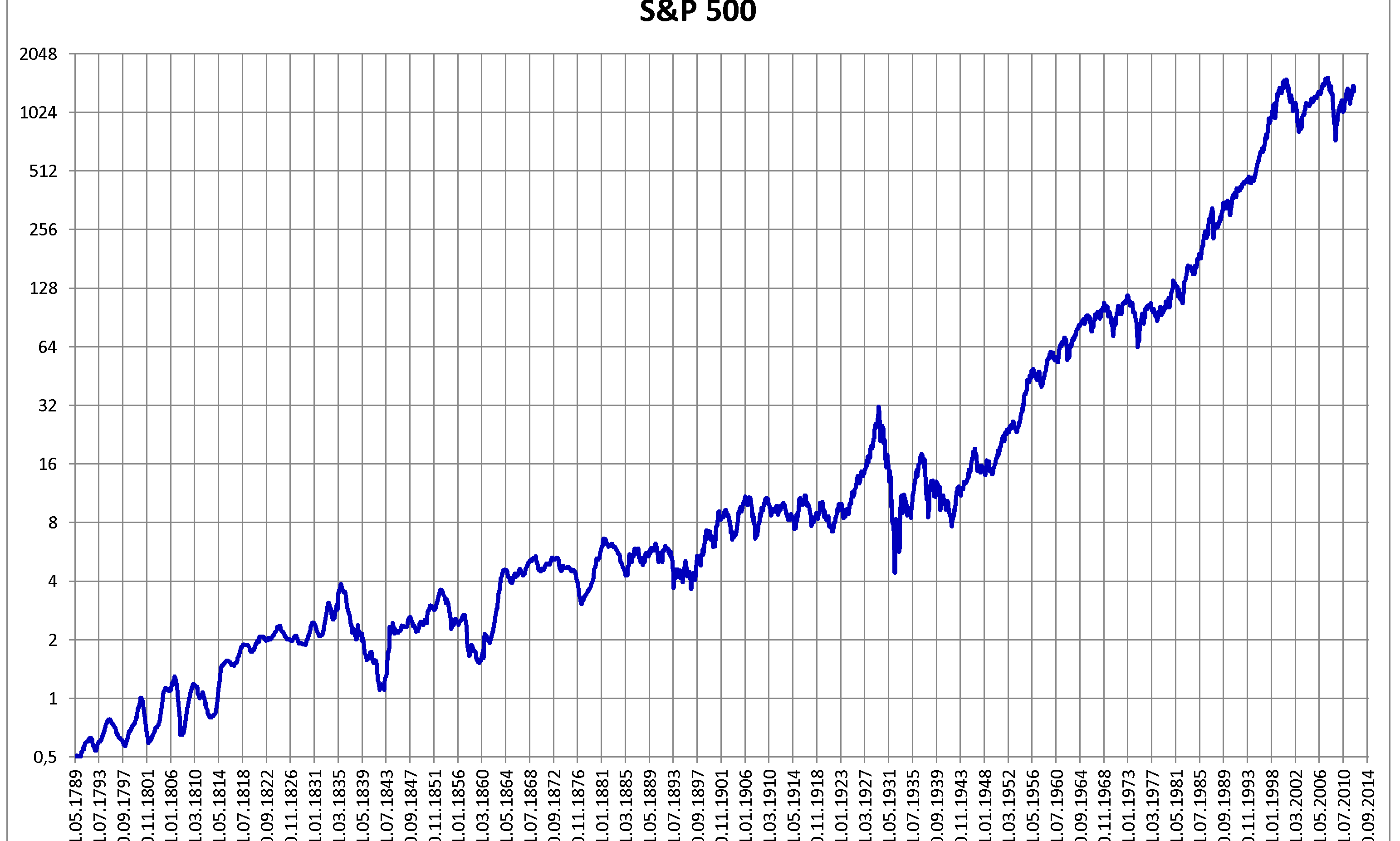
As an index tracking 500 of the largest and most influential U.S. companies across a diverse range of sectors, the S&P 500 is often regarded as a leading economic indicator. Its performance can reflect investor confidence, corporate profitability, and the overall trajectory of the U.S. economy. A sustained upward trend often signals economic growth and optimism, while significant declines can suggest recessions or periods of economic contraction. Economists and policymakers frequently monitor the S&P 500’s movements as part of their broader analysis of economic conditions, using it to gauge sentiment and predict future trends in areas like employment, consumer spending, and industrial output. Its market-cap weighting also means that the performance of the largest companies, which are often global players, provides insights into not just domestic but also international economic conditions.
The Benchmark for Investment Performance
For investors, both professional and amateur, the S&P 500 serves as the primary benchmark against which the performance of diversified U.S. equity portfolios is measured. If a mutual fund manager claims to have achieved an 8% return in a given year, that figure gains context when compared to the S&P 500’s return for the same period. An 8% return is impressive if the S&P 500 returned 5%, but less so if the index returned 10%. This benchmarking function is critical for evaluating investment strategies, assessing fund managers’ skills, and making informed decisions about where to allocate capital. It helps investors determine if their investments are merely keeping pace with the market, underperforming, or outperforming – a key metric for long-term wealth accumulation. The concept of “beating the market” almost universally refers to outperforming the S&P 500.
Facilitating Passive Investing
The existence and prominence of the S&P 500 have fundamentally transformed the landscape of investing by enabling the rise of passive investing strategies. Instead of trying to pick individual winning stocks – a notoriously difficult task – investors can simply invest in funds that aim to mirror the performance of the entire S&P 500. This is achieved through S&P 500 index funds, which can be structured as mutual funds or Exchange Traded Funds (ETFs). These funds hold stocks in the same proportion as they are represented in the index, offering broad diversification, often with lower fees compared to actively managed funds. For many individual investors, investing in an S&P 500 index fund is a cornerstone of a sound long-term financial strategy, providing exposure to the growth of America’s largest companies without the need for extensive stock research or active trading. It democratizes access to market returns for everyone.
Investing in the S&P 500: Practical Approaches for Every Investor
Given its significance as a benchmark and a representation of broad market performance, investing in the S&P 500 is a popular strategy for both novice and experienced investors. It offers a straightforward way to achieve diversification and capture the growth of the U.S. economy.
Index Funds and ETFs: The Most Common Pathways
The most accessible and widely recommended method for investing in the S&P 500 is through index funds or Exchange Traded Funds (ETFs) that track the index.
-
S&P 500 Mutual Funds: These are professionally managed funds that hold all 500 stocks in proportions identical to the S&P 500 index. Investors buy shares of the mutual fund, which then owns the underlying stocks. They are typically bought directly from fund companies or through brokerage accounts and are priced once per day after the market closes. They offer convenience, diversification, and professional management, often with very low expense ratios compared to actively managed funds.
-
S&P 500 ETFs (Exchange Traded Funds): ETFs are similar to mutual funds in that they hold a basket of securities, but they trade on stock exchanges like individual stocks throughout the day. This provides greater flexibility for investors who wish to buy or sell at specific market prices during trading hours. S&P 500 ETFs are immensely popular due to their low costs, high liquidity, and ease of trading. Examples include SPDR S&P 500 ETF (SPY), iShares Core S&P 500 (IVV), and Vanguard S&P 500 ETF (VOO). Both mutual funds and ETFs tracking the S&P 500 are excellent choices for long-term investors seeking broad market exposure with minimal effort.
Considerations for Direct Stock Investing
While it’s technically possible to buy all 500 individual stocks that comprise the S&P 500, this approach is highly impractical and generally not recommended for most investors.
-
High Capital Requirement: Buying 500 different stocks would require a substantial amount of capital, making it inaccessible for the vast majority of individual investors.
-
Transaction Costs: Even with commission-free trading, managing 500 separate stock positions would incur significant administrative complexity and potential costs related to rebalancing and corporate actions.
-
Rebalancing Challenges: The S&P 500 committee regularly adds and removes companies, and the weightings of existing companies change with their market cap fluctuations. To truly replicate the index, an investor would need to constantly rebalance their portfolio, which is a complex and time-consuming endeavor.
-
Lack of Diversification: While owning 500 stocks sounds diversified, the primary benefit of diversification is achieved much more easily and efficiently through index funds, which automatically handle all these complexities for a minimal fee.
For these reasons, individual investors aiming to gain exposure to the S&P 500 are almost always better served by investing in an S&P 500 index fund or ETF.
Historical Performance and Future Outlook: Navigating Market Dynamics
The S&P 500’s historical performance provides valuable insights into the power of long-term investing and the resilient nature of the U.S. economy, though past performance is never a guarantee of future results.
Long-Term Growth and the Power of Compounding
Over its long history, the S&P 500 has demonstrated a remarkable track record of long-term growth. Since its inception in 1957 through various market cycles, its average annual return (including dividends) has been approximately 10-12%. This consistent long-term growth, despite numerous bear markets, recessions, and global crises, is a testament to the innovative capacity and profitability of American businesses. The power of compounding, where returns generate further returns, means that even modest annual gains can lead to substantial wealth accumulation over decades. This historical trend is a cornerstone of why many financial advisors advocate for long-term, diversified investing in broad market indices like the S&P 500 as a core strategy for retirement planning and wealth building.
Volatility, Corrections, and the Role of Dividends
While the long-term trend is upward, the S&P 500’s journey is far from smooth. It experiences regular periods of volatility, market corrections (declines of 10% or more), and bear markets (declines of 20% or more). These downturns, though often painful in the short term, are a normal and inevitable part of market cycles. They often present opportunities for long-term investors to buy into the market at lower prices.
Additionally, it’s crucial to remember that the total return of the S&P 500 includes not just price appreciation but also dividends. Dividends are portions of a company’s earnings paid out to shareholders. Reinvesting these dividends back into the S&P 500 index fund can significantly enhance long-term returns through the magic of compounding. Over extended periods, dividends can account for a substantial portion of the S&P 500’s total return.

The Future Outlook and Diversification Beyond the S&P 500
Predicting the future performance of the S&P 500 is inherently speculative. However, its continued relevance hinges on the strength and adaptability of the U.S. economy and its leading companies. Factors such as technological innovation, global economic growth, corporate earnings, interest rate policies, and geopolitical stability will all influence its trajectory.
For investors, while the S&P 500 is an excellent core holding, it’s often wise to consider diversification beyond just this single index. This could include exposure to international developed markets, emerging markets, small-cap U.S. companies (which the S&P 500 doesn’t fully capture), and different asset classes like bonds and real estate. A truly diversified portfolio balances growth potential with risk mitigation, ensuring that an investor is well-positioned to meet their financial goals regardless of which specific market segment is performing best at any given time. The S&P 500 remains a powerful engine for wealth creation, but a holistic financial strategy will often look to complement it with other strategic investments.
aViewFromTheCave is a participant in the Amazon Services LLC Associates Program, an affiliate advertising program designed to provide a means for sites to earn advertising fees by advertising and linking to Amazon.com. Amazon, the Amazon logo, AmazonSupply, and the AmazonSupply logo are trademarks of Amazon.com, Inc. or its affiliates. As an Amazon Associate we earn affiliate commissions from qualifying purchases.