
Embarking on the journey of stock market investing can feel like stepping into a complex labyrinth, especially for beginners. The fundamental question, “Where can I buy stock?”, often serves as the initial gateway into this world. While the concept might seem daunting, the reality is that accessing the stock market has never been more straightforward or democratized. Thanks to technological advancements and a proliferation of financial tools, individuals now have a diverse array of options to begin building their investment portfolio. This comprehensive guide will demystify the process, illuminate the various avenues available, and equip you with the knowledge to make informed decisions about where and how to purchase stocks.

Understanding the Stock Market Basics
Before diving into the “where,” it’s crucial to grasp the “what” and “why” of stock investing. A solid foundational understanding will not only make the subsequent steps clearer but also empower you to invest with greater confidence and purpose.
What is a Stock?
At its core, a stock (also known as equity) represents a small ownership stake in a company. When you buy a company’s stock, you become a shareholder, meaning you own a tiny fraction of that company. This ownership often comes with certain rights, such as voting on corporate matters (though this is more common with common stock) and a claim on a portion of the company’s assets and earnings. Companies issue stocks to raise capital for various purposes, such as expanding operations, research and development, or paying down debt.
Why Invest in Stocks?
People invest in stocks primarily for capital appreciation and income generation.
-
Capital Appreciation: The most common reason is the potential for your investment to grow in value over time. If the company you’ve invested in performs well, its stock price tends to rise, allowing you to sell your shares for a profit.
-
Income Generation: Some companies pay out a portion of their profits to shareholders in the form of dividends. These dividend payments can provide a steady stream of passive income, a particularly attractive feature for long-term investors or those in retirement.
-
Inflation Hedge: Over the long term, stocks have historically outperformed inflation, helping to preserve and grow purchasing power, unlike cash that depreciates over time.
-
Accessibility: Modern platforms have made stock investing accessible to individuals with varying capital amounts, removing previous barriers to entry.
Key Concepts: Shares, Dividends, Capital Gains
To navigate the market effectively, familiarity with a few key terms is essential:
-
Shares: Individual units of ownership in a company. When you buy stock, you are buying a certain number of shares.
-
Dividends: A distribution of a portion of a company’s earnings, decided by its board of directors, to its shareholders. Dividends are typically paid out quarterly and can be reinvested or taken as cash.
-
Capital Gains: The profit realized from the sale of an investment, such as a stock, when the selling price exceeds the purchase price. Conversely, a capital loss occurs when the selling price is less than the purchase price. Understanding the tax implications of capital gains is crucial for all investors.
Choosing the Right Investment Platform
With a basic understanding in place, the next logical step is to explore the various platforms available for purchasing stocks. The choice of platform largely depends on your investment style, experience level, budget, and the degree of assistance you require.
Online Brokerages: A Popular Choice
Online brokerages have revolutionized individual investing, offering low-cost or even commission-free trading, extensive research tools, and user-friendly interfaces. They cater to a broad spectrum of investors, from complete novices to seasoned traders.
-
Full-Service vs. Discount Brokers: While the line has blurred, full-service online brokers might offer more robust research, analytical tools, and perhaps some advisory services, often at a slightly higher cost. Discount brokers prioritize low fees and straightforward execution. Many popular platforms like Charles Schwab, Fidelity, E*TRADE, Vanguard, and TD Ameritrade (soon to be Schwab) fall into this category.
-
Mobile Apps: Most online brokerages offer sophisticated mobile applications, allowing investors to manage their portfolios, research stocks, and execute trades conveniently from their smartphones. This accessibility has made investing more dynamic and immediate.
-
Key Considerations: When choosing an online brokerage, evaluate their fee structure (trading commissions, account maintenance fees), available investment products, research and educational resources, customer service quality, and platform usability.
Robo-Advisors: Automated Investing
For those who prefer a hands-off approach or are new to investing and feel overwhelmed by choice, robo-advisors present an excellent solution. These platforms use algorithms to build and manage diversified portfolios based on your financial goals, risk tolerance, and time horizon.
-
How They Work: You typically complete a questionnaire about your financial situation and goals. The robo-advisor then constructs a portfolio, usually comprising low-cost Exchange-Traded Funds (ETFs), and automatically rebalances it periodically to maintain your target asset allocation.
-
Benefits: Robo-advisors offer professional portfolio management at a fraction of the cost of traditional financial advisors. They promote diversification, reduce emotional investing, and often include features like tax-loss harvesting.
-
Examples: Betterment and Wealthfront are prominent examples of pure-play robo-advisors, while many traditional brokerages now offer their own hybrid robo-advisor services.
Traditional Brokerage Firms: Full-Service Guidance
For investors who desire personalized advice, in-depth financial planning, and a human touch, traditional brokerage firms with financial advisors remain a viable option. These firms provide comprehensive services that go beyond mere stock transactions.
-
Services Offered: Financial advisors can help you develop a holistic financial plan, including retirement planning, estate planning, and tax optimization, in addition to managing your investment portfolio. They often offer access to a wider range of investment products and strategies.
-
Cost Structure: This level of personalized service comes at a higher cost, typically in the form of advisory fees (a percentage of assets under management) or commissions on transactions.
-
Who It’s For: Ideal for high-net-worth individuals, those with complex financial situations, or anyone who prefers a trusted advisor to guide their investment decisions and manage their portfolio actively.
Direct Stock Purchase Plans (DSPPs)
Some companies offer Direct Stock Purchase Plans (DSPPs), allowing individuals to buy shares directly from the company itself, bypassing a broker. These plans often allow for small, recurring investments, sometimes even fractional shares, and may have lower fees than traditional brokerage accounts.
-
Benefits: Can be a good option for investors looking to invest small amounts regularly in a specific company they believe in. It eliminates brokerage commissions on purchases, though there might be other administrative fees.
-
Limitations: DSPPs are limited to the specific companies that offer them, and you might not have the same level of flexibility or access to research tools as with a brokerage account.
-
How to Find Them: Information on DSPPs can usually be found on the investor relations section of a company’s website.
Navigating the Investment Process
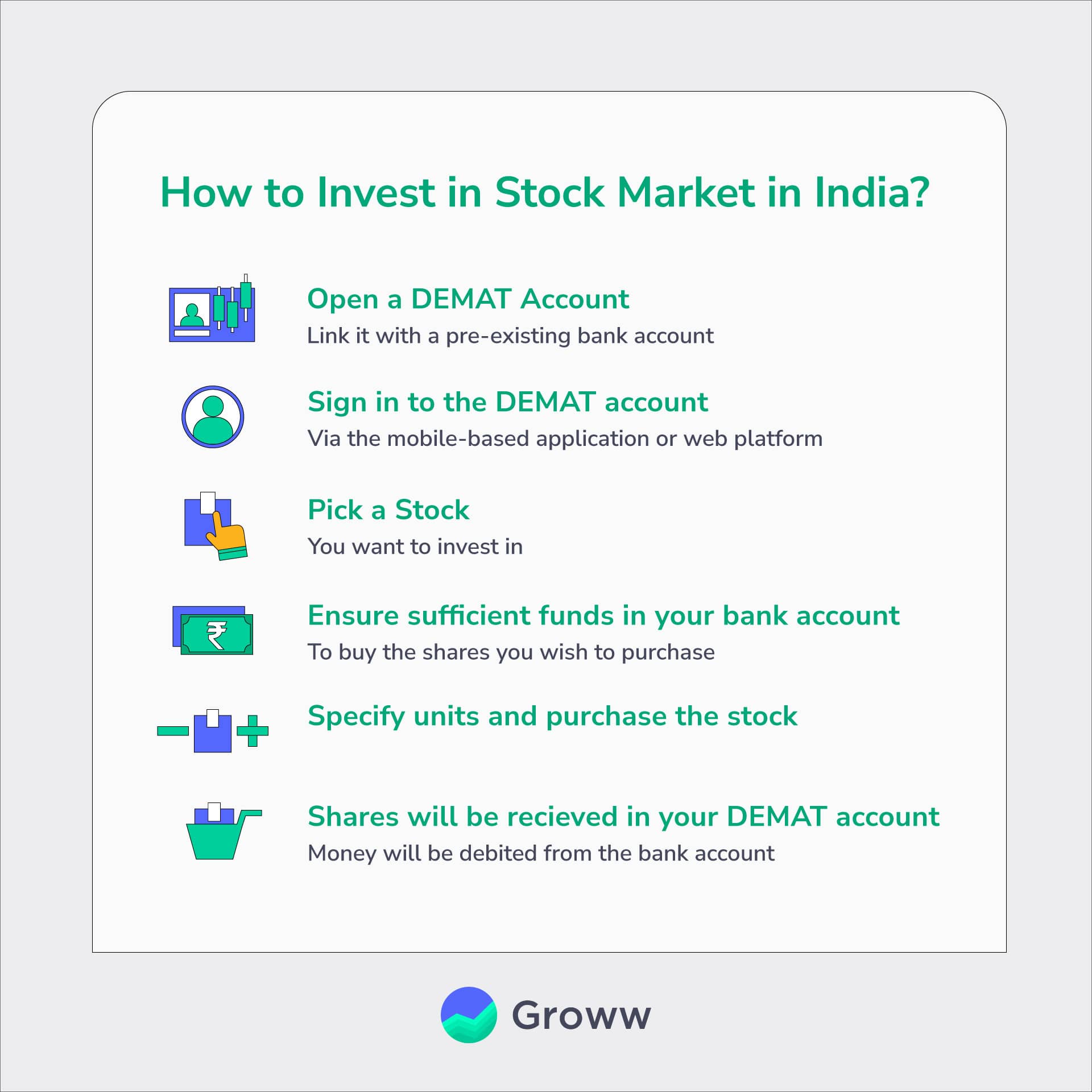
Once you’ve chosen your preferred platform, the actual process of buying stocks involves a few sequential steps. While specific interfaces may vary, the core actions remain consistent across most investment providers.
Opening an Investment Account
This is your first tangible step. Most platforms offer a straightforward online application process. You’ll typically need to provide personal information, including your Social Security number, address, and employment details. You might also be asked about your investment experience and financial goals to help the platform understand your risk profile. The process is often similar to opening a bank account and usually takes less than 15-20 minutes to complete.
Funding Your Account

After your account is approved, you’ll need to deposit money into it. Common funding methods include:
-
Electronic Funds Transfer (EFT): Linking your bank account to your brokerage account for seamless transfers. This is usually free but can take a few business days for funds to settle.
-
Wire Transfer: A faster but typically more expensive option, suitable for larger sums.
-
Check Deposit: Mailing a check to your brokerage firm, which is the slowest method.
-
Rollover from a Retirement Account: If you’re transferring funds from an existing 401(k) or IRA, your brokerage firm will guide you through the rollover process.
Researching and Selecting Stocks
This is arguably the most critical phase and where your understanding of the market truly comes into play. Resist the urge to chase “hot” tips or invest solely based on hype.
-
Fundamental Analysis: Involves evaluating a company’s financial health, management team, industry position, and economic outlook. Key metrics include earnings per share (EPS), price-to-earnings (P/E) ratio, revenue growth, and debt levels.
-
Technical Analysis: Focuses on analyzing past market data, primarily price and volume, to predict future price movements. This is often used by short-term traders.
-
Diversification: Do not put all your eggs in one basket. Spread your investments across different companies, industries, and asset classes to mitigate risk.
-
Resources: Leverage the research tools provided by your brokerage, financial news websites, SEC filings (like 10-K and 10-Q reports), and reputable financial publications.
Placing Your First Trade
Once you’ve identified a stock you wish to purchase, placing an order is usually intuitive. You’ll typically encounter several order types:
-
Market Order: Buys or sells shares immediately at the best available current price. While simple, the execution price might differ slightly from what you see due to market volatility.
-
Limit Order: Specifies the maximum price you’re willing to pay to buy or the minimum price you’re willing to accept to sell. Your order will only execute if the stock reaches your specified price.
-
Stop Order: An order to buy or sell a stock once the price of the stock reaches a specified price (the stop price). When the stop price is reached, a stop order becomes a market order.
-
Stop-Limit Order: Combines features of a stop order and a limit order. Once the stop price is reached, it triggers a limit order.
Always review your order details carefully before confirming to avoid mistakes.
Essential Considerations Before Investing
Successful investing isn’t just about knowing where to buy; it’s also about understanding the broader context and setting yourself up for long-term success.
Defining Your Financial Goals and Risk Tolerance
Before making any investment, clearly define what you’re trying to achieve (e.g., retirement, down payment on a house, child’s education) and by when. Equally important is understanding your risk tolerance – how comfortable you are with the potential for your investments to lose value. Younger investors with longer time horizons might tolerate more risk, while those nearing retirement might prefer more conservative strategies. Your goals and risk tolerance should dictate your investment strategy.
Diversification: Don’t Put All Your Eggs in One Basket
This adage holds profound truth in investing. Spreading your investments across various assets, industries, and geographies helps reduce risk. If one investment underperforms, others may compensate. Diversification is key to building a resilient portfolio. While individual stocks offer the potential for high returns, they also carry higher idiosyncratic risk. Many investors achieve diversification through instruments like ETFs or mutual funds.
Understanding Fees and Commissions
Even seemingly small fees can significantly erode your returns over time. Be aware of:
-
Trading Commissions: Fees charged per buy or sell transaction (though many online brokers now offer commission-free stock trading).
-
Management Fees: Annual fees charged by robo-advisors or mutual funds (expressed as an expense ratio).
-
Account Maintenance Fees: Some brokers charge a fee if your account balance falls below a certain threshold or if there’s no activity.
-
Other Fees: Inactivity fees, transfer fees, or fees for specialized services. Always read the fine print.
The Importance of Long-Term Perspective
The stock market is volatile in the short term, but historically, it has delivered positive returns over long periods. Trying to time the market (buying low and selling high consistently) is incredibly difficult, even for professionals. Adopting a long-term perspective (5, 10, 20+ years) allows you to ride out market fluctuations and benefit from the power of compounding. Patience and discipline are virtues in investing.
Beyond Individual Stocks: Other Investment Avenues
While the question “Where can I buy stock?” often implies individual company shares, it’s important to recognize that a diversified investment portfolio frequently includes other stock-based instruments. These can offer built-in diversification and professional management, simplifying the investing process for many.
Exchange-Traded Funds (ETFs)
ETFs are funds that hold a collection of underlying assets, such as stocks, bonds, or commodities, and trade on stock exchanges like individual stocks.
-
Benefits: Offer instant diversification (as one ETF might hold hundreds or thousands of stocks), typically have low expense ratios, and are highly liquid. You can buy and sell ETFs throughout the trading day.
-
Types: There are ETFs that track broad market indices (e.g., S&P 500 ETFs), specific sectors (e.g., technology ETFs), international markets, and various investment themes.
-
Accessibility: Widely available through all online brokerages, often with commission-free trading.
Mutual Funds
Mutual funds are professionally managed investment funds that pool money from multiple investors to purchase a diversified portfolio of securities.
-
Benefits: Provide professional management, diversification, and convenience. They are suitable for investors who prefer a hands-off approach.
-
Structure: Unlike ETFs, mutual funds are typically bought and sold directly from the fund company or through a broker at the end of the trading day based on their Net Asset Value (NAV).
-
Considerations: Can have higher expense ratios and sometimes sales charges (loads) compared to ETFs. Research the fund’s past performance, fees, and management style before investing.
Index Funds
Index funds are a specific type of mutual fund or ETF designed to track the performance of a particular market index, such as the S&P 500, Dow Jones Industrial Average, or NASDAQ Composite.
-
Benefits: Offer broad market exposure, low costs (due to passive management), and often outperform actively managed funds over the long term. They embody the principle of “buying the market.”
-
Strategy: By investing in an index fund, you are essentially investing in all the companies that make up that index, thereby achieving broad diversification with minimal effort.
In conclusion, the question “Where can I buy stock?” has multiple answers, reflecting the diverse landscape of modern investing. Whether you opt for a hands-on approach with an online brokerage, the automated ease of a robo-advisor, the personalized guidance of a traditional firm, or the niche appeal of DSPPs, the most crucial step is to begin. By understanding the fundamentals, choosing a platform that aligns with your needs, diligently researching your investments, and maintaining a long-term, disciplined perspective, you can confidently navigate the stock market and work towards achieving your financial aspirations.
aViewFromTheCave is a participant in the Amazon Services LLC Associates Program, an affiliate advertising program designed to provide a means for sites to earn advertising fees by advertising and linking to Amazon.com. Amazon, the Amazon logo, AmazonSupply, and the AmazonSupply logo are trademarks of Amazon.com, Inc. or its affiliates. As an Amazon Associate we earn affiliate commissions from qualifying purchases.