
In an increasingly digital world, the traditional image of a stockbroker on a busy trading floor has largely been replaced by individuals managing their investments from the comfort of their homes or offices, often through a few clicks on a screen. The question, “How do I buy shares online?”, is therefore more pertinent than ever for aspiring investors looking to take control of their financial future. This guide will demystify the process, providing a comprehensive roadmap to navigate the exciting, yet sometimes intimidating, world of online share investing.
Understanding the Online Investing Landscape
The ability to buy shares online has democratized investing, making it accessible to a wider audience than ever before. Gone are the days when significant capital or exclusive access was required. Today, with just a few hundred dollars and an internet connection, you can begin building a diversified investment portfolio.

The Shift from Traditional to Digital Investing
Historically, buying shares involved direct contact with a stockbroker, who would execute trades on your behalf. This often came with higher fees, minimum investment requirements, and a degree of detachment from the actual trading process. The advent of the internet and advancements in financial technology (fintech) have ushered in a new era. Online brokerage platforms now allow individuals to open accounts, fund them, research companies, and execute trades themselves, all within a user-friendly digital interface. This shift empowers investors with greater control, transparency, and often, lower costs.
Advantages of Online Share Trading
The benefits of buying shares online are compelling. Firstly, accessibility is paramount; you can trade from virtually anywhere, anytime, as long as markets are open. Secondly, cost-effectiveness is a significant draw. Online brokers typically charge lower commissions per trade compared to traditional full-service brokers, with many now offering commission-free trading on stocks and ETFs. Thirdly, control and flexibility are enhanced; you have direct oversight of your portfolio, can make informed decisions based on real-time data, and react quickly to market changes. Lastly, the abundance of educational resources and analytical tools provided by online platforms empowers even novice investors to learn and grow their financial literacy.
Key Considerations Before You Start
Before diving in, it’s crucial to acknowledge that investing in shares, while offering potential for significant returns, also carries inherent risks. Understanding your risk tolerance – how much volatility you can comfortably withstand – is paramount. Define your financial goals: Are you saving for retirement, a down payment, or a child’s education? Your goals will dictate your investment horizon and strategy. Finally, ensure you have an emergency fund in place. Money invested in the stock market should be capital you can afford to lose, not funds needed for immediate or unexpected expenses.
Essential Steps to Start Investing Online
Embarking on your online investing journey can seem daunting, but by breaking it down into manageable steps, the process becomes clear and achievable.
Step 1: Define Your Investment Goals and Risk Tolerance
This foundational step cannot be overstated. Are you a long-term investor focused on growth, seeking dividends, or aiming for short-term gains? Your goals will influence the types of shares you buy. Simultaneously, assess your risk tolerance. Are you comfortable with high-growth, high-volatility stocks, or do you prefer more stable, established companies? A self-assessment quiz, often provided by online brokers, can help clarify this. This understanding will serve as your compass throughout your investing journey, guiding your choices and helping you stay disciplined during market fluctuations.
Step 2: Choose the Right Online Brokerage Platform
Selecting an online broker is perhaps the most critical practical decision. Consider several factors:
-
Fees and Commissions: Look for low or zero-commission trades, account maintenance fees, and other charges.
-
Investment Options: Does the broker offer access to stocks, ETFs, mutual funds, options, and international markets?
-
Platform Usability: Is the interface intuitive and easy to navigate? Are there mobile apps?
-
Research Tools and Educational Resources: Does the platform provide robust analytical tools, market data, and learning materials?
-
Customer Support: What are their support channels and hours of operation?
-
Security: Ensure the broker is regulated (e.g., by FINRA and SIPC in the US) and offers strong account security features.
Popular choices include established players like Fidelity, Charles Schwab, TD Ameritrade (now part of Schwab), and newer fintech platforms like Robinhood or M1 Finance, each catering to slightly different investor needs and experience levels.
Step 3: Open and Fund Your Brokerage Account
Once you’ve chosen a broker, the account opening process is straightforward, typically taking 10-15 minutes online. You’ll need to provide personal information such as your name, address, Social Security number, employment details, and sometimes your financial situation and investment experience. This is required for regulatory compliance (KYC – Know Your Customer). After your account is approved, you’ll need to fund it. Common methods include:
-
Electronic Funds Transfer (EFT) / ACH Transfer: Linking your bank account for free transfers.
-
Wire Transfer: Faster but often incurs a fee.
-
Check Deposit: Slower and less common for online accounts.
-
Account Transfer: Moving funds or existing investments from another brokerage.
-
Direct Deposit: Some platforms allow you to set up direct deposits from your paycheck.
Start with an amount you are comfortable investing, keeping your emergency fund separate.
Step 4: Research and Select Your Investments
This is where the real investing begins. With funds in your account, you can now research potential shares to buy.
-
Fundamental Analysis: Examine a company’s financial health, including its revenue, earnings, debt, profit margins, and competitive landscape. Look at its annual reports (10-K), quarterly reports (10-Q), and investor presentations.
-
Technical Analysis: Study stock charts to identify patterns and trends in price and volume, which can help predict future price movements.
-
Industry Trends: Understand the broader industry in which a company operates. Is it growing? Are there disruptive forces at play?
-
Diversification: Do not put all your eggs in one basket. Spread your investments across different companies, industries, and asset classes to mitigate risk. Consider Exchange Traded Funds (ETFs) or mutual funds if you prefer broad market exposure over individual stock picking. Utilize the research tools, analyst reports, and news feeds provided by your brokerage platform to make informed decisions.
Navigating the Online Trading Process
Once you’ve identified the shares you want to buy, the actual trading process is surprisingly simple, but understanding the mechanics is crucial.
Placing Your First Buy Order
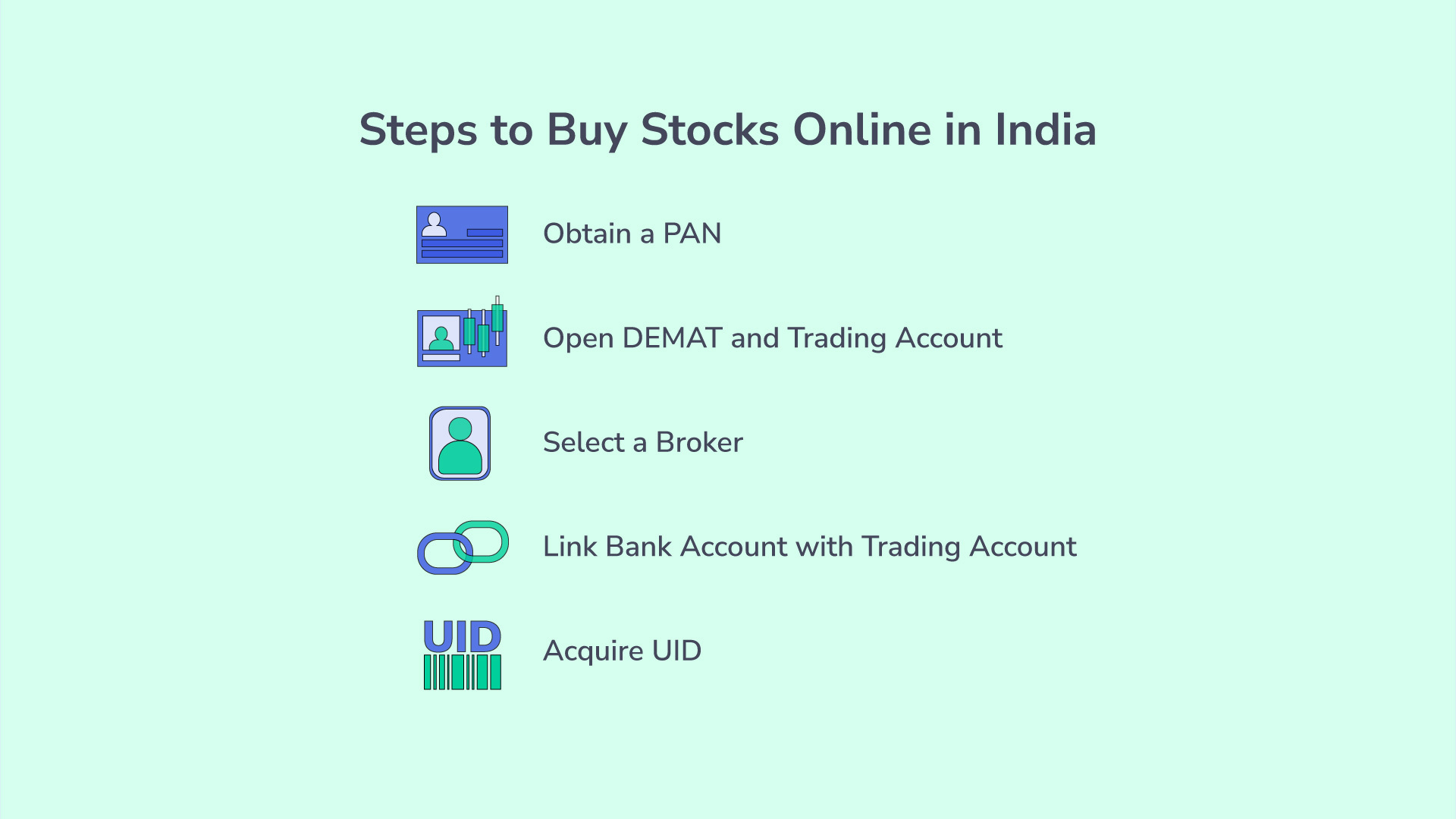
On your broker’s platform, navigate to the “Trade” or “Buy/Sell” section. You’ll enter the stock’s ticker symbol (e.g., AAPL for Apple), the number of shares you wish to purchase, and the order type. Before confirming, review all details carefully, including the estimated cost and any associated fees.
Understanding Different Order Types (Market, Limit, Stop)
-
Market Order: This is the simplest and most common order type. You instruct your broker to buy or sell shares immediately at the best available current market price. While it guarantees execution, the exact price might fluctuate slightly, especially in volatile markets.
-
Limit Order: With a limit order, you specify the maximum price you’re willing to pay to buy a stock (or the minimum price you’ll accept to sell). Your order will only be executed if the stock reaches your specified price or better. This offers price control but doesn’t guarantee execution.
-
Stop Order (Stop-Loss Order): This order becomes a market order once a stock reaches a certain “stop price.” It’s primarily used to limit potential losses on an existing position. For example, if you own a stock trading at $100, you might set a stop-loss at $90. If the price falls to $90, your stop order becomes a market order to sell.
Monitoring Your Portfolio and Performance
Buying shares is not a “set it and forget it” activity. Regularly monitor your portfolio’s performance, but avoid obsessive daily checking. Most platforms provide dashboards showing your current holdings, their market value, unrealized gains/losses, and overall portfolio performance. Stay updated on news related to the companies you own and broader economic trends. This doesn’t mean constant trading; rather, it’s about being informed and making adjustments to your portfolio as your financial goals, risk tolerance, or market conditions change.
Strategies for Successful Online Share Investing
Successful investing online requires more than just knowing how to place an order; it demands strategic thinking, discipline, and continuous learning.
Diversification: Spreading Your Risk
This is perhaps the most fundamental principle of prudent investing. By diversifying, you spread your investments across various companies, industries, geographies, and asset classes (e.g., stocks, bonds, real estate). If one investment performs poorly, the impact on your overall portfolio is mitigated by others that might be performing well. Rather than picking just a few stocks, consider investing in a basket of stocks through ETFs or mutual funds, which are inherently diversified.
Long-Term vs. Short-Term Trading
Your investment horizon significantly impacts your strategy.
-
Long-Term Investing (Buy and Hold): This strategy involves buying shares of quality companies with strong fundamentals and holding them for years, often decades, to benefit from compounding returns and company growth. This approach typically involves less frequent trading, lower transaction costs, and allows you to ride out short-term market fluctuations.
-
Short-Term Trading (Day Trading, Swing Trading): This involves buying and selling shares over very short periods (hours, days, or weeks) to profit from small price movements. This is a high-risk, high-reward strategy that requires significant time commitment, advanced knowledge, and emotional discipline. It is generally not recommended for beginners. For most individuals, especially those new to online investing, a long-term, patient approach yields better results.
The Importance of Continuous Learning and Due Diligence
The financial markets are dynamic and constantly evolving. To succeed, you must commit to continuous learning. Read financial news, follow reputable analysts, delve into investment books, and understand economic indicators. Always perform your own due diligence before investing in any company. Don’t rely solely on tips or hype. Understand what you own, why you own it, and stay informed about its performance and prospects.
Potential Pitfalls and How to Avoid Them
While online investing offers incredible opportunities, it’s not without its hazards. Awareness of these pitfalls can help you navigate them effectively.
Overcoming Emotional Investing
One of the biggest enemies of successful investing is emotion. Fear often leads investors to sell during market downturns, locking in losses, while greed can prompt them to buy at inflated prices during market highs. This “buy high, sell low” cycle is detrimental. Develop a clear investment plan based on your goals and risk tolerance, and stick to it. Avoid making impulsive decisions based on news headlines or social media trends. Discipline and a long-term perspective are your best allies.
Cybersecurity and Account Protection
As you’re managing your money online, cybersecurity is paramount. Use strong, unique passwords for your brokerage account and enable two-factor authentication (2FA). Be wary of phishing emails or suspicious links. Only access your account through secure, trusted networks. Most reputable brokers employ robust security measures and are members of organizations like the Securities Investor Protection Corporation (SIPC), which protects customers’ securities and cash up to $500,000 in case the brokerage firm fails. However, SIPC does not protect against market losses.
Understanding Fees and Commissions
While many brokers now offer commission-free trading for stocks and ETFs, it’s crucial to understand all potential fees. These can include:
-
Account Maintenance Fees: Some brokers charge if your balance falls below a certain threshold.
-
Inactivity Fees: If you don’t trade for a certain period.
-
Transfer Fees: For moving assets to another broker.
-
Mutual Fund Fees: Often have expense ratios or transaction fees.
-
Margin Interest: If you borrow money to trade.
These fees can erode your returns over time, so ensure you have a clear understanding of the fee structure of your chosen platform.

Conclusion
Buying shares online is an accessible and powerful way to build wealth and achieve your financial goals. By understanding the digital investing landscape, meticulously following the steps to set up and fund your account, and employing sound investment strategies rooted in diversification and long-term thinking, you can confidently navigate the markets. Remember, successful investing is a journey of continuous learning, discipline, and prudent risk management. Start small, stay informed, and cultivate patience, and you will be well on your way to becoming a savvy online investor.
aViewFromTheCave is a participant in the Amazon Services LLC Associates Program, an affiliate advertising program designed to provide a means for sites to earn advertising fees by advertising and linking to Amazon.com. Amazon, the Amazon logo, AmazonSupply, and the AmazonSupply logo are trademarks of Amazon.com, Inc. or its affiliates. As an Amazon Associate we earn affiliate commissions from qualifying purchases.