
Investing in the stock market can seem like a daunting prospect, riddled with complex jargon and a perceived barrier to entry. Yet, the reality is that buying a share, and thus becoming a part-owner of a public company, is more accessible today than ever before. For many, it represents a crucial step towards building long-term wealth, securing a comfortable retirement, or funding significant life goals. This comprehensive guide will demystify the process, breaking down the steps involved in making your first share purchase, empowering you to navigate the investment landscape with confidence and a clear strategy.
Understanding the Basics: What is a Share?
Before diving into the mechanics of buying, it’s essential to grasp what a “share” actually represents. At its core, a share, often referred to as a stock or equity, signifies a unit of ownership in a company. When you buy a share, you are literally purchasing a small slice of that business.
Equity Ownership Explained
When a company needs to raise capital for expansion, research, or operations, it can “go public” by issuing shares on a stock exchange. These shares are then traded among investors. As a shareholder, you become an equity owner, meaning you have a claim on the company’s assets and earnings proportional to the number of shares you hold. This ownership typically comes with certain rights, such as voting on corporate matters (like electing board members) and potentially receiving a portion of the company’s profits in the form of dividends.
Common vs. Preferred Shares
There are primarily two types of shares: common and preferred. Common shares are what most people refer to when they talk about “stocks.” They carry voting rights and the potential for higher capital appreciation (growth in value). However, in the event of liquidation, common shareholders are paid last. Preferred shares, on the other hand, typically do not have voting rights but often offer a fixed dividend payment and have priority over common shareholders in receiving payments if the company liquidates. For most beginner investors focused on growth and active participation, common shares are the typical starting point.
Why Invest in Shares?
People invest in shares for various reasons, but the primary motivations are capital appreciation and income generation. Capital appreciation occurs when the value of the stock increases over time, allowing you to sell it for more than you paid. Income generation comes from dividends, which are regular payments made by some companies to their shareholders from their profits. Over the long term, equities have historically outperformed other asset classes, offering a powerful avenue for wealth creation that combats inflation and grows your purchasing power.
Preparing for Your First Investment
Successful investing isn’t just about picking the right stock; it’s about having a solid financial foundation and a clear understanding of your own circumstances. Before you even think about opening a brokerage account, there are crucial preparatory steps to take.
Setting Financial Goals
Why do you want to invest? Is it for retirement in 30 years, a down payment on a house in five years, or to save for your child’s education? Defining your financial goals is paramount because it will dictate your investment strategy, including the amount you need to invest, your time horizon, and your risk tolerance. Short-term goals typically call for less volatile investments, while long-term goals can accommodate higher-risk, higher-reward opportunities like stocks.
Budgeting and Emergency Funds
Investing should always come after you’ve established financial stability. This means having a clear budget that tracks your income and expenses, ensuring you live within your means and can consistently save. Crucially, you must build an emergency fund—typically 3 to 6 months’ worth of living expenses—held in an easily accessible, liquid account (like a high-yield savings account). This fund acts as a safety net, preventing you from having to sell your investments at an inopportune time due to an unexpected expense like job loss or medical emergency. Never invest money you might need in the short term.
Understanding Risk Tolerance
Every investment carries some degree of risk. Stocks, in particular, can be volatile; their prices can fluctuate significantly based on market conditions, company performance, economic news, and even global events. Understanding your personal risk tolerance—how much potential loss you can stomach without losing sleep—is critical. Are you comfortable with significant market swings for the potential of higher returns, or do you prefer a more stable, albeit potentially slower, growth trajectory? Your risk tolerance should align with your investment goals and guide your choices, influencing whether you lean towards individual stocks, diversified index funds, or a mix of various assets.
Navigating the Investment Landscape: Choosing Your Platform
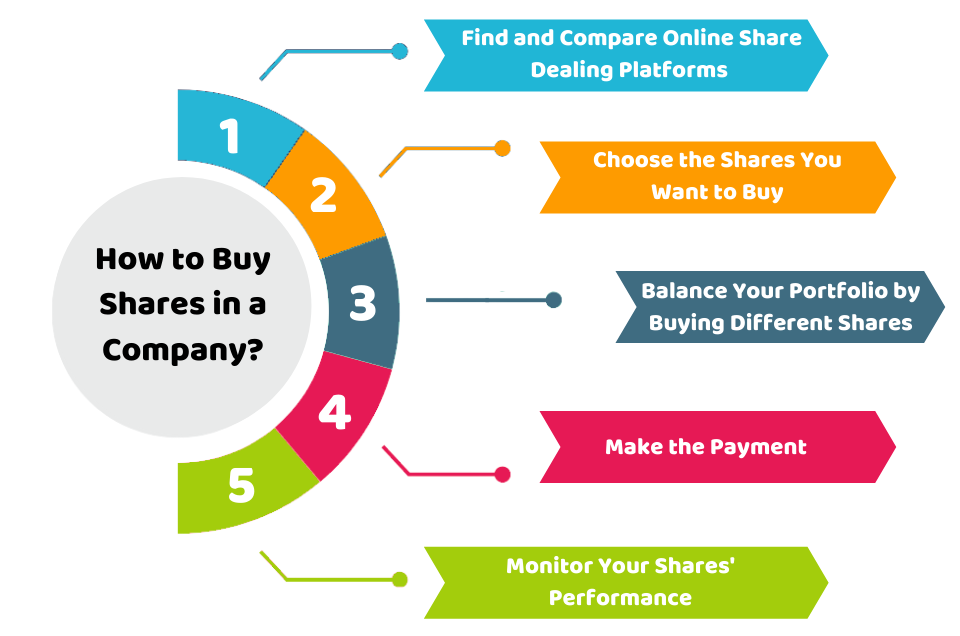
With your financial house in order and goals defined, the next practical step is to select a platform through which you’ll buy your shares. This typically involves opening a brokerage account.
Brokerage Accounts: Full-Service vs. Discount
A brokerage account is essentially an investment account that allows you to buy and sell various securities, including shares. You have two main types of brokerages:
-
Full-Service Brokers: These provide comprehensive financial advice, portfolio management, tax planning, and personalized guidance. They are ideal for investors who prefer a hands-off approach and are willing to pay higher fees for expert assistance. Examples include Merrill Lynch or Edward Jones.
-
Discount Brokers: These offer a more self-directed approach, providing the tools and platforms for you to make your own investment decisions at a much lower cost. Many now offer commission-free trading for stocks and ETFs. Popular choices include Charles Schwab, Fidelity, Vanguard, and E*TRADE. For most new investors, a discount broker is the most cost-effective and empowering option.

Robo-Advisors: Automated Investing
For those who want professional portfolio management without the high fees of a full-service broker, robo-advisors are an excellent alternative. These platforms use algorithms to build and manage a diversified portfolio based on your financial goals, risk tolerance, and time horizon. They automatically rebalance your portfolio and often handle tax-loss harvesting. While they typically invest in exchange-traded funds (ETFs) and mutual funds rather than individual shares directly, these funds hold many individual shares, offering broad market exposure. Betterment and Wealthfront are leading examples.
Understanding Fees and Commissions
Fees can significantly erode your investment returns over time. When choosing a brokerage, pay close attention to:
-
Commissions: Fees charged for buying or selling securities. Many brokers now offer commission-free stock and ETF trades, but always check.
-
Account Maintenance Fees: Some brokers charge an annual fee for holding an account, especially if it falls below a certain balance.
-
Fund Fees (Expense Ratios): If you invest in ETFs or mutual funds, these funds charge an annual percentage of your investment to cover their operating costs. Always look for low expense ratios.
-
Miscellaneous Fees: Be aware of potential fees for wire transfers, paper statements, or inactivity. Transparency about fees is a hallmark of a good brokerage.
Making Your First Share Purchase: A Step-by-Step Guide
Once you’ve chosen and opened your brokerage account, you’re ready to make your first investment. This process involves funding your account, researching potential investments, and placing your order.
Funding Your Account
Before you can buy shares, you need to deposit money into your brokerage account. Common methods include:
-
Electronic Funds Transfer (EFT): Linking your bank account allows you to transfer funds directly, usually taking 1-3 business days.
-
Wire Transfer: Faster but often incurs a fee.
-
Check Deposit: Slower, as it requires mailing a physical check.
-
Rolling over an existing retirement account: If you have an old 401(k) or IRA, you can transfer it to your new brokerage.
Start with an amount you are comfortable investing, keeping in mind your emergency fund is secure.
Researching Companies and Stocks
This is where due diligence comes into play. Don’t just pick a company because you like its products or a friend recommended it. Instead:
-
Understand the Business: What does the company do? How does it make money? What is its competitive advantage?
-
Financial Health: Look at key financial statements. Is it profitable? Does it have manageable debt? What are its growth prospects?
-
Industry Trends: Is the industry growing or shrinking? What are the regulatory challenges or opportunities?
-
Valuation: Is the stock price reasonable compared to its earnings, assets, and growth potential? Tools like Price-to-Earnings (P/E) ratio can offer a quick comparison.
Many brokerage platforms offer extensive research tools, analyst reports, and news feeds to assist you. Start with companies you understand and whose business model you believe in for the long term.
Placing an Order (Market vs. Limit)
Once you’ve identified the shares you want to buy, you’ll place an order through your brokerage platform. There are two primary order types for beginners:
-
Market Order: This tells your broker to buy or sell the shares immediately at the best available current market price. While quick, the price you actually pay might be slightly different from what you saw moments before, especially in volatile markets.
-
Limit Order: This allows you to specify the maximum price you’re willing to pay per share (for buying) or the minimum price you’re willing to accept (for selling). Your order will only execute if the stock reaches that price or better. This gives you more control over the price, but there’s no guarantee your order will fill if the price never reaches your specified limit.
For beginners, using limit orders for purchases can offer more price certainty, especially when buying less liquid stocks.
Diversification and Long-Term Strategy
It’s tempting to put all your eggs in one basket, but diversification is key to managing risk. Don’t invest all your money in a single company or even a single industry. Spread your investments across different companies, sectors, and even asset classes (stocks, bonds, real estate). This way, if one investment performs poorly, it won’t derail your entire portfolio. For beginners, investing in diversified ETFs or index funds that track a broad market (like the S&P 500) is often a simpler and more effective way to achieve diversification than picking many individual stocks. Remember, investing is a marathon, not a sprint. Focus on long-term growth and resist the urge to react to every market fluctuation.
Managing Your Investments and Future Growth
Buying shares is just the beginning. Effective long-term investing requires ongoing management, monitoring, and a commitment to continuous learning.
Monitoring Your Portfolio
While it’s important not to obsess over daily price movements, you should regularly review your portfolio (e.g., quarterly or semi-annually). Check if your investments are still aligned with your financial goals and risk tolerance. Are there any significant changes in the companies you own or the broader market that warrant a re-evaluation? Your brokerage platform will provide tools to track your portfolio’s performance, view account statements, and access tax documents.
Reinvesting Dividends
Many companies pay dividends, which are distributions of their profits to shareholders. When you receive dividends, you often have the option to take them as cash or to reinvest them. Reinvesting dividends means using that money to buy more shares of the same company or another investment. This is a powerful strategy, as it compounds your returns over time. Each new share you buy with reinvested dividends can then earn its own dividends, creating an accelerating growth effect often referred to as “the magic of compounding.”
When to Sell (and When Not To)
Deciding when to sell a stock can be as challenging as deciding when to buy. Avoid emotional selling during market downturns, as this often locks in losses. Good reasons to sell include:
-
Fundamental Change: The company’s business model, competitive landscape, or financial health has significantly deteriorated.
-
Overvaluation: The stock price has soared far beyond its intrinsic value, making it highly speculative.
-
Portfolio Rebalancing: Your allocation to a particular stock or sector has grown too large, throwing off your desired diversification.
-
Achieving a Goal: You need the capital for a specific financial goal (e.g., retirement, down payment).
Conversely, don’t sell simply because a stock has dipped temporarily, or because you see another “hot” stock. Stick to your long-term plan.

Continuous Learning and Adaptation
The world of investing is dynamic. Markets evolve, new industries emerge, and economic conditions shift. Commit to continuous learning by reading financial news, reputable investment books, and analyzing companies. Stay informed but avoid noise. As you gain experience, you might explore more advanced strategies or different asset classes. Review your financial plan periodically and adjust your investment strategy as your life circumstances, goals, and risk tolerance change over time.
Buying your first share is a monumental step on your journey to financial independence. By understanding the fundamentals, preparing thoroughly, choosing the right platform, and adopting a disciplined long-term approach, you can confidently navigate the stock market and harness its power to build lasting wealth. Remember, patience, research, and a clear strategy are your greatest allies.
aViewFromTheCave is a participant in the Amazon Services LLC Associates Program, an affiliate advertising program designed to provide a means for sites to earn advertising fees by advertising and linking to Amazon.com. Amazon, the Amazon logo, AmazonSupply, and the AmazonSupply logo are trademarks of Amazon.com, Inc. or its affiliates. As an Amazon Associate we earn affiliate commissions from qualifying purchases.