
In the modern era of retail investing, the traditional “9-to-5” perspective on finance has been fundamentally reshaped. For many investors, Robinhood has been at the forefront of this transformation, providing a gateway to the global financial markets that feels as accessible as a social media feed. However, while the digital interface remains open around the clock, the actual ability to execute trades depends on a complex interplay of exchange regulations, brokerage policies, and asset classes. Understanding exactly when the Robinhood market “opens” requires a nuanced look at standard hours, extended sessions, and the innovative 24/5 trading model that has redefined expectations for the average investor.
Understanding Standard Market Hours and the Robinhood Ecosystem
For the vast majority of equities listed in the United States, the heartbeat of the market is synchronized with the New York Stock Exchange (NYSE) and the Nasdaq. These primary exchanges operate on a strict schedule that governs the core of global price discovery. On Robinhood, these standard hours represent the period of highest liquidity and most stable pricing for stocks and Exchange-Traded Funds (ETFs).
The Core Trading Session: 9:30 AM to 4:00 PM ET
The standard market session begins at 9:30 AM Eastern Time and concludes at 4:00 PM Eastern Time, Monday through Friday. During this window, the “opening bell” marks the moment when buy and sell orders from around the world converge to establish the day’s starting price. For Robinhood users, this is the period when market orders—orders executed immediately at the current price—are most reliable. The volume of trading is at its peak, meaning that the “bid-ask spread” (the difference between what a buyer will pay and what a seller will accept) is typically at its narrowest.
Holiday Schedules and Early Closures
It is critical for investors to recognize that the market does not operate every day. The NYSE and Nasdaq observe several federal holidays, including New Year’s Day, Martin Luther King Jr. Day, Presidents’ Day, Good Friday, Memorial Day, Juneteenth, Independence Day, Labor Day, Thanksgiving, and Christmas. On certain occasions, such as the day after Thanksgiving or Christmas Eve, the market may observe an “early close” at 1:00 PM ET. Robinhood adheres strictly to these exchange schedules for standard equity trading, and any attempt to place a market order when the exchanges are closed will result in the order being queued for the next available opening bell.
Robinhood’s Extended-Hours Trading: Beyond the 9-to-5
One of the primary draws of Robinhood is its democratization of extended-hours trading. Historically, trading before the market opened or after it closed was the exclusive domain of institutional investors and high-net-worth individuals. Today, Robinhood offers one of the most generous extended-hours windows in the retail brokerage space, allowing investors to react to news cycles that happen outside the traditional trading day.
Pre-Market and After-Hours Windows
Robinhood provides access to pre-market trading and after-hours trading, effectively stretching the trading day significantly. Pre-market trading on Robinhood typically begins at 7:00 AM ET, two and a half hours before the official opening bell. This session is often used by investors to trade on news that broke overnight or early in the morning, such as international economic data or pre-market earnings releases.
After-hours trading begins immediately at 4:00 PM ET and continues until 8:00 PM ET. This four-hour window is arguably the most volatile time of the day, as many corporations release their quarterly earnings reports shortly after the 4:00 PM close. For a Robinhood user, being able to trade until 8:00 PM means the ability to adjust a position in real-time as financial data is digested by the market, rather than waiting for the following morning.
The Robinhood 24-Hour Market
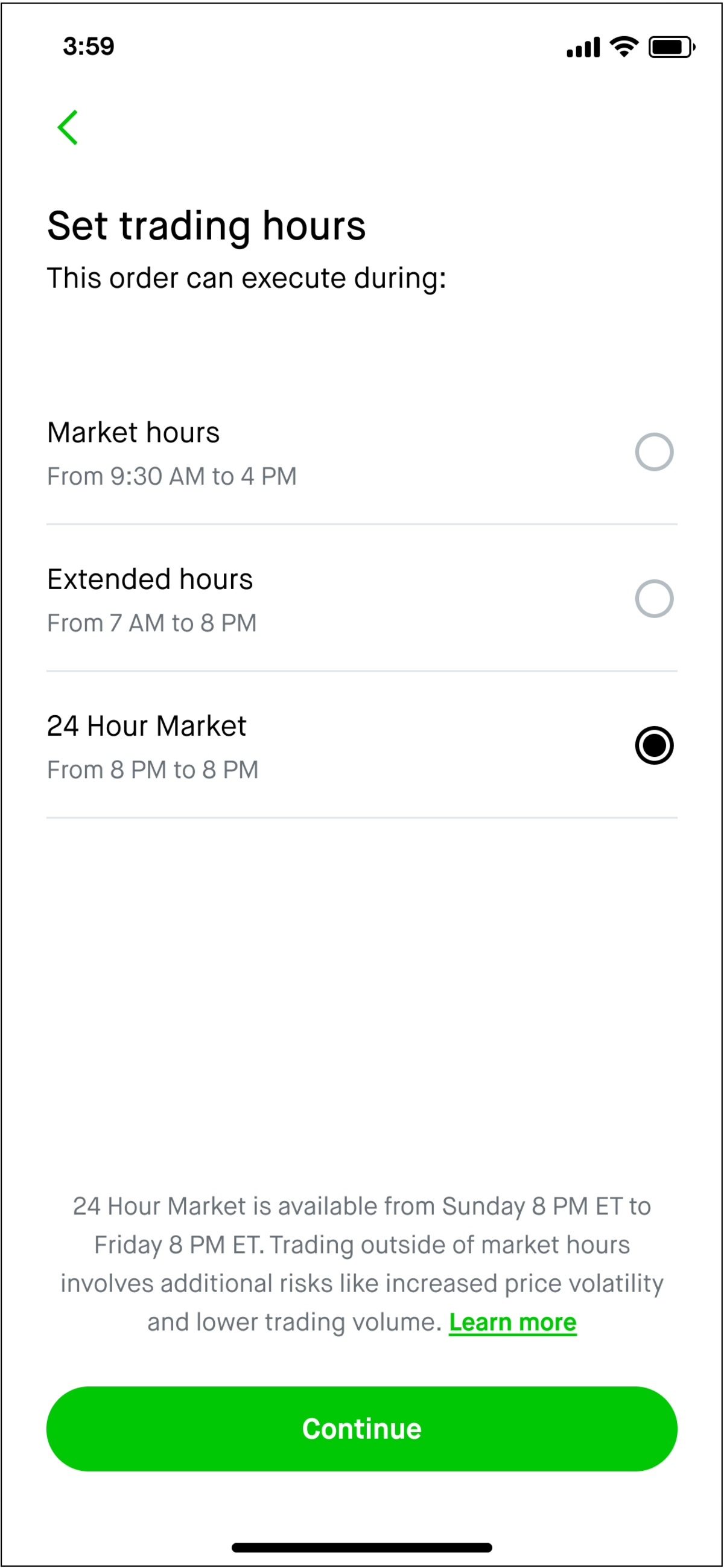
In a bold move to further disrupt traditional finance, Robinhood introduced the “24 Hour Market.” This feature allows users to trade select individual stocks and ETFs 24 hours a day, five days a week. The session runs from 8:00 PM ET on Sunday through 8:00 PM ET on Friday.
This is made possible through a collaboration with Blue Ocean ATS (Alternative Trading System), an exchange designed specifically for overnight trading. While not every stock is available in this 24-hour window, hundreds of the most popular and liquid names—such as Apple, Tesla, and Amazon—are tradable. This shifts the definition of “when the market opens” for a Robinhood user to Sunday night, aligning the US retail experience with the opening of Asian markets.
Strategies for Trading During Different Market Sessions
While the ability to trade at 2:00 AM ET is technically possible, it is not always strategically advisable for every investor. The time of day significantly impacts the “quality” of a trade, primarily due to changes in liquidity and volatility.
Navigating Volatility at the Opening Bell
The first 30 minutes of the standard session (9:30 AM to 10:00 AM ET) are often the most volatile. This is the period when the market reconciles all the news that happened overnight. Professional traders often refer to this as “amateur hour,” as prices can swing wildly before finding a stable trend. For Robinhood investors, using limit orders—specifying the exact maximum price you are willing to pay or the minimum you are willing to accept—is essential during the open to avoid being caught in a sudden price spike or drop.
The Risks and Rewards of Extended Sessions
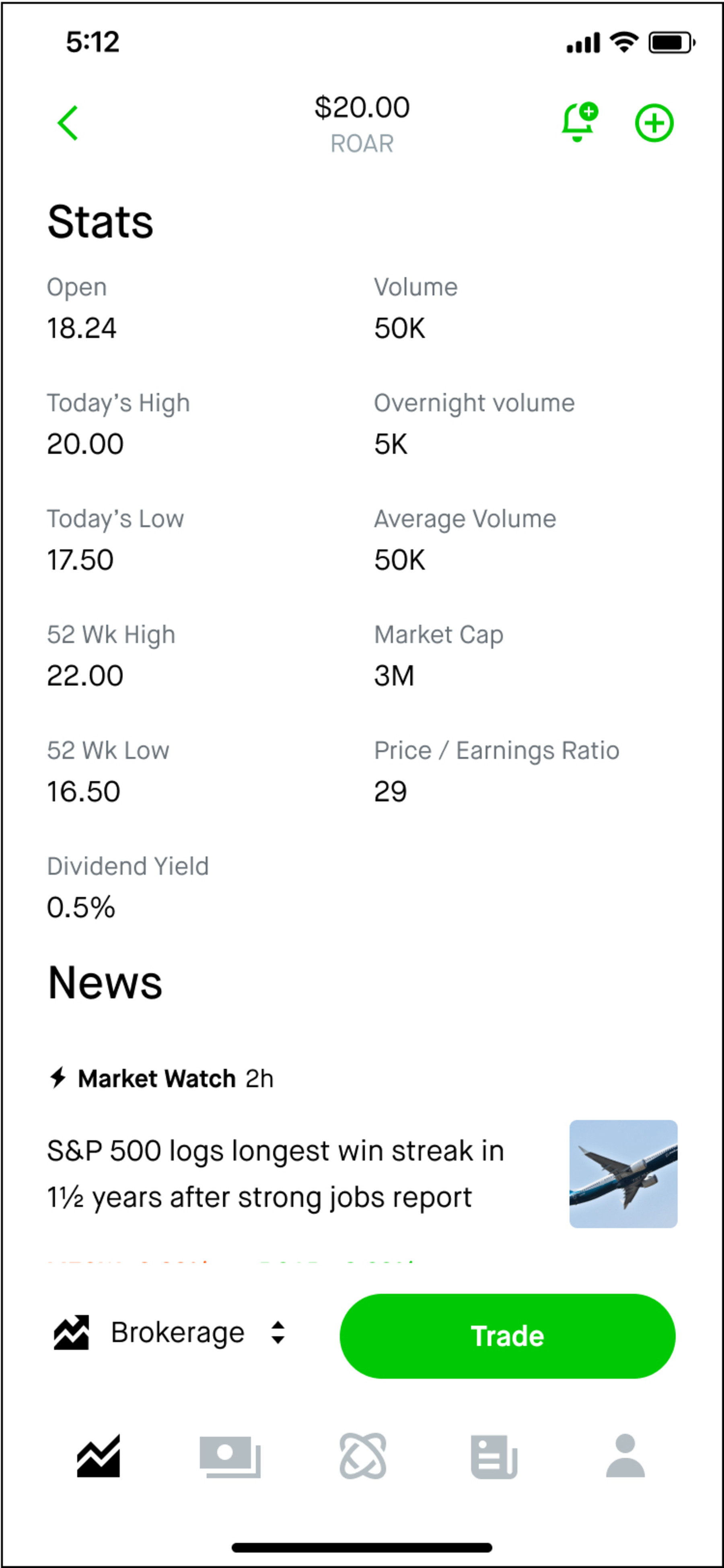
Trading in the pre-market or after-hours sessions carries unique risks. Because there are fewer participants, the volume is lower. This lack of liquidity can lead to wider bid-ask spreads. For example, a stock might be quoted at $100.00/$100.05 during the day, but at 7:00 PM, the quote might be $99.50/$100.50. This means you are effectively paying more to buy and receiving less to sell. However, the reward is the ability to act first. If a company announces a major acquisition at 4:30 PM, the after-hours trader can enter or exit a position before the general public can at 9:30 AM the next day.
Liquidity Considerations for Extended Sessions
Investors must understand that during extended hours, Robinhood only supports limit orders for most users. This is a protective measure. Because the “market price” is less certain when fewer people are trading, a market order could result in an execution price far away from the last traded price. By requiring limit orders, Robinhood ensures that investors aren’t accidentally buying a stock for 10% more than they intended during a low-liquidity overnight session.
Asset-Specific Trading Windows on Robinhood
It is a common misconception that all assets on Robinhood follow the same schedule. In reality, the “market open” depends entirely on what you are trading.
Options Trading Hours
Options are a more complex financial instrument, and their trading hours are more rigid than stocks. Generally, options on Robinhood can only be traded during standard market hours: 9:30 AM to 4:00 PM ET. There are some exceptions for highly liquid ETFs like the SPY (S&P 500 ETF) or QQQ (Nasdaq 100 ETF), which may trade options until 4:15 PM ET. Unlike stocks, options do not participate in the 24-hour market or the standard pre-market/after-hours sessions on Robinhood. This is largely due to the complexity of pricing options models, which require active underlying stock movement and volatility calculations that are most accurate during core hours.
The 24/7 World of Cryptocurrency
For the crypto-curious, the concept of a “market open” is nonexistent. Cryptocurrency markets are decentralized and operate 24 hours a day, 7 days a week, 365 days a year. Whether it is Christmas morning or 3:00 AM on a Tuesday, Robinhood Crypto allows users to buy, sell, and transfer assets like Bitcoin, Ethereum, and Dogecoin. This is the only asset class on the platform that truly never sleeps, reflecting the global, borderless nature of blockchain technology.
Exchange-Traded Funds (ETFs) and Fractional Shares
ETFs generally follow the same rules as stocks, including eligibility for the 24-hour market if they are among the selected popular tickers. Fractional shares—a feature that allows you to buy $5 worth of a $3,000 stock—are also subject to the hours of the underlying asset. However, fractional share orders placed during extended hours are often executed during the next standard market session to ensure the most accurate fractional accounting and pricing.
Maximizing Your Investment Performance Through Timed Execution
Success in the markets is often a matter of timing, but not necessarily in the way most people think. It is not just about when you trade, but how you use the available hours to your advantage.
Utilizing Limit Orders in Volatile Windows
The golden rule for trading on Robinhood outside of the core 9:30 AM to 4:00 PM window is to always use limit orders. By setting a “ceiling” for your buy orders and a “floor” for your sell orders, you protect yourself against the “slippage” that occurs in low-volume environments. This is particularly vital during the 24-hour market session where price action can be erratic.
Staying Informed with Real-Time Alerts
Since Robinhood provides such expansive access to the markets, staying informed is a full-time job. The platform offers customizable notifications for price movements, earnings reports, and breaking news. Setting these alerts for the pre-market or after-hours sessions allows you to leverage the extended hours without having to stare at your screen for 16 hours a day. If a stock in your watchlist drops 5% at 6:00 PM, a real-time alert gives you the window to investigate and decide if you want to utilize the after-hours market to adjust your position.
The Psychological Aspect of Market Timing
Finally, the availability of 24/5 or 24/7 trading introduces a psychological challenge: the temptation to overtrade. Just because the market is open does not mean you should be active. Professional investing often involves long periods of waiting for the right setup. The “always-on” nature of Robinhood can lead to impulsive decisions based on short-term price fluctuations that occur in low-volume overnight sessions. A disciplined investor knows that while the Robinhood market might open on Sunday night, the most significant and meaningful price movements usually happen when the institutional “big money” enters the fray during standard Wall Street hours.
By mastering the schedule of the various trading windows—from the 7:00 AM pre-market to the 24/5 overnight session—investors can better align their strategies with their personal goals, risk tolerance, and the reality of global finance. Understanding when the market opens is no longer just about knowing the time; it’s about knowing the environment you are entering.
aViewFromTheCave is a participant in the Amazon Services LLC Associates Program, an affiliate advertising program designed to provide a means for sites to earn advertising fees by advertising and linking to Amazon.com. Amazon, the Amazon logo, AmazonSupply, and the AmazonSupply logo are trademarks of Amazon.com, Inc. or its affiliates. As an Amazon Associate we earn affiliate commissions from qualifying purchases.