
For many, the idea of “making money grow” conjures images of complex financial schemes or the privileged world of high finance. However, the reality is far more accessible: building wealth is a journey that starts with fundamental principles, disciplined execution, and a long-term perspective. It’s about understanding how your money can work for you, rather than you perpetually working for your money. This comprehensive guide will demystify the process, offering actionable strategies to cultivate financial growth, protect your assets, and ultimately secure your financial future.
Achieving financial growth isn’t a single event but a continuous process of learning, adapting, and making informed choices. It requires a blend of astute planning, strategic investing, and a keen eye for opportunities. Whether you’re just starting your financial journey or looking to amplify existing assets, the path to making your money grow is paved with intention and consistency.
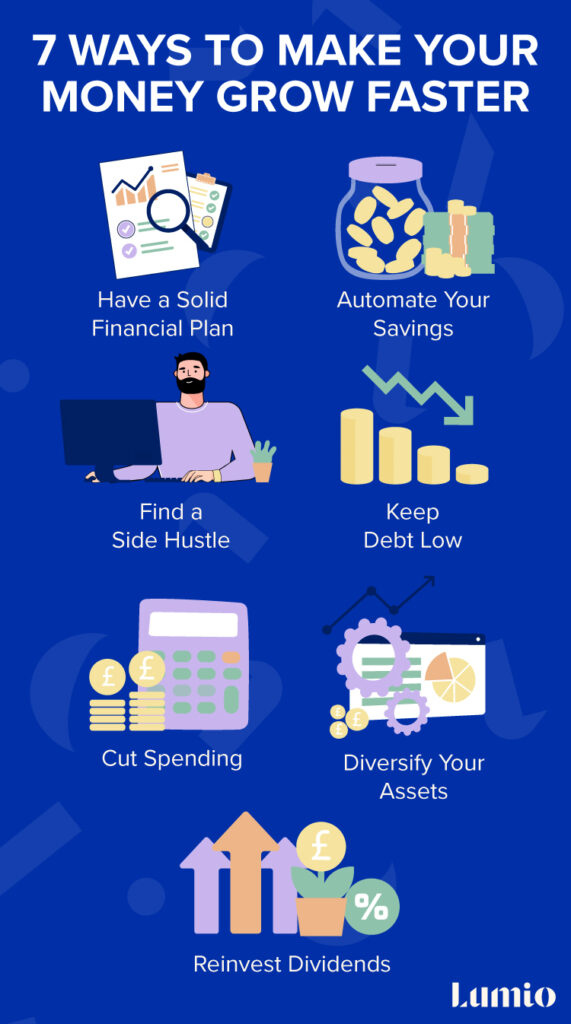
Laying the Foundation: Financial Literacy and Planning
Before you can effectively grow your money, you must first understand its current state and establish a clear roadmap for its future. This foundational stage is critical, as it provides the clarity and direction needed to make sound financial decisions.
Understanding Your Current Financial Landscape
The first step in any financial growth strategy is a thorough assessment of your present situation. This involves understanding where your money comes from, where it goes, and what your overall financial health looks like.
-
Budgeting and Tracking Expenses: A detailed budget is your most powerful tool for financial control. It helps you allocate your income, identify unnecessary spending, and ensure you’re living within your means. Tracking every dollar spent, whether through apps, spreadsheets, or manual logs, reveals patterns and areas for optimization. This isn’t about deprivation, but about intentional spending aligned with your values and goals.
-
Calculating Your Net Worth: Your net worth – the difference between your assets (what you own) and your liabilities (what you owe) – is a critical snapshot of your financial health. Regularly calculating it (monthly or quarterly) provides a clear metric of your progress over time. Assets include savings accounts, investments, real estate, and other valuables. Liabilities include mortgages, credit card debt, student loans, and car loans. A positive and growing net worth indicates you’re on the right track.
Setting Clear Financial Goals
With a clear understanding of your present, the next step is to define where you want to go. Vague aspirations rarely lead to tangible results. Your financial goals should be SMART: Specific, Measurable, Achievable, Relevant, and Time-bound.
-
Short-term Goals (1-3 years): These might include building an emergency fund (3-6 months of living expenses), paying off a high-interest credit card, or saving for a significant purchase like a new appliance or a vacation. An emergency fund is non-negotiable; it acts as a buffer against unexpected life events, preventing you from derailing your long-term growth by incurring new debt.
-
Mid-term Goals (3-10 years): Examples include saving for a down payment on a house, funding a child’s education, or purchasing a new car without a loan. These goals often require more substantial savings and may involve strategic investments.
-
Long-term Goals (10+ years): Retirement planning is the quintessential long-term financial goal. Others might include starting a business, becoming debt-free, or establishing a significant investment portfolio. These goals benefit most from the power of compound interest and consistent contributions over many years.
Eliminating High-Interest Debt
Before aggressively pursuing investment opportunities, it’s often wise to address high-interest debt. Credit card debt, payday loans, or certain personal loans can act as a significant drag on your financial growth, effectively consuming potential investment returns. The interest rates on such debts often far exceed what you can reasonably expect to earn from most investments.
- Debt Snowball or Debt Avalanche Method: These popular strategies provide a structured approach to debt repayment. The debt snowball focuses on paying off the smallest balance first for psychological wins, while the debt avalanche prioritizes debts with the highest interest rates, saving you more money in the long run. Whichever method you choose, aggressively tackling high-interest debt frees up capital that can then be directed towards growth-oriented investments.
Strategic Investing: The Engine of Growth
Once your financial foundation is solid, strategic investing becomes the primary mechanism for making your money grow significantly. Investing is essentially putting your money to work, allowing it to generate returns over time.
The Power of Compound Interest
At the heart of long-term wealth creation lies compound interest, often referred to as the eighth wonder of the world. It’s the process where the interest you earn on your initial investment also earns interest. This snowball effect means that your money grows exponentially over time, especially when coupled with consistent contributions.
- Starting Early Matters: The greatest advantage of compound interest is time. The sooner you start investing, even small amounts, the more time your money has to compound, leading to substantially larger returns compared to starting later with larger sums.
Equity Markets: Stocks and ETFs
Investing in the stock market is one of the most common and effective ways to grow money over the long term, offering historically higher returns than other asset classes, albeit with greater volatility.
-
Individual Stocks: When you buy a stock, you’re purchasing a small piece of ownership in a publicly traded company. Your money grows as the company’s value increases, leading to capital appreciation, or through dividends paid out from company profits. This requires research and understanding of individual businesses.
-
Exchange-Traded Funds (ETFs) and Mutual Funds: For most investors, particularly beginners, diversified funds are a superior choice. ETFs and mutual funds pool money from many investors to buy a basket of securities, such as stocks, bonds, or commodities. This diversification reduces risk compared to holding individual stocks. Index funds, a type of ETF or mutual fund that tracks a specific market index (like the S&P 500), are particularly popular for their low costs and broad market exposure.
Real Estate Investing: Tangible Assets and Income
Real estate can be a powerful wealth builder, offering both capital appreciation and potential income streams.
-
Rental Properties: Purchasing residential or commercial properties to rent out can provide a steady stream of passive income, along with potential appreciation in the property’s value over time. It requires significant capital and active management (or hiring a property manager).
-
Real Estate Investment Trusts (REITs): For those who want exposure to real estate without direct ownership, REITs offer an accessible alternative. REITs are companies that own, operate, or finance income-producing real estate. They trade like stocks on major exchanges, providing liquidity and diversification.
Bonds and Fixed Income: Stability and Income
Bonds are essentially loans made to governments or corporations, which pay investors interest over a specified period and return the principal at maturity. They are generally considered less volatile than stocks and provide a more predictable income stream.
-
Government Bonds: Issued by national, state, or municipal governments, these are often considered among the safest investments, particularly those from stable economies.
-
Corporate Bonds: Issued by companies to raise capital, these carry slightly higher risk than government bonds but offer potentially higher returns.
-
Role in a Portfolio: Bonds play a crucial role in diversification, providing stability and income, especially for investors nearing retirement or those with a lower risk tolerance.
Alternative Investments: Diversification Beyond the Mainstream

Beyond traditional stocks and bonds, a growing array of alternative investments can offer diversification and potentially uncorrelated returns, though often with higher risk and less liquidity.
-
Cryptocurrencies: Digital assets like Bitcoin and Ethereum have gained prominence, offering high growth potential but also extreme volatility. They require a high-risk tolerance and thorough understanding.
-
Commodities: Investing in raw materials like gold, silver, oil, or agricultural products can act as a hedge against inflation and offer diversification, though their prices can be volatile.
-
Private Equity/Venture Capital: Investing in private companies (often startups or growing businesses) can yield significant returns but is typically illiquid and only suitable for accredited investors.
Diversifying Your Income Streams: Beyond Traditional Employment
While investing makes your existing money work harder, diversifying your income streams brings in more money to invest, accelerating your growth. Relying solely on a single source of income can be precarious; creating multiple streams enhances financial resilience and growth potential.
The Gig Economy and Freelancing
The digital age has ushered in unprecedented opportunities to monetize skills outside of a traditional 9-to-5 job.
- Monetizing Skills: Platforms like Upwork, Fiverr, or Toptal connect freelancers with clients seeking services such as writing, graphic design, web development, consulting, or virtual assistance. Even hobbies like photography or tutoring can be turned into income-generating activities. This flexibility allows you to supplement your primary income and build new skills.
Starting a Side Business
Entrepreneurship on a smaller scale, often referred to as a “side hustle,” can evolve into a significant income source or even a full-fledged business.
-
Identifying Market Gaps: Consider products or services that address unmet needs or offer unique value. This could range from selling handmade crafts online, offering specialized coaching, or running a local service business (e.g., pet sitting, lawn care).
-
Leveraging Online Platforms: E-commerce platforms (Shopify, Etsy, Amazon FBA), social media, and digital marketing tools make it easier than ever to reach customers and start a business with minimal upfront investment.
Passive Income Streams
The holy grail for many, passive income is money earned with little to no ongoing active effort once the initial work is done. It frees up your time and allows your money to grow even when you’re not directly working.
-
Dividends from Stocks and REITs: As mentioned earlier, holding dividend-paying stocks or REITs can generate regular income, which can then be reinvested to buy more shares, further compounding your returns.
-
Digital Products: Creating and selling e-books, online courses, stock photos, or software can generate income long after the initial creation phase.
-
Affiliate Marketing: Earning commissions by promoting other companies’ products or services through your website, blog, or social media channels.
-
Royalties: For creators (authors, musicians, artists), royalties provide ongoing income from their intellectual property.
Protecting and Optimizing Your Wealth: Sustaining Growth
Making your money grow is only half the battle; the other half is ensuring that growth is sustainable and protected from unforeseen risks and inefficiencies. This involves strategic planning to safeguard your assets and minimize financial erosion.
Risk Management and Insurance
Life is unpredictable, and unexpected events can quickly decimate years of financial progress. Comprehensive risk management is crucial.
-
Emergency Fund: (Reiterated) This is your first line of defense against job loss, medical emergencies, or unforeseen repairs.
-
Insurance: Adequate insurance coverage is non-negotiable. This includes health insurance (critical for medical costs), auto insurance (for accidents), home insurance (for property damage), life insurance (to protect dependents), and potentially disability insurance (to replace lost income due to illness or injury). These policies act as financial safety nets, preventing major financial setbacks.
Tax-Advantaged Accounts
One of the most effective ways to optimize your wealth growth is by utilizing accounts that offer tax benefits, allowing more of your investment returns to compound over time.
-
Retirement Accounts (401(k)s, IRAs): These accounts offer significant tax advantages, such as tax-deferred growth (you pay taxes only upon withdrawal in retirement) or tax-free withdrawals in retirement (e.g., Roth accounts, if contributions were after-tax). Employer-sponsored 401(k)s often come with matching contributions, which is essentially free money.
-
Health Savings Accounts (HSAs): For those with high-deductible health plans, HSAs offer a triple tax advantage: tax-deductible contributions, tax-free growth, and tax-free withdrawals for qualified medical expenses. They can even function as a supplementary retirement account.
-
Tax-Free Savings Accounts (TFSAs – specific to Canada): These allow investments to grow and be withdrawn completely tax-free, offering immense flexibility. Similar accounts exist in other countries under different names, highlighting the importance of understanding local tax laws.
Regular Portfolio Review and Rebalancing
Your financial goals, risk tolerance, and market conditions evolve. Your investment portfolio should, too.
-
Periodic Review: Regularly review your investment performance, fees, and allocation (e.g., once or twice a year). Ensure your investments still align with your current financial goals and timeline.
-
Rebalancing: Over time, some asset classes may outperform others, shifting your portfolio’s original allocation. Rebalancing involves selling some of the outperforming assets and buying more of the underperforming ones to bring your portfolio back to its target allocation. This helps manage risk and ensure you’re not overexposed to any single asset class.
Estate Planning: Securing Your Legacy
While it might seem premature, particularly for younger individuals, estate planning is a crucial component of financial protection and ensures your money continues to serve your wishes beyond your lifetime.
-
Wills and Trusts: These legal documents dictate how your assets will be distributed after your death, minimizing disputes and ensuring your loved ones are provided for.
-
Beneficiary Designations: Ensure that beneficiary designations on your retirement accounts, insurance policies, and other financial products are up-to-date. These often supersede wills.
-
Power of Attorney: Designating someone to make financial and medical decisions on your behalf if you become incapacitated is vital.

Conclusion
Making your money grow is an achievable goal for anyone willing to commit to the process. It’s a journey that begins with a solid financial foundation built on literacy and disciplined planning. From there, strategic investing in diverse assets like stocks, bonds, and real estate becomes the engine of wealth creation, amplified by the unparalleled power of compound interest. Diversifying income streams further accelerates this growth, providing resilience and additional capital to invest. Finally, safeguarding your accumulated wealth through risk management, tax optimization, and thoughtful estate planning ensures that your financial growth is not only robust but also sustainable across generations.
Embrace continuous learning, remain disciplined, and consistently apply these principles, and you will undoubtedly witness your money not just grow, but flourish, paving the way for a secure and prosperous financial future. The journey to financial independence is a marathon, not a sprint, and every wise decision you make today is an investment in tomorrow’s prosperity.
aViewFromTheCave is a participant in the Amazon Services LLC Associates Program, an affiliate advertising program designed to provide a means for sites to earn advertising fees by advertising and linking to Amazon.com. Amazon, the Amazon logo, AmazonSupply, and the AmazonSupply logo are trademarks of Amazon.com, Inc. or its affiliates. As an Amazon Associate we earn affiliate commissions from qualifying purchases.