
In an increasingly competitive retail landscape, subscription services have become a cornerstone of customer loyalty and convenience. Walmart+, Walmart’s answer to the modern consumer’s demand for value and efficiency, has quickly cemented its place as a significant player. But for the financially astute consumer, the fundamental question remains: “What does Walmart Plus cost, and more importantly, is it a worthwhile investment?” This article will meticulously break down the financial aspects of a Walmart+ membership, moving beyond the simple price tag to explore its true monetary value, potential savings, and how it stacks up against other household expenditures.
Understanding the cost of any subscription service is not merely about identifying the monthly or annual fee. It involves a holistic evaluation of the benefits received, the savings generated, and how it integrates into an individual or family’s financial ecosystem. For Walmart+, a service designed to enhance the shopping experience across various touchpoints, this financial analysis becomes particularly nuanced. We will delve into the pricing tiers, the often-overlooked financial benefits, and equip you with the tools to calculate your personal return on investment (ROI), ensuring that your hard-earned money is spent wisely.
Unpacking the Core Membership Tiers and Pricing Structure
At its heart, Walmart+ offers a straightforward pricing model, yet understanding the nuances of its payment options is crucial for optimizing your financial commitment. Consumers are typically presented with a choice that caters to different budgeting preferences, each with its own set of advantages.
The Annual vs. Monthly Subscription: A Cost-Benefit Analysis
The primary choice for prospective Walmart+ members revolves around committing to an annual payment or opting for a more flexible monthly plan.
-
Monthly Subscription: Priced at approximately $12.95 per month, this option offers maximum flexibility. For those who are new to Walmart+ and wish to test the waters, or for individuals whose financial situation might fluctuate, the monthly plan is an attractive entry point. It allows members to cancel at any time without a significant upfront commitment. However, this flexibility comes at a premium. Over a full year, the monthly subscription totals approximately $155.40, making it the more expensive option in the long run. From a financial planning perspective, this is a strategic choice for short-term engagement or as a trial period before committing to the more economical annual plan.
-
Annual Subscription: The annual membership is offered at approximately $98 per year. This represents a significant saving compared to its monthly counterpart, effectively providing over four months free when viewed against the monthly rate. For regular Walmart shoppers, or those who have already experienced the benefits through a trial and are confident in their long-term usage, the annual plan is the financially superior choice. It consolidates the expense into a single, predictable payment, simplifying budgeting and maximizing the value proposition. The decision to opt for the annual plan signifies a calculated financial commitment, driven by the clear savings it provides over 12 months.
The choice between these two tiers is fundamentally a financial one, weighing the desire for flexibility against the clear monetary savings of a longer-term commitment. Savvy consumers often leverage the monthly option for an initial period before transitioning to the annual plan once its value has been unequivocally demonstrated for their specific needs.
Understanding the Introductory Offers and Promotional Pricing
Walmart, like many subscription service providers, frequently employs introductory offers and promotional pricing to attract new members. These can take various forms, from discounted first months to special bundle deals. For instance, sometimes a three-month trial might be offered at a reduced rate, or specific payment methods (like certain credit cards) might provide cashback or additional discounts upon sign-up.
From a financial perspective, it is imperative to remain vigilant for these opportunities. Subscribing during a promotional period can significantly lower the initial barrier to entry and reduce the effective “cost” of the service for the first few months. This acts as a further incentive to try the service, potentially turning a hesitant consumer into a loyal, long-term subscriber. Before signing up, a quick search for current Walmart+ promotions can yield valuable savings, optimizing your initial investment.
Is There a Free Trial? Maximizing Your Introductory Period
A common and highly effective strategy for consumers to assess the true financial and practical value of a subscription service is through a free trial. Walmart+ typically offers a free trial period, often 30 days, allowing prospective members to experience the full suite of benefits without any financial obligation.
This trial period is a critical component of a responsible financial decision-making process. It’s an opportunity to:
-
Quantify your usage: How often do you genuinely use the free delivery? How much do you save on fuel?
-
Assess convenience: Does the Scan & Go feature truly save you time, which can be quantified as a financial asset (time is money)?
-
Identify specific benefits: Which features provide the most tangible financial advantage for your lifestyle?
By actively utilizing the service during the free trial, consumers can meticulously track their potential savings and convenience gains. This hands-on evaluation allows for a data-driven decision, ensuring that when you do commit financially, you are confident that the recurring cost is justified by the benefits received. Failing to maximize the free trial is a missed opportunity to conduct a thorough personal ROI calculation before making a financial commitment.
Beyond the Sticker Price: Hidden Value and Potential Savings
The direct subscription fee of Walmart+ is only one part of the financial equation. To truly understand its cost-effectiveness, one must meticulously account for the often-overlooked benefits that translate into tangible monetary savings and efficiencies. These are the elements that can transform a perceived expense into a genuine financial advantage.
Free Delivery: Quantifying the Savings on Groceries and More
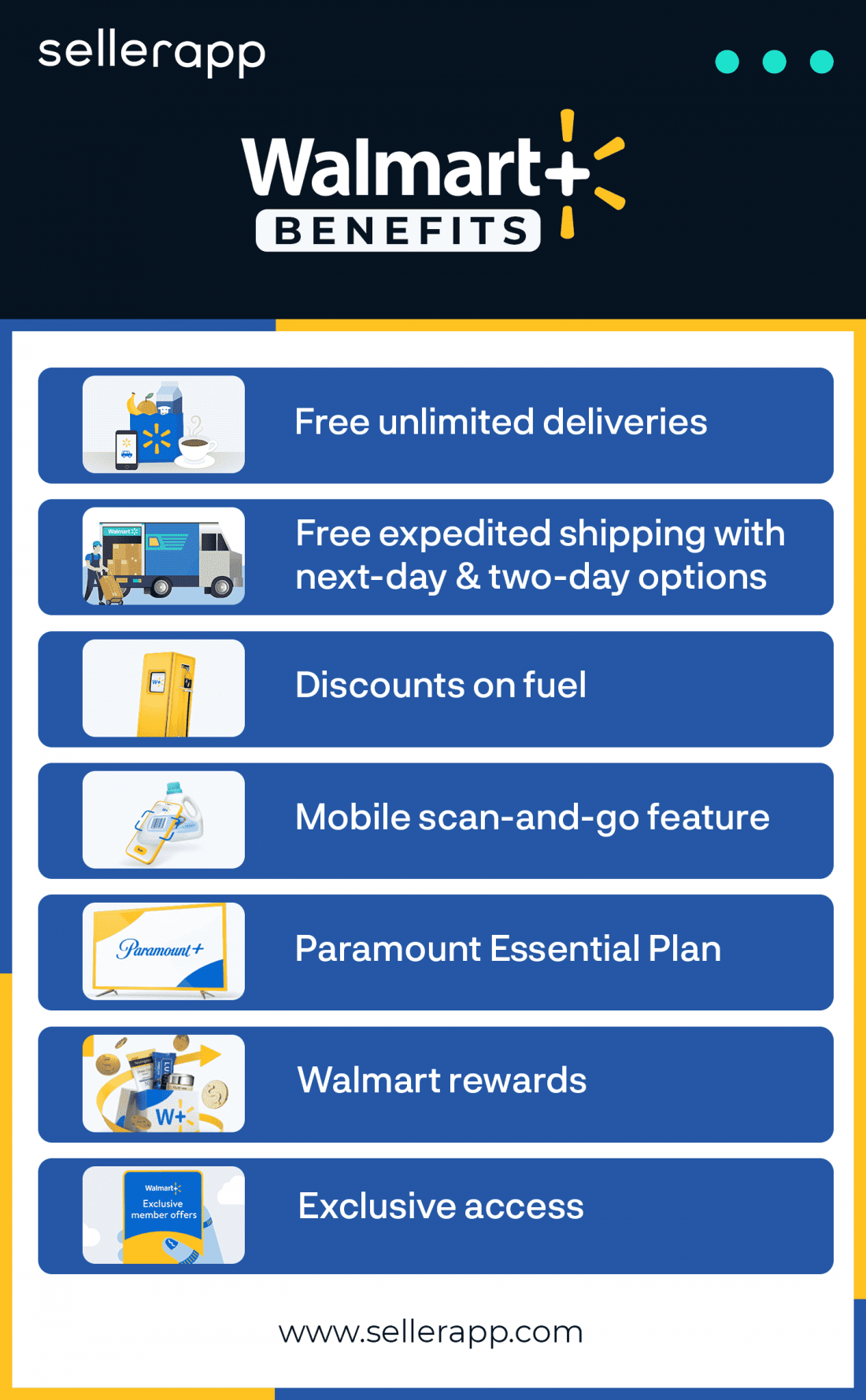
Perhaps the most prominent feature of Walmart+ is its unlimited free delivery from stores, including groceries, with a minimum order requirement (which is typically very easy to meet for a standard grocery run). The financial impact here is multifaceted:
-
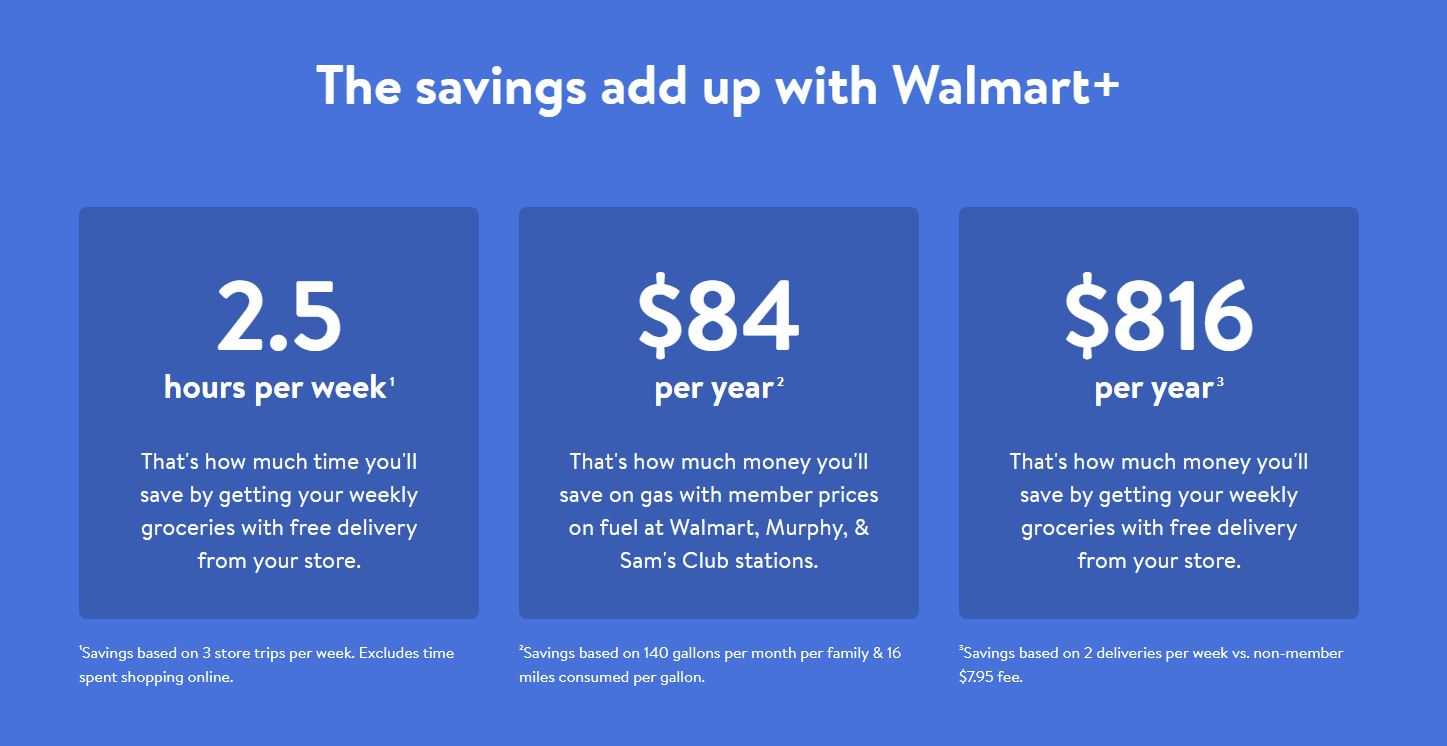
Elimination of Delivery Fees: For non-members, each delivery order typically incurs a fee, which can range from $7 to $10 or more, depending on the location and specific service requested. If a household orders groceries just twice a month, these fees alone can quickly accumulate to $14-$20 monthly, or $168-$240 annually. Compared to the $98 annual Walmart+ fee, the savings become immediately apparent.
-
Time Savings and Opportunity Cost: The time spent driving to the store, navigating aisles, and waiting in checkout lines is a significant, yet often unquantified, cost. For someone earning $20/hour, even two hours saved per week translates to $40 in potential earnings or productive time. While not a direct monetary saving, avoiding these time costs has an indirect financial benefit by freeing up hours for other income-generating activities or personal pursuits that enhance well-being.
-
Reduced Impulse Buys: Shopping online from a carefully curated list often mitigates the temptation of impulse purchases that frequently occur when physically walking through a store. These unplanned items, though small individually, can add up to a substantial drain on a budget over time.
Fuel Discounts: Real Dollars Back in Your Wallet
Walmart+ members gain access to fuel discounts at participating Walmart & Murphy stations, as well as Sam’s Club fuel centers, and increasingly, other branded stations like Exxon and Mobil. While the discount per gallon might seem modest (often 5-10 cents off per gallon), its cumulative effect can be substantial, especially for households with multiple vehicles or those who commute frequently.
Consider a family that fills up two vehicles, each requiring 15 gallons of fuel, twice a month. At a 10-cent per gallon discount, this equates to a $3 saving per fill-up ($0.10 x 30 gallons). Over a month, this is $6, and annually, it totals $72. When combined with other benefits, these fuel savings chip away significantly at the annual membership cost. For rural members or those with longer commutes, the fuel savings alone can offset a substantial portion of the annual fee, making the membership a highly attractive financial proposition.
Scan & Go: Time Savings as a Financial Asset
While not directly providing a discount, the “Scan & Go” feature in the Walmart app allows members to scan items as they shop in-store and pay directly from their phone, bypassing checkout lines entirely. The financial benefit here lies squarely in the value of time.
As discussed with free delivery, time is a non-renewable resource with an inherent financial value. Reducing the time spent in line means more time for work, family, or leisure. For a busy professional, a parent juggling multiple errands, or anyone whose time is at a premium, this convenience translates into indirect financial efficiency. If saving 15-20 minutes on each weekly grocery trip amounts to an hour per month, that hour can be reallocated to income-generating activities, personal development, or simply stress reduction, all of which have an indirect positive impact on one’s financial well-being.
Member-Exclusive Deals and Early Access: Unlocking Extra Value
Beyond the core recurring benefits, Walmart+ occasionally offers members-only pricing on select items, early access to Black Friday deals, and exclusive product releases. These opportunities, while not constant, can lead to significant savings on specific purchases. For consumers who are strategic about their shopping and take advantage of these limited-time offers, the savings generated on a single purchase, such as a large appliance or a popular tech gadget, could potentially offset a substantial portion of the annual membership fee. This requires proactive engagement and awareness of these special promotions, turning the membership into a strategic tool for opportunistic savings.
Is Walmart+ Worth the Investment? A Financial Perspective
The ultimate question for any financial outlay, including a subscription service, is whether the benefits outweigh the costs. For Walmart+, this requires a personalized calculation, as its value proposition varies widely based on individual shopping habits, location, and lifestyle.
Calculating Your Personal ROI: When Does Walmart+ Pay for Itself?
To determine if Walmart+ is a financially sound decision for you, a clear return on investment (ROI) calculation is essential. Here’s a simple framework:
-
Identify Your Annual Membership Cost: ($98 for the annual plan, or $155.40 for the monthly). Let’s use $98 for this example.
-
Estimate Your Annual Delivery Fee Savings: How many times a month do you typically order groceries for delivery? (e.g., 4 times/month). What is the average delivery fee you avoid? (e.g., $7/delivery).
-
Monthly Delivery Savings: 4 deliveries * $7/delivery = $28
-
Annual Delivery Savings: $28 * 12 months = $336
-
-
Estimate Your Annual Fuel Savings: How many gallons of fuel do you purchase per month? (e.g., 60 gallons/month). What is the discount per gallon? (e.g., $0.10/gallon).
-
Monthly Fuel Savings: 60 gallons * $0.10/gallon = $6
-
Annual Fuel Savings: $6 * 12 months = $72
-
-
Consider Other Tangible Savings: Have you taken advantage of any member-exclusive deals that resulted in direct financial savings? (e.g., $20 off a specific item). Add these up.
-
Calculate Total Tangible Savings: $336 (delivery) + $72 (fuel) + $20 (deals) = $428
-
Calculate Your ROI:
-
Net Financial Benefit: Total Tangible Savings – Annual Membership Cost = $428 – $98 = $330
-
In this scenario, for an annual cost of $98, you would be saving $330, indicating a highly positive ROI.
-
This calculation does not even factor in the intangible benefits like time saved (Scan & Go, avoiding store trips), which, while not direct monetary savings, contribute significantly to your quality of life and potentially your productive capacity. If your annual tangible savings consistently exceed the $98 or $155.40 cost, then Walmart+ is demonstrably worth the investment from a purely financial standpoint.
Comparing Walmart+ to Competitors: A Cost-Value Showdown
When assessing the financial viability of Walmart+, it’s natural to compare it with its primary competitor, Amazon Prime. Both services offer a blend of delivery benefits and additional perks, but their cost structures and specific advantages differ:
-
Amazon Prime: Currently priced at $14.99/month or $139/year. Prime’s core appeal lies in its vast product selection with fast, free shipping, alongside digital entertainment (Prime Video, Music) and other exclusive deals.
-
Walmart+: Priced at $12.95/month or $98/year. Its strength is primarily in grocery delivery, fuel savings, and in-store conveniences, catering to everyday household needs.
Financial Comparison: Walmart+ is notably cheaper on an annual basis ($98 vs. $139). For households primarily seeking grocery delivery and fuel savings, Walmart+ presents a more cost-effective solution. If digital entertainment and an extensive marketplace are higher priorities, the added cost of Prime might be justified. The decision often boils down to which retailer dominates your regular spending and which set of benefits aligns more closely with your financial priorities and lifestyle. Some households find value in subscribing to both, if their combined benefits outweigh the total annual outlay.
Budgeting for Your Subscription: Fitting Walmart+ into Your Household Finances
Integrating a new subscription like Walmart+ into your household budget requires conscious planning.
-
Allocate a Specific Budget Line Item: Treat the annual or monthly fee as a fixed expense. Create a dedicated line item in your budget for “Subscription Services” or specifically “Walmart+ Membership.”
-
Reallocate Funds: If you are trying to minimize new expenses, identify areas where you might be able to reallocate funds. For instance, if Walmart+ is saving you money on delivery fees or impulse buys, you might be able to slightly reduce your “Grocery” or “Miscellaneous Spending” categories to offset the membership cost.
-
Avoid Budget Creep: While Walmart+ offers value, it’s crucial to ensure that adding it doesn’t lead to “subscription creep” where multiple services accumulate to an unsustainable monthly total. Periodically review all your subscriptions to ensure each one is still providing sufficient value for its cost.
By proactively budgeting for Walmart+, you ensure that its financial benefits are realized without causing strain elsewhere in your personal finances.
Strategic Considerations for Savvy Consumers
Beyond the direct costs and benefits, there are strategic financial maneuvers that savvy consumers can employ to maximize the value of their Walmart+ membership and integrate it efficiently into their broader financial planning.
Leveraging Credit Card Rewards and Other Payment Strategies
The payment method for your Walmart+ subscription can itself be a source of additional savings or benefits.
-
Credit Card Rewards: Many credit cards offer bonus rewards on everyday spending categories like groceries, gas, or even general online purchases. Paying for your Walmart+ membership (especially the annual fee) with such a card can earn you points, cashback, or travel miles, effectively reducing the net cost of the subscription. For example, a card offering 2% cashback on all purchases would yield an additional $1.96 back on the $98 annual fee.
-
Sign-Up Bonuses: Some credit cards offer significant sign-up bonuses for meeting a certain spending threshold within the first few months. If timing permits, paying for your annual Walmart+ membership could contribute towards meeting that threshold, unlocking a larger financial reward.
-
Payment through Digital Wallets: Occasionally, digital wallets (like PayPal or Apple Pay) might offer promotional discounts or cashback for transactions made through their platforms, which could include subscription payments.
Always ensure that any credit card used for payment offers a good benefits package and is managed responsibly to avoid interest charges, which would negate any savings.
The Opportunity Cost of Subscription Services: Balancing Your Financial Portfolio
Every dollar spent on one item is a dollar not available for another. This concept, known as opportunity cost, is vital in evaluating subscription services. While Walmart+ offers clear benefits, consumers must ask: could this $98 or $155.40 be better utilized elsewhere in my financial plan?
-
Emergency Fund: Is your emergency fund adequately stocked?
-
Debt Repayment: Could this money accelerate high-interest debt repayment?
-
Investments: Could these funds be invested for long-term growth?
For many, the convenience and direct savings of Walmart+ will outweigh these alternative uses. However, for those on a tight budget or aggressively pursuing specific financial goals, it’s a necessary mental exercise. It highlights the importance of not just assessing the ROI of Walmart+, but also its priority within your overall financial portfolio.

Reassessing Your Membership Annually: Is It Still a Good Deal?
Financial situations and shopping habits are not static. What might be a fantastic value one year could become less so the next. A critical strategic consideration for any subscription service is to conduct an annual review.
-
Changes in Lifestyle: Have your grocery shopping habits changed? Do you drive less, thus reducing fuel savings? Are you ordering delivery less frequently?
-
Service Changes: Has Walmart+ itself altered its benefits or pricing structure in a way that impacts its value to you?
-
Competitive Landscape: Have new services emerged that offer a better value proposition for your needs?
By actively reassessing your Walmart+ membership annually, perhaps a month before renewal, you ensure that you are consistently making a financially sound decision. This proactive approach prevents passive spending on services that no longer align with your current needs or provide sufficient financial return. It empowers you to either confidently renew, adjust your usage to maximize value, or make the informed decision to cancel, thereby optimizing your personal financial outlay.
In conclusion, the cost of Walmart+ is more than just its annual or monthly fee. It’s a complex equation involving direct expenses, tangible savings, and intangible benefits that translate into financial efficiency. For the majority of regular Walmart shoppers, particularly those who utilize grocery delivery and benefit from fuel discounts, the service presents a compelling financial value, often paying for itself many times over. By understanding its pricing, calculating personal ROI, and strategically managing your subscription, you can ensure that Walmart+ is not just another expense, but a strategic financial tool in your arsenal.
aViewFromTheCave is a participant in the Amazon Services LLC Associates Program, an affiliate advertising program designed to provide a means for sites to earn advertising fees by advertising and linking to Amazon.com. Amazon, the Amazon logo, AmazonSupply, and the AmazonSupply logo are trademarks of Amazon.com, Inc. or its affiliates. As an Amazon Associate we earn affiliate commissions from qualifying purchases.