
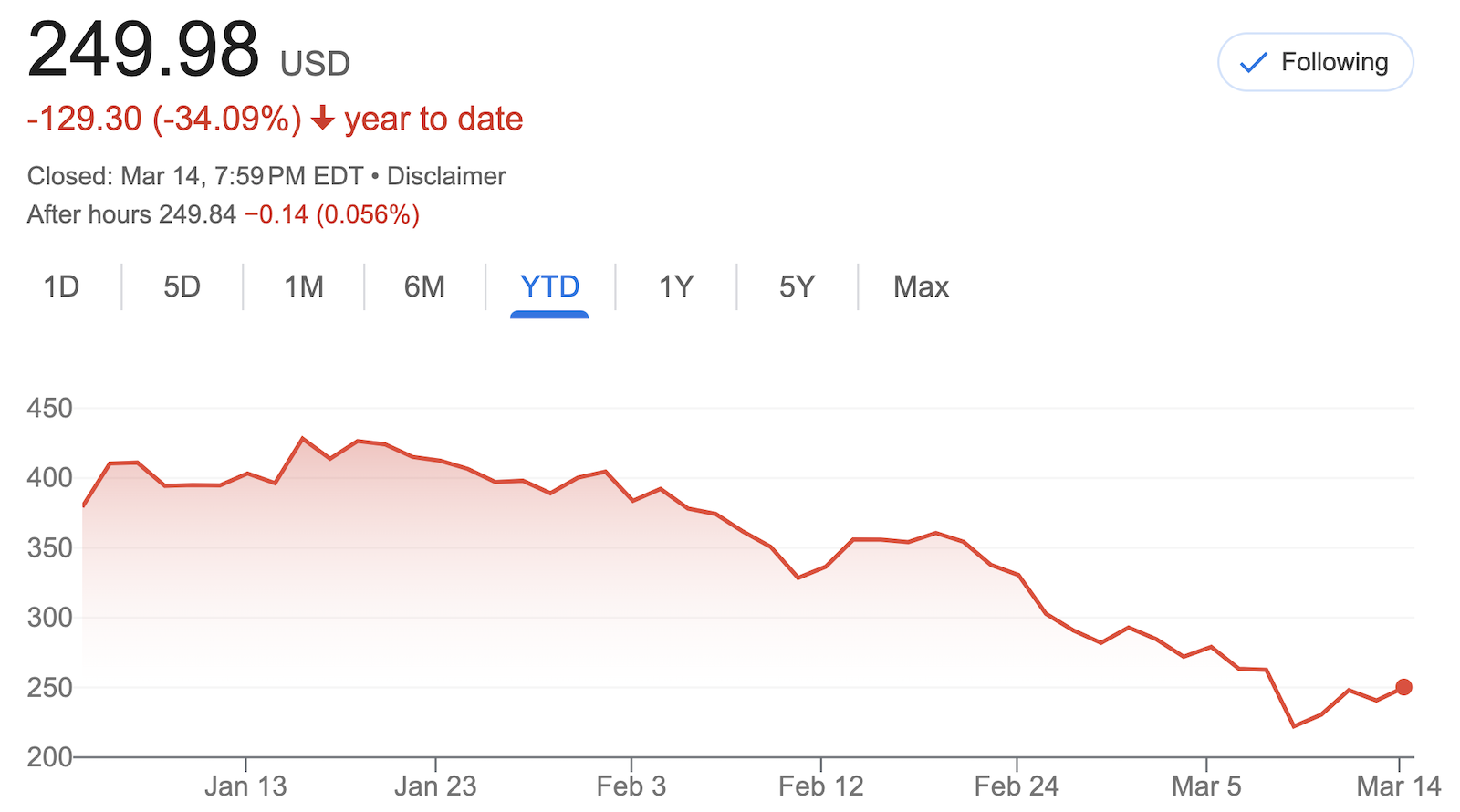
Tesla, once the darling of Wall Street and a seemingly unstoppable force in the automotive and technology sectors, has faced considerable headwinds in recent periods, leading to significant declines in its stock price and a re-evaluation of its market position. For investors and market observers alike, understanding the multifaceted reasons behind this downturn requires a deep dive into macroeconomic shifts, intensifying competitive landscapes, internal operational challenges, and a recalibration of its once-sky-high valuation. This article will explore these critical financial and market dynamics, shedding light on why Tesla’s trajectory has shifted from meteoric ascent to a more volatile and often downward trend.
Macroeconomic Headwinds and Shifting Market Sentiment
The broader economic environment plays a profound role in the performance of any company, but particularly for growth stocks and producers of high-ticket discretionary items like electric vehicles. Tesla’s recent struggles are inextricably linked to a global economic climate that has become less forgiving towards high-valuation companies.
Rising Interest Rates and Their Impact on Growth Stocks
One of the most significant overarching factors influencing Tesla’s valuation decline has been the global surge in interest rates, spearheaded by central banks combating persistent inflation. Higher interest rates fundamentally change how future earnings are valued. Growth companies like Tesla, whose valuations are heavily predicated on projected future profitability and expansion, become less attractive in a high-interest-rate environment. The discounted cash flow (DCF) models used by analysts to value such companies apply higher discount rates, thereby diminishing the present value of anticipated future earnings. As the cost of capital rises, borrowing becomes more expensive, impacting a company’s ability to finance ambitious expansion plans and making debt-fueled growth less sustainable. Investors increasingly pivot from speculative growth stocks towards more stable, dividend-paying companies or fixed-income assets that offer guaranteed returns. This shift in capital allocation naturally draws funds away from high-beta stocks like Tesla.
Global Economic Slowdown and Consumer Spending
The specter of a global economic slowdown, coupled with persistent inflationary pressures, has directly impacted consumer purchasing power and sentiment. High-value purchases, such as new cars, are often the first to be deferred or reconsidered during periods of economic uncertainty. While electric vehicles offer long-term savings, their higher upfront cost can be a deterrent for consumers facing rising living expenses, job insecurity, or shrinking discretionary income. Countries that were once key growth markets for Tesla, particularly China, have experienced their own economic wobbles, contributing to fluctuating demand and increased competition within those regions. A cautious consumer base, coupled with economic contraction in major markets, creates a challenging sales environment that puts pressure on revenue growth and profit margins.
Shifting Investor Appetite
The exuberant “risk-on” environment that characterized the pandemic-era stock market, where investors eagerly poured capital into disruptive technologies and high-growth narratives, has largely dissipated. We are now witnessing a “risk-off” mentality, with investors prioritizing profitability, stable cash flows, and robust balance sheets over speculative growth potential. Tesla, with its premium valuation and reliance on future innovations like Full Self-Driving (FSD) and Optimus bots, is particularly susceptible to this change in investor appetite. The market is less willing to pay a hefty premium for promises, instead demanding consistent execution and demonstrable financial results in the near term. This shift forces a recalibration of Tesla’s valuation multiples, bringing them closer to those of traditional automakers, even if its technological edge persists.
Intensifying Competition and Margin Compression
Tesla’s early dominance in the EV market allowed it to command premium pricing and enjoy substantial gross margins. However, the landscape has matured rapidly, with a flurry of new entrants and aggressive strategies from established automotive giants, leading to significant competitive pressure and, critically, margin compression.
The EV Race Heats Up
What was once a relatively solitary race for Tesla has become a crowded marathon. Legacy automakers, initially slow to respond, have now fully committed to electrification, bringing formidable resources, extensive manufacturing capabilities, and established distribution networks to bear. Companies like Volkswagen, General Motors, Ford, Hyundai, and Mercedes-Benz are rolling out compelling EV models across various segments, often at more competitive price points and with diverse features. Beyond traditional players, new pure-EV startups like Rivian and Lucid, along with a powerful surge from Chinese manufacturers such as BYD, Nio, and XPeng, are vying for market share. This proliferation of credible alternatives means Tesla no longer enjoys the luxury of being the only compelling option for many EV buyers, forcing it to compete more aggressively on price, features, and availability.
Price Wars and Profitability Concerns
In response to slowing demand and mounting competition, Tesla has initiated aggressive price cuts across several of its key models in major markets. While these price adjustments can stimulate demand and help clear inventory, they come at a significant financial cost: reduced profit margins. Tesla’s ability to maintain industry-leading margins was a core tenet of its premium valuation. As price cuts propagate across its lineup, and as competitors match or undercut these prices, the entire EV market risks entering a price war. This dynamic fundamentally challenges the narrative of Tesla as a “tech company” with software-like margins, forcing investors to view it more as an automotive manufacturer facing the inherent cyclicality and lower profit margins of that industry. Lower margins directly impact earnings per share, making the stock less attractive from a traditional valuation standpoint.
Supply Chain Volatility and Production Costs
Despite improvements, global supply chains remain susceptible to disruptions, affecting the availability and cost of critical components like semiconductor chips and raw materials for batteries. Lithium, nickel, and cobalt prices have seen significant fluctuations, directly impacting the cost of manufacturing EVs. While Tesla has made strides in vertical integration (e.g., in battery production), it is not immune to these broader market forces. Higher input costs, coupled with the need to continuously invest in new manufacturing facilities and optimize production processes, put additional strain on profitability. Managing these cost pressures while simultaneously engaging in price cuts presents a formidable challenge to Tesla’s financial health, impacting both gross and operating margins.

Internal Challenges and Execution Risks
Beyond external market forces and competitive pressures, Tesla faces internal challenges and execution risks that have contributed to investor apprehension and its declining stock performance.
Production Ramps and Quality Control
Tesla’s ambitious growth plans rely heavily on its ability to rapidly scale production at new Gigafactories in Berlin and Austin, as well as optimizing output from its existing plants. However, ramping up new facilities to full capacity efficiently and consistently has proven to be a complex and capital-intensive endeavor. Issues related to production bottlenecks, logistical hurdles, and challenges in maintaining consistent quality control at scale can lead to delays in deliveries, increased warranty costs, and ultimately, lower customer satisfaction. While these are common challenges for any rapidly expanding manufacturer, for a company with a premium valuation, even minor hiccups can disproportionately impact investor confidence, affecting sales targets and perceived operational efficiency, and by extension, financial projections.
Dependency on Elon Musk and Leadership Distractions
Elon Musk’s visionary leadership has been a cornerstone of Tesla’s success and market appeal. However, his multifaceted commitments and often controversial public persona have become a double-edged sword from a financial perspective. His significant focus on X (formerly Twitter) following its acquisition has raised concerns among investors about diluted attention and potential distractions from his responsibilities at Tesla. Moreover, Musk’s often provocative statements and engagement in political discourse can expose Tesla to reputational risks and potentially alienate segments of its customer base or investor community. From a financial standpoint, a perceived lack of stable, focused leadership can introduce an element of uncertainty and volatility into the stock, impacting market sentiment and attracting negative coverage that can influence investor decisions. The company’s fortunes are so closely tied to one individual that any perceived instability regarding his involvement or focus can directly translate into financial risk.
Ambiguous Growth Narratives (FSD, Robotaxi, Optimus)
Tesla’s premium valuation has historically been justified not just by its current automotive sales but also by the promise of future, disruptive technologies like Full Self-Driving (FSD), the Robotaxi network, and humanoid robots like Optimus. While these ventures represent potentially massive future revenue streams, their delayed monetization, regulatory hurdles, and unproven efficacy in widespread application create significant uncertainty for investors focused on near-term financial performance. The repeated pushing back of FSD’s Level 5 autonomy, for example, means that a major software revenue stream—which many analysts had factored into Tesla’s valuation—remains elusive. Without clear timelines and demonstrable progress towards profitability for these ambitious projects, investors are increasingly questioning the validity of assigning a “tech multiple” to Tesla, instead opting to value it based on its current, tangible automotive business. This recalibration is a direct contributor to its stock’s downward pressure.
Valuation Reassessment and Future Outlook
The combined weight of macroeconomic headwinds, intensified competition, and internal operational challenges has led to a fundamental reassessment of Tesla’s valuation by the market. This shift has profound implications for its future financial trajectory.
From Tech Growth to Automotive Reality
For years, Tesla successfully cultivated a narrative that transcended its identity as a mere car company, positioning itself as a technology innovator, an AI leader, and an energy disruptor. This allowed investors to justify a premium valuation far exceeding that of traditional automakers, based on the promise of software services, autonomous driving subscriptions, and other high-margin ventures. However, as the EV market matures and competition stiffens, the market is increasingly valuing Tesla more as an automotive manufacturer that happens to integrate advanced technology. This reclassification leads to a significant downward adjustment in its price-to-earnings (P/E) multiple, bringing it closer to those of its more conventional peers, rather than stratospheric multiples typically reserved for pure software or AI companies. This valuation normalization is a critical factor in the stock’s decline, as the “growth at any cost” narrative gives way to a demand for sustainable profitability from its core business.
Cash Flow and Capital Expenditure Demands
Scaling a global automotive and energy enterprise demands immense capital expenditure. Building new Gigafactories, expanding battery production, investing in advanced robotics for manufacturing, and funding cutting-edge R&D for FSD and AI initiatives require billions in ongoing investment. While Tesla has historically managed to generate strong operating cash flow, the sheer scale of these capital demands can put pressure on free cash flow generation. Investors are increasingly scrutinizing how these investments translate into tangible, near-term financial returns and whether the capital deployment is efficient. Any signs of diminishing returns on capital or excessive cash burn relative to growth can trigger concerns about financial health and impact investor confidence, particularly in an environment where the cost of capital is rising.

The Road Ahead: Potential for Rebound or Continued Pressure
Tesla’s future financial performance will hinge on its ability to navigate these multifaceted challenges. A potential rebound could be catalyzed by several factors: successful and profitable launches of new, high-demand models (like the Cybertruck or a next-generation affordable EV), a significant breakthrough in FSD leading to a monetizable robotaxi network, or substantial cost efficiencies realized through advanced manufacturing and battery technology. Consistently improving gross margins in a competitive environment would also be a strong positive signal.
Conversely, continued pressure could result from a protracted economic downturn, an escalating price war that erodes profitability across the industry, or sustained challenges in achieving promised technological milestones. Furthermore, increased regulatory scrutiny, particularly around autonomous driving, could impose further financial burdens or delays. The market will closely watch Tesla’s ability to balance aggressive growth aspirations with sustainable financial performance, demonstrating a clear path to generating consistent, high-margin profits from both its automotive and future technology segments.
In conclusion, Tesla’s recent stock performance reflects a confluence of powerful financial and market forces. The era of near-unfettered growth and premium valuation based solely on disruptive potential has given way to a more sober assessment. Macroeconomic shifts have tightened capital markets, intense competition has eroded pricing power, and internal execution challenges demand rigorous financial discipline. While Tesla remains a formidable innovator, its journey “down” is fundamentally a story of financial recalibration, as investors demand concrete profitability and sustainable business models in an increasingly complex and competitive landscape. The path forward for Tesla, from an investment perspective, will be defined by its ability to translate its technological prowess into robust, consistent, and growing financial returns amidst these formidable challenges.
aViewFromTheCave is a participant in the Amazon Services LLC Associates Program, an affiliate advertising program designed to provide a means for sites to earn advertising fees by advertising and linking to Amazon.com. Amazon, the Amazon logo, AmazonSupply, and the AmazonSupply logo are trademarks of Amazon.com, Inc. or its affiliates. As an Amazon Associate we earn affiliate commissions from qualifying purchases.