
The history of the automotive industry is often divided into two distinct eras: the internal combustion age and the era of the software-defined vehicle. While many legacy manufacturers are currently struggling to bridge this gap, Tesla, Inc. began its journey with the explicit goal of treating the automobile not as a mechanical assembly, but as a high-performance computer on wheels. To answer the question of when Tesla started making cars, one must look back to 2008. However, the technological foundation for that milestone was laid years earlier through a series of hardware and software innovations that would eventually disrupt the entire global transportation sector.

The Roadster Era (2008): Engineering a Proof of Concept
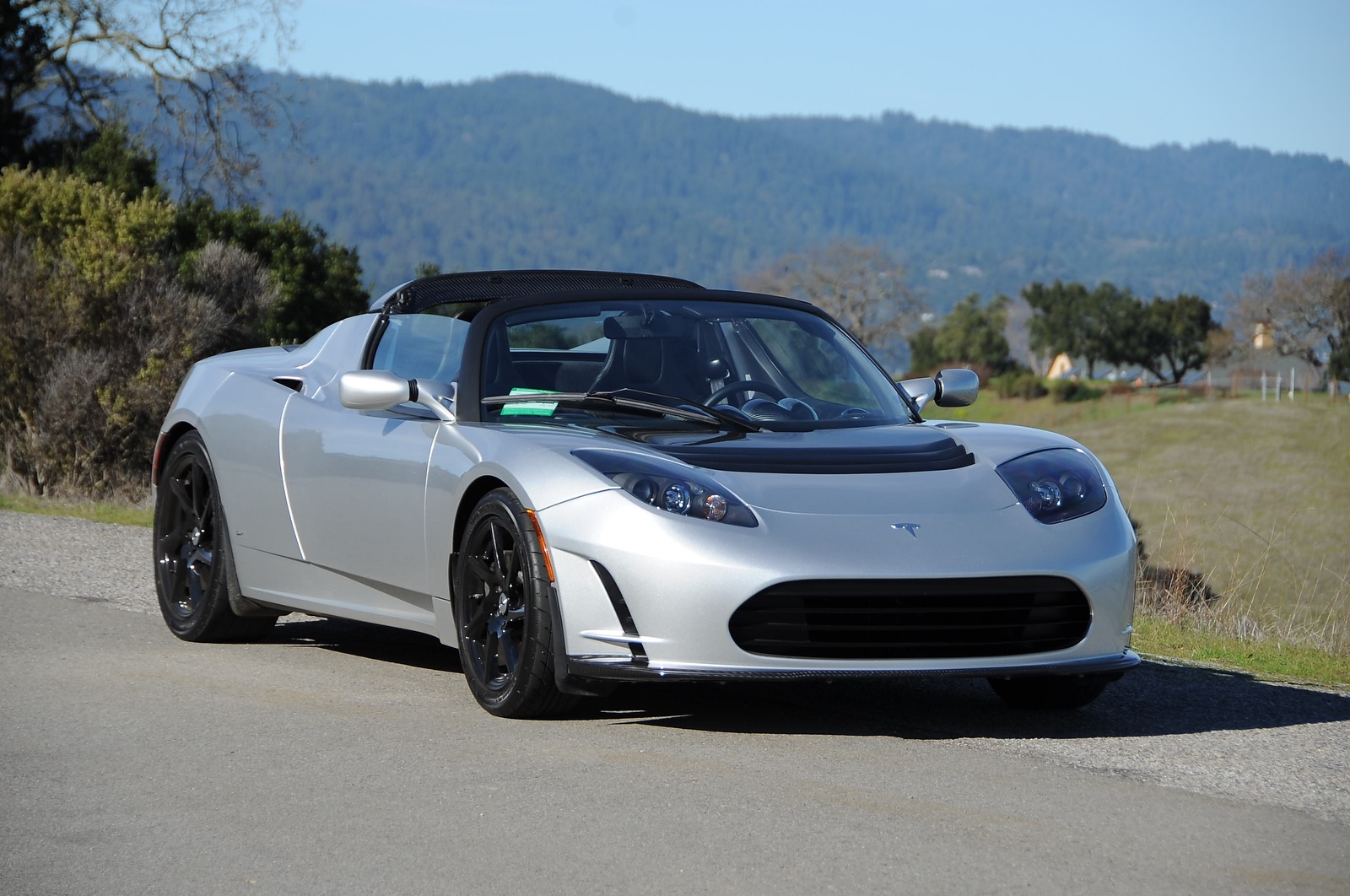
Tesla’s first production vehicle, the Roadster, officially began rolling off the assembly line in March 2008. While the chassis was based on the Lotus Elise, the technological core was entirely proprietary and groundbreaking. At a time when most electric vehicle (EV) prototypes relied on heavy, inefficient lead-acid or nickel-metal hydride batteries, Tesla took a massive gamble on lithium-ion technology.
Breakthrough in Battery Architecture
The Roadster was the first production car to use lithium-ion battery cells, specifically the 18650 form factor typically found in laptops. The engineering challenge was not just the chemistry, but the management of over 6,800 individual cells. Tesla’s engineers developed a complex Battery Management System (BMS) to monitor voltage and temperature across the pack. This digital oversight allowed for a range of 244 miles per charge—a figure that was unheard of in 2008 and remains competitive in the entry-level EV market today. This focus on “energy density” and “thermal management” established the tech-first philosophy that would define the company’s future.
The AC Propulsion Heritage and Optimization
The Roadster’s powertrain was an evolution of the AC Propulsion tzero technology. Tesla refined the power electronics to handle high-output discharge cycles without overheating. By utilizing a digital motor controller, the Roadster could deliver instant torque, proving that electric propulsion was not just an environmental choice, but a performance-oriented one. This early focus on the inverter and motor control software set the stage for the hyper-efficient drive units seen in modern iterations of the Model S and Model 3.
Transitioning to Mass Production: The Model S and the Hardware-Software Integration (2012)
While the Roadster proved that EVs could be exciting, the launch of the Model S in June 2012 marked Tesla’s arrival as a true technology powerhouse. This was the moment the “software-defined vehicle” was born. Unlike previous cars, where the hardware was static once it left the factory, the Model S was designed with an extensible software architecture.
Over-the-Air (OTA) Updates: Redefining Vehicle Maintenance
The most significant technological leap introduced with the Model S was the capacity for Over-the-Air (OTA) updates. For the first time, a car’s performance, safety features, and user interface could be improved remotely. In 2014, for example, Tesla was able to increase the ground clearance of the Model S via a software patch to mitigate fire risks from road debris, bypassing the need for a physical recall. This capability treated the vehicle’s firmware like a mobile operating system, a paradigm shift that legacy automakers are still attempting to replicate a decade later.
The 17-inch Interface: Centralizing the User Experience
Inside the cabin, the Model S replaced traditional knobs and dials with a 17-inch capacitive touchscreen. This was not merely an aesthetic choice but a functional one. By centralizing the controls—from climate and suspension settings to media and navigation—Tesla created a “single pane of glass” for vehicle management. The integration of a Linux-based operating system allowed for a highly responsive UI, integrating Google Maps and high-speed cellular connectivity long before “connected cars” became an industry buzzword.
Autopilot and the AI Revolution (2014–Present)

In October 2014, Tesla began equipping all new vehicles with a suite of sensors—camera, radar, and ultrasonic—that would eventually power “Autopilot.” This move signaled Tesla’s transition from a battery-tech company to an artificial intelligence and computer vision company.
The Shift to Computer Vision and Neural Networks
Tesla’s approach to autonomous driving is fundamentally different from its competitors. While companies like Waymo rely on expensive LiDAR (Light Detection and Ranging) sensors to map the world in 3D, Tesla has pivoted toward a “Vision Only” approach. This relies on high-resolution cameras and sophisticated neural networks to interpret the environment in real-time. By leveraging a fleet of millions of vehicles, Tesla collects billions of miles of real-world driving data, which is then used to train their AI models in a process known as “fleet learning.”
FSD Hardware Iterations: From Mobileye to In-House Silicon
The evolution of Tesla’s AI hardware highlights their commitment to vertical integration. Initially, Tesla partnered with Mobileye for their vision processing. However, seeking higher performance and lower latency, they moved to NVIDIA hardware before eventually designing their own custom silicon. The Tesla FSD (Full Self-Driving) Computer, introduced in 2019, was built specifically for neural network processing. By designing their own chips, Tesla achieved a level of hardware-software optimization that allows their vehicles to process 2,300 frames per second—a feat that general-purpose automotive chips cannot match.
Scaling the Gigafactory Architecture: Engineering Efficiencies (2017–Present)
With the launch of the Model 3 in 2017, the technological focus shifted toward “the machine that builds the machine.” To achieve the scale required for mass-market adoption, Tesla had to innovate in manufacturing technology and battery chemistry.
The Model 3 and the 2170 Cell Innovation
The Model 3 introduced the 2170 battery cell, co-developed with Panasonic at the first Gigafactory in Nevada. These cells offered a significant improvement in energy density and cost-efficiency over the older 18650 cells. Furthermore, the Model 3’s electronics were simplified; the wiring harness was drastically reduced in length to facilitate robotic assembly, moving the industry closer to a “zonal” architecture where localized controllers manage specific sections of the car, rather than a massive, centralized wire loom.
Structural Battery Packs and Megacasting
Tesla’s more recent technological breakthroughs include the “megacast.” By using Giga Presses—some of the largest casting machines in the world—Tesla can cast the front and rear underbodies of a vehicle as single pieces of aluminum. This replaces hundreds of individual parts, reducing weight and increasing structural rigidity. Combined with the “structural battery pack,” where the battery cells themselves provide structural support to the car’s chassis, Tesla has significantly reduced the complexity and footprint of EV manufacturing.
The Future Horizon: Tesla as a Robotics and Energy AI Company
As we look past the initial timeline of when Tesla started making cars, it is clear that the company views the vehicle as just one application of its core technology stack. The advancements made in battery storage, power electronics, and AI inference are now being applied to broader technological frontiers.
Dojo and the Infrastructure of Autonomy
To process the massive amounts of data generated by its fleet, Tesla is building Dojo, a supercomputer optimized for AI machine learning. Dojo uses custom-designed D1 chips to train neural networks more efficiently than traditional GPU clusters. This infrastructure is essential for the refinement of FSD and represents a massive leap in “distributed computing” for the automotive sector.
From Cars to Humanoids: The Optimus Project
The logic behind Tesla’s move into humanoid robotics (Optimus) is rooted in the “Vision AI” developed for their cars. If a car is essentially a robot on four wheels designed to navigate a complex environment, then a humanoid robot is a natural extension of that same software stack. By using the same FSD computer and computer vision models, Tesla is attempting to solve “General Purpose AI” in the physical world.
In conclusion, Tesla did not just start making cars in 2008; it started a technological movement that redefined what a vehicle could be. From the first 18650 cells in the Roadster to the custom AI silicon in the Model Y, Tesla’s history is a timeline of hardware innovation and software mastery. Their journey from a niche manufacturer to a global leader underscores the reality that in the modern era, the most successful car companies are, at their heart, technology companies.
aViewFromTheCave is a participant in the Amazon Services LLC Associates Program, an affiliate advertising program designed to provide a means for sites to earn advertising fees by advertising and linking to Amazon.com. Amazon, the Amazon logo, AmazonSupply, and the AmazonSupply logo are trademarks of Amazon.com, Inc. or its affiliates. As an Amazon Associate we earn affiliate commissions from qualifying purchases.