
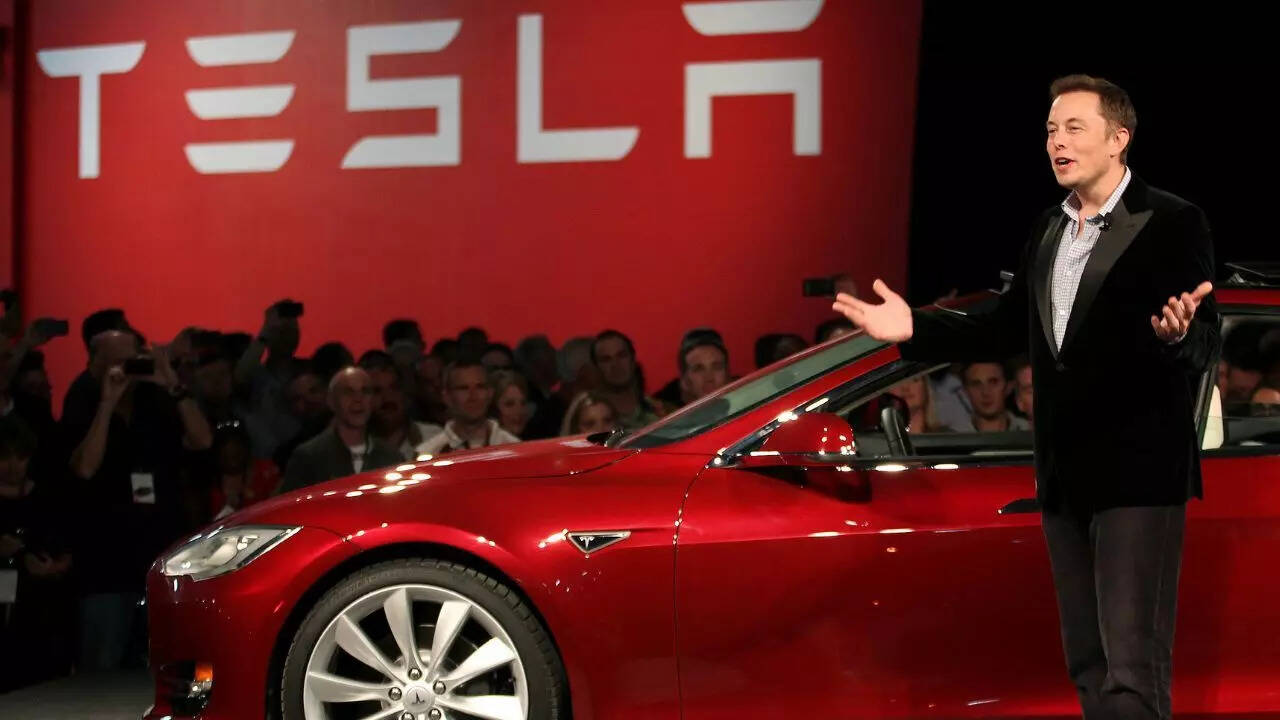
The narrative of Tesla’s inception is often intertwined with the towering figure of Elon Musk, yet its true genesis is a complex tapestry woven with the ambition of several visionaries, groundbreaking technological advancements, and a relentless pursuit of a future free from fossil fuels. While Musk undeniably played a pivotal, transformative role in shaping Tesla into the global technology powerhouse it is today, understanding “how he started Tesla” requires a deep dive into the technological currents and foundational efforts that preceded his significant involvement and continued under his leadership. At its core, Tesla was born from a technological imperative: to accelerate the world’s transition to sustainable energy through the development of superior electric vehicles and energy solutions. This article will exclusively explore the technological journey of Tesla’s founding, its early innovations, and Musk’s profound impact on its technological trajectory.
The Genesis of an Electric Revolution: Pre-Musk Foundations
The dream of electric vehicles (EVs) is as old as the automobile itself, but practical limitations in battery technology and infrastructure kept them on the fringes of the automotive industry for over a century. Tesla’s true genesis began in 2003 with two visionary engineers, Martin Eberhard and Marc Tarpenning, who recognized that breakthroughs in an entirely different sector—consumer electronics—held the key to unlocking the EV’s potential.
Early Visionaries and the Automotive Gap
Eberhard and Tarpenning, seasoned entrepreneurs from Silicon Valley, shared a conviction that the internal combustion engine was an outdated technology ripe for disruption. They observed that major automotive manufacturers were either dismissive of electric vehicles or only producing compliance cars—electric models made to meet regulatory mandates, often with limited range and uninspiring performance. This created a significant gap in the market for a compelling, high-performance electric car that could rival, or even surpass, its gasoline-powered counterparts. Their initial idea was simple yet revolutionary: build an electric sports car that was fun to drive, environmentally conscious, and unequivocally cool. This approach aimed to change public perception of EVs from slow, clunky golf carts to desirable, high-tech machines.
The Lithium-Ion Leap: A Battery Breakthrough
The critical technological enabler for Eberhard and Tarpenning’s vision was the advent of the commercial lithium-ion battery. While individual lithium-ion cells had been in use in laptops and other portable electronics for years, their energy density and power output were far superior to the nickel-metal hydride batteries typically found in early hybrid vehicles. The challenge, however, was packaging thousands of these small, cylindrical cells safely and efficiently to power a car. Traditional automotive batteries were large, heavy, and bespoke units. The Tesla founders conceived of a battery pack architecture that would utilize thousands of small, commodity cells, intelligently managed by sophisticated battery management software. This design choice, leveraging existing high-volume production cells, offered a significant cost advantage and energy density benefit that was crucial for achieving a viable range and performance profile for their ambitious electric sports car. This technological insight was the cornerstone upon which Tesla Motors was built.
Musk’s Entry and the Infusion of Vision
Elon Musk, having already achieved considerable success as a co-founder of PayPal, was an ardent proponent of sustainable energy and space exploration. He saw the potential in Eberhard and Tarpenning’s fledgling company not just as an investment opportunity but as a critical lever to achieve his broader mission of accelerating the world’s transition to sustainable energy.
From Investor to Visionary Leader: Shaping the Technological Path
Musk first invested in Tesla Motors in 2004, leading the Series A funding round with a $6.5 million investment and assuming the role of Chairman of the Board. His early contributions were not merely financial; he became deeply involved in product design, engineering, and strategic direction. Musk pushed the company to think bigger, envisioning a future beyond a niche sports car, towards a full line of mass-market electric vehicles and ultimately, a sustainable energy ecosystem. He actively participated in the selection of technology, the hiring of key engineering talent, and the definition of Tesla’s ambitious technological roadmap. While the initial founders laid the groundwork, Musk’s arrival infused the company with an aggressive, almost audacious, technological vision that would define its subsequent trajectory. He famously took an active role in scrutinizing every engineering decision, often pushing boundaries that others deemed impossible, cementing a culture of rapid innovation and problem-solving.
The Roadster’s Engineering Odyssey: Proving Electric Performance
The first major technological hurdle for Tesla was bringing the Roadster, its initial product, to market. Based on the Lotus Elise chassis, the Roadster was not merely an electric conversion; it required a complete rethinking of powertrain integration, thermal management, and software controls. Engineers faced immense challenges in developing a high-voltage battery system that was robust, safe, and efficient enough to power a performance sports car. The bespoke electric motor, power electronics, and the sophisticated Battery Management System (BMS) were all groundbreaking. The BMS, in particular, was a marvel of engineering, meticulously monitoring and balancing thousands of individual cells to optimize performance, maximize range, and ensure safety. Overcoming these engineering obstacles allowed the Roadster to achieve impressive acceleration (0-60 mph in under 4 seconds) and a significant range for its time (over 200 miles per charge), effectively debunking the myth that electric cars were inherently inferior to gasoline-powered sports cars. The Roadster, despite its limited production, served as a crucial technological proof-of-concept, demonstrating that EVs could be aspirational, high-performance vehicles.
Scaling Innovation: Technology for the Masses

With the technological success of the Roadster, Tesla pivoted to its larger goal: producing mass-market electric vehicles. This transition required a fundamental shift in technological strategy, moving from adapting an existing platform to designing and engineering vehicles from the ground up.
Beyond the Roadster: Developing the Mass-Market Platform
The development of the Model S marked a new era for Tesla, requiring an entirely new, scalable electric vehicle platform. This meant designing dedicated chassis architecture to accommodate a large, flat battery pack under the floor, which not only optimized weight distribution and interior space but also fundamentally changed vehicle safety design. Tesla’s engineers focused on creating a highly integrated powertrain, combining the motor, inverter, and gearbox into a single, compact unit. This platform-first approach was revolutionary, allowing for efficient manufacturing and the incorporation of advanced technologies that would be difficult to retrofit onto traditional automotive platforms. The Model S wasn’t just an electric car; it was a sophisticated computer on wheels, designed to be updated and improved over time through software.
Software at the Core: Defining the Connected Vehicle
Perhaps one of Tesla’s most significant technological differentiators from its inception was its profound embrace of software as a core competency. Unlike traditional automakers, who often relied on third-party suppliers for much of their electronics and software, Tesla developed much of its critical software in-house. This included everything from the vehicle’s infotainment system and user interface to its powertrain control algorithms and advanced driver-assistance systems. The ability to push over-the-air (OTA) software updates directly to its vehicles was a game-changer, allowing Tesla to continuously improve features, enhance performance, fix bugs, and even introduce entirely new functionalities long after a car left the factory floor. This software-defined vehicle approach blurred the lines between automotive and consumer electronics, setting a new benchmark for what a modern car could be.
Battery Production and Gigafactory Ambitions
Realizing that battery supply was a critical bottleneck to scaling EV production, Tesla embarked on another audacious technological venture: the Gigafactory. This move was unprecedented for an automaker. The Gigafactory concept was not just about building batteries; it was about reimagining the entire manufacturing process, from raw materials to finished battery packs, under one roof. The goal was to achieve massive economies of scale and drive down battery cell costs, which were the single most expensive component of an EV. This vertical integration strategy, driven by a deep understanding of manufacturing technology and automation, was essential for Tesla to control its destiny, accelerate its technological development, and ensure a stable, cost-effective supply chain for its ambitious production targets. The Gigafactories themselves represent a significant technological innovation in manufacturing efficiency and sustainable production.
The Tesla Blueprint: A Model for Tech Disruption
Elon Musk’s involvement in Tesla, particularly from his executive leadership roles, cemented a technological philosophy that continues to define the company. He steered Tesla not just as a car company, but as a technology company dedicated to accelerating the transition to sustainable energy.
Vertical Integration as a Technological Edge
Tesla’s commitment to vertical integration across its technology stack – from battery cell design and manufacturing, to electric motor design, power electronics, software, and even charging infrastructure (Superchargers) – provided a significant technological advantage. This allowed for unparalleled optimization, control over quality, and rapid iteration that external suppliers could not match. By owning the core technologies, Tesla could push boundaries in performance, efficiency, and integration in ways traditional automakers, reliant on a complex web of suppliers, struggled to emulate. This approach, heavily influenced by Musk’s engineering mindset, fostered an environment where every component and subsystem was designed to work seamlessly together.
Over-the-Air Updates and Continuous Innovation
The software-centric architecture pioneered by Tesla has fundamentally reshaped consumer expectations for vehicles. OTA updates are more than just bug fixes; they are a continuous stream of technological enhancements that keep Tesla vehicles at the forefront of automotive innovation. Features like “Autopilot” and various entertainment options are delivered wirelessly, directly to the customer, embodying a product development cycle that more closely resembles a smartphone than a traditional car. This model of continuous technological improvement through software is a direct legacy of Musk’s vision to make vehicles dynamic, evolving technological products rather than static machines.

Autonomous Driving and AI’s Future Role
Perhaps the most ambitious technological frontier Tesla is pursuing, under Musk’s relentless push, is full self-driving (FSD) capability. This endeavor relies heavily on cutting-edge artificial intelligence, massive data collection from its fleet of vehicles, and sophisticated neural network training. While still in development, Tesla’s approach to FSD, using a vision-only system and end-to-end AI, represents a significant technological bet that distinguishes it from many competitors. This focus on AI and machine learning for vehicle autonomy underscores Tesla’s identity as a leader in applying advanced computational technology to real-world problems.
In conclusion, Elon Musk’s “start” with Tesla was not as its sole founder in the absolute sense, but as an indispensable catalyst and visionary who profoundly reshaped its technological direction. He took the foundational concepts and embryonic technologies developed by Eberhard and Tarpenning and, with significant personal investment and relentless leadership, transformed them into a disruptive force. His influence solidified Tesla’s identity as a technology company first and foremost, pushing boundaries in battery technology, electric powertrain design, software integration, advanced manufacturing, and artificial intelligence, all in pursuit of a sustainable energy future. The story of how Elon Musk started Tesla is, at its heart, a saga of technological ambition, engineering ingenuity, and a relentless pursuit of innovation.
aViewFromTheCave is a participant in the Amazon Services LLC Associates Program, an affiliate advertising program designed to provide a means for sites to earn advertising fees by advertising and linking to Amazon.com. Amazon, the Amazon logo, AmazonSupply, and the AmazonSupply logo are trademarks of Amazon.com, Inc. or its affiliates. As an Amazon Associate we earn affiliate commissions from qualifying purchases.