
The Tesla Model 3, a vehicle often hailed as a turning point in the automotive industry’s electrification, officially began deliveries on July 28, 2017. However, its journey from a visionary concept to a mass-produced electric vehicle (EV) for the masses was a multifaceted saga that began much earlier with an electrifying announcement and spanned years of intense technological development, manufacturing innovation, and significant challenges. The Model 3 wasn’t just another car; it was designed to be the accessible spearhead of Tesla’s mission to accelerate the world’s transition to sustainable energy, democratizing advanced EV technology in a way no vehicle had before. Its launch marked a pivotal moment, shifting the narrative around electric cars from niche luxury items to compelling, high-performance, and technologically advanced alternatives for the everyday driver.

The Genesis of a Game-Changer: Ideation and Unveiling
The Model 3’s conceptualization was deeply rooted in Tesla’s overarching “Master Plan,” articulated by CEO Elon Musk. Following the Roadster, a low-volume, high-performance sports car, and the Model S and Model X, premium vehicles that established Tesla’s brand and technological prowess, the Model 3 was always intended to be the next crucial step: an affordable, high-volume electric car. This strategy aimed to use profits from higher-priced models to fund the development and manufacturing scale needed for a more mainstream offering.
Tesla’s Vision for Mainstream EV Adoption
Tesla’s ambition with the Model 3 was audacious: to create an electric vehicle that offered compelling range, performance, and safety features at a price point competitive with entry-level luxury sedans and even higher-trim conventional internal combustion engine (ICE) vehicles. This wasn’t merely about building a cheaper EV; it was about building a better one – one that leveraged Tesla’s advancements in battery technology, electric powertrains, and software to deliver a superior driving experience. The goal was to prove that electric cars could not only match but surpass their gasoline counterparts in key areas, thereby catalyzing widespread EV adoption. This vision necessitated breakthroughs not just in the vehicle itself, but in the entire ecosystem surrounding it, from charging infrastructure to manufacturing processes. The Model 3 was to be the ultimate proof of concept for a sustainable automotive future, built on the premise that innovation could lead to both environmental benefits and superior consumer products.
The Grand Reveal: Anticipation and Initial Specifications
The world first got a glimpse of the Model 3 during its highly anticipated unveiling event on March 31, 2016, held at Tesla’s design studio in Hawthorne, California. The event generated unprecedented buzz, with hundreds of thousands of prospective buyers placing reservations even before the car’s full specifications were known, demonstrating a remarkable public hunger for Tesla’s technological promise. At the reveal, Elon Musk outlined the core aspirations for the Model 3: a base price of $35,000 (before incentives), a minimum range of 215 miles per charge, seating for five adults, and the inclusion of Tesla’s Autopilot hardware.
The initial prototypes showcased a sleek, minimalist design, characterized by a panoramic glass roof and a revolutionary interior dominated by a single, large horizontal touchscreen display, which would serve as the central control hub for nearly all vehicle functions. This radical approach to interior design signaled Tesla’s commitment to a software-defined vehicle, where the physical interface was streamlined to a degree unseen in traditional automotive manufacturing. The promise of supercharging compatibility and industry-leading safety ratings further solidified its appeal, positioning the Model 3 not just as an alternative, but as a technological leap forward. The sheer volume of pre-orders—over 325,000 in the first week alone—underscored the market’s readiness for a compelling, technologically advanced electric vehicle at a relatively attainable price point.
Navigating “Production Hell”: From Concept to Consumer
The period following the Model 3’s unveiling and leading up to its first deliveries was notoriously dubbed “production hell” by Elon Musk. Scaling production of a complex, technologically advanced vehicle to hundreds of thousands of units per year presented immense challenges, pushing Tesla to innovate not just in product design but fundamentally in manufacturing methodologies and automation.
Ramp-up Challenges and Manufacturing Innovations
Traditional automotive manufacturing relies heavily on established supply chains and incremental process improvements. Tesla, however, aimed for a revolutionary approach, seeking to automate vast segments of the production line to an unprecedented degree. This ambition, while forward-thinking, led to significant bottlenecks and delays. The initial attempt to implement highly automated assembly lines, particularly for battery module and general assembly, proved overly complex and fragile. Robots struggled with tasks better suited for human dexterity, and software glitches plagued the elaborate automated systems.
In response, Tesla demonstrated remarkable adaptability, eventually scaling back some of the automation in favor of more robust, semi-automated or even manual processes for certain stages, while simultaneously refining its robotic applications. The company’s ability to rapidly iterate on its manufacturing processes, often performing design changes on the fly and bringing engineering teams directly onto the factory floor, was a testament to its agility compared to legacy automakers. This period saw Tesla redefine its understanding of Gigafactory production, learning invaluable lessons about the delicate balance between automation, human labor, and efficient material flow, ultimately leading to a more resilient and high-volume production system. The development of new stamping machines, paint shops, and battery production lines at Gigafactory Nevada and Fremont became a proving ground for Tesla’s unique approach to vertical integration and technological manufacturing prowess.
Iterative Development and Software-Defined Vehicle Philosophy
A core tenet of Tesla’s technological strategy, vividly exemplified by the Model 3, is the concept of a software-defined vehicle. Unlike traditional cars that are largely static once they leave the factory, the Model 3 is designed for continuous improvement through over-the-air (OTA) software updates. This approach allows Tesla to deploy new features, enhance existing functionalities, improve performance, and even address safety concerns remotely, without the need for physical service visits.
During the “production hell” phase and beyond, this philosophy was crucial. Early Model 3s, while technologically advanced, continued to evolve dramatically through software. Features like improved navigation, new entertainment options, enhanced Autopilot capabilities, and even significant power increases were pushed to owners’ vehicles over Wi-Fi. This iterative development model not only kept the Model 3 fresh and competitive but also fundamentally changed consumer expectations for what a vehicle could be. Owners experienced their cars improving over time, a stark contrast to the depreciating assets typically associated with car ownership. This constant technological evolution, driven by software, cemented the Model 3’s reputation as a smart device on wheels, more akin to a smartphone than a traditional automobile.
The Model 3’s Enduring Technological Impact
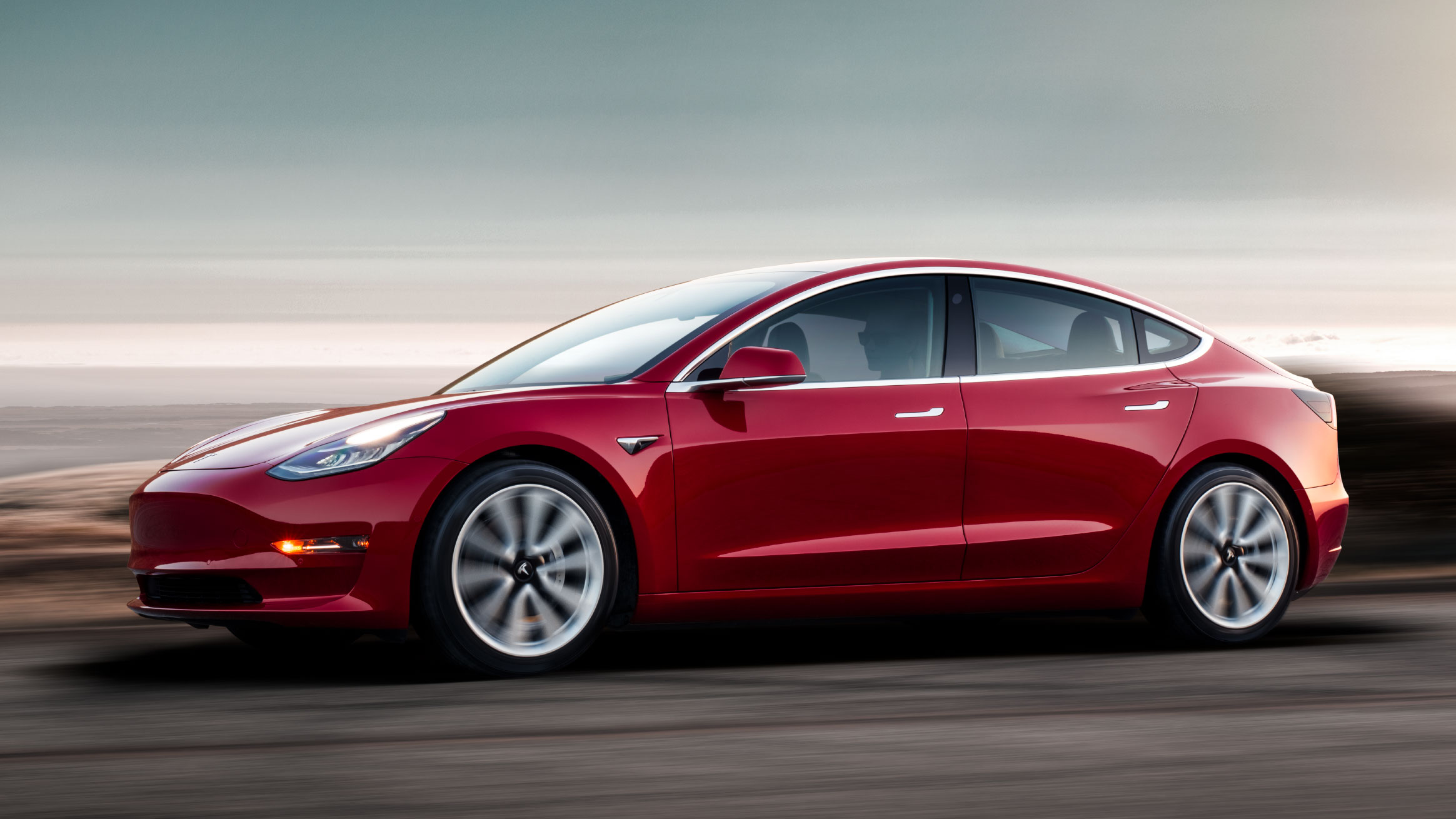
The Tesla Model 3 didn’t just add another option to the EV market; it fundamentally reshaped it, setting new benchmarks for performance, technology integration, and user experience. Its influence reverberated across the automotive industry, compelling traditional manufacturers to accelerate their own electrification plans.
Redefining Electric Vehicle Performance and Range
Before the Model 3, many consumers harbored skepticism about EVs regarding range anxiety and performance capabilities. The Model 3 comprehensively debunked these myths. With its advanced battery technology—initially using 2170-format cylindrical cells manufactured in partnership with Panasonic—the Model 3 offered impressive range figures, exceeding 300 miles in its Long Range variant, making long-distance travel practical. Its electric powertrain, featuring highly efficient permanent magnet synchronous reluctance motors, delivered instant torque and blistering acceleration, often outperforming sports cars in a straight line while maintaining a low center of gravity for dynamic handling.
The combination of its sophisticated battery management system, lightweight body structure (a mix of steel and aluminum), and aerodynamic design contributed to exceptional energy efficiency. This performance, coupled with a growing Supercharger network capable of rapidly recharging the battery, made the Model 3 a compelling daily driver and a formidable road-tripping machine, proving that an EV could be both practical and exhilarating, shifting consumer perception of what an electric car could achieve.
Autopilot and Advanced Driver-Assistance Systems (ADAS)
A significant technological highlight of the Model 3 was its integrated suite of Autopilot and Advanced Driver-Assistance Systems (ADAS). From day one, every Model 3 was equipped with the necessary hardware—multiple cameras, ultrasonic sensors, and a powerful onboard computer—to support varying levels of autonomous driving. While full self-driving capabilities are still under development, Autopilot offered adaptive cruise control and autosteer functionality that was among the most advanced in the industry at the time.
Tesla’s approach to ADAS relies heavily on a “vision-only” system, processing real-time camera data with neural networks to interpret the driving environment. This focus on AI and machine learning, coupled with continuous data collection from its fleet, allows Tesla to rapidly improve its autonomous driving software through OTA updates. The Model 3 became a platform for advancing this technology, constantly pushing the boundaries of what vehicle automation could do, challenging industry norms, and sparking widespread discussion about the future of autonomous vehicles. The seamless integration of these features, controllable through the central touchscreen, highlighted Tesla’s software-first approach to vehicle intelligence.
The Minimalist Interior and Infotainment Revolution
Perhaps one of the most striking and influential technological aspects of the Model 3 was its radical interior design. Eschewing traditional instrument clusters, physical buttons, and complex dashboards, the Model 3 presented an ultra-minimalist cabin dominated by a single 15-inch horizontal touchscreen display centrally mounted. This screen serves as the primary interface for everything: speed display, navigation, climate control, media, vehicle settings, and even opening the glovebox.
This design choice wasn’t just aesthetic; it was a profound technological statement. It showcased Tesla’s belief in a software-driven user experience, where a clean, adaptable digital interface could replace the clutter of analog controls. This approach reduced manufacturing complexity, streamlined the user interface, and allowed for constant updates and personalization. The “information-on-demand” philosophy, where only relevant data is displayed, redefined driver interaction with the vehicle. While initially controversial, this minimalist, screen-centric interior has since influenced numerous other automakers, leading to a broader trend of digital dashboards and consolidated control interfaces in modern vehicles, underscoring the Model 3’s role as a trendsetter in automotive interior technology.
Evolution and Future Trajectory of the Model 3
Since its initial release, the Model 3 has not remained static. Tesla’s commitment to continuous innovation through software and periodic hardware revisions ensures its ongoing relevance and competitiveness in a rapidly evolving market.
Continuous Updates and Feature Enhancements
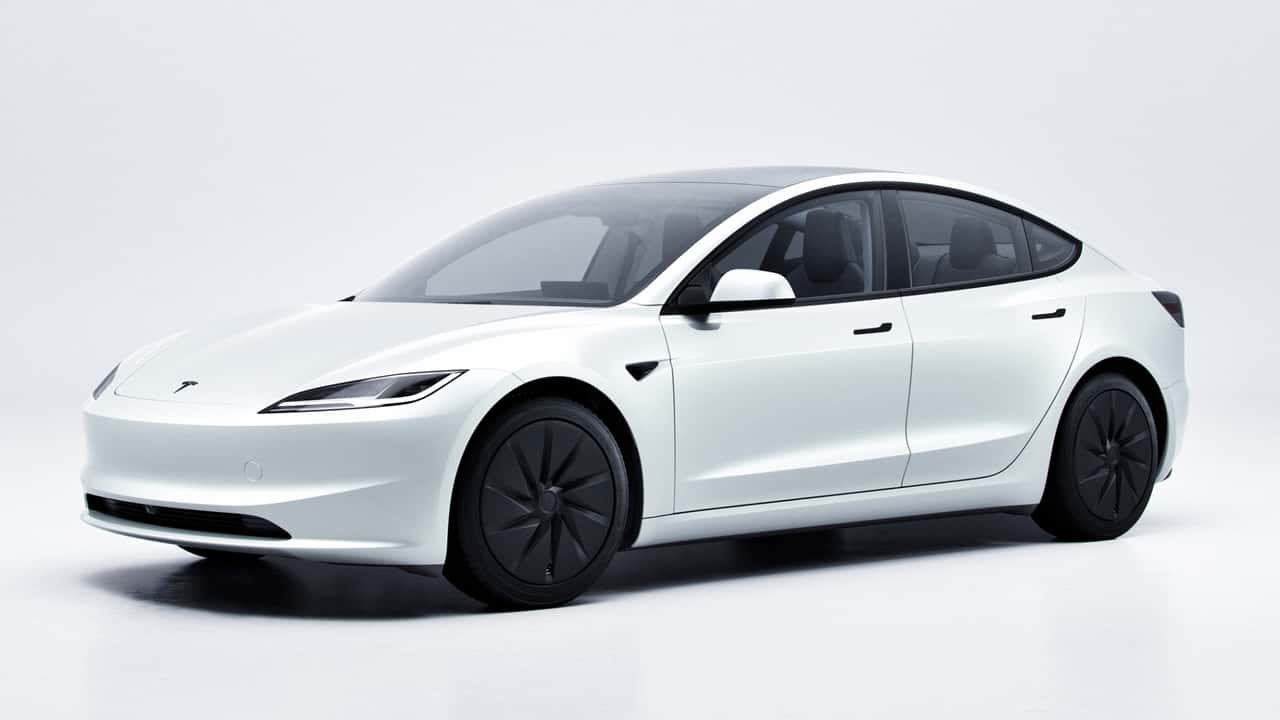
True to its software-defined nature, the Model 3 has received a steady stream of over-the-air updates that have enhanced its capabilities significantly. These updates have brought everything from increased motor power and range optimization to new infotainment features like streaming services, games, and advanced navigation functionalities. Beyond software, Tesla has also introduced hardware updates over the years, including chrome delete, power trunk, heat pump, and most recently, a substantial refresh codenamed “Highland” in late 2023. This refresh brought updated exterior styling, an even more refined interior, improved aerodynamics, and enhanced comfort features, further solidifying the Model 3’s position at the forefront of automotive technology. These continuous improvements demonstrate Tesla’s strategy of evolving its products throughout their lifecycle, rather than relying solely on traditional generational model changes.
Influence on the Broader Automotive Industry
The Model 3’s success and technological prowess have undoubtedly spurred a paradigm shift within the broader automotive industry. Its undeniable market impact forced legacy automakers to take electric vehicles seriously, accelerating their own EV development programs. Competitors recognized the need to not only match Tesla’s range and performance but also to emulate its software integration, OTA update capabilities, and streamlined user interfaces.
The Model 3 proved that a fully electric sedan could be a mass-market success, driving innovation across battery technology, charging infrastructure, and manufacturing automation within the entire sector. Its arrival marked a clear demarcation: before the Model 3, EVs were a niche; after it, they became the undeniable future. It set a new standard for what a modern, technologically advanced vehicle should be, influencing design, engineering, and consumer expectations worldwide and irrevocably shaping the trajectory of sustainable transportation.
In conclusion, while the Tesla Model 3 officially began deliveries on July 28, 2017, its true “coming out” was a prolonged technological journey. From its ambitious conceptualization and electrifying 2016 reveal to overcoming immense manufacturing hurdles and continuously evolving through software and hardware updates, the Model 3 has been a relentless force of innovation. It not only fulfilled Tesla’s vision of an affordable, high-volume electric car but also profoundly impacted the automotive landscape, setting new technological benchmarks for performance, autonomy, and user experience, and unequivocally signaling the dawn of the electric vehicle era.
aViewFromTheCave is a participant in the Amazon Services LLC Associates Program, an affiliate advertising program designed to provide a means for sites to earn advertising fees by advertising and linking to Amazon.com. Amazon, the Amazon logo, AmazonSupply, and the AmazonSupply logo are trademarks of Amazon.com, Inc. or its affiliates. As an Amazon Associate we earn affiliate commissions from qualifying purchases.