
The question “how many Tesla shares are there?” might seem simple, yet its answer is far from static. For investors, financial analysts, and even casual observers, understanding the number of outstanding shares for a company like Tesla – a titan in electric vehicles, energy storage, and AI – is profoundly important. This figure is not merely a numerical curiosity; it’s a fundamental metric that underpins market valuation, influences per-share financial indicators, and reflects a company’s financial strategy.
At any given moment, the exact number of Tesla’s outstanding shares is a dynamic figure, subject to changes driven by corporate actions such as stock splits, secondary offerings, share buybacks, and employee stock compensation plans. While a definitive, real-time number requires consulting the company’s latest regulatory filings (like 10-K annual reports and 10-Q quarterly reports with the U.S. Securities and Exchange Commission, or SEC), it is generally understood to be in the billions after a series of significant stock splits. This article will delve into why this number matters, how it changes, and what its implications are for anyone navigating the intricate world of investing and business finance.

Understanding the Dynamics of Outstanding Shares
The concept of “outstanding shares” is a cornerstone of public market finance. It directly impacts how a company is valued and how its financial performance is perceived by the investment community. For a high-profile, volatile stock like Tesla, these dynamics are particularly pronounced.
What are Outstanding Shares?
Outstanding shares refer to the total number of shares of a company’s stock that are currently held by all its shareholders, including institutional investors, retail investors, and company insiders. It’s crucial to distinguish outstanding shares from “authorized shares” (the maximum number of shares a company is legally permitted to issue) and “issued shares” (the total number of shares that have ever been distributed, some of which may have been repurchased). Only outstanding shares are actively traded on the open market and contribute to the company’s market capitalization.
For a company like Tesla, the count of outstanding shares has evolved significantly since its initial public offering (IPO). Each share represents a fractional ownership in the company and carries specific rights, such as voting rights on corporate matters and a claim on a portion of the company’s earnings. The number available to the public can fluctuate, which has direct consequences for per-share metrics and investor perception.
Why Share Count Matters to Investors
The number of outstanding shares is a critical piece of information for any investor performing due diligence. Firstly, it’s essential for calculating a company’s market capitalization, which is simply the current share price multiplied by the number of outstanding shares. This figure represents the total value of the company as determined by the stock market. A larger number of outstanding shares, without a corresponding increase in share price, means the individual shares might represent a smaller claim on earnings or assets.
Secondly, share count directly influences per-share metrics, most notably Earnings Per Share (EPS). EPS is calculated by dividing a company’s net income by its outstanding shares. A lower share count, assuming static net income, will result in a higher EPS, often making the company appear more profitable on a per-share basis. Conversely, an increase in shares can dilute EPS, even if the company’s overall earnings have grown. Investors closely watch EPS trends as a key indicator of a company’s profitability and growth trajectory. Understanding Tesla’s share count is thus indispensable for accurately interpreting its financial performance and assessing its investment potential.
Tesla’s Journey in Share Issuance
Tesla’s financial history is marked by strategic decisions regarding its equity structure. From its IPO in 2010, the company has navigated various phases of growth, each impacting its share count. Initially, going public meant issuing shares to raise capital for development and expansion. Subsequent secondary offerings have further bolstered its capital base, but also increased the number of shares in circulation. These actions are common for high-growth companies like Tesla, which often require substantial capital investments to fund ambitious projects, research and development, and manufacturing scale-up.
Perhaps the most significant events impacting Tesla’s share count have been its stock splits. These corporate actions dramatically increase the number of shares while proportionally decreasing the share price, aiming to make shares more accessible to a broader base of retail investors. Tesla’s bold moves in this area reflect a conscious strategy to democratize investment in its high-flying stock, making its equity journey a compelling case study in modern corporate finance.
The Impact of Stock Splits on Share Count
Stock splits are among the most direct and visible ways a company’s share count changes. Tesla, known for its innovative approach, has utilized stock splits to manage its share price and investor accessibility, profoundly altering its outstanding share count over time.
Deconstructing Tesla’s Stock Splits
Tesla has notably executed two major stock splits in recent history, each having a significant multiplying effect on its outstanding shares. The first was a 5-for-1 stock split in August 2020. This meant that for every one share an investor owned, they suddenly owned five. The share price simultaneously adjusted by dividing by five, ensuring the total value of the investment remained unchanged. For example, if a share was priced at $2,000 before the split, it would become five shares at $400 each. This action instantly multiplied Tesla’s outstanding share count by five.
Less than two years later, in August 2022, Tesla announced another 3-for-1 stock split. This move tripled the number of shares for existing shareholders and again proportionally reduced the per-share price. Following this split, an investor who held 100 shares before the 2020 split would now own 1,500 shares (100 * 5 * 3), assuming they held through both events. These splits were driven by Tesla’s substantial stock price appreciation, which had made individual shares prohibitively expensive for many retail investors, thus limiting their ability to purchase whole shares. The splits aimed to address this by bringing the share price down to a more “comfortable” range.
The Investor’s Perspective on Splits
From an investor’s standpoint, stock splits are a double-edged sword, though generally viewed positively. On one hand, they do not fundamentally change the value of an investment or the underlying financial health of the company. An investor owning 1% of Tesla before a 5-for-1 split still owns 1% of Tesla after the split, just distributed across more individual shares. The total market capitalization remains the same.
However, splits often have a powerful psychological effect. By reducing the per-share price, they make the stock appear more affordable and accessible to a wider range of retail investors, potentially increasing trading volume and liquidity. This enhanced accessibility can broaden the shareholder base and, in some cases, lead to further upward momentum in the stock price due to increased demand. It allows smaller investors to participate more easily and build positions without needing to invest thousands of dollars for a single share, fostering a sense of inclusion in a high-growth company’s journey.
Beyond Splits: Other Factors Affecting Share Count
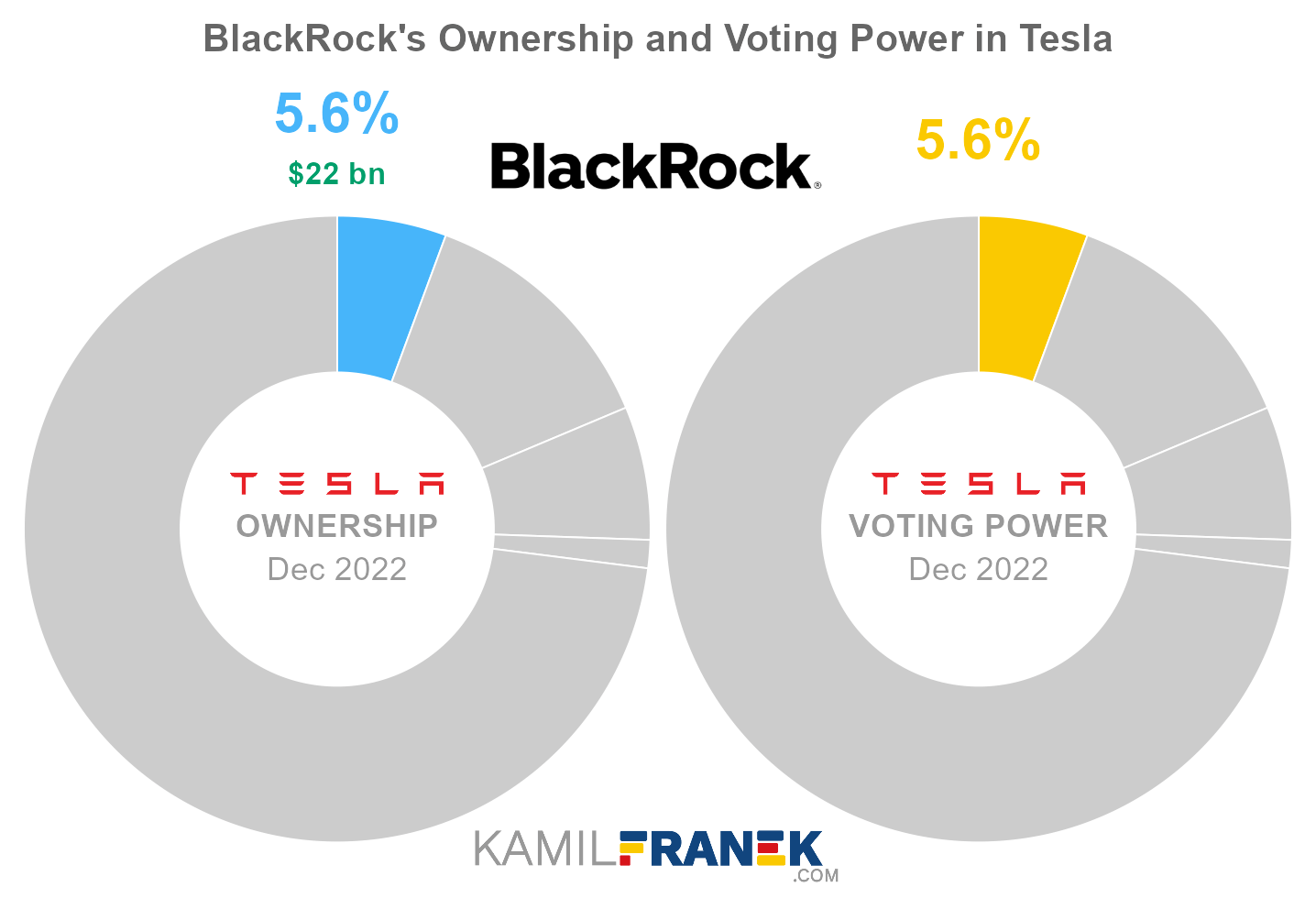
While stock splits dramatically alter the share count in a single event, other corporate actions continuously influence the number of outstanding shares.
Secondary Offerings: When a company needs to raise additional capital, it may issue new shares to the public. This increases the total number of outstanding shares and can lead to dilution, where each existing share represents a slightly smaller percentage of company ownership. Tesla has utilized secondary offerings at various stages to fund its ambitious projects and expansions.
Share Buybacks (or Repurchases): Conversely, a company might choose to buy back its own shares from the open market. This reduces the number of outstanding shares, often leading to an increase in EPS and a boost in shareholder value by concentrating ownership among fewer shares. This is a common strategy for mature, profitable companies, though less frequent for growth companies like Tesla, which prioritize reinvesting capital for expansion.
Employee Stock Options and Restricted Stock Units (RSUs): As part of compensation packages, many companies, including Tesla, grant employees stock options or RSUs. When these options are exercised or RSUs vest, new shares are often issued (or existing treasury shares are distributed), which can incrementally increase the outstanding share count over time. This is a crucial element in attracting and retaining talent, particularly in competitive industries like technology and automotive.
Convertible Debt: Companies may issue convertible bonds, which are debt instruments that can be converted into a predetermined number of common shares under specific conditions. If these bonds are converted, it increases the outstanding share count. These financial instruments offer companies flexibility in capital raising but carry potential for future share dilution.
Connecting Share Count to Tesla’s Financial Health and Valuation
Understanding Tesla’s share count is not an academic exercise; it’s a practical necessity for assessing its financial health and deriving accurate valuations. In the realm of money and investing, share count is a key input for numerous critical financial metrics.
Market Capitalization: The True Measure of Value
As mentioned, market capitalization is calculated by multiplying the current share price by the number of outstanding shares. This figure represents the total value of a company as perceived by the stock market. For Tesla, its market capitalization has fluctuated wildly, at times making it one of the most valuable companies globally, far exceeding traditional automotive giants. A high market cap indicates investor confidence and growth potential, but it doesn’t necessarily mean the company is fundamentally “richer” in terms of cash. Instead, it reflects the market’s collective assessment of its future earnings potential discounted back to the present. Changes in outstanding shares directly influence this number, even if the share price remains stable, fundamentally altering how the market values the enterprise.
Earnings Per Share (EPS): A Key Performance Indicator
Earnings Per Share (EPS) is arguably one of the most scrutinized metrics by investors, providing a snapshot of a company’s profitability on a per-share basis. It’s calculated as a company’s net income divided by its outstanding shares. An increasing EPS often signals a healthy, growing company and can be a catalyst for stock price appreciation. Conversely, a declining EPS can trigger alarm bells.
For Tesla, a company that has experienced significant growth in revenue and, more recently, consistent profitability, monitoring EPS is vital. If Tesla were to issue a large number of new shares without a proportional increase in net income, its EPS would be diluted, potentially signaling slower per-share growth even if total earnings are up. This demonstrates how share count directly affects the perceived efficiency and profitability of a company’s operations. Investors must always consider the “diluted EPS” which accounts for all potential new shares from options, convertible debt, etc., for a more conservative view.
Valuation Metrics: P/E Ratio and Beyond
Beyond EPS, the number of outstanding shares is embedded in various other valuation multiples, helping investors compare companies and assess their relative value. The Price-to-Earnings (P/E) ratio, for instance, divides the current share price by the annual EPS. A higher P/E ratio suggests investors are willing to pay more for each dollar of earnings, often indicating expectations of high future growth. Tesla, as a growth stock, has historically commanded a very high P/E ratio, reflecting market optimism about its long-term potential in EVs, AI, and energy.
Other metrics like Price-to-Sales (P/S) ratio or Enterprise Value (EV) also implicitly or explicitly account for share count. EV, for example, adds market capitalization to total debt and subtracts cash, providing a more comprehensive view of the company’s total value, unaffected by capital structure choices like debt vs. equity. Understanding these relationships allows investors to move beyond mere share price and delve into the deeper financial structure that drives a company’s valuation.
Navigating Investment Decisions with Share Count in Mind
For any investor, leveraging information about outstanding shares is crucial for making informed decisions. It’s a foundational element of due diligence, helping to paint a comprehensive picture of a company’s financial standing and future prospects.
The Role of Due Diligence
Diligent investors understand that current and historical share counts are not always readily apparent at a glance. The most accurate and up-to-date information is always found in a company’s official regulatory filings. For U.S.-listed companies like Tesla, this means scrutinizing documents filed with the SEC, specifically the 10-K annual report and the 10-Q quarterly reports. These documents provide precise figures for outstanding shares, along with explanations of any changes, such as new issuances, buybacks, or the impact of stock options.
Beyond the raw numbers, due diligence also involves understanding the context. Why did a company issue new shares? Was it to fund a critical expansion, or to cover operating losses? Did a stock split achieve its intended effect of broadening investor appeal? These qualitative aspects, when combined with quantitative data, empower investors to make decisions based on a holistic understanding rather than superficial metrics.
Share Count as a Signal
The way a company manages its share count can often serve as a signal about its financial health and strategic priorities. For high-growth companies like Tesla, an increasing share count due to secondary offerings can be a positive sign if the capital is being effectively deployed for expansion and innovation, leading to future revenue and profit growth. It indicates a company investing in its future.
Conversely, a mature, highly profitable company might engage in share buybacks to return value to shareholders, signaling confidence in its cash flow generation and potentially an undervaluation of its stock by the market. An unexpected or continuous increase in share count without clear strategic objectives, on the other hand, might suggest dilution or financial distress, which could be a red flag for investors.
Broader Market Implications for High-Profile Stocks
For a stock as prominent as Tesla, changes in share count, particularly those resulting from stock splits, can have broader market implications. Increased accessibility through lower share prices can attract a new wave of retail investors, driving up trading volume and liquidity. This can also influence a company’s inclusion in various stock market indices, such as the S&P 500. Index funds and ETFs tracking these indices would then be obligated to purchase Tesla shares, further increasing demand.
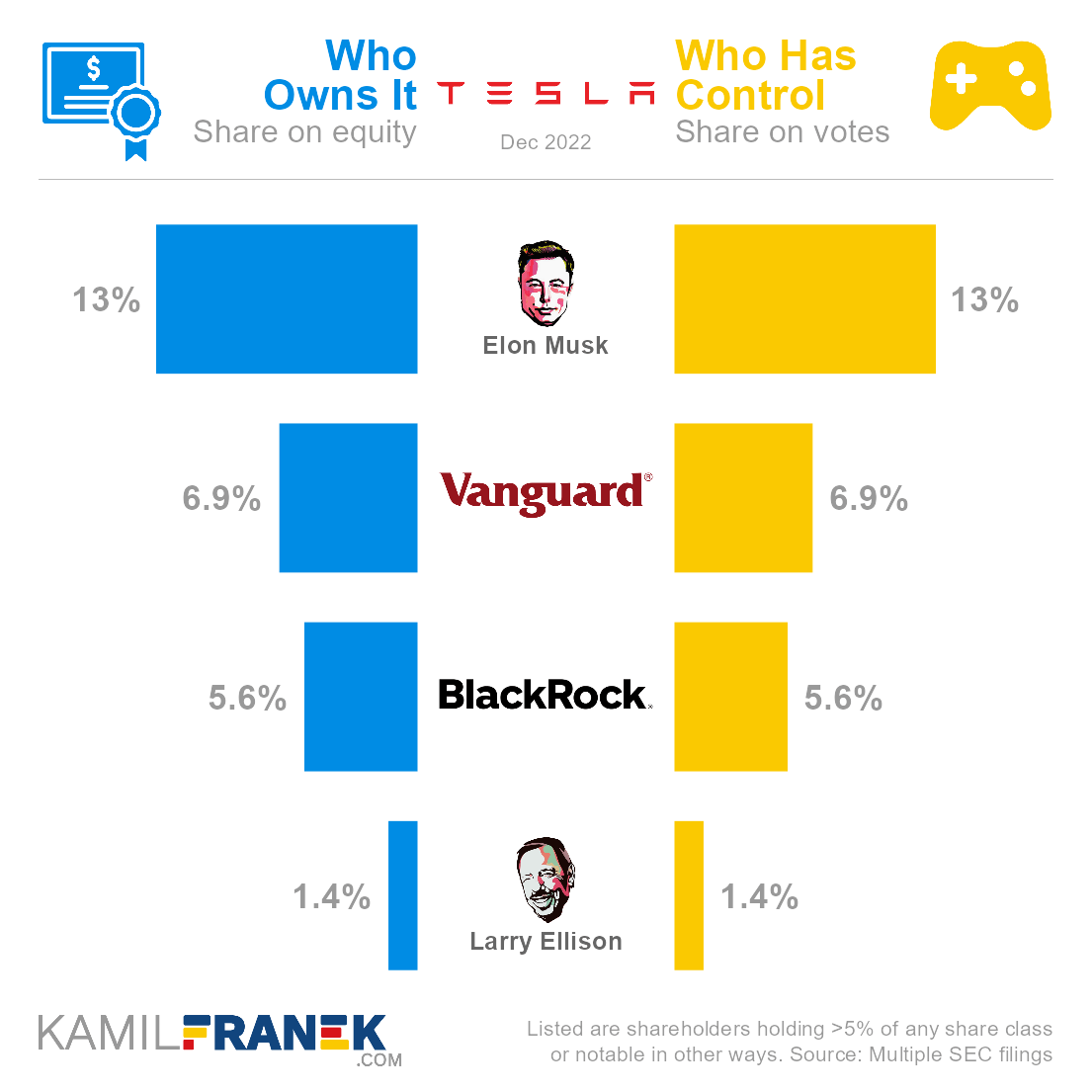
Moreover, the sheer scale of Tesla’s outstanding shares, now in the billions, means that even small percentage shifts in institutional or retail ownership can translate into massive movements in capital. This makes the company’s equity structure a critical factor not just for individual investors but for understanding broader market sentiment and capital flows.
In conclusion, while the question “how many Tesla shares are there?” starts with a simple numerical inquiry, its answer is multifaceted and dynamic, deeply intertwined with the company’s financial strategy, valuation, and market perception. For anyone engaged in the world of money and investing, comprehending these dynamics is essential for making informed decisions and truly understanding the companies that shape our economic landscape.
aViewFromTheCave is a participant in the Amazon Services LLC Associates Program, an affiliate advertising program designed to provide a means for sites to earn advertising fees by advertising and linking to Amazon.com. Amazon, the Amazon logo, AmazonSupply, and the AmazonSupply logo are trademarks of Amazon.com, Inc. or its affiliates. As an Amazon Associate we earn affiliate commissions from qualifying purchases.