
Filing your federal tax return is a cornerstone of financial responsibility for millions of Americans each year. While the obligation is universal, the “where” and “how” of filing have evolved significantly, offering taxpayers a range of choices from traditional paper submissions to sophisticated digital platforms. Deciding where to file isn’t just a matter of logistics; it can impact the speed of your refund, the accuracy of your return, and even the cost of preparation. This comprehensive guide aims to demystify the various avenues available, helping you make an informed decision that best suits your financial situation, technical comfort level, and the complexity of your tax affairs. Understanding your options is the first step toward a seamless and stress-free tax season, ensuring compliance while potentially maximizing your financial outcomes.
Understanding Your Primary Filing Avenues
The Internal Revenue Service (IRS) offers several pathways for taxpayers to submit their federal income tax returns. Each method has distinct advantages and considerations, catering to different needs and preferences. From the lightning-fast efficiency of electronic filing to the time-honored tradition of paper submissions, knowing your options is crucial for navigating the tax landscape successfully.
Electronic Filing (E-filing): The Modern Standard
E-filing has rapidly become the predominant method for submitting federal tax returns, favored for its speed, accuracy, and convenience. The IRS actively encourages e-filing, not only because it reduces processing times and errors but also because it allows for significantly faster refunds, especially when combined with direct deposit.
-
IRS Free File Program: This is a vital resource for many taxpayers. If your Adjusted Gross Income (AGI) falls below a certain threshold (which changes annually, currently around $79,000 for tax year 2023), you may be eligible to use free tax preparation software provided by commercial partners through the IRS Free File program. These guided tax preparation tools walk you through the process, ensuring accuracy and helping you identify potential deductions and credits. The program is accessible directly from the IRS website (IRS.gov/FreeFile) and offers multiple software options to choose from.
-
Commercial Tax Software: For those whose AGI exceeds the Free File threshold or who prefer more robust features, commercial tax preparation software like TurboTax, H&R Block, TaxAct, and others offer comprehensive e-filing solutions. These platforms range from basic versions for simple returns to advanced packages designed for self-employed individuals, investors, or those with complex deductions. They often include audit support, expert advice, and state tax filing integration, though these added features typically come at an additional cost. The software guides you step-by-step, performs calculations automatically, and checks for common errors, significantly reducing the chance of mistakes.
-
Tax Professionals: Many taxpayers opt to have their returns prepared and e-filed by a qualified tax professional, such as a Certified Public Accountant (CPA) or an Enrolled Agent (EA). This option is particularly beneficial for individuals with intricate financial situations, multiple income streams, or those undergoing significant life changes (e.g., marriage, divorce, starting a business). Tax professionals not only handle the filing but also offer personalized advice, ensuring compliance and often identifying deductions or strategies you might overlook. They use specialized software to e-file on your behalf.
-
Security Considerations: While e-filing is highly secure, it’s paramount to use reputable software or professionals and to ensure your internet connection is secure. Always use strong, unique passwords and be wary of phishing scams that mimic the IRS or tax software providers. The IRS employs robust encryption and security protocols to protect your sensitive data during transmission.
Paper Filing: The Traditional Method
Despite the push for digitalization, paper filing remains a viable option, though it is increasingly less common due to slower processing times and a higher likelihood of errors. There are specific scenarios where paper filing might be necessary or preferred.
-
When It’s Used: Some complex forms or certain niche situations might not be supported by all e-filing software, necessitating a paper submission. Additionally, taxpayers who lack reliable internet access, prefer a tangible record, or simply feel more comfortable with the traditional pen-and-paper method may choose to mail their returns.
-
Obtaining Forms: Tax forms and instructions can be downloaded and printed directly from the IRS website (IRS.gov/Forms), picked up at local IRS offices, public libraries, or post offices during tax season. It’s crucial to ensure you are using the correct forms for the relevant tax year.
-
Mailing Addresses: The specific IRS mailing address for your federal tax return depends on two key factors: the state you reside in and the type of form you are filing (e.g., Form 1040, Form 1040-ES, etc.), and whether you are enclosing a payment. The IRS provides detailed mailing addresses on its website and within the instructions for each tax form. It is absolutely critical to use the correct address to avoid delays.
-
Proof of Mailing: If you choose to paper file, especially close to the deadline, consider using certified mail with a return receipt. This provides proof that you mailed your return and that the IRS received it, offering peace of mind and protection in case of disputes.
-
Processing Times: Be prepared for significantly longer processing times compared to e-filed returns, particularly for refunds. Paper returns typically take several weeks, sometimes months, to process, and tracking their status is less immediate.
Key Factors Influencing Your Filing Decision
Choosing the “where” and “how” of filing your federal tax return isn’t a one-size-fits-all decision. Several personal and financial factors should guide your choice, ensuring efficiency, accuracy, and peace of mind.
Complexity of Your Tax Situation
The intricacy of your financial life is perhaps the most significant determinant of your filing method.
-
Simple Returns: If your income consists primarily of W-2 wages, you take the standard deduction, and you have no unusual investments or deductions, consumer-grade tax software or even the IRS Free File program can easily handle your return. These options are designed for straightforward scenarios and can be completed quickly and affordably.
-
Complex Returns: For those with self-employment income (Form 1099-NEC), extensive investment portfolios, rental properties, foreign income, itemized deductions, or significant life changes like starting a business or inheriting assets, the complexity warrants careful consideration. While advanced versions of commercial software can handle many of these situations, engaging a qualified tax professional (CPA, EA) often provides invaluable expertise. They can ensure you take advantage of all eligible deductions and credits, minimize your tax liability, and navigate intricate tax laws that might be challenging for an individual.
Cost vs. Value
Tax filing services span a broad spectrum of costs, from completely free to hundreds or even thousands of dollars. Evaluating this balance is crucial.
-
Free Options: The IRS Free File Program is genuinely free for eligible taxpayers, offering excellent value. Many commercial software providers also offer free versions for very simple returns. These are ideal for those on a tight budget with straightforward finances.
-
Paid Software: As your tax situation becomes more complex, you’ll likely need to upgrade to paid versions of commercial tax software. These typically range from $30 to $150, offering enhanced features, additional forms, and sometimes access to tax experts. The value here lies in the software’s ability to guide you through complex scenarios and catch errors.
-
Professional Fees: Hiring a tax professional is the most expensive option, with fees varying widely based on location, professional’s credentials, and the complexity of your return. A basic return might cost $150-$300, while a highly complex business return could be over $1,000. However, the value can be substantial, especially if a professional identifies significant savings or helps avoid costly mistakes that outweigh their fees. They also offer peace of mind and can represent you in case of an audit.
Time and Convenience
Your available time and preference for convenience play a significant role in your filing choice.
-
E-filing: Electronic filing is unparalleled in convenience. You can complete your return from anywhere with an internet connection, at any time. Software guides you, performs calculations instantly, and allows for immediate submission confirmation. Refunds for e-filed returns with direct deposit are typically processed within 21 days.
-
Paper Filing: This method is the least convenient and most time-consuming. It requires obtaining physical forms, manually filling them out (or printing), packaging them, and mailing them. Processing times for paper returns are significantly longer, potentially extending to several weeks or even months for refunds.
-
Professional Preparation: While you still need to gather documents, a professional handles the bulk of the work. This is convenient for those who are time-poor or find tax preparation daunting.
Refund Speed and Payment Options
How quickly you receive a refund or how you pay taxes due can also influence your filing choice.
-
Fastest Refunds: E-filing combined with direct deposit is by far the fastest way to receive your federal tax refund. The IRS can process these returns and issue refunds in as little as 2-3 weeks.
-
Payment Options: If you owe taxes, e-filing platforms often allow you to schedule an electronic payment directly from your bank account (IRS Direct Pay) or through the Electronic Federal Tax Payment System (EFTPS). You can also pay by credit/debit card (though third-party processing fees apply) or by mailing a check or money order with Form 1040-V, Payment Voucher, if paper filing.
Navigating Specific Filing Scenarios

Beyond the general choices, certain situations introduce specific considerations that can influence where and how you file your federal tax return. Understanding these nuances ensures you remain compliant and leverage appropriate resources.
Filing with a Tax Professional
Engaging a tax professional goes beyond simply outsourcing the filing process; it’s about securing expertise tailored to your financial circumstances.
-
When to Consider It:
-
Complex Tax Situations: If you own a business, have significant investment income (stocks, bonds, cryptocurrency), rental properties, foreign income, or intricate deductions and credits, a professional can navigate the complexities efficiently and accurately.
-
Major Life Changes: Events like marriage, divorce, birth of a child, purchasing a home, retirement, or receiving an inheritance can dramatically alter your tax situation, making professional guidance invaluable.
-
Audit Concerns: If you’ve been audited previously or have reason to believe your return might trigger scrutiny, a professional can prepare a robust defense and, in many cases, represent you before the IRS.
-
Time Constraints or Lack of Confidence: For those who lack the time, patience, or confidence to prepare their own taxes, a professional provides peace of mind and saves valuable hours.
-
-
Types of Professionals:
-
Certified Public Accountants (CPAs): Licensed by individual states, CPAs possess extensive knowledge in accounting and tax law. They can handle complex tax issues for individuals and businesses.
-
Enrolled Agents (EAs): Federally licensed by the IRS, EAs specialize in taxation and have unlimited rights to represent taxpayers before the IRS.
-
Tax Attorneys: Lawyers specializing in tax law, often engaged for highly complex tax disputes, appeals, or planning strategies.
-
-
What to Look For: When selecting a professional, check their credentials, experience in your specific tax situation, fee structure, and whether they offer e-filing as standard practice. Always choose someone reputable and trustworthy.
Extended Deadlines and Amended Returns
Life happens, and sometimes you can’t file on time or discover an error after filing. The IRS has procedures for these scenarios.
-
Filing an Extension (Form 4868): If you need more time to prepare your federal income tax return, you can file Form 4868, Application for Automatic Extension of Time to File U.S. Individual Income Tax Return. This grants you an automatic six-month extension, typically until October 15. Crucially, an extension grants you more time to file, not more time to pay. If you expect to owe taxes, you must still estimate and pay them by the original deadline (usually April 15) to avoid penalties and interest. Extensions can be filed electronically through tax software, a tax professional, or directly via the IRS website.
-
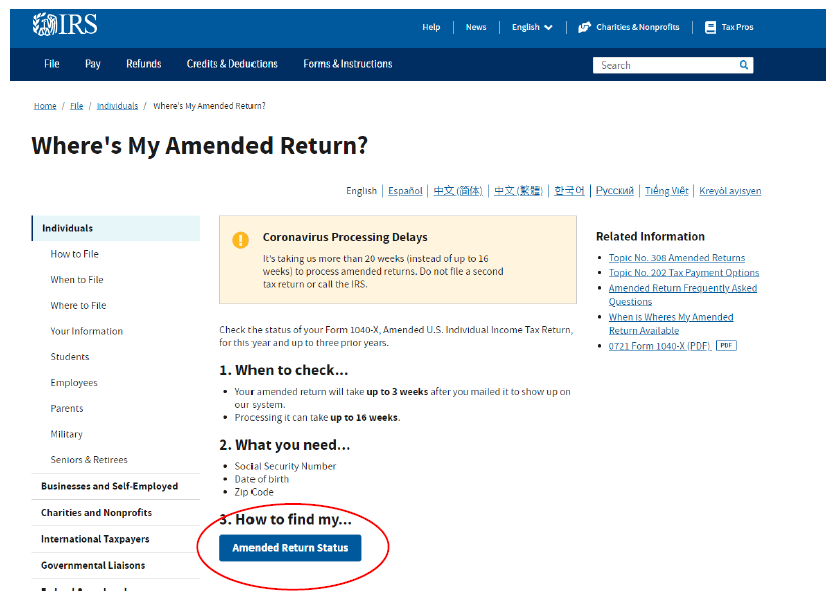
Amended Returns (Form 1040-X): If you discover an error or omission on a tax return you’ve already filed, you’ll need to submit an amended return using Form 1040-X, Amended U.S. Individual Income Tax Return. This form is almost always paper-filed, even if your original return was e-filed. It requires you to explain the changes you are making. The IRS generally allows you to amend a return for up to three years from the date you filed the original return or two years from the date you paid the tax, whichever is later.
Special Considerations for Certain Taxpayers
Some taxpayers have unique circumstances that warrant specific filing information or assistance.
-
Military Personnel: Members of the U.S. armed forces often have extended filing deadlines, especially if serving in a combat zone. They may also qualify for free tax assistance through programs like Military OneSource or Volunteer Income Tax Assistance (VITA) sites specifically for military families.
-
Overseas Filers: U.S. citizens and resident aliens living and working abroad are typically granted an automatic two-month extension to file their returns (until June 15), with further extensions available. They must still report their worldwide income and may be eligible for the Foreign Earned Income Exclusion or foreign tax credits. The IRS has specific filing addresses for those residing abroad.
-
Victims of Natural Disasters: In the aftermath of federally declared natural disasters, the IRS often provides extended filing and payment deadlines for affected individuals and businesses in designated areas. It’s important to check IRS announcements for current disaster relief.
Best Practices for a Smooth Filing Experience
Regardless of where or how you choose to file, adopting sound organizational and review practices can significantly streamline the process, reduce stress, and minimize the risk of errors.
Gather All Necessary Documents Early
Preparation is the cornerstone of efficient tax filing. Proactively collecting your documents is the single most impactful step you can take.
-
Essential Records: This includes W-2s (wages), 1099s (various income types: independent contractor, interest, dividends, unemployment, retirement distributions), investment statements (Form 1099-B, 1099-DIV), mortgage interest statements (Form 1098), student loan interest statements (Form 1098-E), tuition statements (Form 1098-T), records of charitable contributions, medical expenses, property taxes paid, and any other income or deduction documentation.
-
Organization is Key: As documents arrive throughout January and February, keep them organized in a dedicated folder, both physically and digitally. This prevents last-minute scrambling and ensures you don’t overlook any crucial information.
Review Your Return Thoroughly
Before hitting “submit” or dropping your envelope in the mail, conduct a meticulous review of your entire return.
-
Common Errors: Double-check Social Security numbers (for yourself, spouse, and dependents), bank account numbers for direct deposit, and all dates. Verify that all income sources have been included and that deductions and credits are correctly applied. Mistakes in these areas are common and can lead to significant delays in processing your return or refund.
-
Software Checks: If using tax software, utilize its built-in error-checking features. Most software will highlight potential issues and prompt you to correct them.
-
Professional Review: If you’re self-preparing a complex return, consider having a professional perform a final review, sometimes called a “tax diagnostic” or “second look” service.
Keep Records
Maintaining comprehensive records is not just good practice; it’s an IRS requirement.
-
How Long to Keep Records: Generally, you should keep tax records for at least three years from the date you filed your original return or two years from the date you paid the tax, whichever is later. However, for certain situations (e.g., if you claimed a loss from worthless securities), the period can extend to seven years. For records related to property you own, keep them until you sell the property and file a return for that year.
-
Digital vs. Physical Storage: Keep copies of your filed returns and all supporting documentation. Both digital and physical copies are acceptable, but having both provides redundancy. Securely store digital copies on an external hard drive or cloud service, and keep physical copies in a safe, accessible place.
Stay Informed
Tax laws are not static; they change frequently. Staying informed is essential for accurate filing and effective financial planning.
-
IRS Website: The official IRS website (IRS.gov) is the most authoritative and up-to-date source for tax information, forms, instructions, and news regarding tax law changes. Subscribe to IRS e-newsletters or follow their official social media channels.
-
Reliable News Sources: Follow reputable financial news outlets and tax blogs that provide insights into new legislation and tax planning strategies.
-
Consult Professionals: Your tax professional should keep you informed of relevant changes, but it’s good to have a general awareness of major shifts in tax policy.
Conclusion
The journey of filing your federal tax return offers a spectrum of choices, each designed to meet varying taxpayer needs. Whether you opt for the efficiency of e-filing through commercial software or a dedicated professional, or prefer the traditional tangible approach of paper filing, the ultimate goal remains consistent: an accurate and timely submission. By understanding the distinct advantages and considerations of each method, assessing your personal financial complexity, and adhering to best practices for organization and review, you can transform a potentially daunting annual task into a manageable and even empowering financial exercise. Embrace the resources available, make informed decisions, and approach tax season with confidence, ensuring your compliance while optimizing your financial well-being.
aViewFromTheCave is a participant in the Amazon Services LLC Associates Program, an affiliate advertising program designed to provide a means for sites to earn advertising fees by advertising and linking to Amazon.com. Amazon, the Amazon logo, AmazonSupply, and the AmazonSupply logo are trademarks of Amazon.com, Inc. or its affiliates. As an Amazon Associate we earn affiliate commissions from qualifying purchases.