
In today’s digital economy, the ability to accept credit card payments is not just a convenience; it’s a fundamental requirement for most businesses to thrive. Cash transactions are increasingly becoming a relic of the past, with consumers favoring the ease, security, and rewards offered by credit and debit cards. For businesses, mastering the art of processing these payments efficiently and securely is paramount not only for maximizing sales but also for managing cash flow, reducing financial risk, and enhancing customer satisfaction.
This guide delves into the intricate world of credit card processing, demystifying the terminology, outlining the essential steps, and equipping you with the knowledge to select the optimal solutions for your financial operations. From understanding the core players to navigating complex fee structures and ensuring robust security, we’ll cover everything you need to know to empower your business in the modern financial landscape.
Understanding the Fundamentals of Credit Card Processing
Before diving into the specifics of how to process payments, it’s crucial to grasp the underlying ecosystem and the journey a payment takes from a customer’s card to your bank account. This intricate dance involves multiple entities, each playing a vital role in the secure and swift transfer of funds.
The Key Players in a Transaction
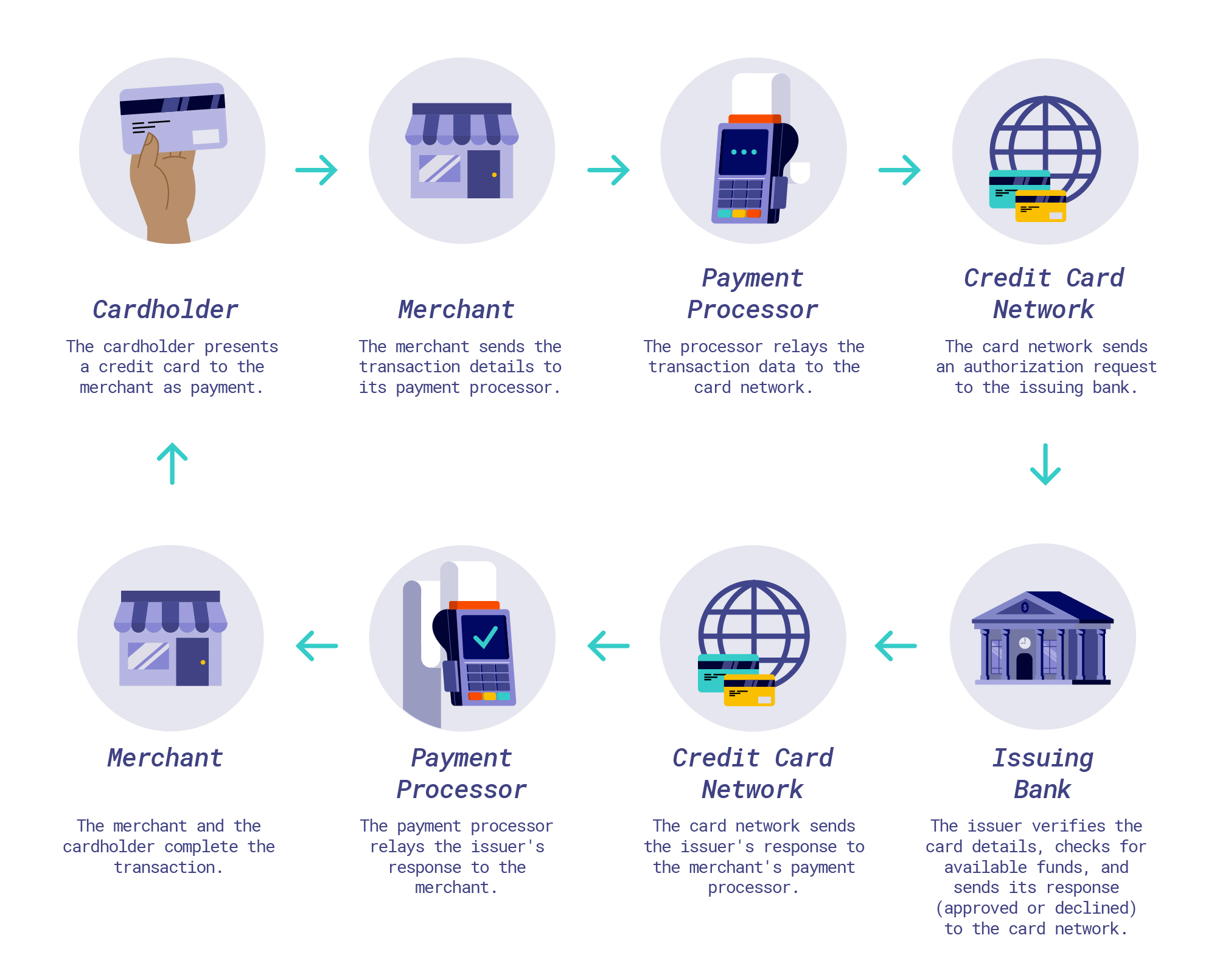
A typical credit card transaction involves several interconnected parties:
-
Cardholder: The customer initiating the purchase with their credit or debit card.
-
Merchant: Your business, the entity accepting the payment for goods or services.
-
Payment Gateway: This is the digital interface that securely transmits card transaction data from the merchant to the payment processor. Think of it as the secure bridge between your sales system (POS, e-commerce site) and the financial networks. It encrypts sensitive card information to protect it during transit.
-
Payment Processor (Acquirer): This is a financial institution that acts as the intermediary between your business, the card networks, and the issuing bank. The processor handles the actual financial transaction, processing the authorization request and ultimately settling the funds into your merchant account. They often provide the technology and services necessary for the transaction to occur.
-
Issuing Bank: The financial institution that issued the credit or debit card to the cardholder (e.g., Chase, Wells Fargo, Bank of America). This bank is responsible for approving or declining transactions based on the cardholder’s available credit or funds.
-
Card Networks: Global financial networks like Visa, Mastercard, American Express, and Discover. These networks set the rules and regulations for transactions, facilitate communication between issuing banks and payment processors, and manage the flow of funds across the entire system.
The Transaction Flow: A Step-by-Step Breakdown
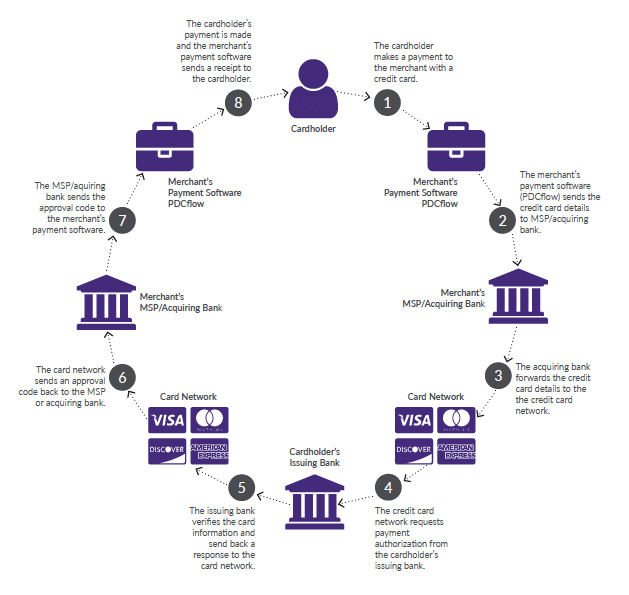
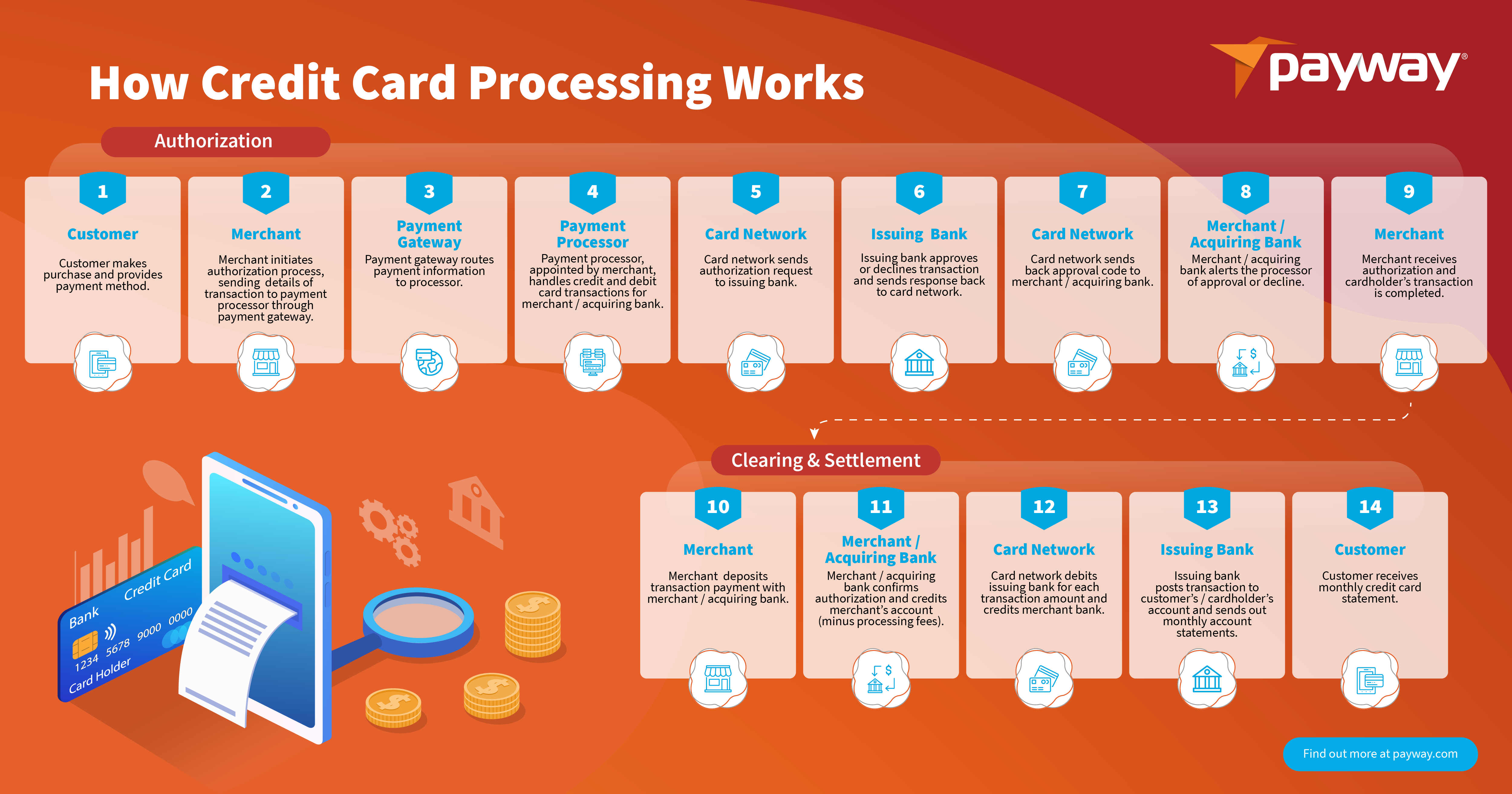
When a customer swipes, dips, or types in their card information, a rapid series of events unfolds:
-
Authorization: The merchant’s POS system or e-commerce platform sends the transaction details via the payment gateway to the payment processor. The processor then routes this request through the appropriate card network to the issuing bank. The issuing bank checks for sufficient funds/credit and verifies the card’s validity. If approved, an authorization code is sent back through the same chain. This step typically takes mere seconds.
-
Authentication (if applicable): For online transactions, additional layers like 3D Secure (e.g., Visa Secure, Mastercard ID Check) might be used to verify the cardholder’s identity directly with their issuing bank, adding another layer of fraud prevention.
-
Capture: Once a transaction is authorized, the merchant “captures” the funds. For physical retail, this often happens immediately. For online orders, it might occur when goods are shipped. Capturing signals to the processor that the authorized amount should be transferred.
-
Settlement: At the end of the business day (or a defined period), the merchant sends a batch of all captured transactions to the payment processor. The processor then submits these batches to the card networks, which in turn request the funds from the respective issuing banks.
-
Funding: The issuing banks transfer the approved funds (minus interchange fees) to the card networks, which then transfer them to the payment processor. Finally, the payment processor deposits the net amount (minus all applicable processing fees) into the merchant’s designated bank account. This final funding step typically takes 1-3 business days.
Choosing the Right Credit Card Processing Solution for Your Business
Selecting the appropriate credit card processing solution is a critical financial decision that can impact your operational efficiency, cost structure, and customer experience. It’s not a one-size-fits-all scenario, and what works for a large e-commerce giant might be overkill for a small local café.
Factors to Consider Beyond Price
While fees are undeniably important, a holistic evaluation requires looking at several other dimensions:
-
Transaction Volume & Value: High-volume businesses with small average transaction values might benefit from flat-rate pricing, while businesses with fewer, larger transactions might prefer interchange-plus models. Your total monthly sales volume is a key indicator for potential savings.
-
Business Type & Sales Environment:
-
E-commerce: Requires a robust payment gateway integrated with your online store, offering features like recurring billing, fraud detection, and mobile responsiveness.
-
Retail/Brick-and-Mortar: Needs a Point-of-Sale (POS) system with integrated card readers (EMV chip, NFC for contactless).
-
Mobile/On-the-Go: Solutions like mobile card readers that connect to smartphones/tablets are essential for field services, food trucks, or pop-up shops.
-
Service-Based/B2B: Virtual terminals, online invoicing with “pay now” options, or recurring billing systems are often preferred.
-
-
Payment Security (PCI DSS Compliance): Your chosen solution must help you comply with the Payment Card Industry Data Security Standard (PCI DSS) to protect cardholder data and avoid hefty fines. Robust fraud prevention tools are also crucial.
-
Integration with Existing Systems: Can the processing solution seamlessly integrate with your accounting software (e.g., QuickBooks), inventory management, CRM, or existing POS? Seamless integration streamlines financial reporting and reduces manual effort.
-
Customer Support: When a payment system goes down or you have a critical query, reliable 24/7 customer support can be invaluable.
Common Processing Models
Various models and providers exist, each with distinct advantages and disadvantages regarding cost, flexibility, and features:
-
Payment Gateways & Processors (Traditional Merchant Accounts): This model typically involves setting up a dedicated merchant account with an acquiring bank. You then connect this account to a payment gateway for online transactions and/or physical terminals for in-person sales. This often offers lower rates for high-volume businesses but can involve more complex setup and approval processes. You’ll typically get a transparent breakdown of fees.
-
Payment Aggregators (e.g., Stripe, Square, PayPal): These services consolidate many merchants under one large merchant account. They offer easy setup, often no monthly fees (just per-transaction fees), and integrated gateways and processing. This is ideal for startups and smaller businesses due to its simplicity, but transaction fees can be higher than traditional merchant accounts, especially for larger volumes. They simplify PCI compliance for merchants.
-
Point-of-Sale (POS) Systems: Modern POS systems often come with integrated payment processing capabilities. They manage sales, inventory, customer data, and payments all from one platform, making them ideal for retail and hospitality businesses.
-
Mobile Payment Solutions: These include mobile card readers (dongles) that connect to smartphones or tablets, allowing businesses to accept payments on the go. Apps often accompany these devices for transaction management.
-
Online Invoicing & Virtual Terminals: A virtual terminal allows you to process payments manually by entering card details into a web-based interface, useful for phone orders. Online invoicing allows you to send invoices with direct payment links, simplifying collection for service-based businesses.
Navigating Fees and Optimizing Costs
Understanding the fee structure associated with credit card processing is vital for managing your business’s financial health. These fees can appear complex, but dissecting them reveals opportunities for cost optimization.
Deconstructing Credit Card Processing Fees
Every transaction comes with a cost, typically comprising several layers:
-
Interchange Fees: These are the largest component of processing fees, making up 70-80% of the total. They are set by the card networks (Visa, Mastercard, etc.) and paid by the acquiring bank (your processor) to the issuing bank (the customer’s bank). Interchange rates vary based on card type (rewards, debit, corporate), transaction type (card-present, card-not-present), and industry. These are non-negotiable.
-
Assessment Fees: These are paid directly to the card networks (Visa, Mastercard, Amex, Discover) for using their network. They are a smaller percentage of the transaction value than interchange fees but are also non-negotiable.
-
Processor Markup: This is the fee charged by your payment processor for their services. This is the only truly negotiable part of the processing fee equation. It covers their operational costs, customer support, and profit margin. It can be a percentage, a per-transaction fee, or both.
-
Other Fees: Be aware of various additional fees, which can include:
-
Monthly Statement Fees: For providing monthly reports.
-
PCI Compliance Fees: To ensure your business meets security standards.
-
Gateway Fees: For using a payment gateway service.
-
Chargeback Fees: Levied when a customer disputes a transaction.
-
Batch Fees: For settling your daily transactions.
-
Annual Fees: A yearly charge from some processors.
-
Strategies for Cost Reduction
Proactive management of processing fees can significantly impact your bottom line:
-
Understanding Pricing Models:
-
Interchange Plus: Often considered the most transparent, you pay the direct interchange and assessment fees plus a fixed markup from your processor (e.g., interchange + 0.20% + $0.10). Best for businesses with higher volumes.
-
Tiered Pricing: Categorizes transactions into “qualified,” “mid-qualified,” and “non-qualified” tiers, each with different rates. Non-qualified transactions (e.g., rewards cards, keyed-in transactions) incur the highest rates. This model can be less transparent and more expensive.
-
Flat Rate Pricing: A simple fixed percentage + per-transaction fee (e.g., 2.9% + $0.30). Popular with aggregators (Square, Stripe) and great for small businesses or those with unpredictable volumes due to its predictability. Can become more expensive than Interchange Plus at higher volumes.
-
Choose the model that best aligns with your transaction volume and risk profile.
-
-
PCI DSS Compliance: Maintaining compliance helps you avoid non-compliance fees and potential data breach costs, which can be devastating.
-
Minimizing Chargebacks: High chargeback rates lead to fees and can even result in your merchant account being terminated. Implement clear refund policies, provide excellent customer service, and ensure detailed transaction records and proof of delivery.
-
Negotiating with Processors: Don’t be afraid to compare rates and negotiate. If you have significant volume, you have leverage. Review your statements regularly to spot hidden fees or rate increases.
-
Surcharging/Cash Discounting: In some regions, businesses can legally pass a portion of the credit card processing fees onto the customer (surcharging) or offer a discount for cash payments. Understand local laws before implementing.
Ensuring Security and Compliance (Financial Risk Management)
In the realm of credit card payments, security isn’t just a best practice; it’s a legal and financial imperative. Protecting cardholder data is crucial not only for consumer trust but also to shield your business from devastating financial losses and legal repercussions.
PCI DSS Compliance: Protecting Cardholder Data
The Payment Card Industry Data Security Standard (PCI DSS) is a set of security standards designed to ensure that all companies that process, store, or transmit credit card information maintain a secure environment. Compliance is mandatory for any business accepting credit cards.
-
What it is and why it’s critical: PCI DSS compliance protects sensitive cardholder data from breaches, reduces fraud, and prevents potentially crippling fines, lawsuits, and damage to your business’s reputation. It’s about safeguarding your financial assets and your customers’ trust.
-
Basic Requirements: While complex, PCI DSS broadly covers:
-
Building and maintaining a secure network (firewalls, secure passwords).
-
Protecting cardholder data (encryption, tokenization).
-
Maintaining a vulnerability management program (anti-virus, secure systems).
-
Implementing strong access control measures.
-
Regularly monitoring and testing networks.
-
Maintaining an information security policy.
-
Many modern payment processors and aggregators (like Square and Stripe) simplify PCI compliance for merchants by handling much of the burden themselves, provided you use their compliant hardware and software. However, ultimate responsibility for your business’s environment still rests with you.
Mitigating Fraud and Chargebacks
Fraud and chargebacks represent direct financial losses for your business, impacting revenue, increasing processing fees, and consuming valuable operational time.
-
Understanding Chargebacks: A chargeback occurs when a cardholder disputes a transaction with their issuing bank, requesting a refund. Common reasons include unauthorized transactions, goods not received, or dissatisfaction with services. Each chargeback incurs a fee from your processor, and a high rate can lead to account suspension.
-
Fraud Detection Tools: Implement robust tools and practices to identify and prevent fraudulent transactions:
-
CVV/CVC: Always request the 3- or 4-digit security code on the back/front of the card.
-
Address Verification Service (AVS): Checks if the billing address provided matches the one on file with the issuing bank.
-
3D Secure (e.g., Visa Secure, Mastercard ID Check): Adds an extra authentication step for online purchases, shifting liability for fraud to the issuing bank if successful.
-
Tokenization: Replaces sensitive card data with a unique, encrypted token, making the original data useless to fraudsters if breached.
-
Fraud Scoring & AI Tools: Many payment gateways offer sophisticated algorithms that analyze transaction patterns to flag suspicious activity.
-
-
Best Practices for Preventing Disputes:
-
Clear Policies: Clearly state your refund, return, and cancellation policies.
-
Excellent Customer Service: Resolve customer issues promptly and fairly to prevent them from escalating to a chargeback.
-
Detailed Records: Maintain meticulous records of all transactions, including proof of delivery, communication with customers, and any authorization confirmations.
-
Accurate Descriptions: Ensure product/service descriptions are accurate to avoid “not as described” disputes.
-
Timely Processing: Process refunds and cancellations promptly.
-
The Future of Credit Card Payments and Your Business
The financial technology landscape is continuously evolving, introducing new methods of payment and transforming how businesses interact with money. Staying abreast of these changes is crucial for maintaining a competitive edge and ensuring long-term financial success.
Emerging Payment Technologies
Innovation is rapidly shaping the future of credit card processing and beyond:
-
Contactless Payments (NFC & Mobile Wallets): Technologies like Near Field Communication (NFC) allow customers to tap their card or smartphone (via Apple Pay, Google Pay, Samsung Pay) to a compatible terminal for swift and secure transactions. These are growing rapidly due to convenience and perceived hygiene.
-
Installment Payments (Buy Now, Pay Later – BNPL): Services like Affirm, Afterpay, and Klarna allow customers to pay for purchases in several interest-free installments. For businesses, this can increase average order value and conversion rates, though it introduces a different financial flow and cost structure.
-
Cryptocurrency Payments: While still niche for mainstream commerce, some businesses are exploring accepting cryptocurrencies like Bitcoin and Ethereum. This represents a significant shift in the concept of money and transaction processing, though volatility and regulatory uncertainty remain challenges.
-
Biometric Payments: Facial recognition and fingerprint scanning are emerging as ultra-secure payment authentication methods, moving towards password-less and card-less transactions.
Adapting for Long-Term Success
To future-proof your payment processing strategy and maximize your financial potential, consider these adaptive approaches:
-
Embracing Omnichannel Payments: Provide a consistent and seamless payment experience across all your sales channels – online, in-store, mobile, and even social media. An integrated payment system ensures all financial data is consolidated, offering a unified view of your revenue.
-
Leveraging Data for Financial Insights: Your payment processing data is a rich source of information. Analyze transaction patterns, peak sales times, customer preferences, and payment method popularity to make informed business decisions, optimize inventory, and enhance marketing strategies. It’s about turning raw financial data into actionable intelligence.
-
Continuous Evaluation of Payment Partners: The financial industry is dynamic. Regularly review your payment processor’s rates, features, and customer service. As your business grows or changes, your needs may evolve, and a different provider might offer better value or more suitable solutions. Don’t be afraid to compare and negotiate to ensure you’re always getting the best financial deal.
Conclusion
Processing credit card payments is far more than a simple transaction; it’s a cornerstone of modern business finance. By understanding the intricate mechanics, choosing the right tools, diligently managing costs, and prioritizing security, businesses can transform this essential function from a mere operational necessity into a powerful engine for growth and financial stability.
Embrace the complexity, leverage the innovation, and continuously refine your payment processing strategy. In doing so, you not only meet customer expectations but also empower your business to navigate the evolving financial landscape with confidence, ensuring secure revenue streams and fostering a robust economic future. View your payment system as an investment in your business’s success, and it will undoubtedly yield dividends.
aViewFromTheCave is a participant in the Amazon Services LLC Associates Program, an affiliate advertising program designed to provide a means for sites to earn advertising fees by advertising and linking to Amazon.com. Amazon, the Amazon logo, AmazonSupply, and the AmazonSupply logo are trademarks of Amazon.com, Inc. or its affiliates. As an Amazon Associate we earn affiliate commissions from qualifying purchases.