
Effectively managing your credit card payments is a cornerstone of sound personal finance. For Bank of America credit cardholders, understanding the various payment methods, setting up efficient systems, and adhering to best practices can significantly impact your financial health, from your credit score to your long-term financial goals. This comprehensive guide will navigate you through the process, offering insights into timely payments, available options, and strategic approaches to keep your finances in excellent shape.
Understanding Your Bank of America Credit Card Bill
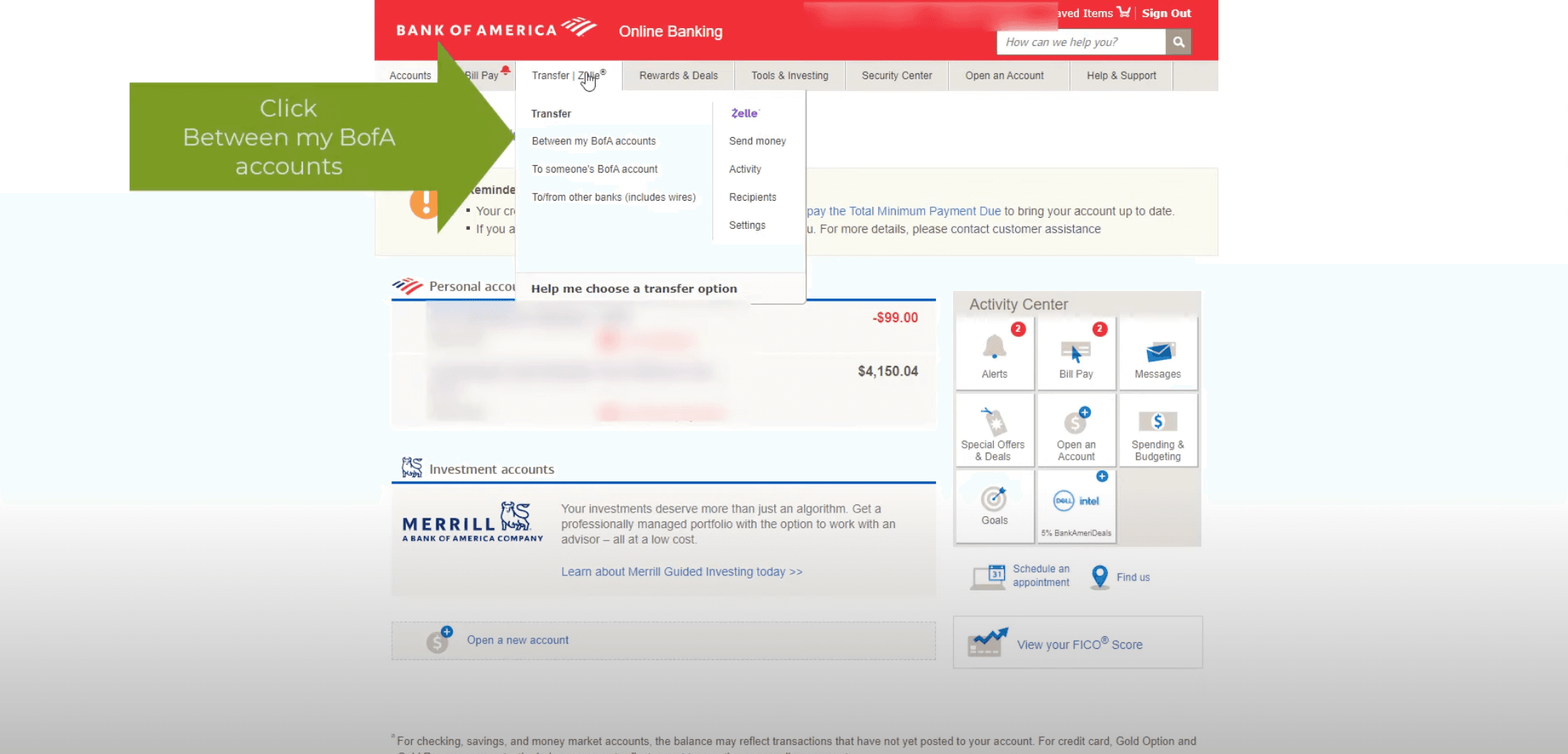
Before you even consider making a payment, it’s crucial to grasp what your Bank of America credit card statement is telling you. This document isn’t just a request for money; it’s a detailed financial report of your spending, payments, and interest accrual over a specific billing cycle.
Key Components of Your Statement
Every Bank of America credit card statement will feature several critical pieces of information you need to review diligently:
-
Due Date: This is perhaps the most important date on your statement. It’s the absolute last day your payment must be received by Bank of America to avoid late fees and potential negative impacts on your credit score. Missing this date can also lead to penalty interest rates.
-
Minimum Payment Due: This is the smallest amount you must pay by the due date to keep your account in good standing. While paying only the minimum might seem appealing, it prolongs your debt, incurs more interest over time, and slows down your credit-building progress.
-
New Balance (or Statement Balance): This is the total amount you owe for the current billing cycle, including new purchases, cash advances, fees, and interest, minus any payments or credits. Paying this amount in full by the due date means you typically won’t pay any interest on your purchases (assuming you had a grace period and paid the previous balance in full).
-
Previous Balance: The outstanding balance from your last billing cycle.
-
Credit Limit: The maximum amount of credit Bank of America has extended to you.
-
Available Credit: The amount of credit you have left to use before reaching your credit limit.
-
Interest Rate (APR): The Annual Percentage Rate applied to different types of transactions (purchases, cash advances, balance transfers). Understanding this rate helps you grasp the cost of carrying a balance.
-
Transaction History: A detailed list of all purchases, payments, returns, and fees during the billing cycle. Reviewing this helps you track your spending and identify any unauthorized transactions.
Importance of Timely Payments
The significance of paying your Bank of America credit card bill on time cannot be overstated. It is fundamental to responsible credit management and has far-reaching financial implications:
-
Avoiding Late Fees: Bank of America, like other issuers, charges a late fee if your payment isn’t received by the due date. These fees can range from around $30 to $40, adding unnecessary costs to your debt.
-
Protecting Your Credit Score: Payment history is the single largest factor in determining your FICO credit score, accounting for 35%. A single late payment (especially if it’s 30 days or more overdue) can cause a significant drop in your score, impacting your ability to get favorable rates on loans, mortgages, and even apartment rentals or insurance in the future.
-
Avoiding Penalty Interest Rates: Some credit card agreements include a “penalty APR” clause. If you miss a payment, your interest rate can jump significantly, making it much harder and more expensive to pay down your debt.
-
Maintaining Good Standing with Bank of America: Consistently paying on time helps you build a positive relationship with the bank, which can lead to higher credit limits, better offers, and other financial opportunities down the line.
Convenient Ways to Pay Your Bank of America Credit Card Bill
Bank of America offers a variety of convenient methods to ensure you can make your credit card payment easily and on time. Choosing the method that best suits your lifestyle and preferences is key to consistent, responsible credit management.
Online Banking and Mobile App Payment
This is by far the most popular and efficient method for most cardholders, offering speed, control, and accessibility.
-
Setting Up and One-Time Payments: If you haven’t already, enroll in Bank of America Online Banking. Once logged in, navigate to your credit card account. You’ll typically find an option like “Make a Payment” or “Pay Bill.” You can choose to make a one-time payment from a linked Bank of America checking or savings account, or from an external bank account (though payments from external accounts might take an extra day or two to process). You’ll specify the amount (minimum, statement balance, or custom amount) and the payment date.
-
Scheduling Payments: Online banking allows you to schedule payments in advance. This is particularly useful if you want to pay on a specific date each month but don’t want to wait until the last minute. You can schedule a payment weeks ahead of its due date, giving you peace of mind.
-
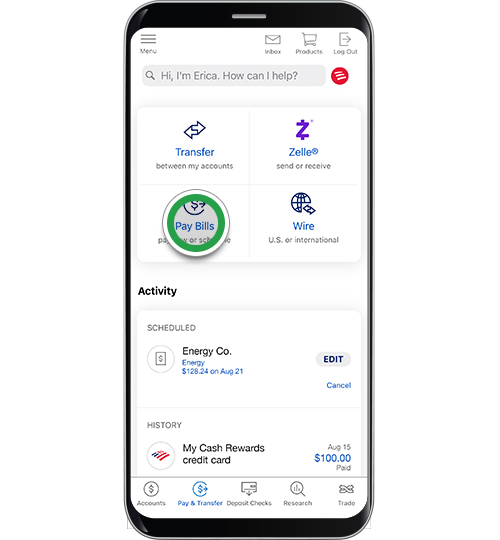
Bank of America Mobile App: The Bank of America Mobile App offers the same functionality as online banking, optimized for your smartphone or tablet. It’s incredibly convenient for making payments on the go, checking your balance, and reviewing transactions anytime, anywhere.
Paying by Phone
If you prefer to speak with someone or use an automated system, paying by phone is a viable option.
-
Automated System: You can typically call the customer service number on the back of your credit card (or find it on the Bank of America website) and follow the prompts to make a payment using the automated system. You’ll need your credit card number and your bank account details.
-
Speaking with a Representative: If you have questions or prefer human assistance, you can opt to speak with a customer service representative. They can process your payment over the phone, but be aware that some banks may charge a small fee for payments made with a representative.
Mail-In Payments
For those who prefer traditional methods or don’t have internet access, paying by mail remains an option.
-
Check or Money Order: Write a check or obtain a money order for the amount you wish to pay.
-
Payment Coupon: Always include the payment coupon provided with your monthly statement. This coupon ensures your payment is correctly applied to your account. If you don’t have the coupon, write your credit card account number clearly on the check or money order.
-
Payment Address: The payment address will be listed on your statement. It’s usually a P.O. Box. Send your payment several business days before the due date to account for mail delivery and processing time.
In-Person Payments
While less common for credit cards than for other banking services, you can make payments in person.
-
Bank of America Branches: You can visit any Bank of America branch during business hours and make a payment with a teller. You’ll need your credit card account number and the payment amount. This can be useful if you need to make a payment right up to the due date and want instant confirmation.
-
Bank of America ATMs: Some Bank of America ATMs allow you to make credit card payments, especially if you’re paying from a linked Bank of America checking or savings account. Check the ATM’s capabilities before relying on this method.
Setting Up and Managing Automatic Payments
Automatic payments, or AutoPay, are a powerful tool for ensuring you never miss a credit card payment. They provide peace of mind and are a staple of responsible financial management.
Benefits of AutoPay
-
Never Miss a Payment: The primary benefit is eliminating the risk of late payments, protecting your credit score and saving you from late fees.
-
Convenience and Time-Saving: Once set up, AutoPay handles your payments automatically, freeing up your time and mental energy.
-
Consistent Credit Building: Regular, on-time payments are crucial for building and maintaining a strong credit history. AutoPay ensures this consistency.
-
Avoiding Penalty APRs: By guaranteeing on-time payments, AutoPay helps you avoid triggering higher penalty interest rates.
Step-by-Step Setup Through Online Banking
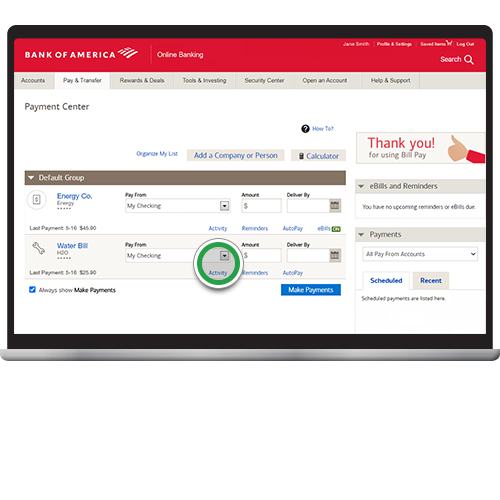
Setting up AutoPay for your Bank of America credit card is straightforward through their online banking portal:
-
Log In: Access your Bank of America Online Banking account or the mobile app.
-
Navigate to Your Credit Card: Select the specific credit card account you wish to set up AutoPay for.
-
Find AutoPay Settings: Look for options like “AutoPay,” “Automatic Payments,” or “Payment Settings.”
-
Choose Payment Amount: You’ll typically have options to pay:
-
Minimum Payment Due: This covers the minimum required, but you’ll accrue interest on the remaining balance.
-
Statement Balance: This is highly recommended as it pays off your balance in full each month, avoiding interest charges on purchases (assuming no previous carryover balance).
-
Fixed Amount: You can set a specific dollar amount to be paid each month.
-
-
Select Payment Account: Link the checking or savings account from which the payments will be drawn. This can be a Bank of America account or an external bank account. Ensure this account always has sufficient funds.
-
Choose Payment Date: Select a date before your credit card’s due date to ensure timely processing. It’s wise to pick a date a few days before the actual due date to account for any processing delays.
-
Review and Confirm: Double-check all the details before confirming the setup. You’ll usually receive a confirmation email.
Monitoring Your AutoPay Settings
While AutoPay is designed for hands-off convenience, it’s not entirely “set it and forget it.”
-
Ensure Sufficient Funds: Always ensure the linked bank account has enough money to cover the AutoPay amount. A returned payment due to insufficient funds can incur fees from both your bank and Bank of America, and still result in a late payment on your credit card.
-
Review Statement Changes: If your financial situation changes, or if you make an unusually large purchase, you might want to adjust your AutoPay settings. For instance, if you usually pay the minimum but want to pay off a large purchase quickly, you might temporarily increase the AutoPay amount or make an additional manual payment.
-
Check Confirmation Notices: Bank of America will typically send notifications before AutoPay payments are processed. Review these to confirm the amount and date are correct.
Best Practices for Credit Card Bill Management
Beyond simply knowing how to pay, implementing strategic best practices can optimize your financial outcomes and empower you to leverage your credit card effectively rather than being burdened by it.
Paying More Than the Minimum
This is arguably the most impactful strategy for credit card users. While the minimum payment keeps your account in good standing, it does little to reduce your overall debt or the interest you pay.
-
Reduce Interest Accrual: By paying more than the minimum, you reduce your principal balance faster, meaning less interest is charged on the outstanding amount each month. Over time, this can save you hundreds or even thousands of dollars.
-
Faster Debt Repayment: A higher payment directly translates to a quicker path to becoming debt-free.
-
Improve Credit Utilization: Paying down your balance reduces your credit utilization ratio (the amount of credit you’re using compared to your total available credit), which is a significant factor in your credit score. Lower utilization generally leads to a higher score.
Understanding Payment Posting Times
Knowing when your payment will actually register on your account is crucial, especially when paying close to the due date.
-
Instant vs. Delayed: Payments made from a Bank of America account via online banking or the mobile app are often processed quickly, sometimes even instantly. However, payments from external bank accounts, mail, or phone calls can take 1-3 business days to post.
-
Weekend and Holiday Considerations: Payments initiated on weekends or holidays typically won’t begin processing until the next business day. Always factor this into your timing to avoid a late payment.
-
Cut-off Times: Banks often have daily cut-off times for processing payments. A payment submitted after this time will be treated as if it were submitted on the next business day.
What to Do If You Can’t Pay on Time
Life happens, and sometimes despite your best efforts, you might find yourself unable to make your full payment by the due date.
-
Contact Bank of America Immediately: Do not wait until your payment is past due. Call Bank of America customer service as soon as you anticipate difficulty. Explain your situation. They may be able to offer options such as a temporary payment arrangement, deferring a payment, or waiving a late fee (especially if it’s your first time).
-
Pay at Least the Minimum: Even if you can’t pay the full balance, try your absolute best to pay at least the minimum amount by the due date to avoid a late payment mark on your credit report.
-
Understand Potential Impacts: Be aware that even with an arrangement, interest may still accrue, and late payment fees could apply unless explicitly waived. The most critical goal is to prevent a 30-day (or more) late mark on your credit report.
Regularly Reviewing Your Statements
Making payments is only one part of responsible credit card management. Regularly reviewing your statements is equally important.
-
Fraud Detection: Scrutinize every transaction. If you spot unfamiliar charges, report them to Bank of America immediately. Early detection helps protect you from financial loss.
-
Budgeting and Spending Habits: Your statement is a clear record of where your money is going. Use it to track your spending, identify areas where you can cut back, and refine your budget.
-
Accuracy Check: Verify that payments and credits have been correctly applied and that all charges are accurate. Discrepancies should be reported promptly.
The Broader Impact of Responsible Credit Card Use
Paying your Bank of America credit card bill responsibly isn’t just about avoiding fees; it’s a fundamental pillar of your overall financial well-being, with significant positive ripple effects.
Building and Maintaining a Strong Credit Score
Your credit score is a numerical representation of your creditworthiness, a critical factor used by lenders, landlords, and even some employers.
-
Access to Better Loans: A high credit score (generally 720+) makes you eligible for lower interest rates on mortgages, car loans, and personal loans, saving you tens of thousands of dollars over a lifetime.
-
Easier Approvals: Lenders are more likely to approve you for credit products, and landlords are more likely to approve your rental applications.
-
Increased Credit Limits: As you demonstrate responsible payment behavior, Bank of America may periodically increase your credit limit, which can also help lower your credit utilization ratio (if your spending doesn’t increase proportionally).
Leveraging Credit Card Rewards and Benefits
Many Bank of America credit cards come with reward programs, cash back, travel points, and other benefits. Responsible payment practices allow you to fully enjoy these perks.
-
Maximize Rewards: By paying your balance in full each month, you avoid interest charges, making your rewards truly “free money” or discounts. If you carry a balance, the interest you pay often outweighs the value of the rewards earned.
-
Utilize Cardholder Benefits: Cards may offer benefits like purchase protection, extended warranties, travel insurance, or concierge services. Keeping your account in good standing ensures you can take advantage of these valuable features when needed.
Financial Discipline and Future Planning
The consistent act of managing and paying your credit card bill fosters broader financial discipline.
-
Budgeting Habits: It forces you to be aware of your spending and integrate credit card payments into your monthly budget.
-
Saving Goals: By keeping credit card debt in check, you free up more of your income to allocate towards savings goals, investments, or other financial priorities.
-
Reduced Financial Stress: Knowing your credit card payments are handled responsibly provides a sense of control and reduces financial anxiety, allowing you to focus on your long-term aspirations.
In conclusion, paying your Bank of America credit card bill is a straightforward process with multiple convenient options. However, beyond the mechanics of payment, it represents a crucial aspect of personal financial management. By understanding your statement, utilizing automated tools, and embracing best practices, you can transform this monthly task into a powerful driver for a stronger credit score, greater financial flexibility, and overall peace of mind.
aViewFromTheCave is a participant in the Amazon Services LLC Associates Program, an affiliate advertising program designed to provide a means for sites to earn advertising fees by advertising and linking to Amazon.com. Amazon, the Amazon logo, AmazonSupply, and the AmazonSupply logo are trademarks of Amazon.com, Inc. or its affiliates. As an Amazon Associate we earn affiliate commissions from qualifying purchases.