
Navigating the complexities of federal tax obligations can feel like a daunting task for many individuals and businesses. Yet, understanding and fulfilling these responsibilities is a cornerstone of sound financial management. Paying federal tax isn’t just a legal requirement; it’s an essential component of a well-structured personal or business finance strategy, ensuring compliance, avoiding penalties, and contributing to overall financial stability. This comprehensive guide will demystify the process, exploring various payment methods, strategic considerations, and the financial tools available to make tax season less stressful.
Understanding Your Federal Tax Obligations
Before delving into how to pay, it’s crucial to understand why and what you’re paying. Federal taxes underpin many government services and programs, and your personal or business financial structure dictates your specific obligations.
Who Needs to Pay Federal Tax?
Virtually every working American, whether an individual employee, a self-employed contractor, or a business owner, is subject to federal taxes.
-
Individuals: Most people who earn income through wages, salaries, investments, or other sources are required to pay federal income tax. The amount depends on income level, filing status, deductions, and credits.
-
Businesses: From sole proprietorships to large corporations, businesses have various federal tax responsibilities, including income tax, employment taxes (for employees), and sometimes excise taxes. The structure of the business (e.g., sole proprietorship, partnership, S-Corp, C-Corp) significantly impacts how and when taxes are paid.
-
Self-Employed Individuals: Those who work for themselves, freelancers, and independent contractors are responsible for both income tax and self-employment tax (which covers Social Security and Medicare taxes). Unlike W-2 employees who have these taxes withheld, self-employed individuals must typically make estimated tax payments throughout the year.
Types of Federal Taxes
While income tax is the most common, other federal taxes contribute to the overall burden:
-
Federal Income Tax: Levied on taxable income earned by individuals, businesses, and other entities. This is the primary tax most people think about.
-
Self-Employment Tax: A combined Social Security and Medicare tax primarily for individuals who work for themselves. It’s calculated on net earnings from self-employment.
-
Capital Gains Tax: A tax on the profit from the sale of an asset, such as stocks, bonds, or real estate. The rate depends on how long the asset was held (short-term vs. long-term).
-
Estate and Gift Taxes: Taxes on the transfer of wealth, either upon death (estate tax) or through gifts made during a person’s lifetime (gift tax), typically only applying to very large estates or gifts.
Key Deadlines and Filing Requirements
Adhering to deadlines is paramount to avoid penalties. While April 15th is the most famous tax deadline for individual income tax returns, it’s not the only one.
-
April 15th: The general deadline for individuals to file federal income tax returns and pay any taxes due. Businesses may have different deadlines depending on their fiscal year and structure.
-
Quarterly Estimated Tax Payments: For self-employed individuals and those with significant income not subject to withholding, estimated taxes are due on April 15, June 15, September 15, and January 15 of the following year.
-
Extensions: If you cannot file on time, you can request an extension, typically granting an additional six months to file. However, an extension to file is not an extension to pay. Any taxes due must still be paid by the original deadline to avoid penalties.
Traditional Methods of Federal Tax Payment
The IRS provides several avenues for taxpayers to fulfill their obligations, ranging from conventional mail to modern electronic options. Choosing the right method often comes down to convenience, security, and personal preference, all of which should be considered as part of your financial planning.
Paying by Mail (Check or Money Order)
For those who prefer a tangible record or are less comfortable with digital transactions, mailing a payment remains a viable option.
-
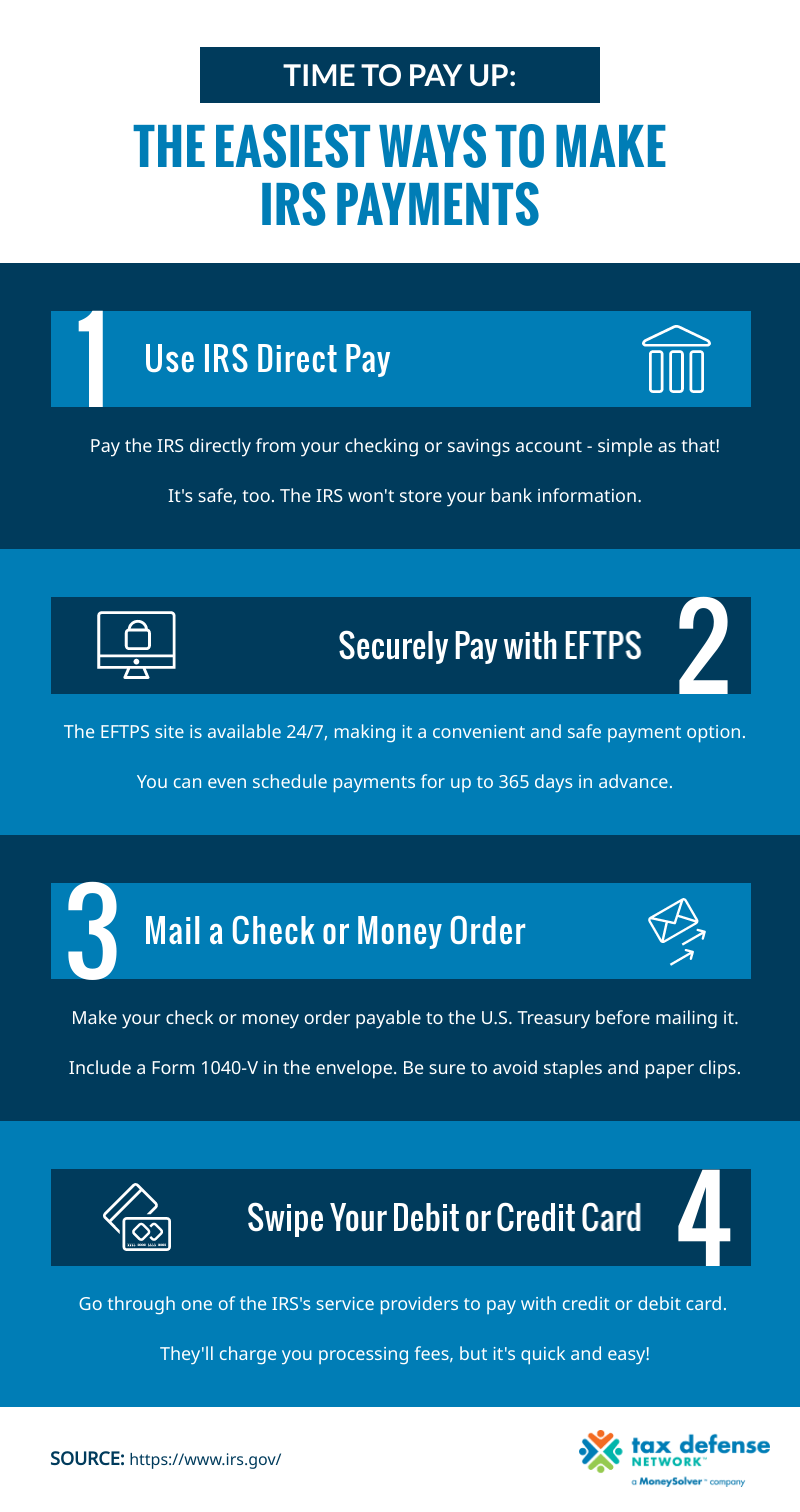
Process: You can send a check or money order made payable to the “U.S. Treasury” along with a payment voucher (e.g., Form 1040-V for individuals). Ensure your Social Security number or Employer Identification Number (EIN), tax year, and form number (e.g., “2023 Form 1040”) are clearly written on the payment.
-
Considerations: While simple, this method relies on postal service reliability. It’s crucial to mail payments well in advance of the deadline and to use certified mail with a return receipt for proof of timely submission. From a financial perspective, this method offers less real-time tracking compared to electronic options.
Paying Electronically Through IRS Direct Pay
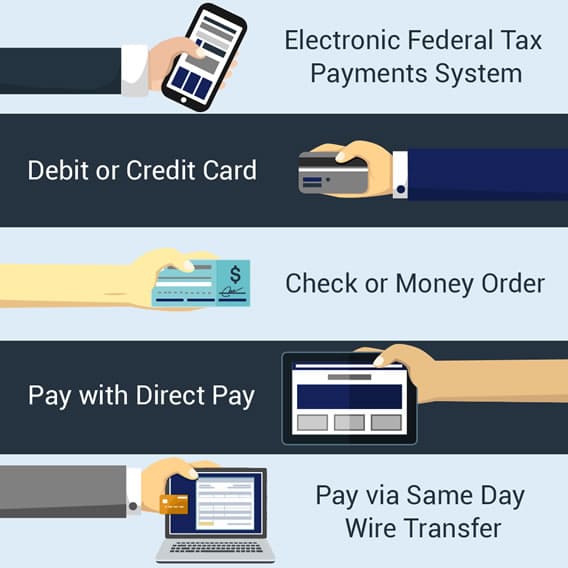
IRS Direct Pay is a free, secure service offered by the IRS, allowing taxpayers to pay directly from their checking or savings account.
-
Process: Access the IRS website, select “Direct Pay,” and follow the prompts. You’ll need your bank account number, routing number, and personal identifying information. You can schedule payments up to 365 days in advance.
-
Benefits: This method is fast, secure, and free. You receive an immediate confirmation number, providing peace of mind and an instant financial record. It’s an excellent option for individuals and businesses seeking a straightforward, no-cost electronic payment.
Credit Card, Debit Card, or Digital Wallet Payments (via Third-Party Processors)
The IRS partners with several third-party payment processors that allow you to pay your federal taxes using a credit card, debit card, or digital wallet (like PayPal).
-
Process: You select a processor from the IRS website, and they handle the transaction.
-
Considerations: While convenient, these processors charge a fee (which varies by processor and card type), typically a percentage for credit cards and a flat fee for debit cards. From a financial planning standpoint, weigh the convenience against these transaction costs. Using a credit card can offer rewards points, but only if you pay off the balance immediately to avoid high-interest charges. This option might be strategically used for large payments where rewards outweigh fees, or in situations where immediate liquidity is an issue.
Electronic Federal Tax Payment System (EFTPS) for Businesses and Individuals
EFTPS is a robust system primarily used by businesses but also available to individuals for making all types of federal tax payments.
-
Process: Requires enrollment and an enrollment code (sent by mail). Once enrolled, you can make payments online or by phone. Payments can be scheduled up to 365 days in advance.
-
Benefits: EFTPS is free and offers high security. It’s particularly useful for businesses that make frequent tax deposits (e.g., payroll taxes, estimated taxes). It provides a detailed payment history, a valuable financial record for audits or reconciliation.
Leveraging Financial Tools for Tax Management
Modern financial planning and tax management often go hand-in-hand. Various tools and strategies can simplify the payment process and optimize your overall tax situation, aligning with your broader financial goals.
The Role of Tax Preparation Software in Payment Process
Tax preparation software (e.g., TurboTax, H&R Block, TaxAct) has revolutionized how many people file and pay their taxes.
-
Integration: Most software programs guide you through calculating your tax liability and then seamlessly integrate payment options. They often link directly to IRS Direct Pay or other electronic payment methods, streamlining the final step of your tax journey.
-
Benefits: These tools reduce errors, offer step-by-step guidance, and simplify the payment process by pre-populating forms and linking to official payment portals. They are a core financial tool for efficient tax compliance.
Utilizing Professional Tax Preparers and Advisors
For complex financial situations, business owners, or those who simply prefer expert assistance, professional tax preparers, certified public accountants (CPAs), or financial advisors specializing in tax can be invaluable.
-
Expertise: They can accurately calculate your tax liability, identify all applicable deductions and credits, and handle the filing and payment submission on your behalf.
-
Strategic Planning: Beyond mere compliance, a good tax advisor can offer strategic financial planning advice throughout the year to minimize future tax burdens, optimize investments, and plan for retirement, integrating tax considerations into your holistic financial strategy.
Estimated Tax Payments for Self-Employed and Those with Non-W2 Income
A crucial financial strategy for self-employed individuals, freelancers, and those with significant investment or rental income is to make estimated tax payments.
-
Purpose: Since no employer withholds taxes from their income, these individuals must proactively pay income and self-employment taxes throughout the year in quarterly installments.
-
Avoid Penalties: Failing to pay enough tax through withholding or estimated payments can result in underpayment penalties. Financial tools like spreadsheets, budgeting apps, or specialized tax software can help estimate and track these payments to avoid surprises.
Payroll Withholding Adjustments for W-2 Employees
For employees receiving W-2 income, managing federal tax payments often starts with adjusting payroll withholding.
-
Form W-4: By updating your Form W-4 with your employer, you can control how much federal income tax is withheld from each paycheck.
-
Financial Impact: Regularly reviewing and adjusting your W-4 ensures you’re not withholding too little (leading to a large tax bill and potential penalties) or too much (giving the government an interest-free loan throughout the year). Striking the right balance allows for better cash flow management and aligns with personal finance goals.
Strategies for Managing Tax Burdens and Avoiding Pitfalls
Effective tax payment goes beyond merely submitting money; it involves proactive planning and diligent record-keeping to manage your financial obligations efficiently.
Proactive Tax Planning Throughout the Year
The most effective way to manage federal taxes is to engage in continuous, year-round planning, rather than scrambling at tax time.
-
Budgeting: Incorporate tax liabilities into your annual budget.
-
Deductions and Credits: Understand and track eligible deductions (e.g., student loan interest, IRA contributions, business expenses) and credits (e.g., child tax credit, education credits) that can reduce your taxable income or tax liability directly.
-
Investment Strategy: Align your investment choices with tax efficiency goals, considering vehicles like 401(k)s, IRAs, and health savings accounts (HSAs) that offer tax advantages.
Understanding Payment Plans and Options for Underpayment
If you find yourself unable to pay your full tax bill by the deadline, the IRS offers several options, but it’s crucial to act proactively.
-
Short-Term Payment Plan: You may be granted up to 180 additional days to pay your tax liability in full, though interest and penalties still apply.
-
Installment Agreement: If you need more time, you can apply for a monthly installment agreement, allowing you to pay over a longer period (up to 72 months). This option still incurs interest and penalties.
-
Offer in Compromise (OIC): An OIC allows certain taxpayers to resolve their tax liability with the IRS for a lower amount than they originally owed, typically under specific hardship circumstances. This is a complex process and not available to everyone.
Understanding these options is a critical part of financial contingency planning for unexpected tax bills.
The Importance of Accurate Record-Keeping
Meticulous record-keeping is the bedrock of sound financial management and essential for tax compliance.
-
Documentation: Keep organized records of all income, expenses, deductions, and credits. This includes W-2s, 1099s, bank statements, receipts, mileage logs, and investment statements.
-
Digital vs. Physical: Whether you prefer digital files or physical binders, ensure your records are easily accessible and maintained for at least three to seven years, as recommended by the IRS. Good record-keeping not only simplifies tax preparation but is invaluable if you are ever audited.
Avoiding Common Tax Payment Mistakes and Penalties
Financial prudence extends to avoiding unnecessary costs associated with tax non-compliance.
-
Late Filing Penalties: Separate from late payment penalties, a penalty applies for failing to file on time unless you have an approved extension.
-
Late Payment Penalties: Interest and penalties accrue on underpayments or taxes paid after the deadline.
-
Underpayment Penalties: Can apply if you don’t pay enough tax throughout the year through withholding or estimated payments.
-
Accuracy-Related Penalties: Can be imposed for negligence or substantial understatement of tax. By understanding your obligations, using reliable tools, and planning ahead, these avoidable financial drains can be minimized or eliminated.
The Future of Federal Tax Payments and Financial Wellness
As technology advances and financial landscapes evolve, so too does the ecosystem around federal tax payments. Integrating tax planning into a broader strategy for financial wellness is becoming increasingly seamless and crucial.
Digitalization and Streamlined Processes
The trend towards digitalization in tax payments is undeniable. The IRS continually enhances its online tools and capabilities, aiming for a more efficient and user-friendly experience. Expect further integration of AI-powered financial tools, more intuitive online portals, and potentially even pre-filled tax forms as data exchange improves. Staying abreast of these developments can simplify future tax seasons.
Integrating Tax Planning into Overall Financial Strategy
True financial wellness encompasses more than just investments or savings; it includes effective tax management. By understanding how your income, expenditures, and investment choices impact your tax liability, you can make more informed financial decisions. This holistic approach ensures that tax considerations are not an afterthought but an integral part of your long-term wealth-building and preservation strategy.
Resources for Further Assistance
For ongoing support and the most current information, always refer to official IRS resources. The IRS website (IRS.gov) is a treasure trove of information, forms, and tools. Additionally, consider leveraging professional financial advisors who specialize in tax planning to help navigate complex situations and optimize your financial health.
Paying federal tax, while a mandatory responsibility, doesn’t have to be an ordeal. By understanding the basics, utilizing available payment methods, leveraging financial tools, and engaging in proactive planning, you can fulfill your obligations efficiently, avoid unnecessary penalties, and integrate this critical aspect into a robust framework for personal and business financial success.
aViewFromTheCave is a participant in the Amazon Services LLC Associates Program, an affiliate advertising program designed to provide a means for sites to earn advertising fees by advertising and linking to Amazon.com. Amazon, the Amazon logo, AmazonSupply, and the AmazonSupply logo are trademarks of Amazon.com, Inc. or its affiliates. As an Amazon Associate we earn affiliate commissions from qualifying purchases.