
In the pantheon of technology giants, few companies command the awe and influence of NVIDIA Corporation, ubiquitously recognized by its NASDAQ ticker, NVDA. More than just a chipmaker, NVIDIA has evolved into a foundational force driving the most transformative technological revolutions of our era. From rendering hyper-realistic gaming worlds to training complex AI models and orchestrating the digital infrastructure of the metaverse, NVIDIA stands at the epicenter of innovation, constantly pushing the boundaries of what’s computationally possible. This article delves into the technological essence of NVIDIA, exploring its origins, its revolutionary contributions, and its profound impact across diverse industries.
The Genesis and Evolution of a Tech Powerhouse
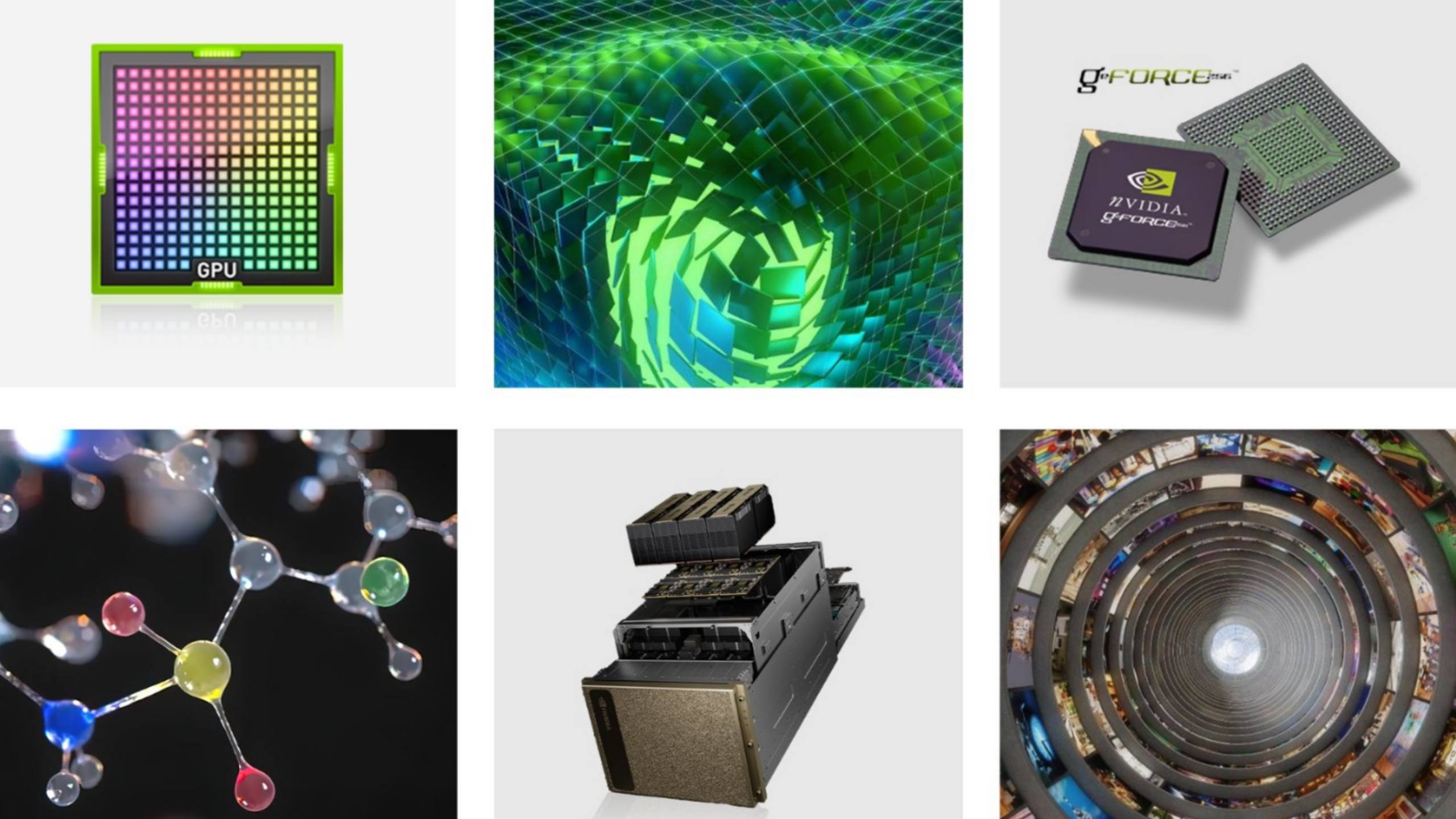
NVIDIA’s journey began with a vision to revolutionize computing through graphics. Founded in 1993 by Jensen Huang, Chris Malachowsky, and Curtis Priem, the company set out to create specialized processors that could handle the immense computational demands of real-time 3D graphics. This singular focus would eventually lead to the creation of one of the most significant architectural innovations in modern computing: the Graphics Processing Unit (GPU).
Early Days and the Dawn of Graphics
In its nascent years, NVIDIA navigated a highly competitive and rapidly evolving graphics landscape. Early products like the NV1 showcased the company’s ambition, but it was with the RIVA 128 in 1997 that NVIDIA truly began to carve out its niche, delivering superior 3D performance and setting new benchmarks for consumer graphics cards. The pivotal moment, however, arrived in 1999 with the introduction of the GeForce 256. NVIDIA boldly coined the term “Graphics Processing Unit” (GPU) for this device, a single-chip processor with integrated transform, lighting, triangle setup, and rendering engines, explicitly designed to accelerate 3D graphics. This marked a paradigm shift, defining the architecture that would dominate visual computing for decades.
The GPU Revolution and Gaming Dominance
The GeForce series quickly became synonymous with high-performance gaming. NVIDIA’s relentless innovation in GPU architecture, driver software, and development tools fueled an explosion in graphically intensive video games. Technologies like programmable shading, introduced with the GeForce 3, empowered developers to create increasingly intricate and lifelike virtual environments. This era cemented NVIDIA’s dominance in the gaming sector, building a loyal community of enthusiasts and developers around its GeForce brand. The GPU, initially conceived for rendering pixels, was quietly building a foundation for something far greater – a parallel processing powerhouse capable of tackling problems far beyond graphics.
Beyond Gaming: NVIDIA’s Expanding Technological Frontiers
While gaming remains a core pillar, NVIDIA’s true technological ascendancy stems from its strategic foresight in recognizing the broader potential of the GPU. Its architecture, designed for parallel processing, proved incredibly adept at handling the massive, simultaneous computations required by scientific simulations, data analytics, and, most critically, artificial intelligence.
Artificial Intelligence and Deep Learning
The late 2000s and early 2010s witnessed a resurgence of interest in artificial intelligence, particularly in deep learning, a subset of machine learning inspired by the structure and function of the human brain. Researchers discovered that GPUs, with their thousands of processing cores, were exceptionally well-suited for the matrix multiplications and parallel computations inherent in training deep neural networks. NVIDIA’s CUDA (Compute Unified Device Architecture) platform, introduced in 2007, played a crucial role in this revolution. CUDA provided a software layer that allowed developers to program NVIDIA GPUs for general-purpose computing, essentially turning them into supercomputers in a box.
NVIDIA invested heavily in AI research and development, collaborating with academia and industry leaders. Their GPUs became the de facto standard for training AI models, powering breakthroughs in image recognition, natural language processing, speech synthesis, and countless other fields. NVIDIA’s deep learning accelerators, such as the Tesla and later A100/H100 series, became the engine rooms for virtually every major AI breakthrough, cementing the company’s position as the foundational infrastructure provider for the AI revolution.
Data Centers and Accelerated Computing
The computational demands of AI and other data-intensive workloads rapidly outgrew the capabilities of traditional CPUs. This led to the proliferation of NVIDIA GPUs in data centers, transforming them from general-purpose computing hubs into accelerated computing powerhouses. NVIDIA’s data center platforms, including powerful GPUs like the A100 and H100, combined with high-speed interconnects like NVLink and InfiniBand (through their acquisition of Mellanox), enable supercomputing-level performance for enterprise and cloud environments.
These accelerated computing platforms are not just for AI training; they are also crucial for high-performance computing (HPC) simulations in fields like weather forecasting, drug discovery, materials science, and financial modeling. NVIDIA provides an entire software stack, including cuDNN for deep learning, cuBLAS for linear algebra, and various SDKs, making it easier for developers and researchers to leverage the immense power of their GPUs. The data center segment now represents a significant and rapidly growing portion of NVIDIA’s revenue, underscoring its pivotal role in the digital infrastructure.
Professional Visualization and Design
Beyond gaming and AI, NVIDIA’s professional-grade GPUs, under the Quadro and more recently RTX Ada Lovelace architecture, are indispensable tools for creative professionals and engineers. These GPUs power workstations used for complex tasks such as 3D rendering, animation, video editing, architectural design, product prototyping, and scientific visualization. NVIDIA’s Quadro GPUs are renowned for their reliability, precision, and certification with professional applications from companies like Adobe, Autodesk, and Dassault Systèmes.
The advent of real-time ray tracing and AI-accelerated denoising, enabled by NVIDIA’s RTX technology, has further revolutionized professional workflows. Designers can now visualize photorealistic scenes in real-time, accelerating iteration cycles and improving the quality of their work significantly. NVIDIA’s Omniverse platform, discussed later, further extends this capability by providing a collaborative, real-time simulation and design platform.
Driving Innovation in Emerging Technologies
NVIDIA’s forward-looking strategy extends into several nascent yet highly promising technological domains, where its core expertise in parallel computing, AI, and graphics provides a significant competitive advantage.
Autonomous Vehicles and Robotics
The dream of self-driving cars and intelligent robots hinges entirely on sophisticated AI and robust real-time processing capabilities. NVIDIA has positioned itself as a leading technology provider for the autonomous vehicle (AV) industry with its DRIVE platform. This comprehensive platform includes powerful AI supercomputers (like DRIVE Orin and Thor), a complete software stack (DRIVE OS, DRIVE AV, DRIVE Sim), and a vast ecosystem of tools and partners.
NVIDIA DRIVE processes vast amounts of sensor data (cameras, lidar, radar) in real-time, enabling perception, localization, path planning, and vehicle control. Their DRIVE Sim platform, built on Omniverse, allows for the simulation and testing of autonomous vehicles in diverse virtual environments, significantly accelerating development and validation. Beyond cars, NVIDIA’s Jetson platform brings AI capabilities to robotics, embedded systems, and edge devices, powering everything from industrial robots to smart city infrastructure.
The Metaverse and Omniverse Platform
The concept of the metaverse – a persistent, interconnected set of virtual worlds – represents a monumental technological undertaking. NVIDIA is not just participating; it is actively building the foundational infrastructure for this future. Its Omniverse platform is a real-time 3D design collaboration and simulation platform built on the Universal Scene Description (USD) framework.
Omniverse allows creators, designers, and engineers to connect their disparate 3D tools and work together in a shared virtual space, similar to Google Docs for 3D. It enables the creation of “digital twins” – highly accurate virtual replicas of real-world objects, factories, or even entire cities – for simulation, testing, and optimization. This platform is powered by NVIDIA’s RTX GPUs, leveraging ray tracing for photorealistic rendering and AI for tasks like physics simulation and content generation. Omniverse is not merely for entertainment; it’s a powerful tool for industrial design, architectural visualization, scientific simulation, and the creation of the next generation of digital experiences.
Edge AI and IoT
As AI becomes more pervasive, the need to perform computations closer to the data source – at the “edge” of the network – becomes critical. This is where Edge AI comes into play, enabling real-time decision-making, reducing latency, and enhancing privacy and security. NVIDIA’s Jetson platform is at the forefront of this trend, offering a range of compact, power-efficient AI supercomputers for embedded and edge applications.
These devices bring accelerated computing and AI capabilities to a vast array of Internet of Things (IoT) devices, from smart cameras and manufacturing robots to medical devices and retail analytics systems. NVIDIA provides a comprehensive software stack, including AI frameworks and SDKs, to simplify the development and deployment of intelligent applications at the edge, effectively extending the reach of AI from the cloud to every connected device.
NVIDIA’s Ecosystem and Strategic Impact
NVIDIA’s dominance is not solely due to its hardware prowess; it’s the result of a meticulously built ecosystem that intertwines cutting-edge hardware with powerful software, a vibrant developer community, and strategic partnerships.
Software Platforms and Developer Community (CUDA, cuDNN)
At the heart of NVIDIA’s ecosystem lies CUDA, its parallel computing platform and programming model. CUDA transformed GPUs from mere graphics accelerators into general-purpose parallel processors, unlocking their immense potential for scientific computing, AI, and data analytics. Complementing CUDA are libraries like cuDNN (CUDA Deep Neural Network library), which provides highly optimized primitives for deep learning, and cuBLAS for linear algebra.
NVIDIA actively fosters a massive global developer community, providing extensive documentation, training, and support. This robust software ecosystem and developer engagement are critical differentiators, making it easier for researchers and engineers to harness NVIDIA’s hardware and accelerate their work. Without this comprehensive software stack, the raw power of NVIDIA’s GPUs would be significantly less accessible and impactful.
Hardware Innovations (GPUs, DPUs, CPUs)
While GPUs remain NVIDIA’s flagship product, the company has broadened its hardware portfolio to deliver complete accelerated computing platforms. The acquisition of Mellanox in 2020 brought high-performance networking technology (InfiniBand and Ethernet) into NVIDIA’s fold, enabling faster data transfer between GPUs and other system components. This led to the development of Data Processing Units (DPUs), such as the NVIDIA BlueField DPU, which offload networking, storage, and security tasks from CPUs, freeing up valuable CPU cycles for application processing and enhancing data center efficiency and security.
More recently, NVIDIA has also ventured into CPUs, most notably with its Grace CPU Superchip. Designed for AI and HPC workloads, Grace combines high-performance CPU cores with NVIDIA’s signature GPU architecture and high-bandwidth memory, creating an integrated platform optimized for complex, data-intensive computations that require massive memory bandwidth and efficient data movement. This strategic expansion into CPUs and DPUs demonstrates NVIDIA’s ambition to provide a full-stack, end-to-end solution for accelerated computing.
Strategic Partnerships and Acquisitions
NVIDIA’s strategic impact is further amplified by its extensive network of partnerships across virtually every tech sector. Collaborations with cloud providers (AWS, Azure, Google Cloud), server manufacturers (Dell, HPE, Lenovo), automotive companies (Mercedes-Benz, Volvo, BYD), and software vendors are crucial for integrating NVIDIA’s technology into diverse products and services.
Beyond organic growth and partnerships, targeted acquisitions have played a vital role in expanding NVIDIA’s technological footprint. Mellanox for networking, ARM for CPU architecture (though the acquisition ultimately did not complete), and various smaller AI software companies have enriched NVIDIA’s intellectual property and market reach. These strategic moves underscore NVIDIA’s holistic approach to building a comprehensive ecosystem that addresses the entire spectrum of accelerated computing challenges.
Challenges and Future Outlook
Despite its impressive trajectory, NVIDIA faces a dynamic and challenging landscape, marked by intense competition, geopolitical factors, and the ever-present demand for continuous innovation.
Competition and Market Dynamics
NVIDIA operates in highly competitive markets. In gaming, it contends with AMD, which also produces GPUs. In the data center and AI space, while NVIDIA holds a significant lead, it faces competition from custom AI accelerators developed by hyperscalers (e.g., Google’s TPUs, AWS’s Inferentia/Trainium), as well as renewed efforts from Intel and AMD in the accelerator market. The shift towards greater software-defined solutions and the rise of open-source AI frameworks also present ongoing challenges and opportunities. NVIDIA’s continued success hinges on its ability to maintain its technological leadership and ecosystem advantage.
Supply Chain and Geopolitical Factors
The global semiconductor industry has been prone to supply chain disruptions, particularly in recent years. NVIDIA, like many others, relies on third-party foundries for chip manufacturing, making it susceptible to geopolitical tensions, trade policies, and manufacturing capacity constraints. Ensuring a resilient and diversified supply chain is a continuous strategic imperative. Furthermore, regulations and export controls related to advanced AI chips, especially concerning certain geopolitical regions, can impact NVIDIA’s market access and growth trajectory.
The Road Ahead: Sustaining Innovation
Looking ahead, NVIDIA’s future is intrinsically linked to its ability to sustain its unparalleled pace of innovation. The demand for accelerated computing will only intensify as AI becomes more sophisticated, the metaverse takes shape, and digital twins proliferate. NVIDIA is well-positioned to capitalize on these trends, leveraging its integrated hardware and software platforms.
Key areas of focus will likely include: pushing the boundaries of GPU architecture for even greater performance and energy efficiency; expanding the Omniverse platform to become the default operating system for the metaverse; solidifying its leadership in autonomous machines and robotics; and continuing to democratize AI through its comprehensive developer tools. NVIDIA’s journey from a graphics card pioneer to a full-stack computing platform provider exemplifies technological vision and execution, firmly establishing NVDA not just as a company, but as a crucial architect of our digital future.
aViewFromTheCave is a participant in the Amazon Services LLC Associates Program, an affiliate advertising program designed to provide a means for sites to earn advertising fees by advertising and linking to Amazon.com. Amazon, the Amazon logo, AmazonSupply, and the AmazonSupply logo are trademarks of Amazon.com, Inc. or its affiliates. As an Amazon Associate we earn affiliate commissions from qualifying purchases.