
NVIDIA has long transcended its origins as a graphics card manufacturer to become a pivotal force in the technological revolution, particularly in artificial intelligence and high-performance computing. As a bellwether for innovation and a significant player in the semiconductor industry, its stock performance is a daily focal point for investors, analysts, and market watchers globally. The question “what happened to NVIDIA stock today?” is more than just a casual inquiry; it delves into the complex interplay of immediate market catalysts, underlying financial fundamentals, broader macroeconomic trends, and evolving investor sentiment. Understanding the daily fluctuations of a stock like NVIDIA requires a comprehensive look beyond simple price movements, exploring the confluence of factors that drive its valuation in the dynamic world of finance and investing.

Unpacking Today’s Market Movements for NVIDIA
The daily performance of any stock, especially one as prominent as NVIDIA, is a microcosm of prevailing market forces. Investors scrutinize not just the closing price, but the journey it took throughout the trading session, seeking to understand the immediate triggers and underlying sentiment that drove its trajectory. For a company at the forefront of AI and data center technology, these movements can often be sharp and decisive, reflecting the high stakes and rapid evolution of its core markets.
The Immediate Catalyst: What Drove the Day’s Trading?
Today’s specific movement in NVIDIA’s stock price would typically be attributable to one or a combination of several immediate catalysts. Earnings reports are perhaps the most significant, providing a quarterly health check on the company’s financial performance. Strong revenue growth, exceeding analyst expectations, or a positive outlook on future guidance can send the stock soaring. Conversely, a miss on key metrics or a cautious forecast can lead to a sharp decline. Beyond earnings, analyst upgrades or downgrades from major investment banks can significantly sway investor perception, often based on revised financial models or new insights into market opportunities or risks.
Company-specific news, such as major product announcements, strategic partnerships, or significant contract wins, can also act as powerful drivers. For NVIDIA, this might include breakthroughs in new AI chips, expansions into new markets, or collaborations with tech giants. Broader market sentiment, too, plays a crucial role. A general rally in the tech sector or a downturn driven by macroeconomic concerns – like inflation fears, interest rate hikes, or geopolitical tensions – can drag or lift even fundamentally strong stocks like NVIDIA. Furthermore, sector-specific events, such as news concerning competitors, supply chain disruptions affecting the semiconductor industry, or regulatory changes, can also create ripples that directly impact NVIDIA’s daily performance. Identifying the precise immediate catalyst often requires sifting through a flurry of news headlines and market commentary that emerges throughout the trading day.
Volume and Volatility: A Snapshot of Trading Activity
Beyond the simple percentage change, the volume of shares traded and the stock’s volatility offer deeper insights into market sentiment and conviction. High trading volume accompanying a significant price movement suggests strong conviction among investors. If NVIDIA’s stock surged on exceptionally high volume, it indicates that a large number of buyers entered the market, confident in its prospects. Conversely, a sharp decline on heavy volume signals widespread selling pressure and a bearish outlook. Low volume on a price change, whether up or down, might suggest a less convincing move, perhaps driven by fewer large players or general market inertia rather than a strong consensus.
Volatility, measured by the amplitude of price swings within the day, also tells a story. A highly volatile day for NVIDIA, characterized by wide swings between its intraday high and low, suggests uncertainty and active debate among investors. This could be due to conflicting news reports, rapid shifts in sentiment, or algorithmic trading exacerbating movements. For investors, understanding volume and volatility provides context to the daily price action, helping to discern whether a move is a strong directional indicator or merely market noise. It helps differentiate between a temporary blip and a potentially more significant shift in the stock’s valuation trajectory.
Comparison to Key Indices and Peers
To truly assess “what happened” to NVIDIA’s stock today, its performance must be benchmarked against broader market indices and its direct competitors. How did NVIDIA fare relative to the NASDAQ Composite, which is heavily weighted towards technology stocks, or the broader S&P 500? Outperforming these indices suggests NVIDIA is showing relative strength, potentially attracting capital flows from other segments of the market. Underperforming, on the other hand, might signal specific concerns about the company or the semiconductor sector that are not broadly impacting the market.
Equally important is a comparison with its peers within the semiconductor and AI hardware space, such as Advanced Micro Devices (AMD), Intel (INTC), or even cloud computing giants that are customers or partners. If NVIDIA rises while AMD falls, it could indicate a shift in investor preference within the competitive landscape, perhaps due to a perceived advantage in a new product cycle or a more favorable outlook on its market share. Conversely, if the entire sector moved in unison, it might point to a broader industry trend, like a recovery in chip demand or concerns over global supply chains. This comparative analysis provides crucial context, helping investors understand whether NVIDIA’s daily move is company-specific, industry-wide, or a reflection of broader market sentiment.
Understanding NVIDIA’s Underlying Financial Health and Market Position
While daily stock movements often hinge on immediate news, a deeper understanding of NVIDIA’s valuation requires an examination of its fundamental financial health and its strategic position within key growth markets. Investors don’t just buy a stock; they buy a piece of a company’s future earnings potential, driven by its innovation, market dominance, and financial performance.
The AI Dominance: A Fundamental Pillar of Growth
NVIDIA’s ascent into the upper echelons of market capitalization is inextricably linked to its unparalleled dominance in artificial intelligence and accelerated computing. Its Graphics Processing Units (GPUs), initially designed for gaming, have become the de facto standard for training complex AI models and powering data centers worldwide. This technological leadership has translated directly into a robust financial moat. The significant capital expenditure required to develop competing AI hardware, coupled with the intricate software ecosystem (CUDA) that NVIDIA has cultivated, creates substantial barriers to entry for rivals.
From a financial perspective, this dominance ensures strong revenue streams from data center clients, cloud providers, and enterprise customers who are heavily investing in AI capabilities. The increasing demand for AI, driven by applications ranging from autonomous vehicles to scientific research and generative AI, guarantees a long runway for growth. Investors view NVIDIA not just as a chip maker, but as an enabler of the future economy, which justifies its premium valuation in the eyes of many. Understanding this fundamental pillar helps investors interpret daily stock movements within the context of a powerful, long-term growth narrative. Even a transient dip might be seen as a buying opportunity by those who believe in the enduring financial implications of its AI leadership.
Financial Performance Metrics: Beyond the Daily Fluctuation
Astute investors look past daily stock price changes to evaluate NVIDIA’s financial performance through key metrics that indicate its underlying health and growth trajectory. Revenue growth is paramount, demonstrating the company’s ability to expand its sales in a competitive market. Consistent double-digit revenue growth, particularly in its high-margin data center segment, is a strong positive signal. Profitability, measured by net income and earnings per share (EPS), shows how effectively NVIDIA converts its revenues into profits, reflecting operational efficiency and pricing power. High-gross margins, often above 60-70% for NVIDIA, are particularly attractive, indicating strong product differentiation and pricing leverage.
Cash flow generation is another critical metric, as it indicates the company’s ability to fund its operations, invest in research and development, and potentially return capital to shareholders through buybacks or dividends. A healthy free cash flow allows NVIDIA to self-finance its aggressive innovation pipeline without relying heavily on debt or equity dilution. Furthermore, investors pay close attention to management’s guidance for future quarters. Positive guidance, suggesting continued strong performance, can outweigh current market anxieties and bolster investor confidence, anchoring the stock’s valuation over the medium to long term, irrespective of short-term volatility.
Investor Sentiment and Valuation Concerns
NVIDIA’s success has naturally led to a significant increase in its valuation, often placing it among the most highly valued companies globally. This elevated status brings with it scrutiny regarding its valuation multiples. Metrics such as the Price-to-Earnings (P/E) ratio, Price-to-Sales (P/S) ratio, and Enterprise Value to EBITDA (EV/EBITDA) are closely watched. A high P/E ratio, for instance, suggests that investors are willing to pay a premium for NVIDIA’s future growth prospects. While this reflects strong investor confidence, it also raises questions about whether the stock is “overvalued” and if future growth is already priced in.
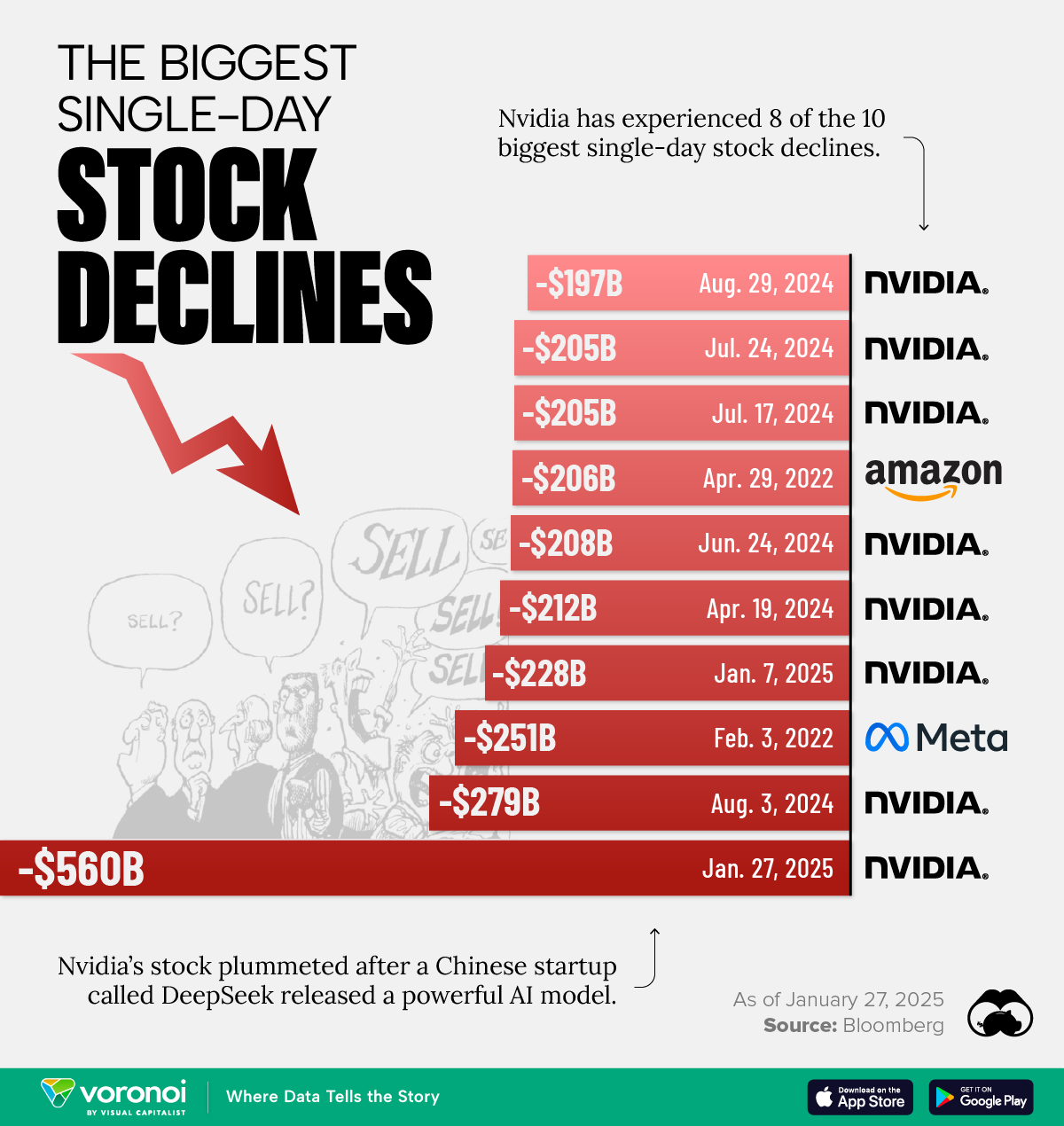
Analyst ratings, typically ranging from “Strong Buy” to “Sell,” provide a consensus view from Wall Street on the stock’s attractiveness. While not infallible, these ratings can influence sentiment, especially for institutional investors. Moreover, market sentiment can be fickle; fears of an economic slowdown, increased competition, or regulatory pressures could lead to a reassessment of growth assumptions and a re-rating of the stock. For a stock like NVIDIA, which has seen explosive growth, discerning between legitimate concerns and speculative jitters is crucial for investors. A healthy degree of skepticism combined with a focus on long-term fundamentals is often the best approach to navigating these valuation debates.
Broader Market Context and Sectoral Headwinds/Tailwinds
No stock exists in a vacuum. NVIDIA’s daily movements are often heavily influenced by macroeconomic forces that shape investor appetite for risk, as well as specific dynamics within the semiconductor sector that impact its operational environment and competitive landscape. Understanding these broader currents is essential for interpreting daily price action and anticipating future trends.
Macroeconomic Factors Impacting Tech Stocks
The health of the global economy profoundly impacts the technology sector, and by extension, NVIDIA. Interest rates, dictated by central banks, play a critical role. Higher interest rates increase the cost of capital, making it more expensive for companies to borrow and invest, which can dampen growth prospects. Furthermore, higher rates make future earnings less valuable in present terms, often leading to a downward re-evaluation of high-growth tech stocks that rely on distant future cash flows. Inflation, another macroeconomic concern, can erode purchasing power and increase operating costs, potentially squeezing profit margins.
Geopolitical events, such as trade disputes, international conflicts, or shifts in global alliances, can introduce significant uncertainty. For NVIDIA, this could manifest as restrictions on chip exports, disruptions to its global supply chain, or increased geopolitical competition in the tech sphere. Conversely, periods of strong global economic growth and stable inflation can create an environment conducive to risk-taking and investment in innovative tech companies. Investors are constantly weighing these macro factors against company-specific news, making decisions that collectively move stock prices.
The Semiconductor Sector: A Dynamic Landscape
NVIDIA operates at the heart of the semiconductor industry, a sector characterized by intense innovation, cyclical demand, and complex global supply chains. The availability and cost of raw materials, manufacturing capacity (often concentrated with foundry partners like TSMC), and logistics can all impact NVIDIA’s ability to meet demand and manage costs. Periods of chip shortages, for example, can constrain sales but also lead to higher pricing power. Conversely, oversupply can result in pricing pressure and inventory write-downs.
Competition within the sector is fierce. While NVIDIA dominates in AI GPUs, it faces formidable rivals in various segments, including AMD in CPU/GPU design, Intel in CPUs and specialized AI accelerators, and a growing number of custom chip developers (e.g., Google’s TPUs, Amazon’s Graviton) from its own customers. Innovations from competitors, new product launches, or shifts in market share can impact NVIDIA’s competitive standing and, by extension, its financial outlook. Government policies, such as subsidies for domestic chip manufacturing or export controls on advanced technology, also significantly shape the operating environment for semiconductor companies, creating both opportunities and challenges that ripple through their stock performance.
The Role of Institutional Investors and Retail Trading
The daily movements of a stock like NVIDIA are largely influenced by the combined actions of institutional investors and, increasingly, retail traders. Large institutional funds – mutual funds, hedge funds, pension funds, and sovereign wealth funds – collectively manage trillions of dollars. Their decisions to buy or sell significant blocks of NVIDIA shares can create substantial price momentum. These institutions often conduct extensive due diligence, employ sophisticated trading strategies, and can influence market sentiment through their public disclosures or analyst interactions.
Retail investors, empowered by accessible trading platforms and social media, also contribute to market dynamics. While individual retail trades are small, their collective action, sometimes spurred by online discussions or trending narratives, can generate considerable volume and even contribute to short-term volatility. Understanding the interplay between these different investor types—from the long-term strategic holdings of institutional giants to the often quicker, sentiment-driven trades of retail participants—provides a more complete picture of the forces shaping NVIDIA’s daily stock performance. Major shifts in institutional ownership can signal fundamental reassessments, while heightened retail interest might indicate increased speculative activity.
Navigating NVIDIA Stock: Considerations for Investors
For individuals looking to invest in NVIDIA, understanding daily stock movements is only one piece of the puzzle. A robust investment strategy transcends short-term noise, focusing on long-term goals, risk management, and continuous education. NVIDIA’s journey illustrates the potential for significant wealth creation, but also the inherent volatility and risks associated with high-growth technology investments.
Short-Term vs. Long-Term Perspectives
Today’s movement in NVIDIA’s stock, whether up or down, holds different implications for different types of investors. For day traders or those focused on short-term gains, intraday volatility and immediate catalysts are paramount. They might seek to capitalize on swift price swings, using technical analysis to predict short-term directions. However, this approach is highly speculative and carries significant risk, often requiring constant monitoring and rapid decision-making.
For long-term investors, today’s price action is often less critical. Their focus is on NVIDIA’s multi-year growth trajectory, its sustained dominance in AI, its financial strength, and its ability to innovate. They might view a significant dip as a buying opportunity, accumulating more shares at a lower price, confident in the company’s future prospects. Conversely, a sharp surge might prompt a partial profit-taking if the stock appears overextended. The key distinction lies in the investment horizon: long-term investors generally tolerate short-term volatility, trusting that the underlying business fundamentals will drive value appreciation over years, not days.
Diversification and Risk Management
Investing in a single, even highly successful, stock like NVIDIA carries inherent risks. While NVIDIA has demonstrated exceptional growth, no company is immune to unforeseen market shifts, technological obsolescence, competitive threats, or macroeconomic downturns. Therefore, a cornerstone of sound financial planning is diversification. Rather than allocating all investment capital to one stock, investors should spread their holdings across various companies, industries, and asset classes (e.g., stocks, bonds, real estate).
For an investor heavily weighted in tech, diversifying into other sectors like healthcare, consumer staples, or utilities can help mitigate concentration risk. Within the tech sector itself, investing in a mix of hardware, software, and services companies can provide broader exposure. Risk management also involves understanding one’s own risk tolerance and aligning investment choices accordingly. High-growth stocks like NVIDIA are typically more volatile, making them suitable for investors with a higher risk appetite and a long investment horizon. Implementing strategies like dollar-cost averaging (investing a fixed amount regularly) can also help smooth out purchase prices over time, reducing the impact of short-term market fluctuations.
Due Diligence and Continuous Monitoring
The world of investing is dynamic, and successful investors are perpetual students. Relying solely on headlines or past performance is insufficient. Thorough due diligence involves understanding NVIDIA’s business model, reviewing its financial statements (quarterly and annual reports), analyzing its competitive landscape, and staying informed about industry trends and technological advancements. This includes understanding the potential risks the company faces, such as supply chain vulnerabilities, regulatory scrutiny, or emerging competition.
Continuous monitoring is also crucial. The financial health of a company, the competitive environment, and macroeconomic conditions can change rapidly. Regular review of NVIDIA’s earnings reports, analyst updates, and relevant industry news allows investors to assess whether their initial investment thesis remains valid. This doesn’t mean reacting to every daily price swing, but rather re-evaluating the fundamental reasons for holding the stock periodically. Empowering oneself with knowledge is the most effective way to make informed investment decisions and navigate the complex, ever-changing landscape of the stock market.
In conclusion, “what happened to NVIDIA stock today?” is a question with many layers. Its answer is a blend of immediate market catalysts, the company’s enduring financial strength and strategic positioning in critical growth markets like AI, and the broader macroeconomic and sectoral forces at play. For investors, understanding these intertwined factors and maintaining a long-term, diversified, and well-researched approach is key to harnessing the potential of a transformative company like NVIDIA while prudently managing risk.
aViewFromTheCave is a participant in the Amazon Services LLC Associates Program, an affiliate advertising program designed to provide a means for sites to earn advertising fees by advertising and linking to Amazon.com. Amazon, the Amazon logo, AmazonSupply, and the AmazonSupply logo are trademarks of Amazon.com, Inc. or its affiliates. As an Amazon Associate we earn affiliate commissions from qualifying purchases.