
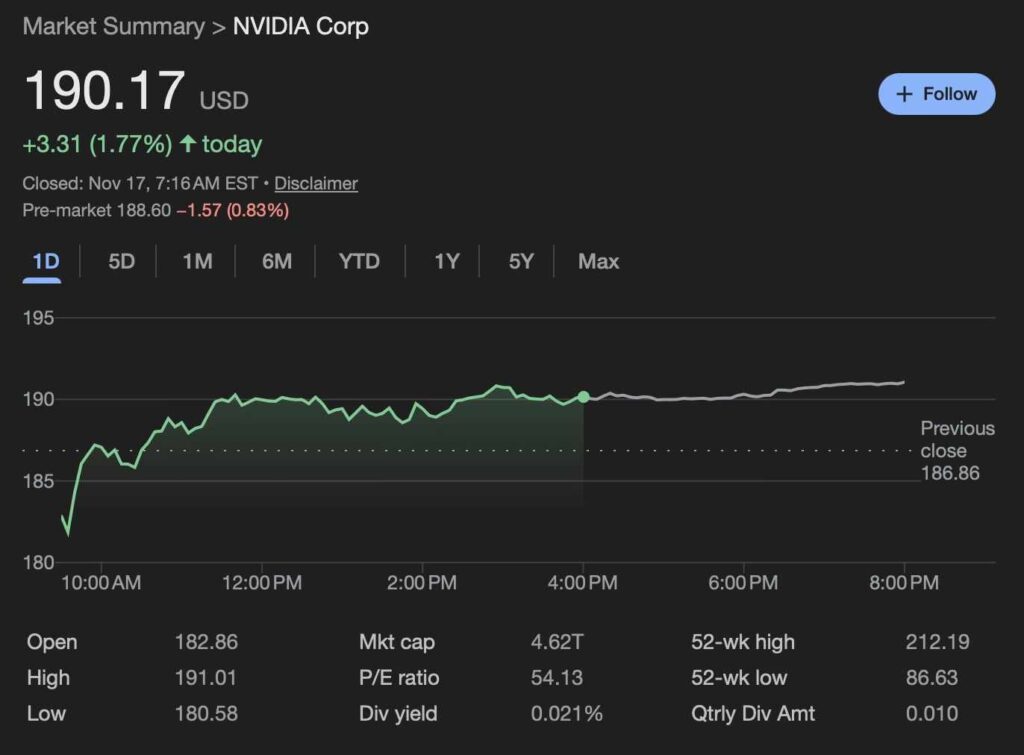
The question, “What is NVIDIA stock at today?” resonates frequently in financial discussions, reflecting not just a passing curiosity but a deeper desire to understand the forces shaping one of the most impactful companies of our era. While a real-time stock quote offers a snapshot, true investment insight demands a comprehensive look at the company’s market position, financial drivers, historical performance, and future outlook within the broader economic landscape. This article delves into the multifaceted world of NVIDIA’s stock, offering a professional, insightful, and engaging perspective for investors seeking to move beyond mere daily price fluctuations.
Understanding NVIDIA’s Unrivaled Market Position and Growth Drivers
NVIDIA (NVDA) has transcended its origins as a graphics card manufacturer to become a pivotal player in several of the most transformative technological trends. Its market position is not merely strong; it is, in many critical sectors, dominant, acting as a crucial enabler of innovation across industries. Understanding this foundational strength is key to assessing its stock’s value.
Dominance in AI and Data Centers
At the heart of NVIDIA’s current success lies its near-monopoly in the high-performance computing (HPC) and artificial intelligence (AI) markets, particularly within data centers. Its Graphics Processing Units (GPUs), initially designed for rendering complex gaming graphics, proved uniquely suited for the parallel processing demands of AI model training and inferencing.
-
CUDA Platform: NVIDIA’s proprietary CUDA parallel computing platform and programming model has created a formidable moat. Developers and researchers across the globe rely on CUDA to optimize their AI workloads, making it exceedingly difficult for competitors to displace NVIDIA’s ecosystem. This network effect locks in customers and expertise.
-
Data Center Expansion: The insatiable demand for AI capabilities, from large language models (LLMs) to advanced analytics, has fueled an unprecedented build-out of data centers. NVIDIA’s H100 and A100 Tensor Core GPUs are the workhorses of these facilities, driving significant revenue growth from hyperscale cloud providers (e.g., AWS, Azure, Google Cloud) and enterprises building their own AI infrastructure.
-
Full-Stack Computing: NVIDIA doesn’t just sell chips; it offers a complete computing platform encompassing hardware, software, and services (e.g., NVIDIA AI Enterprise, DGX systems). This full-stack approach provides integrated, high-performance solutions that are greater than the sum of their parts, increasing customer stickiness and total addressable market.
Resilience and Innovation in the Gaming Segment
While AI and data centers capture headlines, NVIDIA’s legacy gaming division remains a significant and resilient contributor to its revenue. The GeForce line of GPUs continues to be the preferred choice for PC gamers worldwide, driven by continuous innovation.
-
Next-Generation Graphics: Advances in real-time ray tracing and AI-powered upscaling technologies (like DLSS) consistently push the boundaries of visual fidelity, enticing gamers to upgrade to the latest hardware.
-
Esports and Content Creation: The growth of esports and the explosion of content creation (streaming, video editing) further solidify the demand for high-performance GPUs, where NVIDIA holds a substantial market share.
-
Strategic Partnerships: Collaborations with game developers and console manufacturers, albeit less direct than in the past, ensure NVIDIA’s technologies remain at the forefront of the gaming experience.
Emerging Opportunities: Diversification and Long-Term Vision
NVIDIA is not resting on its laurels but actively expanding into new, high-growth markets that leverage its core competencies in parallel computing and AI. These emerging segments represent significant long-term growth vectors for the company and potential future drivers for its stock.
-
Automotive: The shift towards autonomous vehicles and advanced driver-assistance systems (ADAS) relies heavily on AI processing at the edge. NVIDIA’s DRIVE platform offers a scalable, end-to-end solution for self-driving cars, attracting partnerships with leading automakers and robotaxi companies.
-
Professional Visualization and Omniverse: The NVIDIA Omniverse platform is a significant play in the industrial metaverse, enabling real-time collaboration on 3D designs and simulations. This has applications ranging from manufacturing and architecture to digital twins and content creation, tapping into a vast professional market.
-
Robotics and Edge AI: As AI moves beyond the cloud, NVIDIA’s Jetson platform provides powerful, energy-efficient AI computing for robotics, smart cities, and industrial automation, expanding its reach into new physical world applications.
Key Factors Influencing NVIDIA’s Stock Valuation
Understanding the intrinsic value of NVIDIA is crucial, but its stock price, like any other, is also a reflection of numerous external and internal factors. Investors must consider these dynamic influences when evaluating “what NVIDIA stock is at today” and where it might be headed tomorrow.
Macroeconomic Trends and Sector-Specific Dynamics
Broader economic conditions and specific industry trends play a significant role in investor sentiment and, consequently, stock valuations.
-
Interest Rates and Inflation: Higher interest rates can compress valuations, especially for growth stocks like NVIDIA, as they reduce the present value of future earnings. Inflation impacts production costs and consumer spending power, indirectly affecting demand.
-
Global Economic Health: A robust global economy generally fosters increased enterprise spending on technology, benefiting NVIDIA’s data center and professional visualization segments. Conversely, slowdowns can lead to reduced capital expenditures.
-
Semiconductor Industry Cycles: The chip industry is historically cyclical, characterized by periods of oversupply and undersupply. While NVIDIA’s diversified business model makes it more resilient, it is not immune to these broader cycles.
-
AI Spending Outlook: The sustainability and pace of AI adoption and investment are paramount. Any shifts in corporate AI strategies or government regulations impacting AI development could influence NVIDIA’s growth trajectory.
Company-Specific Performance and Innovation Lifecycle
NVIDIA’s direct operational performance, strategic moves, and product pipeline are direct drivers of its stock price.
-
Earnings Reports and Guidance: Quarterly earnings releases are critical events. Exceeding revenue and earnings per share (EPS) expectations, alongside strong forward guidance, typically fuels stock appreciation. Misses or conservative outlooks can lead to sharp declines.
-
Product Launches and Technology Roadmaps: Successful new product introductions (e.g., new GPU architectures, AI platforms) and a clear, compelling technology roadmap reassure investors about future growth and competitive advantage. Delays or underwhelming performance can be detrimental.
-
Research and Development (R&D): NVIDIA’s substantial investment in R&D is vital for maintaining its technological leadership. Innovation is its lifeblood, and consistent breakthroughs reinforce its moat.
-
Supply Chain Management: Given the complexity of semiconductor manufacturing, effective supply chain management, particularly with foundry partners like TSMC, is crucial for meeting demand and managing costs.
Investor Sentiment and Market Hype
Beyond fundamentals, psychological factors and market narratives can significantly impact NVIDIA’s stock, especially in periods of rapid technological advancement.
-
AI Narrative and Enthusiasm: NVIDIA has become a proxy for the entire AI revolution. Intense investor excitement around AI can lead to higher valuations, sometimes extending beyond what traditional metrics might suggest.
-
Analyst Ratings and Price Targets: Reports from prominent financial analysts can influence institutional and retail investor behavior. Upgrades or downgrades, along with revised price targets, often trigger immediate stock movement.
-
Retail Investor Engagement: The accessibility of investing platforms has increased retail participation, sometimes leading to amplified short-term price movements based on social media trends or perceived momentum.
Historical Performance and the Imperative of a Long-Term View
NVIDIA’s journey as a public company has been nothing short of spectacular, marked by periods of explosive growth interspersed with significant corrections. Understanding this history is vital for prospective investors.
Acknowledging Past Growth and Valuation Expansion
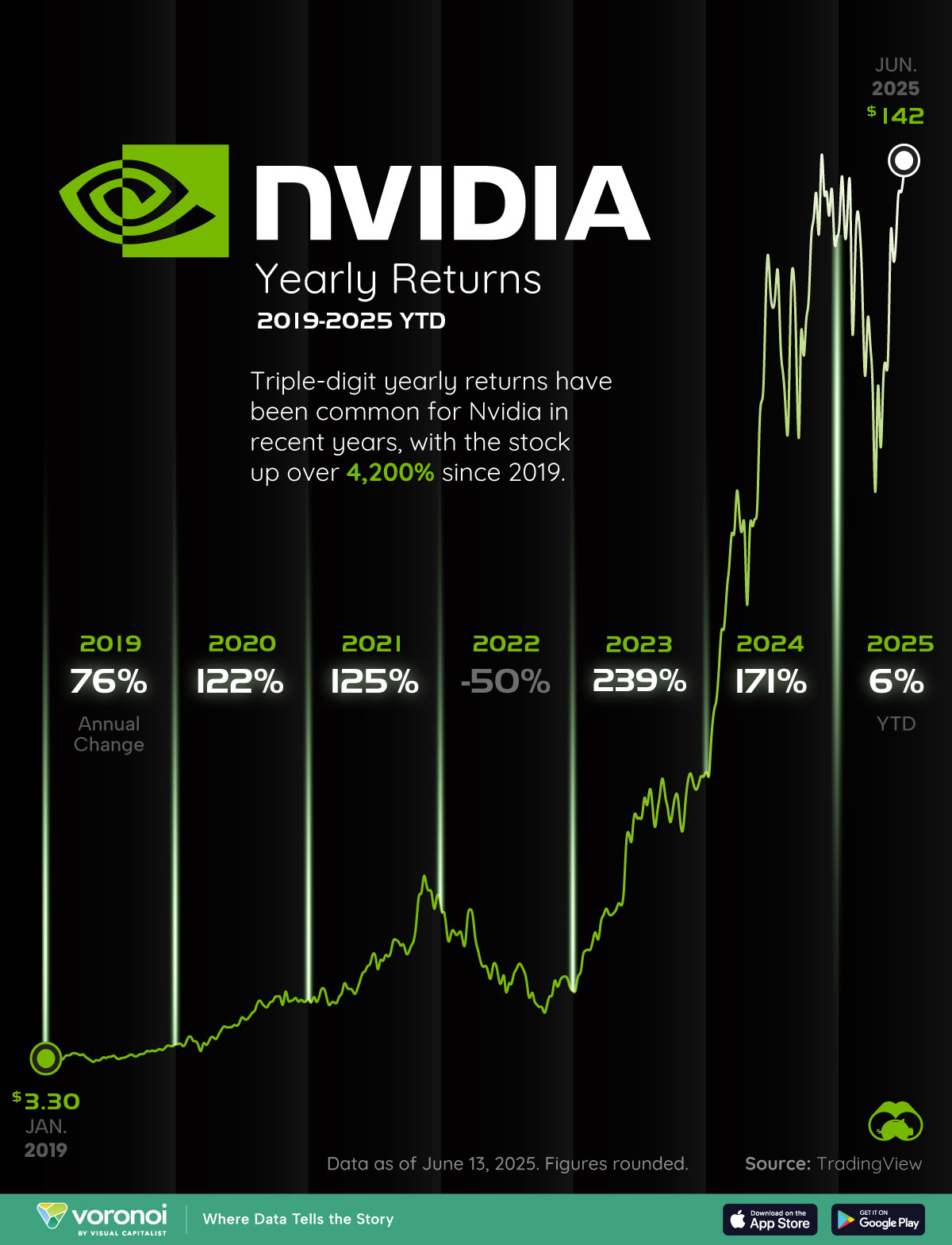
Over the past decade, NVIDIA has been one of the market’s top performers, delivering multi-bagger returns for long-term investors. This appreciation has been driven by its strategic pivots, technological breakthroughs, and the relentless demand for its products across multiple high-growth industries.
-
GPU Computing Revolution: Early investors recognized the potential of GPU computing beyond gaming, particularly its application in scientific research and later, AI.
-
Consistent Execution: The company has consistently delivered innovative products and strong financial results, building trust and confidence among investors.
-
Reinvestment and Growth: NVIDIA has skillfully reinvested its profits into R&D and strategic acquisitions, fueling further growth and expanding its market reach.
Periods of Correction and Volatility: The Inevitable Drawdowns
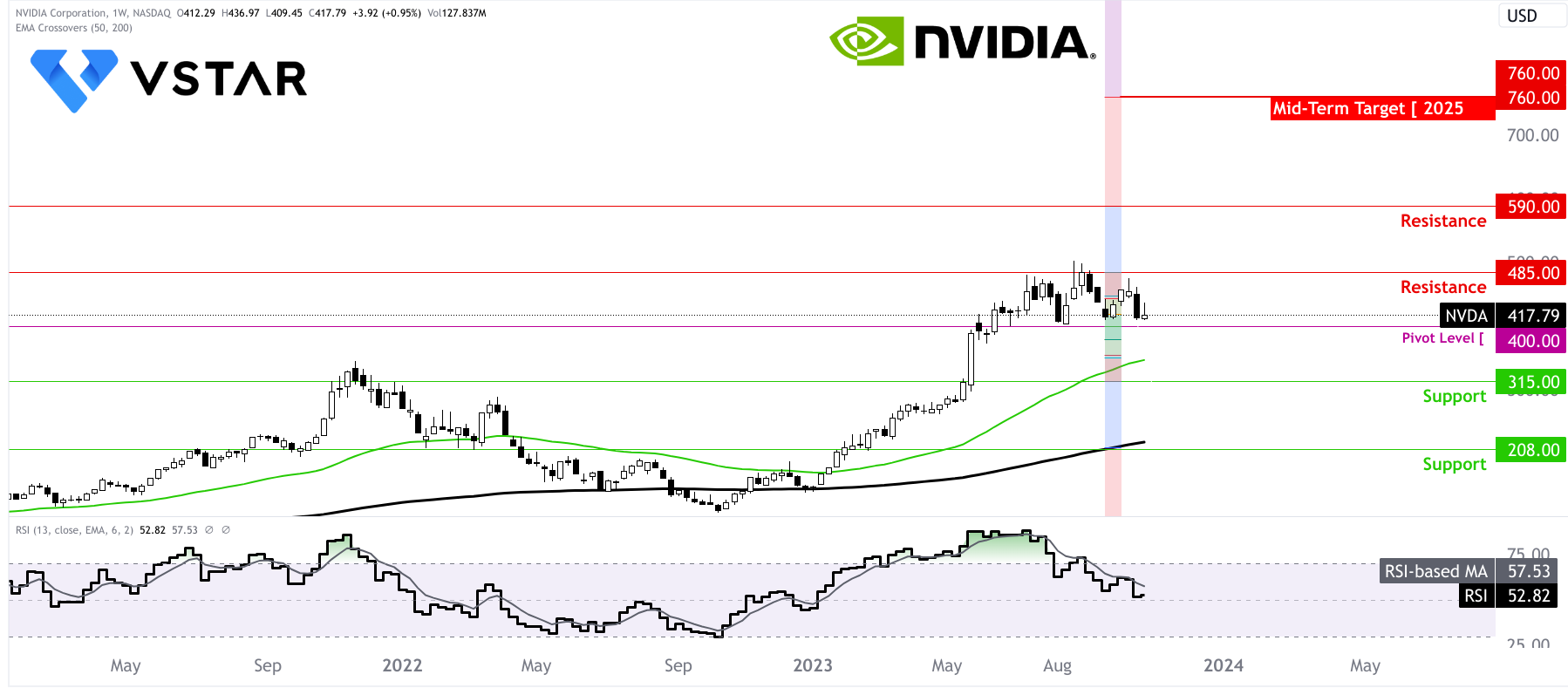
Even the most stellar growth stocks experience volatility. NVIDIA’s stock has faced multiple periods of significant corrections, sometimes declining by 30-50% or more from its peaks.
-
Market-Wide Sell-offs: Broader economic downturns or tech sector corrections often pull down even fundamentally strong companies.
-
Company-Specific Challenges: Inventory corrections in gaming, geopolitical tensions affecting exports, or increased competition have all, at various times, led to stock price pressure.
-
High Valuation Concerns: When a stock trades at a premium valuation (high P/E, P/S ratios), it becomes more susceptible to sharp corrections if growth decelerates or market sentiment shifts.
The Importance of a Long-Term Perspective
Focusing on “NVIDIA stock at today” in isolation can be misleading. A long-term investment horizon is critical for maximizing returns and weathering inevitable market fluctuations.
-
Compounding Returns: The true power of investing in growth companies like NVIDIA is realized through compounding returns over many years.
-
Ignoring Noise: Daily price movements are often just noise. Long-term investors focus on the company’s fundamentals, strategic direction, and its ability to continue innovating and capturing market share.
-
Dollar-Cost Averaging: For highly volatile stocks, employing a dollar-cost averaging strategy (investing a fixed amount regularly) can help mitigate the risk of buying at a peak and smooth out returns over time.
Analyzing NVIDIA as a Prospective Investment
For those contemplating an investment in NVIDIA, a deeper dive into its financial health, competitive landscape, and inherent risks is essential. This analysis goes beyond surface-level observations.
Key Financial Metrics for Evaluation
While “today’s price” is a starting point, savvy investors scrutinize several financial metrics to gauge NVIDIA’s health and valuation.
-
Price-to-Earnings (P/E) Ratio: This indicates how much investors are willing to pay for each dollar of earnings. High-growth companies often have high P/E ratios, but extreme figures warrant careful consideration.
-
Revenue Growth: Consistent, high revenue growth is a hallmark of a successful growth company, demonstrating increasing demand for its products and services.
-
Gross and Operating Margins: Healthy margins indicate pricing power and efficient operations, crucial for sustained profitability.
-
Free Cash Flow (FCF): Positive and growing FCF is vital, as it represents the cash a company generates after accounting for cash outflows to support operations and maintain its capital assets. It’s a strong indicator of financial health and ability to reinvest or return capital to shareholders.
-
Balance Sheet Strength: Low debt levels and ample cash reserves provide financial flexibility and resilience during economic downturns.
Competitive Landscape and Moats
Despite its dominance, NVIDIA operates in a competitive environment. Understanding its rivals and its competitive advantages (moats) is crucial.
-
Direct Competitors: Advanced Micro Devices (AMD) is NVIDIA’s primary competitor in both GPUs (gaming, data center) and CPUs. Intel also competes in data center CPUs and is making strides in discrete GPUs.
-
Custom Silicon: Major tech giants like Google (TPU), Amazon (Inferentia/Trainium), and Microsoft are developing their own custom AI chips, posing a potential long-term threat by reducing reliance on NVIDIA.
-
NVIDIA’s Moat: Its robust software ecosystem (CUDA), continuous hardware innovation, established market share, and strong brand recognition collectively form a powerful economic moat that is difficult for competitors to replicate quickly.
Inherent Risks and Challenges
No investment is without risk, and NVIDIA, despite its strengths, faces several challenges that investors must acknowledge.
-
Geopolitical Tensions: Trade restrictions, particularly between the US and China, can significantly impact NVIDIA’s ability to sell its high-end chips to a major market, leading to revenue disruptions.
-
Supply Chain Disruptions: The global semiconductor supply chain is complex and vulnerable to geopolitical events, natural disasters, or manufacturing issues, which could constrain NVIDIA’s ability to meet demand.
-
Increased Competition: While NVIDIA currently dominates, the allure of the AI market is attracting significant investment from existing players and startups, potentially eroding market share over time.
-
Regulatory Scrutiny: As a dominant player, NVIDIA may face increased antitrust scrutiny, which could impact its business practices or M&A activities.
-
Valuation Concerns: If the stock’s valuation outpaces its underlying growth potential, it becomes more vulnerable to sharp corrections.
Strategic Considerations for NVIDIA Investors
Investing in a high-growth, high-profile stock like NVIDIA requires a thoughtful, strategic approach that aligns with individual financial goals and risk tolerance.
Diversification and Portfolio Management
Even with a strong conviction in NVIDIA, over-concentration in a single stock, no matter how promising, is generally not advisable.
-
Spread the Risk: Diversifying across different industries, asset classes, and geographies helps mitigate the impact of any single company’s underperformance.
-
Asset Allocation: NVIDIA should be viewed as one component within a broader, well-balanced portfolio tailored to your investment horizon and risk profile.
-
Rebalancing: Periodically rebalancing your portfolio ensures that NVIDIA doesn’t grow into an excessively large position and helps maintain your desired risk exposure.
Dollar-Cost Averaging for Volatility Management
For long-term investors, using dollar-cost averaging can be a prudent strategy, especially for volatile stocks that experience significant price swings.
-
Consistent Investment: Investing a fixed amount of money at regular intervals (e.g., monthly) regardless of the stock price.
-
Mitigating Market Timing Risk: This strategy reduces the need to “time the market” perfectly, as you buy more shares when the price is low and fewer when it’s high, averaging out your purchase price over time.
-
Emotional Detachment: It removes emotion from investing decisions, fostering disciplined savings habits.
Staying Informed and Continuous Research
The technology and financial landscapes are constantly evolving. Continuous education is paramount for investors.
-
Follow Earnings Calls: Listen to NVIDIA’s quarterly earnings calls for direct insights from management on performance, outlook, and strategic initiatives.
-
Read Financial News: Stay updated on broader economic news, semiconductor industry trends, and AI developments from reputable financial publications.
-
Understand Competitive Dynamics: Keep an eye on competitors’ advancements and new market entrants.
-
Monitor Analyst Reports: While not gospel, analyst reports can provide different perspectives and valuable data points.
Consulting Financial Professionals
For many investors, especially those with complex financial situations, seeking professional guidance is invaluable.
-
Personalized Advice: A qualified financial advisor can help assess your risk tolerance, financial goals, and create a personalized investment plan that incorporates stocks like NVIDIA appropriately.
-
Portfolio Construction: They can assist in building a diversified portfolio and managing asset allocation.
-
Tax Implications: Financial advisors can also provide guidance on the tax implications of stock investments and capital gains.
Conclusion
The question “what is NVIDIA stock at today” is more than just a search for a number; it’s an entry point into understanding a company at the forefront of technological innovation and a bellwether for the future of AI. While daily price movements capture immediate attention, a truly informed investor looks beyond the fleeting snapshot. They analyze NVIDIA’s strategic dominance in critical growth sectors, evaluate the myriad factors influencing its valuation, learn from its historical trajectory, and diligently assess its financial health and inherent risks.
Investing in NVIDIA, like any high-growth stock, comes with both immense potential and significant volatility. By adopting a professional, insightful, and long-term perspective, and by integrating NVIDIA into a well-diversified portfolio, investors can navigate the complexities of the market and align their financial decisions with their broader wealth-building objectives. The true value lies not just in today’s price, but in the enduring potential and strategic position of this industry titan.
aViewFromTheCave is a participant in the Amazon Services LLC Associates Program, an affiliate advertising program designed to provide a means for sites to earn advertising fees by advertising and linking to Amazon.com. Amazon, the Amazon logo, AmazonSupply, and the AmazonSupply logo are trademarks of Amazon.com, Inc. or its affiliates. As an Amazon Associate we earn affiliate commissions from qualifying purchases.