
Calculating the cost of a cruise is a significant exercise in personal finance management. While the cruise industry often markets lead-in prices that appear remarkably low—sometimes as little as $50 per person, per day—the actual capital required for a high-quality sea-going vacation is far more complex. To accurately budget for a cruise, one must look beyond the sticker price and perform a granular analysis of the total cost of ownership for the experience.
From a financial planning perspective, a cruise is essentially a prepaid bundle of logistics, lodging, and nutrition, but it is rarely truly “all-inclusive.” Understanding the per-person breakdown requires categorizing expenses into fixed costs, variable operating expenses, and discretionary luxury allocations.
Understanding the Base Fare and Fixed Financial Obligations
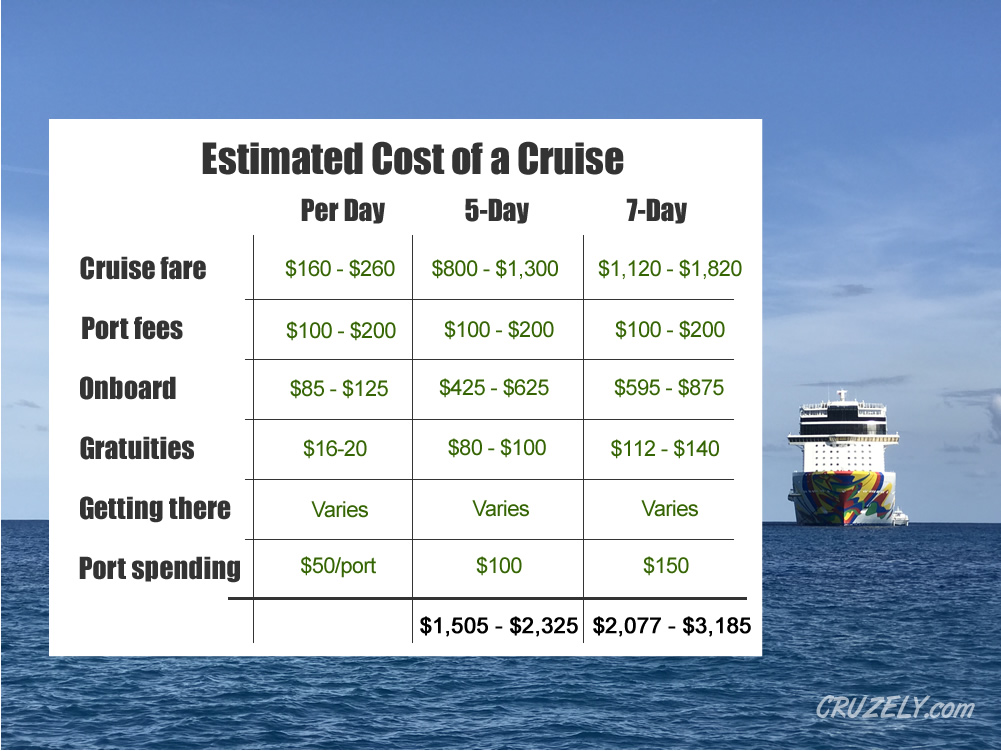
The “lead-in” fare is the price most consumers see in advertisements, but it represents only the foundation of the total financial commitment. For a standard mid-market cruise line (such as Royal Caribbean, Carnival, or Norwegian), the base fare typically covers the cabin, basic meals in the buffet or main dining room, and entry-level entertainment.
The Pricing Tiers of Stateroom Selection
The per-person cost fluctuates wildly based on the “real estate” you occupy on the ship.
-
Interior Cabins: These represent the most efficient use of travel capital. On a standard 7-night Caribbean cruise, an interior room might cost between $600 and $900 per person.
-
Balcony Staterooms: These are the industry standard for value-driven travelers. You can expect to pay a premium of 40% to 60% over the interior price, often landing between $1,100 and $1,600 per person.
-
Suites and Luxury Enclaves: For those prioritizing comfort over cost-efficiency, suites can range from $3,000 to over $10,000 per person. From a financial standpoint, these often include “perks” like free Wi-Fi or drinks, which can slightly offset the high entry price.
Port Fees and Government Taxes
A common oversight in personal budgeting is the exclusion of port fees and taxes. These are not included in the initial advertised price but are mandatory. Depending on the itinerary, these can range from $150 to $400 per person. For a family of four, this adds a non-negotiable $1,000+ to the final bill that must be accounted for in the initial cash-flow projection.
Budgeting for Onboard Expenses and “Hidden” Costs
Once on the ship, the financial structure shifts from a fixed-cost model to a variable-cost model. This is where many travelers experience “budget creep.” To maintain a disciplined financial plan, it is essential to quantify these anticipated costs before embarking.
Mandatory Gratuities and Service Charges
Most modern cruise lines automatically apply a daily service charge to your onboard account. This typically ranges from $16 to $20 per person, per day. For a 7-day cruise, this adds roughly $112 to $140 per person to the total cost. While these can sometimes be adjusted at the guest services desk, they are considered a standard cost of the service economy within the industry.
The Economics of Beverage Packages
Beverage packages are one of the most debated financial decisions in cruising. A standard “Deluxe Beverage Package” often costs between $60 and $100 per person, per day, plus a 18-20% automatic gratuity.
-
The Break-Even Analysis: To justify an $80/day drink package, an individual usually needs to consume 6 to 9 alcoholic beverages daily (based on a $12-$14 per drink average).
-
The Opportunity Cost: If you are a light drinker, paying for drinks “a la carte” is almost always the more fiscally responsible choice.
Connectivity and Professional Requirements
For the digital nomad or the professional who must remain “plugged in,” Wi-Fi is an essential expense. Current rates for high-speed satellite internet (like Starlink) average $20 to $30 per day, per device. When calculating the per-person cost, this “connectivity tax” must be factored in as a fixed utility expense for the duration of the voyage.
Calculating the Daily Rate: A Comparative Financial Analysis
To determine if a cruise offers a high Return on Investment (ROI) compared to land-based travel, one must calculate the “All-In Daily Rate.” This is done by taking the total projected cost (Fare + Taxes + Gratuities + Drinks + Excursions) and dividing it by the number of nights.
Cruise vs. Land-Based Resort Budgeting
In a traditional land-based vacation in a destination like Hawaii or Europe, your expenses are fragmented: hotel, individual meals, transportation between cities, and entertainment.
-
The Efficiency of Scale: A cruise often provides a lower per-diem rate because of the ship’s economies of scale. A “value” cruise might sit at $150–$200 per day all-in, whereas a comparable land-based trip with similar dining and moving between three different islands or cities could easily exceed $400 per day.
-
The “Luxury” Ceiling: Conversely, ultra-luxury cruise lines (like Silversea or Regent) have daily rates exceeding $1,000 per person. While the upfront cost is higher, these are truly all-inclusive, eliminating the need for a secondary “onboard budget.”
Risk Management: Travel Insurance
From a personal finance perspective, travel insurance is a critical risk mitigation tool. A policy typically costs 4% to 10% of the total trip cost. While it increases the per-person investment, it protects the capital against medical emergencies, trip cancellations, or mechanical failures. Given the high cost of medical evacuation at sea, this is a “defense-first” financial move that every cruiser should consider.
Strategic Planning to Maximize Value and ROI
Just as in the stock market, timing is everything when it comes to the cruise industry’s dynamic pricing models. To lower the per-person cost, savvy travelers must utilize specific financial strategies.
Booking Windows and Yield Management
Cruise lines use sophisticated algorithms to maximize the “yield” per cabin.
-
The Early Bird Strategy: Booking 12 to 18 months in advance usually secures the lowest base fare and the best cabin selection. This allows for a longer “savings runway” to cash-flow the vacation without resorting to high-interest credit card debt.
-
The Last-Minute Liquidation: If a ship is not at capacity 60-90 days before sailing, lines will often slash prices to fill beds (since they make much of their profit on onboard spending). This is an excellent way to reduce the per-person cost if you have the flexibility to travel on short notice.
Utilizing Loyalty Programs and Financial Incentives
Most major cruise lines are owned by publicly traded corporations (like Carnival Corp, Royal Caribbean Group, and Norwegian Cruise Line Holdings).
-
Shareholder Benefits: Investors who own at least 100 shares of the parent company’s stock are often eligible for onboard credit (OBC), ranging from $50 to $250 per cabin. This is a direct dividend-style benefit that reduces the net cost of the trip.
-
Credit Card Arbitrage: Utilizing co-branded cruise credit cards or high-value travel cards (like Chase Sapphire Reserve or Amex Platinum) can provide thousands of points that can be redeemed to offset the fare, effectively lowering the out-of-pocket per-person cost.
The Long-Term Financial Impact of Discretionary Travel
When answering “how much per person for a cruise,” one must ultimately view the expense within the context of their broader financial health. A cruise is a depreciating asset—it is a consumption of capital for the sake of experience.
The Value of Experience vs. Capital Preservation
While the average mid-market cruise costs roughly $1,500 to $2,000 per person (when all expenses are tallied), the “value” is subjective. From a wealth management perspective, the goal is to ensure that the cost of the cruise does not impede long-term goals such as retirement contributions or emergency fund maintenance.
Final Financial Tally: The “Reality Check”
To provide a concrete answer, a realistic budget for a modern 7-day cruise on a mainstream line looks like this:
-
Base Fare: $900
-
Taxes & Fees: $250
-
Gratuities: $120
-
Airfare/Transportation to Port: $400
-
Onboard Spending (Drinks/Dining/Wi-Fi): $500
-
Shore Excursions: $300
Total Projected Cost: Approximately $2,470 per person.
While it is possible to cruise for significantly less by staying in an interior room and avoiding all onboard extras, the $2,500 mark is a safer “real-world” figure for a comfortable, mid-range experience. By breaking the costs down into these specific financial buckets, travelers can move from “guessing” the cost to “managing” the investment, ensuring that the vacation provides maximum enjoyment without a post-trip “financial hangover.”
aViewFromTheCave is a participant in the Amazon Services LLC Associates Program, an affiliate advertising program designed to provide a means for sites to earn advertising fees by advertising and linking to Amazon.com. Amazon, the Amazon logo, AmazonSupply, and the AmazonSupply logo are trademarks of Amazon.com, Inc. or its affiliates. As an Amazon Associate we earn affiliate commissions from qualifying purchases.