
On April 4, 1975, a pivotal moment in the history of technology occurred in Albuquerque, New Mexico. It was on this day that childhood friends Bill Gates and Paul Allen officially founded Microsoft (originally stylized as Micro-Soft). While the world today knows Microsoft as a trillion-dollar titan of cloud computing and artificial intelligence, its origins were rooted in a singular, audacious vision: a computer on every desk and in every home. Understanding when and how Gates founded Microsoft requires looking past the date and into the technological landscape of the mid-1970s, an era defined by the transition from massive mainframes to the first “microcomputers.”
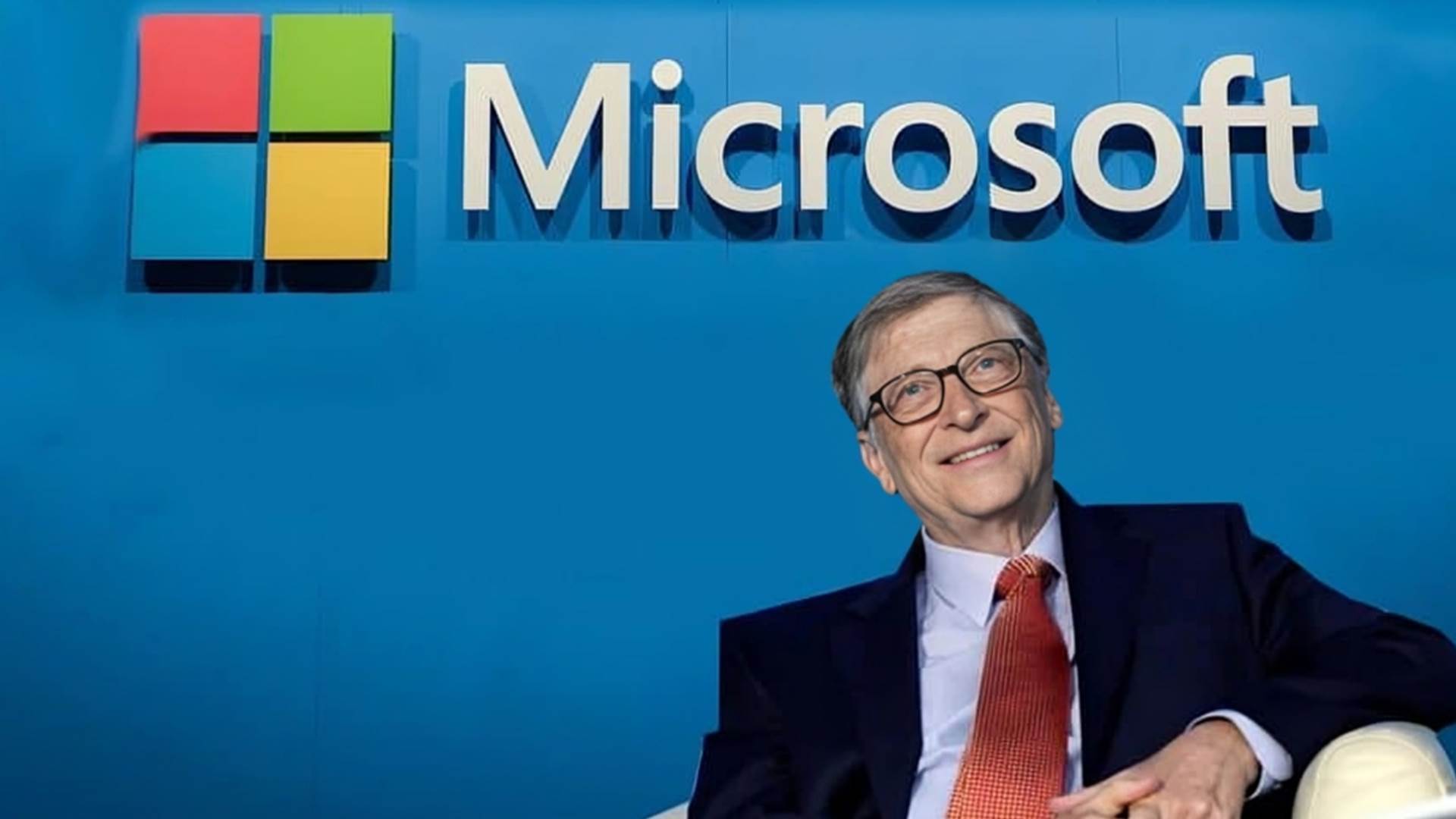
The foundation of Microsoft was not a corporate boardroom decision but a response to a specific technical challenge. When the MITS Altair 8800, the first commercially successful personal computer, appeared on the cover of Popular Electronics in January 1975, Gates and Allen recognized that the hardware revolution was missing a critical component: software. Without a high-level programming language, the Altair was little more than a box of switches and lights for hobbyists. By founding Microsoft in April of that year, Gates and Allen shifted the paradigm of the industry from hardware-centric to software-driven, a move that would define the next five decades of digital evolution.
The 1975 Spark: From Albuquerque to the Altair 8800
The timing of Microsoft’s founding was inextricably linked to the release of the Altair 8800. At the time, Bill Gates was a student at Harvard University, and Paul Allen was working for Honeywell in Boston. The two had spent their teenage years at Lakeside School in Seattle mastering teletype machines and PDP-10 mainframes. When they saw the Altair, they realized that the era of accessible computing had arrived. However, the Altair lacked an operating system or a language that allowed users to write programs easily.
The Popular Electronics Catalyst
The catalyst for Microsoft’s official registration was a bold gamble. Gates and Allen contacted Ed Roberts, the founder of MITS (Micro Instrumentation and Telemetry Systems), claiming they had developed a BASIC (Beginner’s All-purpose Symbolic Instruction Code) interpreter for the Altair’s Intel 8080 microprocessor. In reality, they hadn’t written a single line of code for the 8080 yet. When Roberts expressed interest, the duo spent eight weeks of grueling coding sessions in a Harvard computer lab.
This period was a masterclass in technical efficiency. Because they didn’t have an actual Altair, Allen wrote a simulator for the PDP-10 to mimic the 8080 chip’s behavior. When Allen flew to Albuquerque to demonstrate the software, it was the first time the code actually ran on the target hardware. It worked flawlessly. This success led to the formal establishment of Microsoft in Albuquerque to be near MITS, their first major client.
The Birth of BASIC for the 8080
The technical achievement of Microsoft BASIC cannot be overstated. Gates and Allen managed to squeeze a functional, high-level language interpreter into just 4 kilobytes of memory. This forced them to engage in “tight” coding, where every byte was precious. This obsession with efficiency became a hallmark of early Microsoft software development. By providing a version of BASIC for the Altair, Microsoft democratized programming, allowing hobbyists to write their own applications rather than toggling machine code by hand. This was the first “platform” play in tech history—creating the tools that others would use to build the ecosystem.
The Strategic Pivot: MS-DOS and the IBM Partnership
While 1975 was the year of founding, 1980 was the year Microsoft redefined the business of technology. By the late 70s, the company had moved to Bellevue, Washington, and was thriving as a language provider for various microcomputers. However, the true explosion occurred when IBM, the dominant force in corporate computing, decided to enter the personal computer market.
Licensing over Ownership
When IBM approached Microsoft for an operating system for their upcoming PC, Microsoft didn’t actually have one. Gates and Allen famously purchased “QDOS” (Quick and Dirty Operating System) from Seattle Computer Products for $50,000, refined it, and renamed it MS-DOS (Microsoft Disk Operating System).
The technical genius of this era wasn’t just in the code, but in the licensing agreement. Gates insisted that Microsoft retain the right to license MS-DOS to other manufacturers. IBM, focused on hardware, agreed. This allowed Microsoft to profit from every “IBM-compatible” PC produced by companies like Compaq and Dell. It transformed the software industry from a service-based model into a high-margin, scalable product-based model.
Setting the Standard for Personal Computing
MS-DOS became the standard architecture for the 16-bit era. It provided a BIOS (Basic Input/Output System) abstraction layer that allowed software developers to write applications that could run on a wide variety of hardware configurations. This was a massive leap forward in software compatibility. During this time, Microsoft’s focus was on the command-line interface (CLI). While cryptic by today’s standards, MS-DOS 1.0 and its successors provided the stable file management and memory handling required for the first generation of business software, including spreadsheets and word processors.
The GUI Revolution: Making Technology Accessible
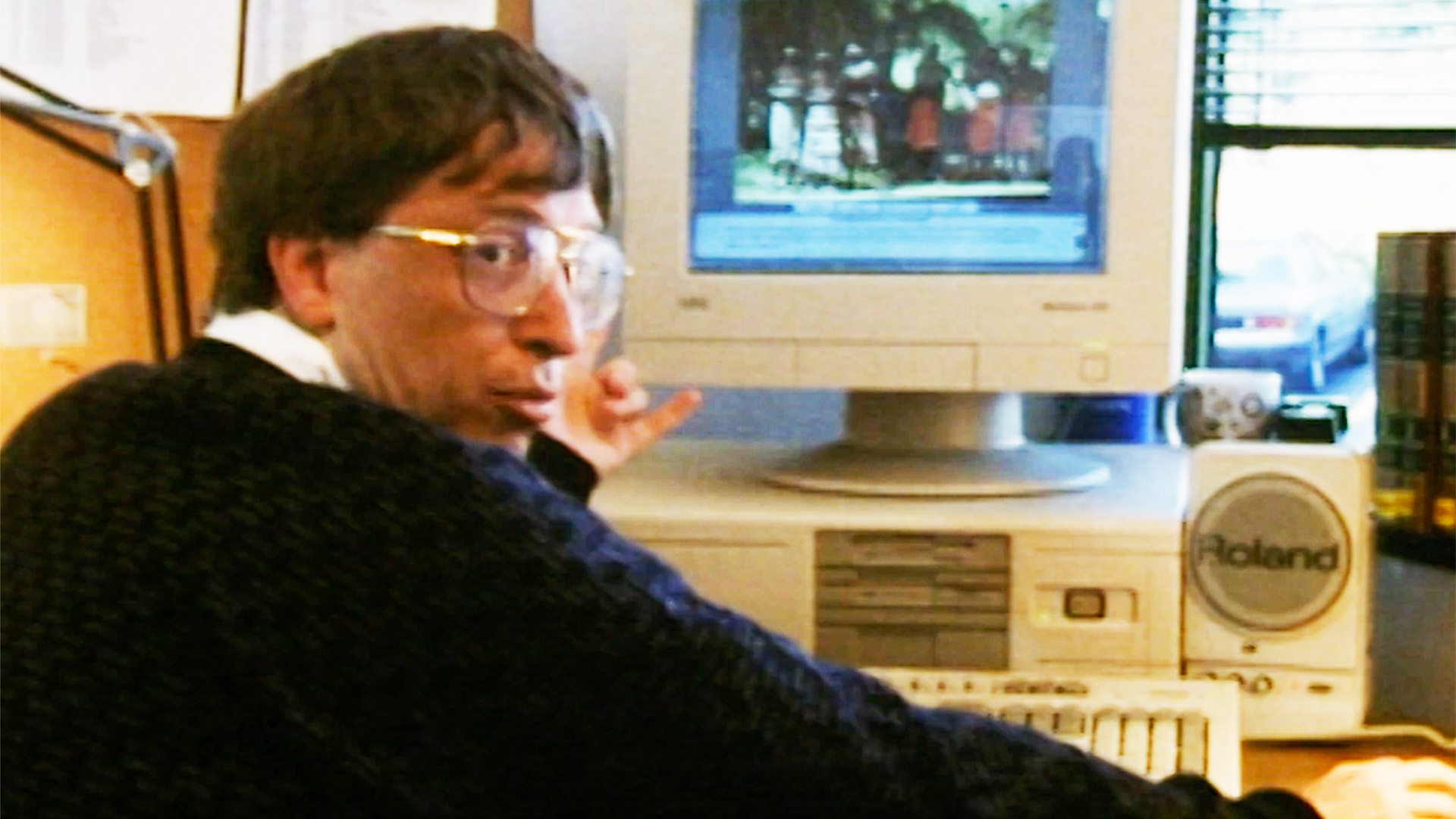
As the 1980s progressed, the technical focus shifted from command-line interfaces to Graphical User Interfaces (GUIs). Seeing the potential of the Xerox PARC Alto and the subsequent release of the Apple Macintosh, Bill Gates steered Microsoft toward a visual future. This transition was not immediate; it required a fundamental rethinking of how software interacted with hardware resources like video memory and input devices like the mouse.
The Rise of Windows
Microsoft announced Windows in 1983 as a graphical extension for MS-DOS, but it wasn’t until the release of Windows 3.0 in 1990 and Windows 95 that the technology truly matured. From a technical perspective, Windows 95 was a landmark. It introduced the 32-bit architecture, “Plug and Play” hardware detection, and a much more robust multitasking environment.
The development of Windows shifted the focus from simple instruction sets to complex APIs (Application Programming Interfaces). Developers no longer had to write code to talk directly to a printer or a graphics card; they wrote to the Windows API, which handled the hardware communication. This abstraction layer allowed for an explosion in third-party software development, cementing Microsoft’s dominance in the software stack.
The Productivity Suite Monopoly
Alongside the OS, Microsoft developed the Microsoft Office suite. By integrating Word, Excel, and PowerPoint, Microsoft created a “killer app” ecosystem. The technical challenge here was interoperability—ensuring that a chart from Excel could be seamlessly embedded into a Word document. This was achieved through OLE (Object Linking and Embedding) and later COM (Component Object Model) technologies. These architectural decisions ensured that once a business adopted Microsoft’s tools, the friction of switching to a competitor became prohibitively high.
Evolution in the Internet Age: Browsers and the Cloud
The mid-1990s brought a new challenge that almost caught Microsoft off guard: the World Wide Web. In 1995, Gates issued his famous “Internet Tidal Wave” memo, signaling a total shift in company strategy. The founding principles of desktop dominance were expanded to include the browser and the server.
The Internet Tidal Wave
The technical response to the web was the rapid development of Internet Explorer and its integration into the Windows operating system. While this led to significant antitrust litigation, it also forced a standard for web rendering during the early days of the internet. Microsoft transitioned from a company that built offline tools to one that built the gateways to the global network. This era also saw the birth of .NET, a software framework that allowed developers to build web-based applications with the same ease they built desktop ones.
Azure and the Software-as-a-Service Shift
As Bill Gates transitioned away from day-to-day operations in the 2000s, the company he founded faced the “Mobile First, Cloud First” revolution. The most significant technical shift in Microsoft’s recent history is the move from selling “shrink-wrapped” software to providing Cloud-based services via Microsoft Azure.
Azure represents the culmination of the vision started in 1975, but on a global scale. Instead of managing a single PC, Microsoft now manages millions of servers across the globe. The transition to Office 365 (SaaS) changed the software delivery model from perpetual licenses to subscriptions, ensuring that the software is always updated with the latest security patches and features. This required a massive overhaul of Microsoft’s backend infrastructure and a shift toward Linux-friendly environments, a move that would have been unthinkable in the 1990s.

The Architectural Legacy: Microsoft’s Role in the AI Future
Nearly half a century since its founding, the legacy of April 4, 1975, continues to manifest in the realm of Artificial Intelligence. Bill Gates’ original focus on providing the “intellectual layer” for hardware has evolved into providing the “cognitive layer” for digital services. Through its partnership with OpenAI and the development of the Copilot ecosystem, Microsoft is once again positioning itself as the foundational platform for the next generation of computing.
The technical architecture of modern Microsoft is now built around Large Language Models (LLMs) and massive data processing. The transition from BASIC to MS-DOS, to Windows, to the Cloud, and now to AI, shows a consistent thread of technical adaptation. Each stage has involved abstracting complexity to make powerful technology accessible to non-experts.
When we ask when Bill Gates founded Microsoft, the answer is 1975, but the “founding” is a continuous process of technical reinvention. What started as a two-man operation in a small New Mexico office to write a language for a hobbyist kit has become the backbone of the global digital economy. The 1975 founding was not just the start of a company; it was the start of the software industry itself. By decoupling software from hardware and focusing on the power of the code, Gates and Allen set in motion a technological evolution that continues to reshape how we work, communicate, and solve problems in the 21st century.
aViewFromTheCave is a participant in the Amazon Services LLC Associates Program, an affiliate advertising program designed to provide a means for sites to earn advertising fees by advertising and linking to Amazon.com. Amazon, the Amazon logo, AmazonSupply, and the AmazonSupply logo are trademarks of Amazon.com, Inc. or its affiliates. As an Amazon Associate we earn affiliate commissions from qualifying purchases.