
In the world of global finance, few tickers command as much attention as MSFT. For investors asking, “What is Microsoft stock price today?” the answer is more than just a numerical value blinking on a trading terminal; it is a real-time reflection of market sentiment regarding the future of enterprise software, cloud computing, and the rapidly evolving landscape of artificial intelligence. As one of the cornerstones of the S&P 500 and a dominant force in the Nasdaq-100, Microsoft represents a bellwether for the broader economy. Understanding its current valuation requires a deep dive into the financial metrics, strategic pivots, and macroeconomic factors that drive its daily fluctuations.
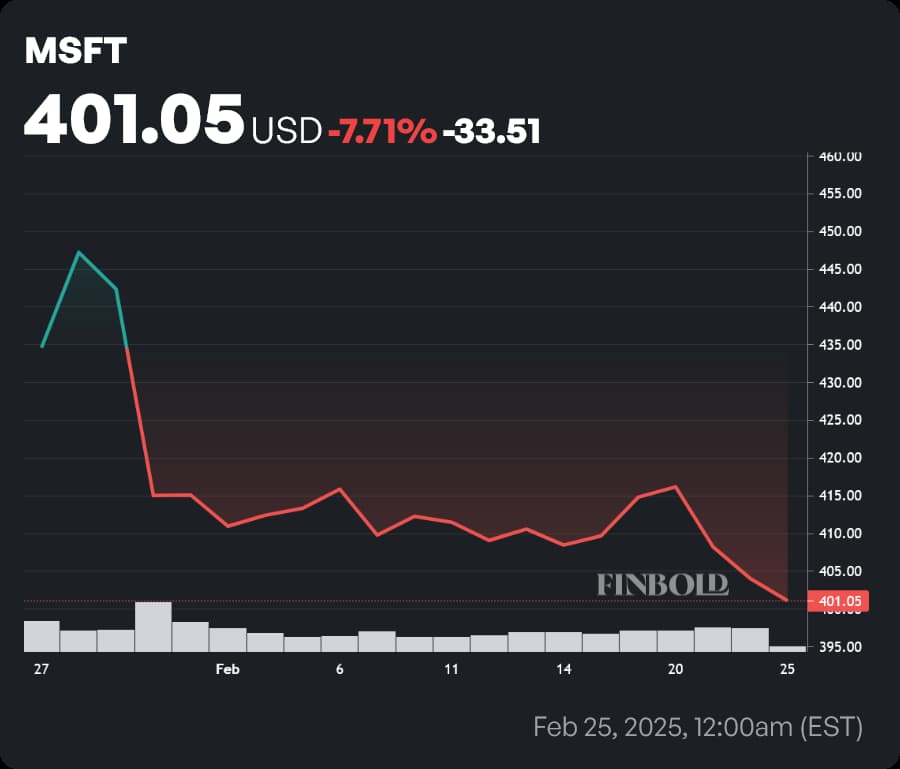
The Mechanics of Microsoft’s Market Valuation
When we observe the stock price of Microsoft on any given day, we are looking at the equilibrium point between millions of buyers and sellers globally. This price is influenced by a complex interplay of high-frequency trading algorithms, institutional rebalancing, and retail investor sentiment. However, the true “value” of the stock is rooted in the company’s massive market capitalization, which has consistently placed it among the most valuable corporations in the world.
Market Capitalization and the Trillion-Dollar Club
Microsoft’s stock price is the primary variable in determining its market capitalization. As the company navigated the transition from a legacy software provider to a cloud-first, AI-driven powerhouse, its valuation climbed into the multi-trillion-dollar range. For investors, this level of capitalization offers a unique form of “blue-chip” security. Large-cap stocks like MSFT often experience lower volatility compared to small-cap growth stocks, making them a preferred choice for pension funds, ETFs, and individual retirement accounts. When the price moves even by 1%, it represents tens of billions of dollars in shifting wealth, illustrating the sheer scale of the company’s influence on the financial markets.
Factors Influencing Daily Price Fluctuations
The “price today” is rarely static. It responds to immediate catalysts such as quarterly earnings reports, product launches, or shifts in Federal Reserve interest rate policies. In a high-interest-rate environment, growth stocks—even those as established as Microsoft—often face valuation pressure as the present value of future cash flows is discounted more heavily. Conversely, when the market anticipates a “pivot” toward lower rates, tech giants with strong balance sheets often see their share prices rally. Investors monitoring the daily price must distinguish between “noise”—temporary dips caused by broader market sell-offs—and “signals,” which indicate fundamental changes in the company’s earning power.
Financial Foundations: Why Investors Watch Microsoft
To understand why Microsoft’s stock price maintains its premium valuation, one must look at the underlying financial machinery. Unlike many tech companies that struggle with profitability in their early years, Microsoft is a cash-flow juggernaut. Its ability to generate billions in free cash flow every quarter provides a safety net for the stock price, even during periods of market uncertainty.
Diversified Revenue Streams
Microsoft’s financial strength lies in its diversification. The company operates through three primary segments: Productivity and Business Processes (including Office 365 and LinkedIn), Intelligent Cloud (centered around Azure), and More Personal Computing (encompassing Windows, Xbox, and Surface). This tripartite structure ensures that if one sector faces a cyclical downturn—such as a slump in PC sales—the growth in cloud services can offset the losses. From an investment perspective, this diversification reduces the risk profile of the stock, supporting a higher price-to-earnings (P/E) ratio than many of its peers.
Earnings Per Share (EPS) and Dividend Growth
A critical driver of the stock price is Earnings Per Share. Microsoft has a long history of beating analyst expectations, which often results in immediate upward pressure on the stock price following earnings calls. Furthermore, Microsoft is a rare breed in the tech world: a growth company that also pays a consistent dividend. For the income-focused investor, the steady increase in annual dividend payouts adds a layer of total return that complements capital appreciation. This commitment to returning value to shareholders through both dividends and share buybacks creates a “floor” for the stock price, as value investors step in to buy the dip when yields become attractive.
The Impact of AI on Microsoft’s Valuation
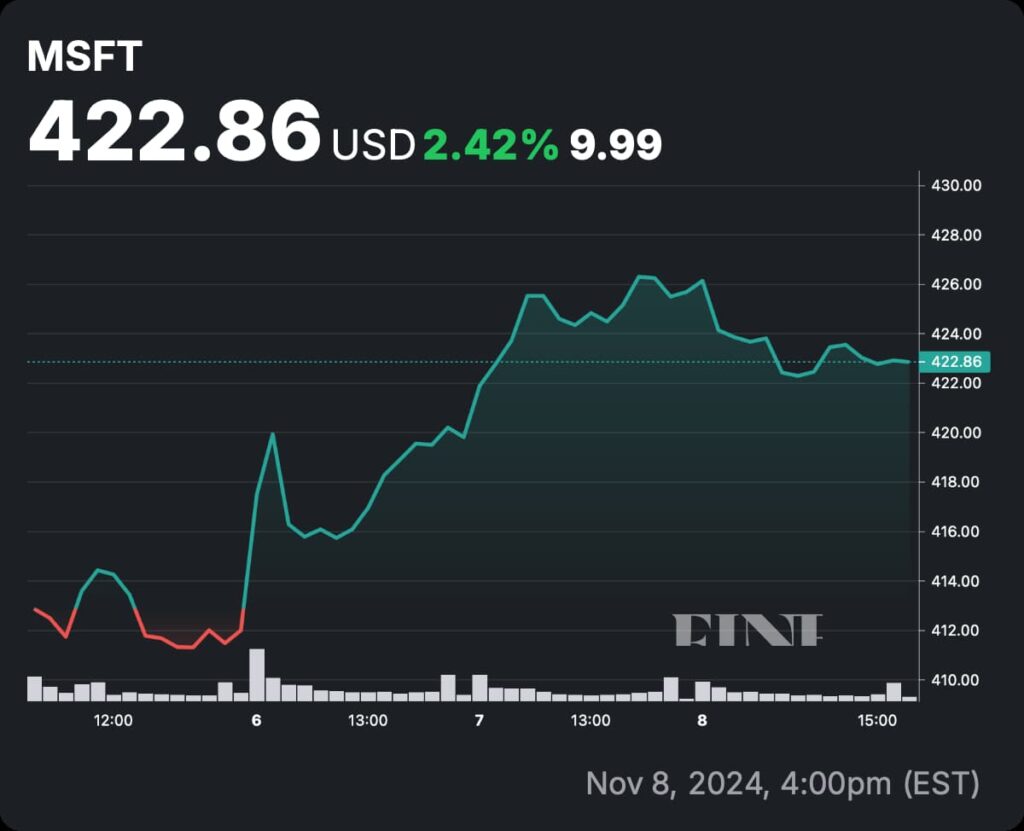
In recent years, the primary catalyst for Microsoft’s stock price appreciation has been its aggressive integration of artificial intelligence. The market has moved from viewing Microsoft as a software utility to seeing it as the vanguard of the “Fourth Industrial Revolution.” This shift in perception has significantly expanded the stock’s valuation multiples.
Azure and the Cloud Infrastructure Boom
Azure, Microsoft’s cloud platform, is the engine of its modern growth. As businesses move their data and operations to the cloud, Azure’s recurring revenue model provides a predictable and expanding income stream. The stock price often moves in tandem with Azure’s growth percentages. When Azure shows signs of outperforming its main competitor, Amazon Web Services (AWS), the market rewards MSFT with a higher valuation. The integration of AI tools directly into Azure services has created a new “upsell” opportunity, allowing Microsoft to extract more value from its existing enterprise customer base.
The OpenAI Partnership as a Market Catalyst
Microsoft’s multi-billion-dollar investment in OpenAI has been perhaps the most significant strategic move in the company’s recent history. By integrating GPT-4 capabilities into its “Copilot” across Word, Excel, and PowerPoint, Microsoft has effectively re-monetized its legacy software suite. Investors track the adoption rates of these AI features closely, as they represent high-margin revenue. The narrative of being “the AI company” has allowed Microsoft to trade at a premium, as the market bets on the long-term productivity gains that generative AI will bring to the global economy.
Technical and Fundamental Analysis for the Modern Investor
Determining whether the current stock price is a “buy” or a “hold” requires a balance of fundamental and technical analysis. While the fundamentals tell us about the company’s health, technicals provide insight into market timing and psychological price levels.
P/E Ratios and Historical Valuation Trends
The Price-to-Earnings ratio is the most common metric used to judge if MSFT is overvalued or undervalued. Historically, Microsoft has traded at a higher P/E than the average S&P 500 company, justified by its superior growth rates and dominant market position. However, if the P/E expands too far beyond its 5-year average without a corresponding spike in earnings, the stock may be due for a correction. Investors also look at the Price-to-Sales (P/S) ratio and Enterprise Value to EBITDA to get a clearer picture of whether the “price today” reflects the company’s true earning power.
Support and Resistance Levels
For those tracking the daily price, technical indicators like moving averages (50-day and 200-day) are vital. When Microsoft’s stock price stays above its 200-day moving average, it is generally considered to be in a long-term uptrend. Traders often look for “support” levels—price points where the stock has historically stopped falling and started rising—to identify entry points. Conversely, “resistance” levels indicate where selling pressure typically increases. Understanding these psychological barriers helps investors manage the volatility inherent in the tech sector.
Strategic Considerations for Your Portfolio
Investing in Microsoft is not just about the “price today”; it is about where the company fits into a broader financial strategy. Whether you are a day trader or a long-term “buy and hold” investor, MSFT requires a nuanced approach to risk management.
Risk Management and Macroeconomic Influences
No stock is without risk. For Microsoft, these risks include regulatory scrutiny and antitrust investigations, particularly in the EU and the US. Any news regarding potential fines or forced breakups of business units can lead to sudden drops in the stock price. Additionally, as a global company, Microsoft is sensitive to currency fluctuations. A strong US dollar can eat into international profits, a factor that is frequently discussed in quarterly guidance. Investors should monitor these macroeconomic headwinds to understand potential “black swan” events that could impact the share price.

Building Wealth Through Blue-Chip Stability
Ultimately, Microsoft remains a cornerstone for wealth building. Its role in the modern economy is so fundamental that it is often compared to a digital utility. For the individual investor, focusing too much on the minute-to-minute fluctuations of the stock price can be counterproductive. Instead, the focus should be on the company’s compounding power. By reinvesting dividends and maintaining a position through market cycles, investors have historically been rewarded by Microsoft’s ability to reinvent itself.
Whether the price is up or down today, the underlying narrative of Microsoft is one of resilience and innovation. As the company continues to lead in the AI space and expand its cloud footprint, its stock price will remain a primary indicator of the health of the global tech economy. For those looking to grow their net worth, keeping a close eye on MSFT is not just a matter of curiosity—it is a financial necessity.
aViewFromTheCave is a participant in the Amazon Services LLC Associates Program, an affiliate advertising program designed to provide a means for sites to earn advertising fees by advertising and linking to Amazon.com. Amazon, the Amazon logo, AmazonSupply, and the AmazonSupply logo are trademarks of Amazon.com, Inc. or its affiliates. As an Amazon Associate we earn affiliate commissions from qualifying purchases.