
The stock market is a dynamic, complex ecosystem, perpetually reacting to a myriad of forces. When investors wake up to see red on their screens, the immediate, pressing question is always, “Why are stocks down today?” This isn’t a simple query with a singular answer; rather, it’s a confluence of macroeconomic shifts, corporate specificities, investor sentiment, and global events that collectively drive market movements. Understanding these underlying currents is crucial not just for seasoned investors, but for anyone looking to make sense of their financial world and build resilience in their investment strategy.
Today’s market dip could be the result of a sudden geopolitical flare-up, a disappointing earnings report from a major tech company, a new inflation reading that spooks central banks, or simply a bout of profit-taking after a sustained rally. Often, it’s a combination of several factors, amplifying the downward pressure. This article will delve into the primary reasons behind stock market downturns, offering an insightful perspective on the intricate interplay of forces that dictate daily fluctuations, and ultimately, guiding investors on how to approach such periods with a measured, informed strategy.
Macroeconomic Headwinds: The Big Picture
The broader economic environment forms the bedrock upon which stock valuations are built. When this foundation starts to crack, the entire market can feel the tremors. Macroeconomic factors often exert the most widespread influence, affecting nearly every sector and company.
Inflationary Pressures and Interest Rate Hikes
One of the most potent drivers of market downturns is persistent inflation. When the cost of goods and services rises rapidly, it erodes purchasing power for consumers and increases operational costs for businesses. Higher input costs, from raw materials to labor, can squeeze profit margins, making companies less attractive to investors. To combat inflation, central banks, such as the U.S. Federal Reserve, typically resort to raising interest rates.
Interest rate hikes are a double-edged sword for the stock market. Firstly, they make borrowing more expensive for businesses, hindering expansion plans and capital investments. Companies that rely heavily on debt to finance operations or growth often see their profitability diminish in a high-interest rate environment. Secondly, higher interest rates make alternative, “safer” investments like bonds more attractive. When bond yields rise, investors may shift capital out of equities, which are inherently riskier, into fixed-income securities, leading to selling pressure in the stock market. Moreover, future corporate earnings are discounted at a higher rate in valuation models when interest rates are up, making current stock prices seem less appealing. The market often anticipates these moves, reacting negatively even to the prospect of rate hikes.
Geopolitical Instability and Global Events
The interconnectedness of the global economy means that events far from Wall Street can have a profound impact on stock prices. Geopolitical instability, such as wars, trade disputes, or significant political unrest in major economic blocs, introduces a level of uncertainty that markets inherently dislike. Conflicts can disrupt supply chains, leading to shortages and price spikes in critical commodities like oil, natural gas, and essential raw materials. For instance, a disruption in energy supply can send shockwaves through industries reliant on fuel for production and transportation, increasing their costs and reducing profitability.
Trade wars, characterized by tariffs and protectionist policies between major trading nations, can severely impact companies with international supply chains and export markets. The increased cost of imports and reduced access to foreign markets can depress corporate earnings and dampen investor confidence. Beyond direct economic impacts, geopolitical tensions foster an environment of fear and unpredictability, prompting investors to pull back from riskier assets like stocks and seek refuge in safer havens, leading to broad market sell-offs. Pandemics, like COVID-19, also fall into this category, demonstrating how global health crises can paralyze economies, disrupt supply and demand, and trigger widespread market panic.
Economic Slowdown and Recession Fears
Perhaps the most visceral macroeconomic fear for investors is the prospect of an economic slowdown or, worse, a recession. A recession is typically defined as two consecutive quarters of negative GDP growth, signifying a significant contraction in economic activity. Signs of a weakening economy – such as declining manufacturing output, slowing retail sales, rising unemployment figures, or a dip in consumer confidence – often precede market downturns.
As economic activity slows, corporate earnings tend to decline. Businesses face reduced demand for their products and services, leading to lower revenues and profits. Investors, anticipating these reduced earnings, will often sell off stocks, driving prices down. The bond market can also signal recessionary fears through an inverted yield curve, where short-term government bond yields exceed long-term yields. This phenomenon has historically been a reliable predictor of impending recessions, and when it occurs, it often sends a chilling message to equity markets, triggering defensive positioning and selling. The fear itself can be self-fulfilling, as businesses and consumers, anticipating a downturn, reduce spending and investment, further exacerbating the slowdown.
Corporate Performance and Sector-Specific Challenges
While macroeconomic forces paint the broad strokes, the individual performance of companies and the specific challenges faced by various sectors can also trigger or exacerbate market declines. Even in a relatively stable economy, sector-specific issues can lead to market-wide shifts.
Disappointing Earnings Reports
Corporate earnings are the lifeblood of stock valuations. Investors buy stocks for a share of a company’s future profits. Each quarter, publicly traded companies release their earnings reports, detailing their financial performance. When a prominent company, or a significant number of companies, report earnings that fall short of analyst expectations, or provide a weaker-than-expected outlook (guidance) for future quarters, it can send shockwaves through the market.
Missing earnings estimates suggests that the company’s underlying business might not be performing as robustly as anticipated, or that its growth trajectory is decelerating. Even more impactful can be a lowered guidance, indicating that management expects future challenges. This leads analysts to downgrade their ratings, and investors to sell off shares, not just of the individual company but often across its entire sector, as a weak outlook for one major player can signal broader industry headwinds. If enough large-cap companies report disappointing results around the same time, the negative sentiment can cascade throughout the entire stock market, pulling down major indices.
Sectoral Weakness and Industry-Specific Headwinds
Sometimes, the market’s decline isn’t uniform but concentrated in particular sectors. A market downturn today might be heavily influenced by significant weakness in, say, the technology sector, while other sectors like utilities or healthcare remain relatively stable. Such sectoral weakness can arise from a variety of industry-specific headwinds.
For instance, the tech sector, often characterized by high growth and innovation, can be particularly vulnerable to rising interest rates because their future earnings are discounted more heavily. Regulatory scrutiny, anti-trust investigations, or new government policies can also specifically target tech giants, impacting their business models and profitability. Similarly, the energy sector is highly sensitive to fluctuations in global oil prices; a sudden drop in demand or an increase in supply can decimate energy stock values. The retail sector might face headwinds from shifting consumer spending habits, increased competition from e-commerce, or supply chain disruptions. When a major sector faces significant challenges, its decline can weigh heavily on the overall market, especially if that sector represents a large portion of market capitalization.
Analyst Downgrades and Market Sentiment
Financial analysts play a significant role in shaping market perceptions. Investment banks and research firms employ analysts who cover specific companies and sectors, issuing “buy,” “hold,” or “sell” ratings. When a widely respected analyst or a major investment bank downgrades a prominent stock or an entire sector, it can trigger a wave of selling. These downgrades often reflect a revised outlook based on new information, such as changing economic conditions, competitive pressures, or a re-evaluation of a company’s growth prospects.
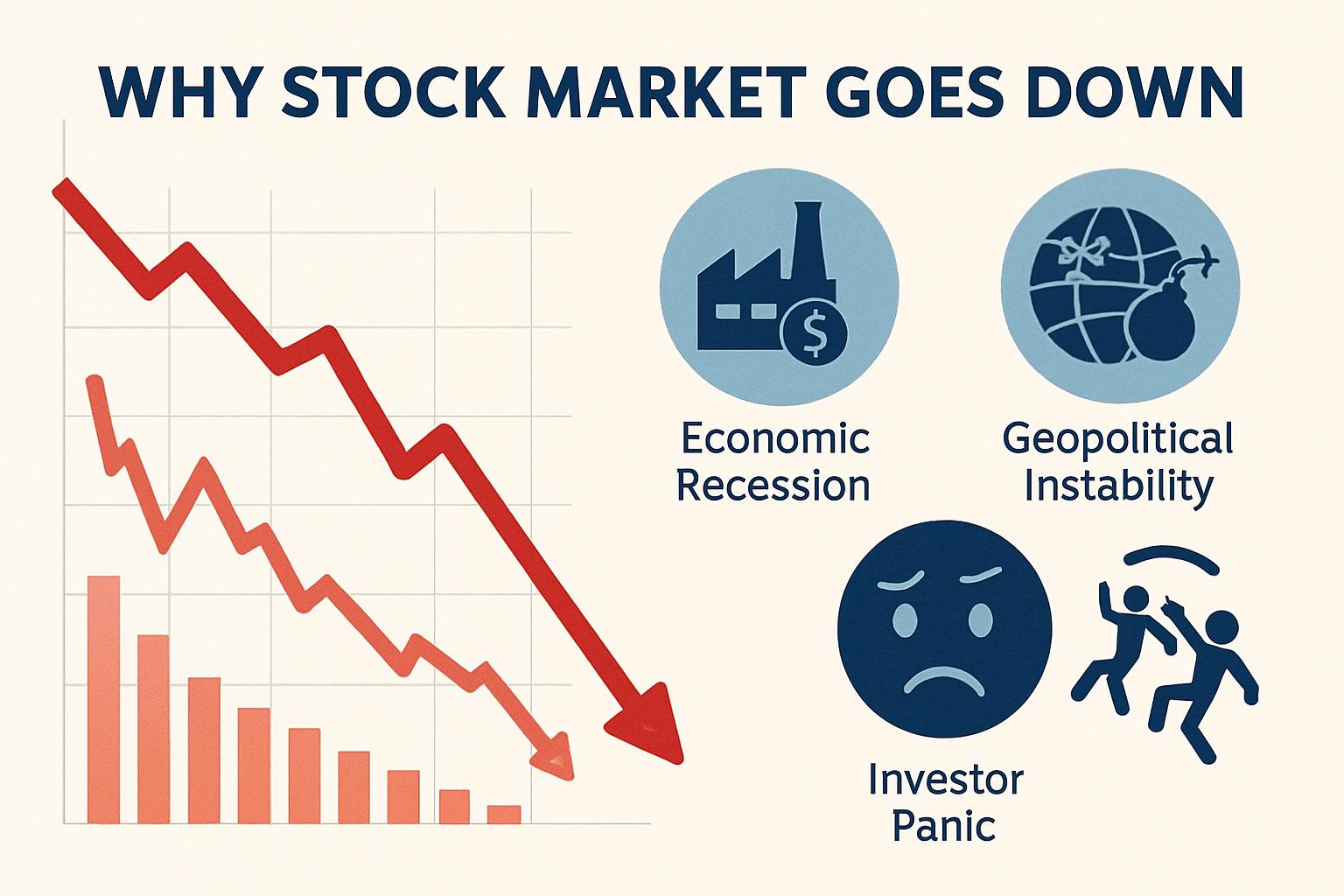
Beyond individual analyst actions, broader market sentiment is a powerful, albeit intangible, force. Sentiment refers to the overall psychological mood of investors – whether they are optimistic (bullish) or pessimistic (bearish). Negative news, whether economic, corporate, or geopolitical, can quickly shift sentiment from positive to negative. Fear and uncertainty can spread rapidly, amplified by social media and financial news cycles. This often leads to a “herd mentality,” where investors, seeing others sell, panic and sell their own holdings, even if the underlying fundamentals of their investments haven’t significantly changed. This emotional contagion can accelerate market downturns, sometimes to levels that are not fully justified by objective economic data.
Market Mechanics and Investor Behavior
Beyond the fundamental economic and corporate drivers, the actual mechanics of market trading and the inherent psychological biases of investors contribute significantly to daily stock fluctuations, including sudden dips.
Technical Corrections and Profit-Taking
Stock markets rarely move in a straight line; periods of strong gains are often followed by pullbacks. A “technical correction” is a common market phenomenon where prices fall by at least 10% from their most recent peak. These corrections are often a healthy part of a bull market, allowing the market to “digest” previous gains and reset before potentially moving higher. One primary reason for such corrections is profit-taking. After a sustained rally, many investors who have seen their portfolios grow substantially decide to sell some of their holdings to lock in profits. This selling pressure, especially if widespread, can lead to a significant dip.
Algorithmic trading also plays a role. Computer algorithms are programmed to execute trades based on specific technical indicators or news events. When certain thresholds are met, these programs can trigger rapid, high-volume selling, exacerbating market movements and creating flash crashes or sharp intraday declines. While not always indicative of fundamental problems, these technical corrections can certainly make headlines and contribute to the “stocks are down today” narrative.
Fear, Uncertainty, and Doubt (FUD)
Investor psychology is a powerful, often irrational, force in financial markets. The acronym FUD – Fear, Uncertainty, and Doubt – perfectly encapsulates the emotional state that can drive market downturns. Negative news, speculation, or even rumors can quickly ignite fear among investors. This fear can manifest as panic selling, where investors offload their assets without fully considering the long-term implications, simply to avoid further perceived losses.
Uncertainty about future economic conditions, corporate performance, or geopolitical stability can paralyze decision-making or lead to overly cautious behavior. When there’s a lack of clear information or conflicting narratives, investors tend to default to a defensive posture, which often involves selling riskier assets like stocks. Doubt, whether in a company’s management, a government’s economic policy, or the market’s overall trajectory, can undermine confidence and lead to a retreat from the market. These emotional responses, while understandable, can create market volatility that might not always align with underlying economic realities, causing stocks to fall deeper and faster than fundamentals might suggest.
Liquidity Concerns and Margin Calls
In more extreme market downturns, liquidity can become a significant issue. Market liquidity refers to the ease with which an asset can be converted into cash without affecting its price. When there is widespread selling, particularly in thinly traded stocks or specific market segments, it can become difficult to find buyers, causing prices to plummet rapidly. A lack of liquidity can amplify selling pressure, as investors struggle to exit positions, leading to further price drops.
Another mechanism that can accelerate a market decline is margin calls. Many investors use margin – borrowed money from their broker – to buy stocks. If the value of their portfolio falls below a certain threshold, the broker issues a “margin call,” demanding that the investor deposit more funds or sell off some assets to bring their account back to an acceptable level. When the market is falling rapidly, a wave of margin calls can force investors to sell even more stocks, regardless of their intrinsic value, to cover their obligations. This forced selling creates a negative feedback loop, pushing prices down further and potentially triggering more margin calls, exacerbating the market’s decline.
What Should Investors Do When Stocks Are Down?
Market downturns are an inevitable part of investing. While they can be unsettling, they also present opportunities for disciplined investors. Reacting impulsively is often the worst strategy; instead, a thoughtful and calm approach is paramount.
Maintain a Long-Term Perspective
The most crucial piece of advice during a market downturn is to remember that the stock market has historically recovered from every major decline. While today’s dip might feel significant, focusing on your long-term financial goals – retirement, buying a home, funding education – helps put daily fluctuations into perspective. Market timing is notoriously difficult; very few investors can consistently buy at the bottom and sell at the top. A long-term horizon allows you to ride out the short-term volatility and benefit from the market’s historical upward trend. For many, simply holding through a downturn is a better strategy than panic selling and locking in losses.
Reassess Your Portfolio and Risk Tolerance
A market dip can be an excellent opportunity to review your portfolio, not to panic sell, but to ensure it still aligns with your current risk tolerance and financial goals. Ask yourself: Is my asset allocation appropriate for my age and investment horizon? Am I overly concentrated in any particular stock or sector? Do I have sufficient diversification? This is a time to prune any holdings that no longer fit your strategy or have fundamentally deteriorated, and potentially rebalance your portfolio. If you find yourself losing sleep over market movements, it might indicate that your portfolio has too much risk, and you may want to consider a more conservative allocation going forward.
Consider Dollar-Cost Averaging and Diversification
Downturns can be periods of opportunity for investors employing a dollar-cost averaging strategy. This involves investing a fixed amount of money at regular intervals, regardless of market conditions. When prices are high, your fixed investment buys fewer shares; when prices are low (like during a downturn), it buys more shares. Over time, this strategy averages out your purchase price and can lead to significant gains when the market eventually recovers.
Equally important is diversification. Spreading your investments across different asset classes (stocks, bonds, real estate, commodities), sectors, geographies, and company sizes helps to mitigate risk. When one segment of your portfolio is underperforming, others might be holding steady or even gaining, cushioning the overall impact. A well-diversified portfolio is built to withstand market turbulence, allowing you to weather downturns more effectively.
Stay Informed, Not Overwhelmed
While it’s important to stay abreast of financial news, avoid excessive market watching or consuming speculative, fear-mongering content. Focus on reputable financial news sources that provide objective analysis rather than sensational headlines. Understand the difference between legitimate economic data and market noise. Excessive exposure to negative news can amplify fear and lead to poor decisions. Instead, use this time to educate yourself on the underlying drivers of the market, understand the companies you’ve invested in, and reinforce your investment philosophy. Consulting with a qualified financial advisor can also provide valuable perspective and help you make rational decisions during challenging times.
In conclusion, the question “Why are stocks down today?” has no single, simple answer. It is a reflection of the intricate dance between macroeconomic forces, corporate realities, global events, and the powerful, often emotional, decisions of millions of investors. While market downturns can be disconcerting, understanding their multifaceted causes empowers investors to react with strategy rather than panic. By maintaining a long-term perspective, ensuring proper diversification, reassessing risk tolerance, and practicing disciplined investing, individuals can navigate these turbulent periods, ultimately positioning themselves for sustained financial growth when the inevitable recovery takes hold.
aViewFromTheCave is a participant in the Amazon Services LLC Associates Program, an affiliate advertising program designed to provide a means for sites to earn advertising fees by advertising and linking to Amazon.com. Amazon, the Amazon logo, AmazonSupply, and the AmazonSupply logo are trademarks of Amazon.com, Inc. or its affiliates. As an Amazon Associate we earn affiliate commissions from qualifying purchases.