
The current state of the global stock market is a complex tapestry of conflicting signals, driven by shifting monetary policies, the explosive growth of artificial intelligence, and a persistent tug-of-war between inflationary pressures and economic resilience. For the modern investor, the landscape can feel both exhilarating and intimidating. While major indices have recently touched record highs, the underlying mechanics of the market suggest a more nuanced story—one defined by narrow leadership, evolving valuation models, and a transition into a “new normal” for interest rates.
To understand what is truly happening in the stock market today, one must look beyond the daily fluctuations of the Dow Jones or the S&P 500 and examine the structural shifts defining this fiscal era.

Navigating the Macroeconomic Landscape: Interest Rates and the Federal Reserve
At the heart of every major market movement over the last twenty-four months has been the Federal Reserve and its global counterparts. The era of “cheap money”—characterized by near-zero interest rates—has officially concluded, and the market is currently in the process of recalibrating to a higher-cost-of-capital environment.
The Pivot Narrative: From Hikes to Cuts
The primary question dominating Wall Street is no longer how high rates will go, but rather when they will begin to descend. This “pivot narrative” creates significant volatility. When inflation data—such as the Consumer Price Index (CPI)—comes in cooler than expected, stocks tend to rally on the hope of imminent rate cuts. Conversely, “sticky” inflation leads to sell-offs, as investors realize the Fed may keep rates “higher for longer” to ensure inflation returns to its 2% target.
This environment has fundamentally changed the “discounted cash flow” models used by analysts. When interest rates are high, the future earnings of growth-oriented companies are worth less today, which is why we see such sensitivity in the tech sector whenever a Fed official speaks.
Inflation’s Stubborn Tail
While headline inflation has dropped significantly from its 2022 peaks, certain sectors, particularly services and housing, remain resilient. This creates a “goldilocks” dilemma. The market wants an economy that is weak enough to justify rate cuts but strong enough to avoid a recession. Currently, the stock market seems to be betting on a “soft landing,” where inflation is tamed without a significant spike in unemployment. However, any deviation from this path creates immediate ripples in equity valuations.
The Dominance of Large-Cap Tech and the AI Revolution
Perhaps the most visible trend in the current market is the extreme concentration of gains. A small handful of technology giants, often referred to as the “Magnificent Seven,” have been responsible for the lion’s share of the market’s total returns. This phenomenon is driven by a singular catalyst: the rapid advancement and commercialization of Generative Artificial Intelligence (AI).
The Concentration Risk in Modern Indices
For investors holding passive index funds, the current market provides a unique challenge. Because the S&P 500 is market-cap weighted, companies like Microsoft, Apple, and Nvidia exert a disproportionate influence on the index’s performance. While this has been a boon during the AI surge, it creates “concentration risk.” If a single regulatory hurdle or earnings miss impacts one of these titans, the entire market can feel the impact, regardless of how well the other 493 companies in the index are performing.
Hardware vs. Software: Where the Capital is Flowing
Initially, the market’s enthusiasm for AI was focused on hardware—the “shovels” of the digital gold rush. Semiconductor companies have seen their valuations skyrocket as data centers scramble for processing power. We are now entering the second phase of this trend: the search for software integration. Investors are looking for companies that can effectively monetize AI through productivity tools, cloud services, and proprietary data sets. This transition is causing a rotation within the tech sector, where “AI pretenders” are being weeded out in favor of companies with actual revenue growth tied to the technology.
Market Volatility and the Resilience of the Consumer
Despite high interest rates and geopolitical tensions, the stock market has shown remarkable resilience. Much of this can be attributed to the health of the American consumer and the strength of corporate balance sheets.
Understanding the Fear Index (VIX)
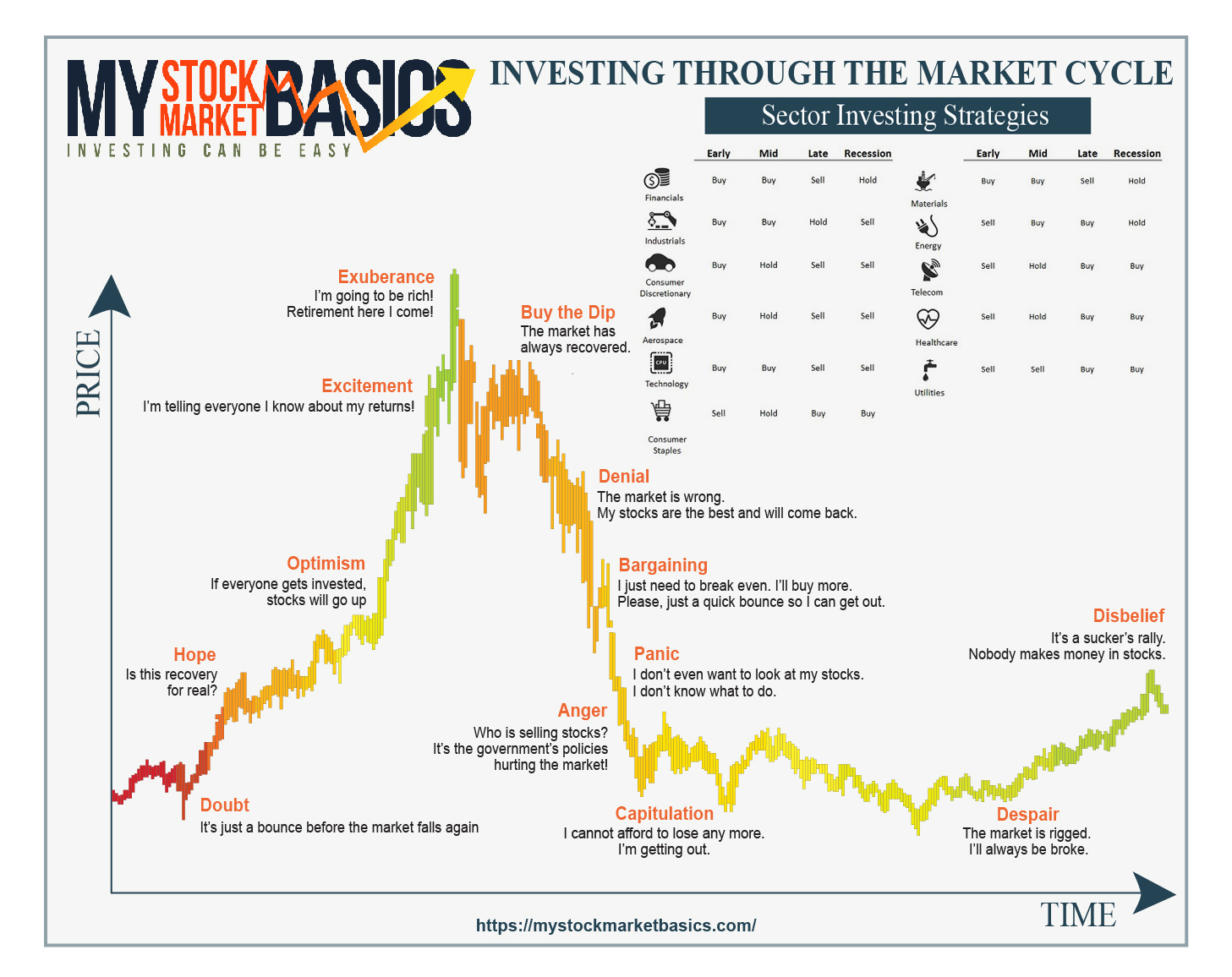
The CBOE Volatility Index, or VIX, has remained surprisingly low throughout much of the recent rally. This suggests a level of investor complacency, or perhaps a “wall of worry” that the market continues to climb. However, beneath the surface, we see spikes in volatility during earnings seasons. Investors are no longer rewarding companies simply for meeting expectations; they are punishing any company that offers “soft” future guidance. This indicates that while the overall market appears calm, the margin for error for individual stocks is incredibly thin.
Corporate Earnings as a Reality Check
Stock prices eventually follow earnings. In the current market, we are seeing a “K-shaped” recovery in corporate performance. Large companies with deep pockets and the ability to self-fund their operations are thriving. In contrast, smaller companies that rely on floating-rate debt are struggling with higher interest expenses. This divergence is why we see the Russell 2000 (small-cap index) frequently lagging behind the Nasdaq 100. For the market to sustain its current levels, we need to see earnings growth broaden out beyond just the tech sector and into industrials, consumer staples, and healthcare.
Global Geopolitics and Commodity Market Shifts
The stock market does not exist in a vacuum, and global events are increasingly dictating domestic price action. From supply chain disruptions to energy transitions, the “Money” side of the market is hyper-focused on global stability.
Energy Prices and Supply Chain Integrity
Fluctuations in oil and gas prices act as a hidden tax on both corporations and consumers. Geopolitical tensions in energy-producing regions create “risk premiums” that can lead to sudden market pullbacks. Furthermore, the trend toward “near-shoring”—moving manufacturing closer to home—is a multi-year structural shift. While this increases long-term supply chain security, it also introduces higher labor costs, which can squeeze profit margins in the short term.
Diversification in a Fragmented World
The current market environment has led to a resurgence in the importance of international diversification. While the U.S. market has outperformed for much of the last decade, high valuations in domestic tech are leading some institutional investors to look toward undervalued markets in Europe and emerging economies. This “valuation gap” is a key theme for those looking to protect their portfolios from a potential correction in high-flying U.S. growth stocks.
Strategies for the Modern Investor: Staying the Course
With so much moving parts, how should an individual navigate the current stock market? The consensus among financial experts is a return to fundamental principles rather than chasing the latest hype.
The Importance of Asset Allocation
In a world of 5% yields on money market funds and “high-yield” savings accounts, the “TINA” (There Is No Alternative) era of stocks is over. Investors now have a legitimate alternative to equities in the form of fixed income. This means that a balanced portfolio—one that includes bonds, cash equivalents, and stocks—is once again a viable and necessary strategy. Proper asset allocation allows an investor to capture the upside of an AI-driven rally while having a buffer against the inherent volatility of the equity markets.

Long-term Vision vs. Short-term Noise
The most significant threat to an investor’s wealth in the current market is emotional decision-making. The 24-hour news cycle and the instant accessibility of trading apps make it easy to react to every headline. However, history shows that the stock market’s most significant gains often follow periods of intense uncertainty.
What is going on in the stock market today is a transition. We are moving from a decade of artificial liquidity into an era of fundamental performance. Success in this environment requires a focus on “quality” companies—those with low debt, consistent cash flow, and a clear competitive advantage. By focusing on these metrics rather than trying to time the Fed’s next move or guess the next meme stock, investors can navigate the complexities of today’s market with confidence and clarity.
aViewFromTheCave is a participant in the Amazon Services LLC Associates Program, an affiliate advertising program designed to provide a means for sites to earn advertising fees by advertising and linking to Amazon.com. Amazon, the Amazon logo, AmazonSupply, and the AmazonSupply logo are trademarks of Amazon.com, Inc. or its affiliates. As an Amazon Associate we earn affiliate commissions from qualifying purchases.