
The Nasdaq Composite and the Nasdaq 100 have long been viewed as the primary barometers for global innovation and the appetite for risk within the financial markets. Over the last decade, this tech-heavy index became synonymous with the “easy money” era, characterized by low interest rates and explosive growth in the software, semiconductor, and internet services sectors. However, recent shifts in the global macroeconomic landscape have led many investors to ask a fundamental question: what happened to the Nasdaq? To understand the current state of the index, one must look beyond the daily price fluctuations and examine the structural changes in interest rates, the divergence between legacy tech and artificial intelligence, and the evolving psychology of the modern investor.
The Structural Shift: How High-Interest Rates Reshaped the Index
For much of the 2010s, the Nasdaq benefited from a “goldilocks” environment—low inflation and near-zero interest rates. This backdrop was the perfect catalyst for growth-oriented companies that prioritize future earnings over immediate profitability. When the Federal Reserve began its aggressive tightening cycle to combat rising inflation, the fundamental math underlying tech valuations shifted dramatically.
The End of Cheap Money
The most significant headwind for the Nasdaq in recent times has been the rise in the risk-free rate of return. In financial modeling, particularly the Discounted Cash Flow (DCF) analysis, the value of a company is determined by the present value of its future earnings. When interest rates rise, the “discount rate” applied to those future earnings also increases. Since many Nasdaq components are valued based on cash flows expected five, ten, or even twenty years into the future, higher rates disproportionately erode their current market valuations. This transition from a zero-interest-rate policy (ZIRP) to a more restrictive monetary environment forced a massive repricing of the entire index, moving capital away from speculative “moonshot” companies and toward more stable, cash-generative assets.
Valuation Contraction in Growth Stocks
What happened to the Nasdaq was not necessarily a decline in corporate innovation, but a contraction in the multiples investors were willing to pay for that innovation. During the peak of 2021, it was not uncommon to see software companies trading at 20 or 30 times their annual revenue. As the cost of capital rose, these multiples compressed toward historical norms. This “valuation reset” caused significant pain for investors who entered the market at the top. While many of these companies continued to grow their top-line revenue, their stock prices plummeted as the market demanded higher margins and a clearer path to GAAP profitability.
The Artificial Intelligence Paradigm: A Tale of Two Markets
While interest rates provided a downward pull, the emergence of Generative Artificial Intelligence (AI) acted as a powerful counter-force, creating a notable divergence within the Nasdaq. We are currently witnessing a market that is highly concentrated, where a handful of companies are driving the majority of the index’s returns, while the “average” tech stock struggles to regain its former glory.
The Concentration of Gains in Megacap Tech
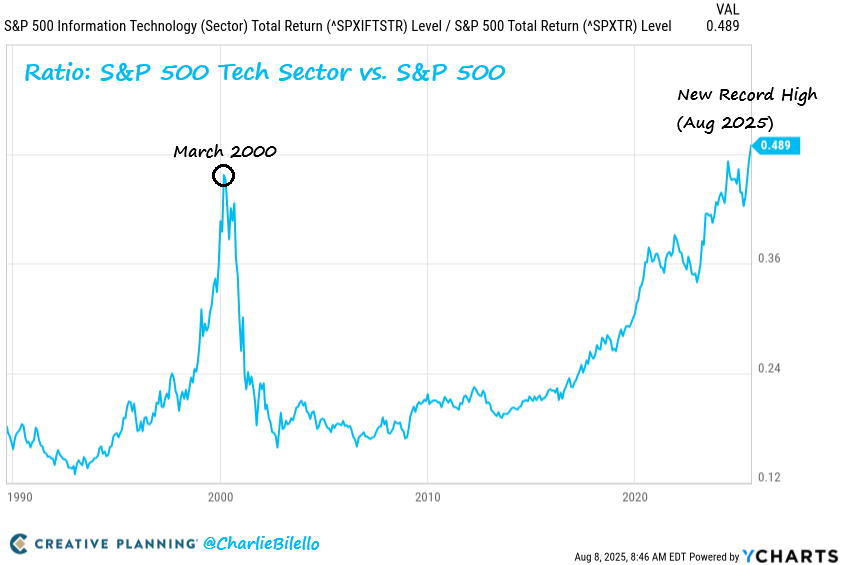
The narrative of the Nasdaq has recently been dominated by the “Magnificent Seven”—a group of elite tech giants including Nvidia, Microsoft, Alphabet, and Apple. These companies possess the massive balance sheets and specialized hardware required to lead the AI revolution. Because the Nasdaq is a market-cap-weighted index, the stellar performance of these few giants has often masked the underlying weakness in the broader market. When people ask what happened to the Nasdaq, they are often surprised to find that while the index might be near all-time highs, a significant percentage of its individual components remain in a bear market, trading 30% to 50% below their previous peaks.
Infrastructure vs. Software Adoption
We are currently in the “build-out” phase of the AI cycle. This is why semiconductor companies, particularly those producing GPUs and high-bandwidth memory, have seen parabolic growth. However, the software-as-a-service (SaaS) layer of the Nasdaq has faced more skepticism. Investors are increasingly questioning when the massive capital expenditures in AI infrastructure will translate into realized productivity gains and subscription revenue for software companies. This “show-me” period has led to high volatility during earnings seasons, where even a slight miss in forward guidance can lead to double-digit percentage drops in share price.
Analyzing the Fundamental Health: Earnings and Profit Margins

Despite the volatility, the Nasdaq’s recent trajectory has been underpinned by a surprising level of corporate resilience. Following the excesses of the pandemic era, tech leadership shifted its focus from “growth at any cost” to operational efficiency.
Efficiency and “The Year of Efficiency”
In 2023 and early 2024, many of the largest Nasdaq components underwent significant restructuring. Massive layoffs, the shuttering of non-core projects, and a renewed focus on core competencies became the norm. This transition, often referred to by industry leaders as the “Year of Efficiency,” allowed tech companies to maintain or even expand their profit margins despite slowing revenue growth. For the investor, this was a critical turning point. It proved that the largest tech firms were not just high-growth vehicles, but mature enterprises capable of disciplined financial management.
Revenue Guidance and Forward Multiples
The market is no longer rewarding companies simply for beating earnings estimates; it is hyper-focused on forward-looking guidance. What happened to the Nasdaq’s stability is that it has become incredibly sensitive to “macro commentary” from CEOs. If a major cloud provider mentions a slowdown in enterprise spending or a hardware manufacturer notes supply chain bottlenecks in Southeast Asia, the entire index reacts. Currently, the Nasdaq trades at a forward P/E ratio that is higher than its 10-year average, suggesting that investors are already “pricing in” a perfect soft landing for the economy and continued dominance in AI.
Global Macroeconomics and the Tech Ecosystem
The Nasdaq does not operate in a vacuum; it is the most globalized of the major indices. Recent geopolitical and macroeconomic shifts have introduced new layers of risk that were previously discounted by the market.
Supply Chain Fragility and Onshoring
The semiconductor industry, which is the backbone of the Nasdaq, is currently at the center of a geopolitical tug-of-war. Trade restrictions, particularly between the U.S. and China, have forced companies to rethink their supply chains. The shift toward “onshoring” or “friend-shoring” chip production is a multi-year, multi-billion-dollar endeavor. While this may provide long-term security, the short-term result is increased capital expenditure and potential disruptions in the global flow of hardware. This uncertainty has added a “risk premium” to the Nasdaq that wasn’t present five years ago.
Regulatory Hurdles and Antitrust Sentiment
Another factor in the Nasdaq’s recent evolution is the increasing scrutiny from regulators in the U.S. and Europe. Anti-monopoly lawsuits against the major tech pillars threaten to break up integrated ecosystems or change the fundamental ways these companies monetize their data. While these legal battles often take years to resolve, they create a persistent “overhang” on the stock prices of the index’s largest weights. Investors must now weigh the growth potential of these companies against the legal and regulatory costs of maintaining their market dominance.
Navigating the Future: Investment Perspectives for the Tech Sector
For the individual investor, the “new” Nasdaq requires a more nuanced approach than the simple “buy the dip” strategy that worked for the last decade. The market has become more discerning, rewarding quality and sustainable cash flows over hype.
Rebalancing for a New Economic Regime
Diversification within the tech sector is more important than ever. The days when an investor could throw a dart at a list of cloud stocks and see 20% annual returns are likely over. A robust strategy now involves balancing exposure between the “AI infrastructure” plays (semiconductors and data centers) and “defensive tech” (companies with high recurring revenue and strong moats in cybersecurity or enterprise resource planning). Furthermore, the role of the Nasdaq in a portfolio has shifted; for many, it is no longer the sole engine of growth but a volatile component that must be balanced with value-oriented sectors or fixed income.
Identifying Resilience in Non-AI Verticals
While AI is the headline-grabber, other sectors within the Nasdaq are undergoing significant transformations. Biotechnology, for instance, is seeing a convergence with data science, leading to faster drug discovery and personalized medicine. Fintech continues to disrupt traditional banking, despite the headwinds of higher interest rates. The investors who will succeed in the next phase of the Nasdaq’s history are those who look for “hidden gems”—profitable, mid-cap companies that are essential to the modern economy but have been overlooked during the current obsession with megacap AI.
In summary, what happened to the Nasdaq is a complex story of maturation and adaptation. The index has weathered a transition from an era of unlimited liquidity to one of fiscal discipline and higher costs. While the path forward will likely be marked by continued volatility as the world grapples with the implications of artificial intelligence and shifting global powers, the Nasdaq remains the premier destination for capital seeking the frontier of human innovation. Understanding the interplay between interest rates, earnings quality, and technological shifts is the key to navigating this essential, albeit turbulent, financial landscape.
aViewFromTheCave is a participant in the Amazon Services LLC Associates Program, an affiliate advertising program designed to provide a means for sites to earn advertising fees by advertising and linking to Amazon.com. Amazon, the Amazon logo, AmazonSupply, and the AmazonSupply logo are trademarks of Amazon.com, Inc. or its affiliates. As an Amazon Associate we earn affiliate commissions from qualifying purchases.