
Refinancing a loan—whether it’s your mortgage, auto loan, student loan, or personal loan—can seem like a straightforward path to lower monthly payments, a better interest rate, or more manageable terms. The allure of significant savings can be powerful, but beneath the surface of a seemingly simple transaction lies a complex web of costs and fees that can substantially impact your overall financial benefit. Understanding these expenses is paramount to making an informed decision, ensuring that the perceived advantages truly outweigh the actual outlay.
Many consumers focus solely on the interest rate reduction when considering a refinance, often overlooking the various closing costs that accompany the process. Just like when you initially took out your loan, refinancing is a financial transaction that involves numerous parties and services, each contributing to the total cost. Without a clear grasp of these charges, you risk negating potential savings or, in some cases, ending up in a worse financial position than before. This comprehensive guide will dissect the costs associated with refinancing, provide strategies for calculating your true expense, and help you determine if refinancing is indeed the right financial move for you.

Understanding the Landscape of Refinancing Expenses
Refinancing is not a “free” process. While the primary goal is often to save money over the long term, achieving that goal requires an initial investment in the form of fees and closing costs. These costs are a necessary part of the lending process, covering the administrative, legal, and appraisal work involved in issuing a new loan.
What is Refinancing and Why Do It?
At its core, refinancing means replacing your existing loan with a new one, typically from the same or a different lender. The new loan pays off the old one, and you then make payments on the new terms. People refinance for several key reasons:
-
Lower Interest Rates: The most common reason is to secure a lower interest rate, which reduces the total amount of interest paid over the life of the loan and often results in lower monthly payments.
-
Shorter or Longer Loan Term: Some aim to shorten their loan term to pay off debt faster, while others extend it to reduce monthly payments, albeit often paying more interest over time.
-
Accessing Home Equity (Cash-Out Refinance): For homeowners, a cash-out refinance allows them to borrow against their home equity, receiving a lump sum of cash for home improvements, debt consolidation, or other large expenses.
-
Converting Loan Types: Switching from an adjustable-rate mortgage (ARM) to a fixed-rate mortgage for stability, or vice-versa, is another common motivation.
-
Consolidating Debt: Refinancing can consolidate multiple high-interest debts into a single, lower-interest payment.
The Myth of “Free” Refinancing
The term “no-closing-cost refinance” often leads to a misunderstanding that the process is entirely free. While you might not pay out-of-pocket at closing, the costs are still there—they’re just handled differently. Lenders typically recoup these costs in one of two ways: by charging a slightly higher interest rate on your new loan, or by rolling the closing costs into the new loan’s principal balance. In either scenario, you end up paying for them over time, often with interest. It’s crucial to understand this distinction, as what appears free upfront can cost you more in the long run.
A Deep Dive into Common Refinancing Fees
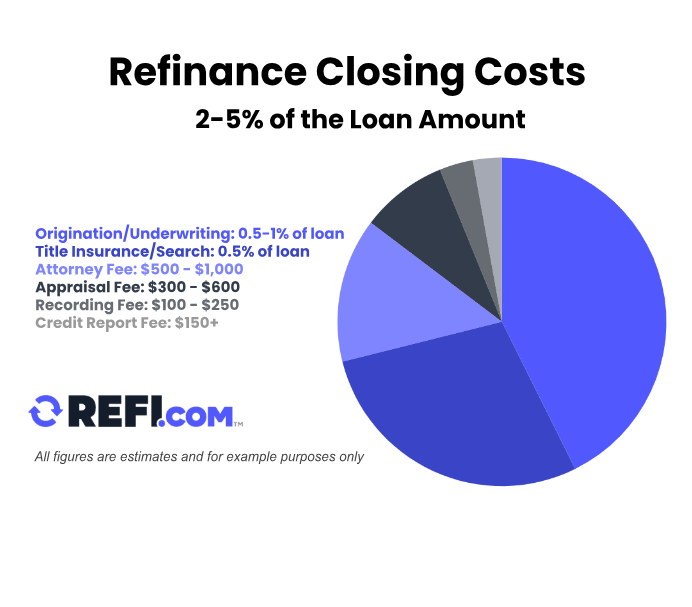
Refinancing costs can vary widely depending on the type of loan, the lender, your creditworthiness, and market conditions. For a mortgage refinance, these costs typically range from 2% to 5% of the new loan amount. Let’s break down the most common fees you’re likely to encounter.
Lender-Specific Fees
These are charges levied directly by the financial institution providing your new loan.
-
Loan Origination Fee: This is a fee charged by the lender for processing your loan application. It covers administrative costs and the lender’s profit. It’s typically expressed as a percentage of the loan amount (e.g., 0.5% to 1%).
-
Underwriting Fee: This fee covers the cost of evaluating your loan application, including assessing your creditworthiness, income, and assets, to determine the risk involved in lending to you.
-
Discount Points: These are optional fees paid upfront to the lender in exchange for a lower interest rate. One “point” typically equals 1% of the loan amount. You essentially “buy down” your interest rate. Deciding whether to pay points requires a break-even analysis to see how long it takes for the interest savings to offset the cost of the points.
-
Application Fee: Some lenders charge a small, non-refundable fee just to process your initial loan application.
Third-Party Service Fees
These fees are paid to various independent professionals and services involved in the refinancing process.
-
Appraisal Fee: For mortgage refinancing, an appraiser assesses the current market value of your property to ensure it’s sufficient collateral for the new loan. This fee can range from $300 to $700 or more.
-
Title Search and Title Insurance: A title search is conducted to ensure there are no liens or claims against your property, while title insurance protects both the lender and you from future claims against the property’s title. These fees can be substantial.
-
Attorney Fees: In some states, an attorney is required to oversee the closing process and prepare legal documents.
-
Credit Report Fee: The lender pulls your credit report to assess your creditworthiness, and you’re typically charged a small fee for this.
-
Survey Fee: In certain situations, a survey might be required to verify property lines, especially if there have been changes or disputes.
-
Flood Determination Fee: A small fee to determine if your property is located in a flood zone, which would require flood insurance.
Government and Escrow-Related Costs
Certain costs are related to local government regulations and the establishment of your escrow account.
-
Recording Fees: These are fees paid to your local government to officially record the new mortgage or deed of trust.
-
Transfer Taxes: Some states or localities charge a tax on the transfer of property ownership, even in a refinance scenario.
-
Prepaid Property Taxes and Homeowner’s Insurance: Lenders often require you to prepay a certain number of months’ worth of property taxes and homeowner’s insurance premiums to fund your new escrow account. While these aren’t “fees” per se, they are significant upfront cash requirements at closing.
Calculating Your Total Refinance Outlay
To truly understand the cost of refinancing, you need to consolidate all these individual fees and assess their impact on your financial goals. This goes beyond just looking at the new interest rate.
The Importance of the Loan Estimate
When you apply for a mortgage refinance, lenders are legally required to provide you with a Loan Estimate (LE) within three business days of receiving your application. This standardized three-page form details all the loan terms, projected payments, and estimated closing costs. It’s your most important tool for comparing offers from different lenders. Pay close attention to:
-
Section A – Origination Charges: This includes the lender’s direct fees.
-
Section B – Services You Cannot Shop For: These are third-party services chosen by the lender, like appraisal and credit report fees.
-
Section C – Services You Can Shop For: These are services where you can choose your own provider, such as title insurance, if permitted by your lender and state law.
-
Section E – Taxes and Other Government Fees: Recording fees and transfer taxes.
-
Section F & G – Prepaids and Initial Escrow Payment: Funds needed to start your escrow account.
-
Section H – Other: Miscellaneous charges.
Comparing Apples to Apples: APR vs. Interest Rate
The nominal interest rate is the percentage charged by the lender for borrowing money. However, the Annual Percentage Rate (APR) provides a more comprehensive measure of the loan’s cost because it includes not only the interest rate but also most of the closing costs and fees rolled into the loan. When comparing refinance offers, always use the APR for a more accurate apples-to-apples comparison of the true cost of borrowing. A lower interest rate might look appealing, but a higher APR could indicate significant hidden fees.
Beyond Upfront Costs: The Long-Term View
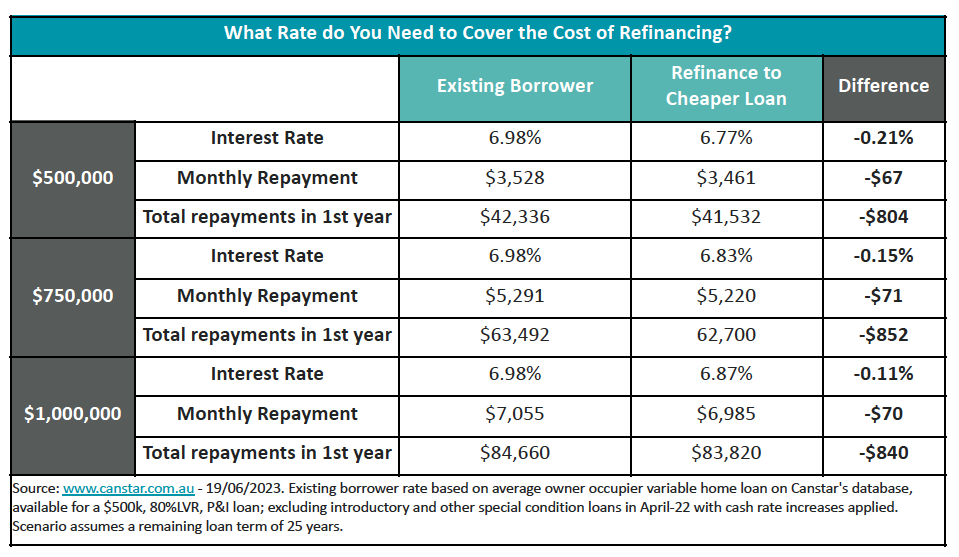
While upfront costs are important, the long-term impact of refinancing is equally critical. Even if you roll closing costs into your new loan, remember that you’ll be paying interest on those costs for the entire loan term. A refinance might save you $50 a month, but if it costs you $5,000 in fees, it will take 100 months (over 8 years) just to break even on those fees, assuming the interest rate savings are solely attributed to the new loan amount. It’s crucial to analyze the total interest paid over the life of the new loan compared to what you would have paid on your old loan.
Strategies for Reducing Refinancing Costs
While some fees are unavoidable, there are several ways to minimize your refinancing costs and maximize your savings.
Shop Around and Compare Offers
This is perhaps the most effective strategy. Get quotes from at least three to five different lenders. Don’t just compare interest rates; compare the full Loan Estimates. Lenders can have different fee structures, and competition can drive down costs.
Negotiate Fees
Many fees are negotiable. Ask your lender if they can waive or reduce certain charges, particularly origination fees, underwriting fees, or processing fees. You might have more leverage if you have excellent credit or are working with your current lender. For “services you can shop for” (Section C on the LE), get quotes from multiple providers (e.g., title companies) to find the best price.
Understand Discount Points
Paying discount points can lower your interest rate, but it adds to your upfront costs. Calculate your break-even point: Divide the cost of the points by the monthly savings from the lower interest rate. If you plan to stay in the home or keep the loan for longer than the break-even period, paying points might be worthwhile. If not, it might be better to take a slightly higher rate without the upfront cost.
Improve Your Credit Score
A higher credit score signals less risk to lenders, potentially qualifying you for lower interest rates and sometimes even fewer fees. If your credit score is borderline, taking a few months to improve it before applying can result in significant long-term savings.
Consider a “No-Closing-Cost” Option (with caution)
If you lack the cash for upfront closing costs or plan to move or refinance again in a few years, a no-closing-cost refinance might be appealing. However, be fully aware that you will pay for these costs either through a higher interest rate or by adding them to your loan principal, increasing your total interest paid over time. Factor this into your overall cost-benefit analysis.
Deciding if Refinancing is the Right Financial Move
Ultimately, the decision to refinance should be based on a thorough analysis of costs versus benefits, tailored to your individual financial situation and goals.
The Break-Even Point Analysis
This is the most critical calculation. Determine how long it will take for the savings from your new loan (e.g., lower monthly payments or reduced interest) to offset the total closing costs.
Formula: Total Closing Costs / Monthly Savings = Number of Months to Break Even
If you plan to keep the loan for longer than this break-even period, refinancing is likely a good financial decision. If you anticipate moving or refinancing again before you reach the break-even point, you might lose money.
Beyond Just Costs: Other Factors to Consider
-
Your Future Plans: How long do you plan to stay in your home or keep the loan? If your plans are uncertain, a refinance might not be ideal.
-
Current Interest Rates: Are rates significantly lower than your current rate? The larger the difference, the greater the potential savings.
-
Financial Stability: Is your income secure? Can you comfortably afford the new payments, especially if you’re shortening the loan term?
-
Loan Term Change: If you’re extending your loan term (e.g., from 15 to 30 years), while your monthly payment might decrease, you will likely pay significantly more interest over the life of the loan. Conversely, shortening the term increases monthly payments but saves on total interest.
-
Credit Score: Has your credit score improved since you took out the original loan? This can open doors to better rates.
When Refinancing Might Not Be Beneficial
-
Minimal Interest Rate Reduction: If the new interest rate isn’t substantially lower than your current one, the savings might not justify the closing costs.
-
Short Remaining Loan Term: If you only have a few years left on your current loan, the costs of refinancing might erase any potential savings.
-
High Closing Costs Relative to Savings: If the fees are very high and the monthly savings are small, your break-even point could be so far in the future that it’s not worth it.
-
Uncertain Future: If your job is unstable or you plan to sell your home soon, the upfront costs could be a sunk expense.
In conclusion, refinancing can be a powerful financial tool for managing debt, reducing expenses, and achieving long-term financial goals. However, approaching it with a clear-eyed understanding of all associated costs is essential. By meticulously reviewing your Loan Estimate, comparing offers, negotiating fees, and conducting a thorough break-even analysis, you can ensure that your refinance decision is truly beneficial and not a costly misstep. Always prioritize a holistic view that considers both immediate expenses and the long-term financial implications.
aViewFromTheCave is a participant in the Amazon Services LLC Associates Program, an affiliate advertising program designed to provide a means for sites to earn advertising fees by advertising and linking to Amazon.com. Amazon, the Amazon logo, AmazonSupply, and the AmazonSupply logo are trademarks of Amazon.com, Inc. or its affiliates. As an Amazon Associate we earn affiliate commissions from qualifying purchases.