
For the past several years, the global financial conversation has been dominated by one primary force: the cost of borrowing. After a decade of historically low interest rates that fueled a boom in real estate, venture capital, and consumer spending, the paradigm shifted abruptly. Central banks, led by the Federal Reserve in the United States, embarked on an aggressive campaign of rate hikes to combat surging inflation. Today, every homeowner with a variable-rate mortgage, every small business owner seeking an expansion loan, and every investor watching their portfolio is asking the same fundamental question: When are rates going down?
The answer is not a simple date on a calendar but a complex calculation based on labor market stability, consumer price indices, and the delicate balance of economic growth. Understanding when and why rates will decline requires a deep dive into the mechanics of monetary policy and the specific indicators that signal a pivot in the financial weather.
Understanding the Federal Reserve’s Logic
To predict when rates will drop, one must first understand the “dual mandate” of the Federal Reserve: price stability and maximum sustainable employment. Interest rates are the primary tool used to achieve this balance. When the economy overheats and inflation rises, the Fed raises the federal funds rate—the interest rate at which banks lend to each other overnight. This trickles down to every other corner of the economy, making it more expensive to borrow money, which theoretically slows down spending and cools inflation.
The Dual Mandate: Inflation and Employment
The current cycle of high rates is a direct response to inflation that peaked well above the Fed’s 2% target. For rates to go down, the Fed needs “greater confidence” that inflation is on a sustainable path back to that target. If they cut rates too early, they risk a second wave of inflation, similar to the economic volatility seen in the 1970s. Conversely, if they wait too long, the high cost of capital could trigger a severe recession and mass unemployment.
The Role of the Federal Funds Rate
The federal funds rate currently sits at a multi-decade high. This “restrictive” territory is designed to restrict economic activity. When the Fed moves to a “neutral” or “accommodative” stance—meaning they start cutting rates—it is usually a signal that they believe the battle against inflation is largely won or that the labor market is starting to crack under the pressure.
The Economic Indicators That Dictate the Pivot
The timeline for rate cuts is data-dependent. Economists and market analysts spend their days dissecting every government report for clues. There are three primary pillars of data that will determine when the downward trend begins.
CPI and the Battle Against Inflation
The Consumer Price Index (CPI) is the most watched metric. It measures the average change over time in the prices paid by urban consumers for a market basket of consumer goods and services. The Fed looks specifically at “Core CPI,” which strips out volatile food and energy prices to get a clearer picture of the underlying trend. Until the Core CPI shows a consistent, month-over-month deceleration toward the 2% annualized mark, the Fed is likely to keep rates steady.
The Labor Market’s Cooling Effect
A strong labor market is generally good, but in an inflationary environment, it can be a double-edged sword. Low unemployment often leads to wage growth, which can further drive up prices (the wage-price spiral). The Fed is looking for a “soft landing”—a scenario where the labor market cools slightly, job openings decrease, and wage growth stabilizes without the economy falling into a deep recession. If unemployment begins to rise sharply, the Fed will likely accelerate rate cuts to prevent a total economic collapse.
Consumer Spending and Retail Sales
The American economy is driven by consumption. High interest rates are designed to make consumers think twice before swiping a credit card or financing a new car. If retail sales and consumer spending remain unexpectedly high, it suggests that the current interest rates are not yet restrictive enough to curb inflation, potentially delaying any planned cuts.
How Falling Rates Will Impact Your Wallet
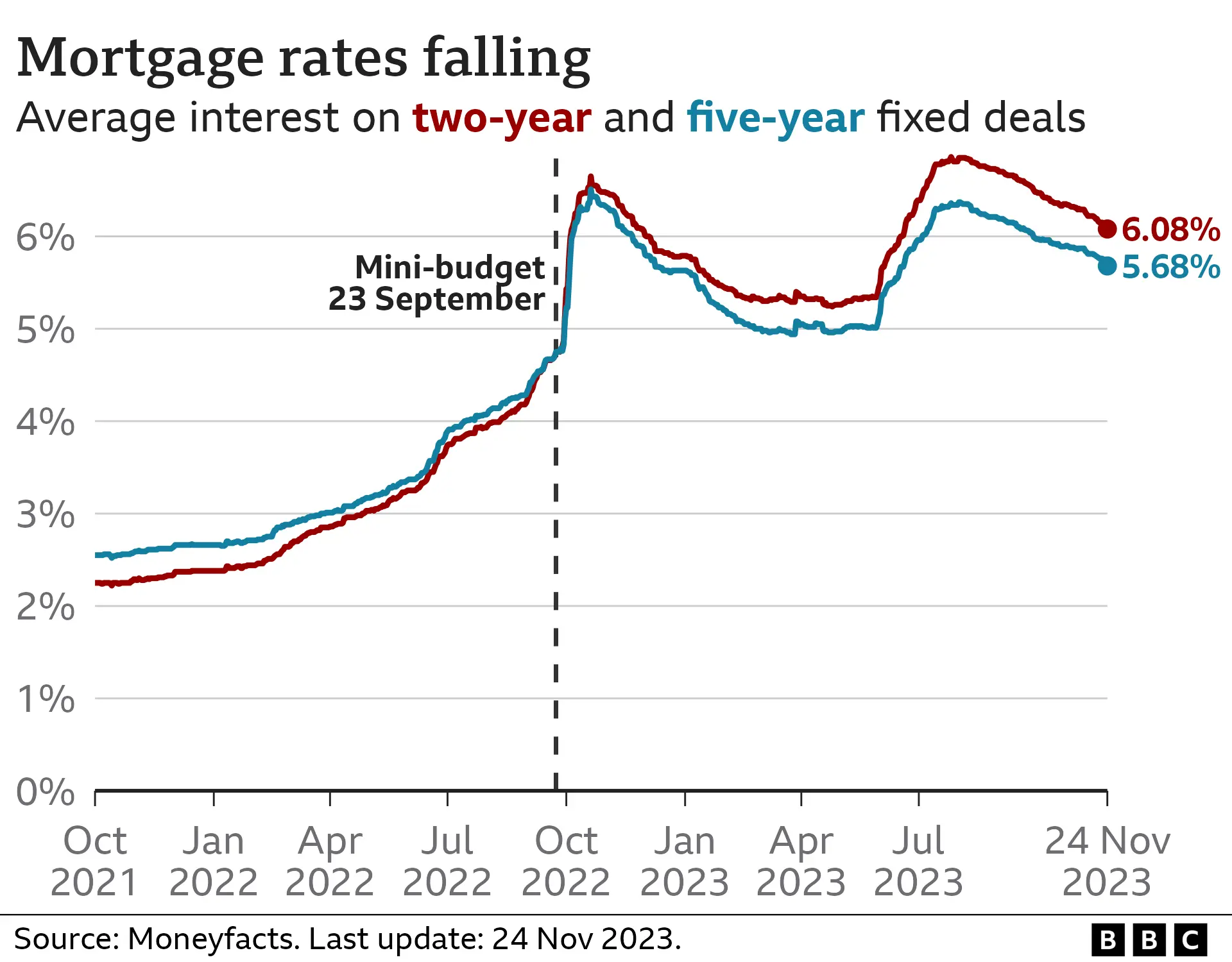
When the pivot finally occurs, the ripple effects will be felt across every personal finance category. A reduction in the federal funds rate acts as a release valve for the entire financial system.
The Mortgage Market and Real Estate
Perhaps no sector is more sensitive to interest rates than real estate. High rates have created a “lock-in effect,” where homeowners with 3% mortgages refuse to sell because they don’t want to trade their low rate for a 7% rate. This has led to a stagnation in inventory. As rates begin to decline, we can expect a surge in both buyers and sellers. However, lower rates often lead to higher home prices as purchasing power increases, meaning the “affordability” gain might be partially offset by rising valuations.
Savings Accounts and Fixed Income
The silver lining of a high-rate environment has been the return of the High-Yield Savings Account (HYSA) and Certificates of Deposit (CDs). For the first time in years, savers have been able to earn 4% to 5% on their cash with zero risk. When rates go down, these yields will be the first to drop. Investors who have enjoyed high returns on liquid cash will need to look back toward the stock or bond markets to maintain their yield, shifting the flow of capital back into riskier assets.
Stock Market Volatility and Growth Assets
Lower rates are generally a boon for the stock market, particularly for growth stocks and technology companies. These firms often rely on future earnings, which are worth more today when the discount rate (linked to interest rates) is lower. Furthermore, lower borrowing costs improve corporate profit margins. However, if rates are being cut because the economy is entering a recession, the initial market reaction might be negative due to fears of lower corporate earnings.
Strategic Financial Moves While You Wait for the Drop
While we wait for the official word from central banks, there are proactive steps individuals can take to optimize their financial position. Timing the market is notoriously difficult, but positioning your portfolio for a lower-rate environment is a matter of sound strategy.
Managing High-Interest Debt
Credit card rates are directly tied to the federal funds rate. If you are carrying a balance, you are currently paying some of the highest interest charges in history. Using this “waiting period” to aggressively pay down high-interest debt or consolidate it into a fixed-rate personal loan can save thousands of dollars before rates even begin to budge.
Locking in Returns with CDs and Bonds
If you have significant cash reserves, now may be the time to “lock in” current high yields. While an HYSA rate can change overnight, a 12-month or 24-month CD guarantees your return. If the Fed cuts rates in six months, your CD will continue to pay the higher rate, effectively outperforming the market during the transition. Similarly, bond prices have an inverse relationship with interest rates. When rates go down, existing bonds with higher coupons become more valuable, potentially providing capital appreciation for bondholders.
Refinancing Strategy
For those who purchased homes or cars during the peak of the rate cycle, a “refinance watch” is essential. You don’t necessarily need to wait for rates to hit their all-time lows. Often, a drop of even 1% or 1.5% can justify the closing costs of a refinance, providing immediate monthly cash flow relief.

Future Projections: What to Expect in the Coming Year
Most institutional forecasts suggest that the era of “ultra-high” rates is nearing its plateau, if it hasn’t reached it already. However, the return to “zero-bound” interest rates—the near-0% levels seen during the pandemic—is highly unlikely in the foreseeable future.
The “New Normal” is likely to be a neutral rate somewhere between 2.5% and 3.5%. This provides the Fed with “dry powder” (the ability to cut rates in a future crisis) while keeping inflation in check. Financial institutions currently anticipate a gradual series of quarter-point (0.25%) cuts rather than a dramatic slash. This measured approach allows the Fed to monitor the economy’s reaction in real-time.
For the average consumer and investor, the transition to lower rates will be a double-edged sword. It will bring relief to borrowers and potentially spark a rally in equity markets, but it will also signal the end of the “easy money” era for savers. The key to navigating this shift is flexibility. By understanding the underlying economic drivers—inflation, employment, and Fed policy—you can move from being a passive observer of rate hikes to an active participant in the opportunities that falling rates provide.
The wait for lower rates is a test of economic patience. While the exact month of the first cut remains a subject of debate among FOMC members and Wall Street analysts alike, the trend lines are beginning to converge. By preparing your personal finances now—paying down debt, locking in yields, and readying your investment strategy—you will be well-positioned to thrive regardless of when the gavel finally falls on the current high-rate era.
aViewFromTheCave is a participant in the Amazon Services LLC Associates Program, an affiliate advertising program designed to provide a means for sites to earn advertising fees by advertising and linking to Amazon.com. Amazon, the Amazon logo, AmazonSupply, and the AmazonSupply logo are trademarks of Amazon.com, Inc. or its affiliates. As an Amazon Associate we earn affiliate commissions from qualifying purchases.