
For veterans, active-duty service members, and eligible surviving spouses, the VA home loan represents one of the most powerful financial tools available in the American real estate market. At the heart of this benefit is the VA loan interest rate—a figure that determines the long-term affordability of a home and the total cost of borrowing over decades. Unlike conventional loans, VA loan interest rates are often lower, more flexible, and backed by the federal government, but they are not a monolith. Understanding how these rates are set, what influences them, and how they impact your personal finance strategy is essential for any military homebuyer.
The Mechanics Behind VA Loan Interest Rates
One of the most common misconceptions regarding VA loans is that the Department of Veterans Affairs sets the interest rates. In reality, the VA does not lend money directly to borrowers; instead, it provides a partial guarantee to private lenders—such as banks, credit unions, and mortgage companies—protecting them against loss if a borrower defaults. Because the VA does not set the rates, the interest rate you receive can vary significantly from one lender to another.
The Role of the Secondary Market and MBS
VA loan rates are primarily influenced by the secondary mortgage market, specifically Mortgage-Backed Securities (MBS). When a lender issues a VA loan, they often bundle that debt with others and sell it to investors on the secondary market. The most common vehicle for this is Ginnie Mae, a government-owned corporation that guarantees bonds backed by federally insured loans.
Because VA loans are government-backed, they are viewed as lower-risk investments. When investor demand for these bonds is high, interest rates tend to fall. Conversely, when inflation rises or the economy shows signs of volatility, investors may demand higher yields, leading to an increase in mortgage rates. Therefore, the “daily” VA loan rate is a reflection of global economic health, inflation expectations, and Federal Reserve policy.
The Federal Reserve and Economic Indicators
While the Federal Reserve does not directly set mortgage rates, its influence is profound. The Federal Open Market Committee (FOMC) adjusts the federal funds rate to control inflation and manage economic growth. When the Fed raises rates to combat inflation, the cost of borrowing increases across the board, including for the banks that provide VA loans. Veterans should keep a close eye on the Consumer Price Index (CPI) and employment reports, as these are the primary indicators that drive the Fed’s decisions and, subsequently, your VA mortgage rate.
VA Rates vs. Conventional Mortgages: A Financial Comparison
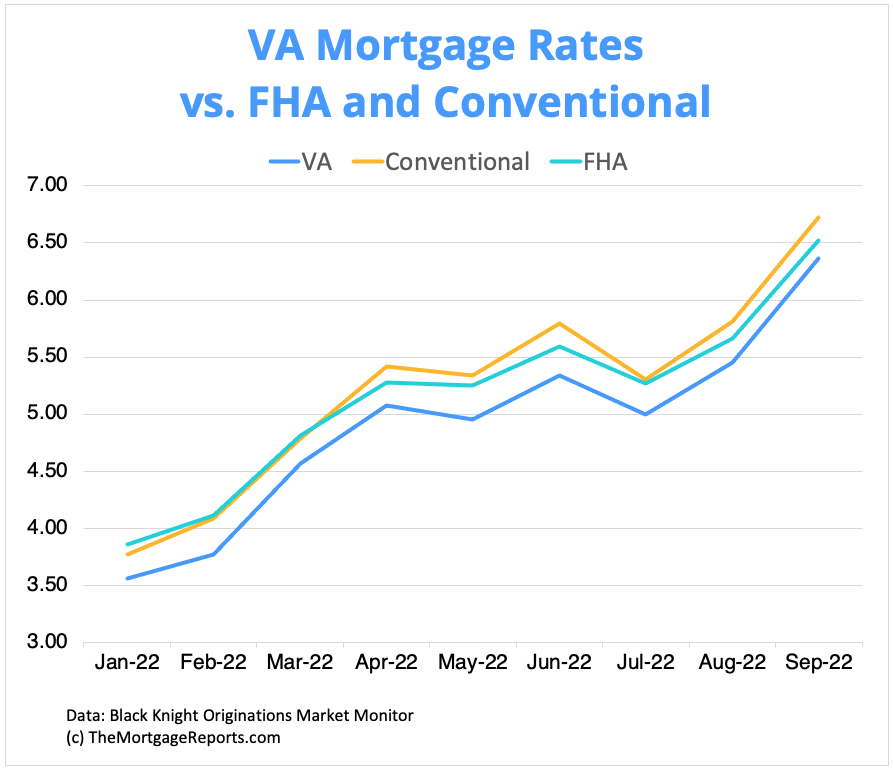
For most borrowers, the primary draw of the VA loan is the competitive interest rate. Historically, VA loan interest rates sit anywhere from 0.25% to 0.50% lower than conventional 30-year fixed-rate mortgages. While this may seem like a marginal difference, the cumulative savings over a 30-year amortization schedule can amount to tens of thousands of dollars.
The Impact of the Government Guarantee
Lenders are willing to offer lower rates on VA loans because of the safety net provided by the Department of Veterans Affairs. If a borrower defaults, the VA promises to repay the lender a portion of the loan (usually up to 25%). This mitigation of risk allows financial institutions to pass savings onto the veteran in the form of a lower interest rate. In the world of personal finance, risk and interest are intrinsically linked; by lowering the lender’s risk profile, the veteran secures a more favorable price for capital.
The Absence of Private Mortgage Insurance (PMI)
When discussing the “true” interest rate of a loan, one must consider the total cost of borrowing. Conventional borrowers who put down less than 20% are typically required to pay Private Mortgage Insurance (PMI). This is an additional monthly fee that protects the lender. VA loans, however, do not require PMI, regardless of the down payment amount.
When you factor in the lack of PMI, the effective interest rate of a VA loan is even more attractive. A veteran with a 6.5% VA loan will almost always have a lower monthly payment than a conventional borrower with a 6.5% loan who is also paying $150 a month in PMI. This strengthens the veteran’s debt-to-income (DTI) ratio and increases their overall purchasing power.
Factors That Influence Your Personal VA Interest Rate
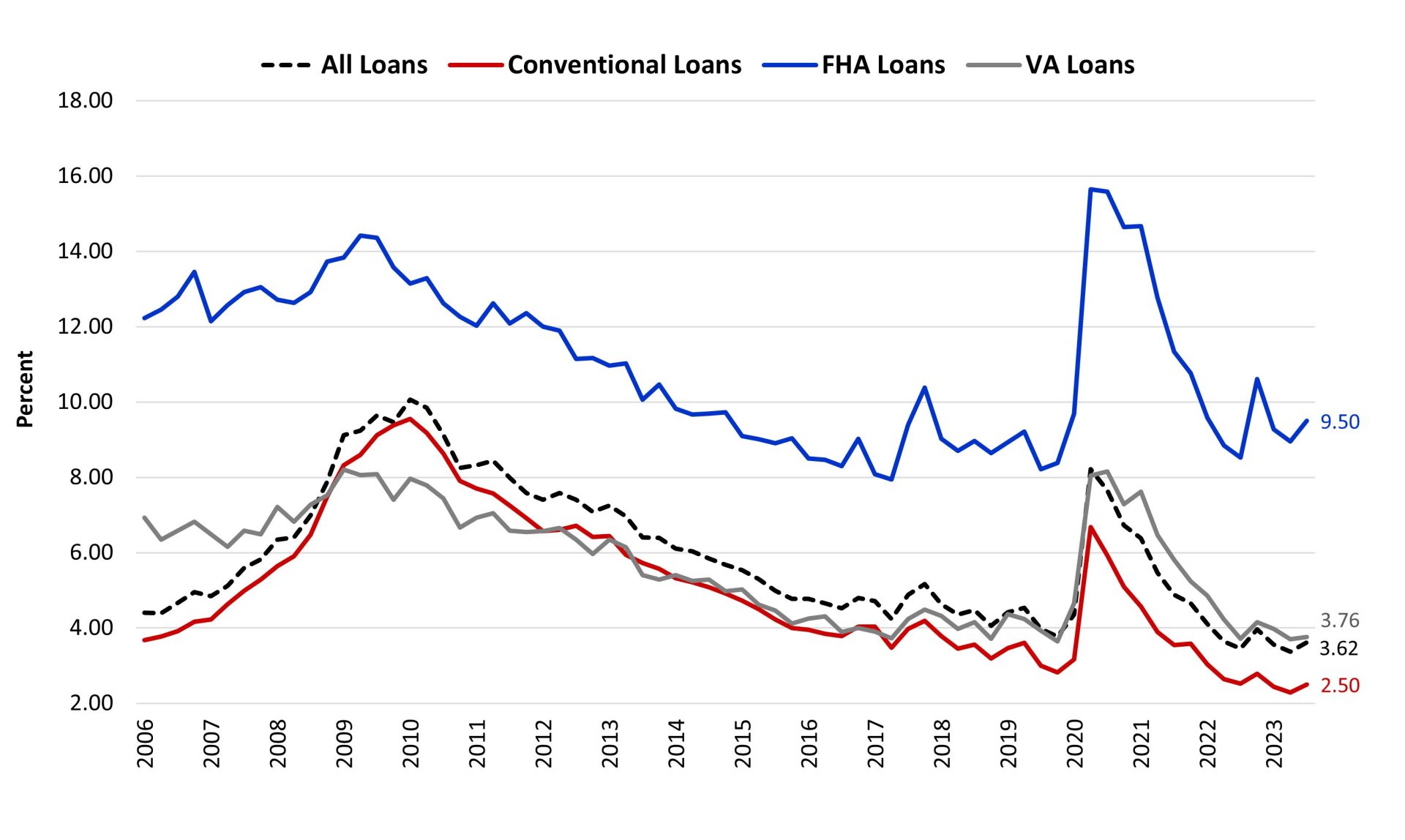
While market trends set the baseline, your specific financial profile determines the final rate a lender offers you. Because VA loans are processed by private entities, each lender has its own “overlay” or internal set of criteria that goes beyond the minimum requirements of the VA.
Credit Score Tiers and Pricing
Although the VA does not technically have a minimum credit score requirement, most lenders do. These lenders categorize borrowers into “tiers.” A borrower with a 740 credit score will likely be offered a better rate than a borrower with a 640 score. In the mortgage industry, this is known as Risk-Based Pricing. Even though the loan is guaranteed by the government, a higher credit score indicates a history of financial reliability, leading the lender to offer a more competitive rate to win your business.
Loan Term and Type
The duration of the loan significantly impacts the interest rate. A 15-year fixed-rate VA loan will almost always carry a lower interest rate than a 30-year fixed-rate loan. This is because the lender is exposed to market fluctuations for a shorter period, and the principal is repaid faster. Additionally, veterans can choose between fixed-rate mortgages and Adjustable-Rate Mortgages (ARMs). While ARMs may offer a lower introductory rate, they carry the risk of rate hikes in the future, making them a strategic choice only for those planning to sell or refinance within a few years.
Debt-to-Income (DTI) Ratio
Lenders look at your DTI ratio to ensure you have the cash flow to support a mortgage payment. While the VA is famously flexible with DTI—sometimes allowing ratios as high as 41% or even 50% with compensating factors—a lower DTI can sometimes result in better rate offers. It signals to the lender that you are not “house poor” and are less likely to experience financial distress that could lead to a late payment.
Strategies for Optimizing Your Rate and Monthly Payment
Securing a VA loan is not a passive process. Savvy borrowers can take specific steps to drive their interest rate lower, ensuring the best possible outcome for their personal finances.
Shopping Multiple Lenders
Because the VA does not set rates, the price of a loan can vary between a big-box bank, a local credit union, and an online mortgage broker. It is a common mistake for veterans to go with the first lender they speak to. By obtaining three or more Loan Estimates, you can compare the “Par Rate” (the rate without any adjustments) and the closing costs. This competition encourages lenders to lower their margins to earn your mortgage.
Buying Down the Rate with Discount Points
Borrowers have the option to pay “discount points” at closing to permanently lower their interest rate. One point typically costs 1% of the total loan amount and usually reduces the interest rate by 0.25%. This is a classic “math problem” in personal finance: you pay more upfront to save more every month. If you plan on staying in the home for more than seven to ten years, “buying down the rate” often results in significant long-term savings. However, if you plan to move quickly, the upfront cost may not be recouped.
Improving Your Financial Profile Before Application
Before applying, veterans should focus on cleaning up their credit reports. Even a 20-point increase in a credit score can move a borrower from one interest rate tier to a lower one. Paying down revolving credit card debt and ensuring there are no errors on the credit report are high-return activities that can pay off in the form of a lower interest rate for the next 30 years.
The Role of Interest Rate Reduction Refinance Loans (IRRRL)
The VA loan benefit is not a one-time event; it is a lifetime tool. One of the most unique aspects of the program is the Interest Rate Reduction Refinance Loan (IRRRL), often called the “VA Streamline.” This tool is specifically designed to help veterans lower their interest rate with minimal paperwork and cost.
How the IRRRL Works
If market rates drop after you have purchased your home, the IRRRL allows you to refinance your existing VA loan into a new one with a lower rate. The beauty of the IRRRL is its simplicity: often, no appraisal is required, no income verification is needed, and the closing costs can be rolled into the loan balance.

The Net Tangible Benefit Rule
To protect veterans from predatory lending, the VA requires that an IRRRL must provide a “net tangible benefit.” This usually means the new interest rate must be significantly lower than the old one (typically at least 0.50% lower), and the veteran must be able to recoup the costs of the refinance within 36 months. This ensures that the refinance is a sound financial move that actually improves the veteran’s bottom line rather than just generating fees for the lender.
By understanding the nuances of the VA loan interest rate—from the macro-economic forces of the bond market to the micro-economic details of credit scores and discount points—veterans can master their mortgage. In the realm of personal finance, the interest rate is the lever that controls your wealth-building potential. Utilizing the VA loan benefit correctly allows those who have served to secure a piece of the American dream at a cost that respects their service and secures their financial future.
aViewFromTheCave is a participant in the Amazon Services LLC Associates Program, an affiliate advertising program designed to provide a means for sites to earn advertising fees by advertising and linking to Amazon.com. Amazon, the Amazon logo, AmazonSupply, and the AmazonSupply logo are trademarks of Amazon.com, Inc. or its affiliates. As an Amazon Associate we earn affiliate commissions from qualifying purchases.