
The journey toward homeownership is one of the most significant financial milestones in an individual’s life. For those who have served in the United States Armed Forces, this journey is supported by one of the most powerful financial tools available in the modern lending landscape: the VA home loan. Central to this program is the VA home loan rate—a percentage that determines the cost of borrowing and ultimately dictates the monthly mortgage payment for millions of veterans, active-duty service members, and eligible surviving spouses.
Understanding what a VA home loan rate is, how it is calculated, and how it compares to traditional financing is essential for any eligible borrower looking to maximize their military benefits. Unlike conventional loans, VA loans are backed by the Department of Veterans Affairs, which allows lenders to offer terms that are often significantly more favorable than those found in the private sector.
Understanding the Fundamentals of VA Home Loan Rates
To understand VA home loan rates, one must first understand the relationship between the government and private lenders. A common misconception is that the VA itself lends the money or sets the interest rates. In reality, VA loans are provided by private banks, credit unions, and mortgage companies. The VA “guarantees” a portion of the loan, promising the lender that if the borrower defaults, the government will cover a percentage of the loss.
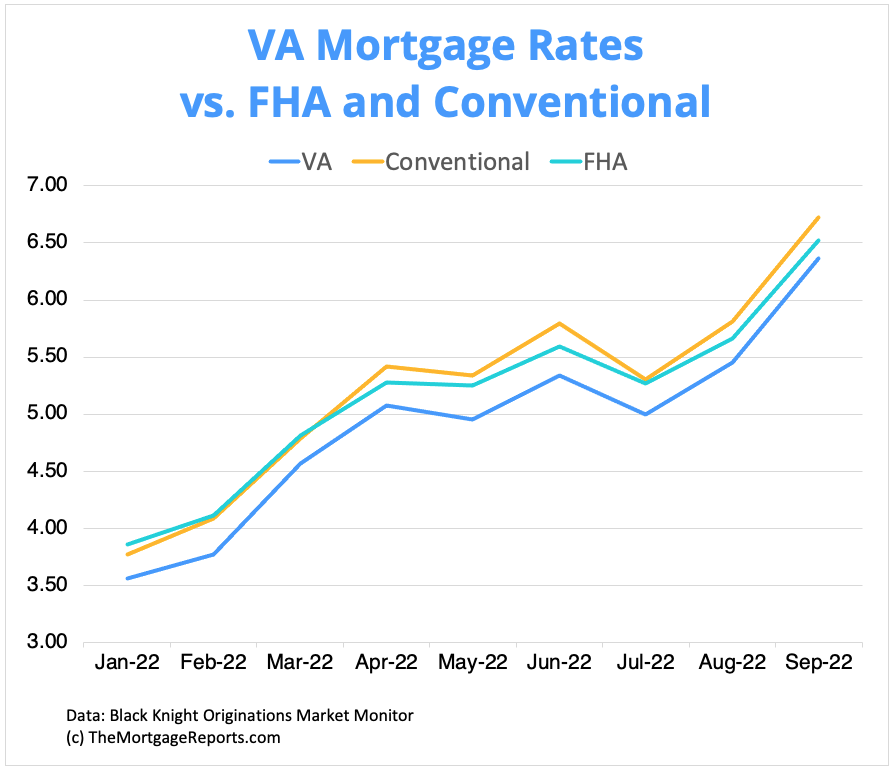
This government backing reduces the risk for the lender. Because the risk is lower, lenders are willing to offer interest rates that are typically 0.25% to 0.50% lower than conventional mortgage rates.
How VA Rates Differ from Conventional and FHA Loans
When comparing VA loan rates to conventional or FHA (Federal Housing Administration) loans, the VA option consistently emerges as the most cost-effective. Conventional loans are heavily dependent on credit scores and down payment amounts. If a borrower puts down less than 20%, they are usually hit with higher interest rates and the added cost of Private Mortgage Insurance (PMI).
VA loans, by contrast, do not require PMI, and the base interest rates remain competitive even for those who do not have a perfect credit history. While FHA loans also offer low down payments, they require an upfront mortgage insurance premium and annual premiums that last for the life of the loan. The VA rate structure eliminates these recurring insurance costs, providing a lower “effective” rate over the long term.
The Role of the Secondary Market
VA home loan rates are not static; they fluctuate daily based on the secondary mortgage market. Most VA loans are bundled into Mortgage-Backed Securities (MBS), specifically those guaranteed by Ginnie Mae. When investors demand higher yields on these securities, mortgage rates go up. Conversely, when economic uncertainty drives investors toward the safety of government-backed bonds, rates tend to decrease. Therefore, the “VA rate” you see today is a reflection of global economic health, inflation forecasts, and the current appetite for low-risk debt.
Factors That Influence Your Specific VA Interest Rate
While the market sets the baseline, your individual financial profile determines the specific rate a lender offers you. Not every veteran receives the same rate on the same day. Lenders evaluate several “risk layers” to determine the final pricing of your loan.
Credit Score Requirements and Impact
Even though the VA does not technically set a minimum credit score, most lenders do. This is known as a “lender overlay.” Typically, a credit score of 620 is the benchmark for many VA lenders, though some may go lower. The higher your credit score, the lower your VA home loan rate will be. A borrower with a 740 score may be offered a significantly lower rate than someone with a 640 score, as the higher score suggests a lower probability of default.
Loan-to-Value Ratio and the VA Funding Fee
The Loan-to-Value (LTV) ratio represents the amount of the loan compared to the value of the home. Because VA loans allow for 100% financing (0% down), the LTV is often high. While this doesn’t always increase the interest rate directly, it does impact the VA Funding Fee.
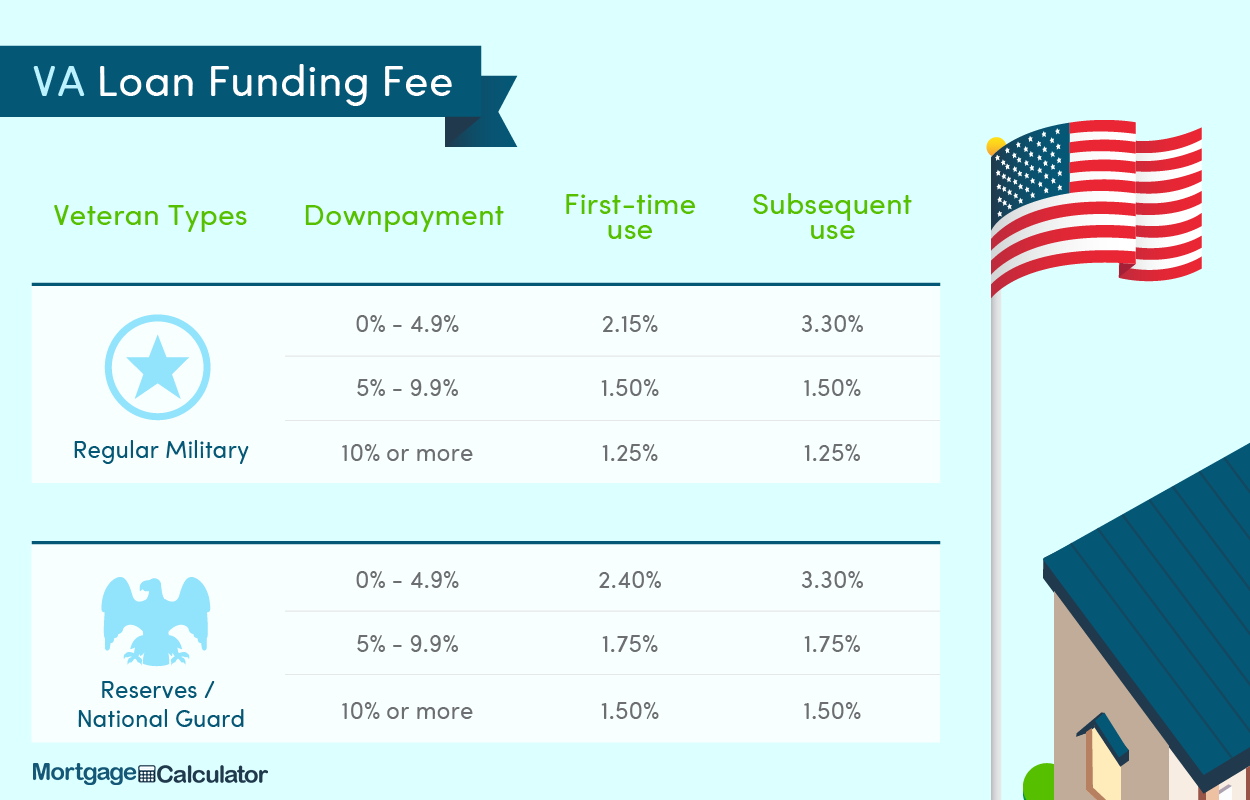
The VA Funding Fee is a one-time payment made to the Department of Veterans Affairs to help sustain the program. While it is not part of the interest rate percentage, it is a crucial part of the total cost of the loan. The fee varies based on whether it is your first time using the benefit and whether you are making a down payment. Veterans with service-connected disabilities are often exempt from this fee, which further enhances the financial viability of the loan.
Debt-to-Income (DTI) Ratio
Lenders also look closely at your Debt-to-Income ratio, which is the percentage of your gross monthly income that goes toward paying debts. While the VA is more flexible with DTI than conventional lenders—often allowing ratios up to 41% or even higher with compensating factors—a lower DTI can sometimes help you qualify for the most competitive rates available from premium lenders.
The Financial Advantages of VA Loans Beyond the Interest Rate
A VA home loan rate is only one piece of the puzzle. When evaluating the “Money” aspect of this benefit, one must look at the total cost of capital over the life of the loan.
The Absence of Private Mortgage Insurance (PMI)
On a conventional loan, if you put down less than 20%, you are required to pay PMI, which can cost between 0.5% and 1.5% of the loan amount annually. On a $400,000 home, this could mean an extra $200 to $400 per month. VA loans never require PMI. When you factor this into the equation, a VA loan with a 6% interest rate is effectively much cheaper than a conventional loan with a 6% rate plus PMI.
Capped Closing Costs
The VA limits the types of closing costs that a veteran can be charged. For example, veterans cannot be charged a brokerage fee or certain administrative fees. Lenders are also limited to a 1% flat fee to cover origination, processing, and underwriting. This ensures that the “entry cost” to the loan remains low, preserving the borrower’s liquidity for other investments or home maintenance.
The IRRRL: A Unique Refinancing Opportunity
One of the most powerful features of the VA program is the Interest Rate Reduction Refinance Loan (IRRRL), often called a “VA Streamline.” If market interest rates drop after you have closed on your home, the IRRRL allows you to refinance into a lower rate with very little paperwork, no new appraisal, and no out-of-pocket costs. This financial tool ensures that veterans are never “stuck” with a high rate if the broader economy shifts in their favor.
Comparing Fixed-Rate vs. Adjustable-Rate VA Loans
When choosing a VA home loan rate, borrowers must decide between the stability of a fixed rate and the potential initial savings of an adjustable rate.
The Stability of VA Fixed-Rate Mortgages
The vast majority of VA borrowers opt for a 30-year fixed-rate mortgage. The advantage is simple: your interest rate and your principal-and-interest payment will never change. In an inflationary environment, a fixed-rate VA loan is an excellent hedge. As the value of the dollar decreases and wages potentially rise, your mortgage payment remains the same, effectively becoming “cheaper” in real terms over time.
When to Consider a VA Hybrid ARM
VA Adjustable-Rate Mortgages (ARMs) typically start with a lower interest rate than fixed-rate loans for an initial period (usually 3, 5, or 7 years). After this period, the rate adjusts annually based on a market index. This can be a savvy financial move for service members who know they will be relocated (PCS) within a few years. By taking the lower introductory rate, they save money during their stay and sell the home before the rate has a chance to increase.
Strategies to Secure the Lowest VA Home Loan Rate
Securing the best possible rate requires a proactive approach to personal finance. Because different lenders have different overhead costs and risk tolerances, the rates offered can vary significantly from one institution to another.
Shopping Multiple VA-Approved Lenders
It is a mistake to assume that all VA rates are the same. A “Big Bank” might have higher overhead and offer a slightly higher rate than a specialized online VA lender or a local credit union. Financial experts recommend getting at least three different Loan Estimates. Even a 0.25% difference in your rate can save you tens of thousands of dollars over the life of a 30-year mortgage.
Improving Your Financial Profile Before Applying
If you are not in a rush to buy, taking six months to polish your finances can lead to a better rate. This includes:
-
Paying down revolving debt: Lowering your credit card balances can boost your credit score quickly.
-
Checking for errors: Ensure your credit report is accurate, as errors can artificially depress your score.
-
Stability: Avoid changing jobs or making large purchases (like a new car) right before applying for a VA loan.
Buying Down the Rate with Points
Borrowers have the option to pay “discount points” at closing to permanently lower their interest rate. One point typically costs 1% of the loan amount and lowers the rate by approximately 0.25%. This is essentially a way to “prepay” interest. From a financial planning perspective, this makes sense if you plan to stay in the home for a long time, as the monthly savings will eventually surpass the initial cost of the points—a calculation known as the “break-even point.”
In conclusion, the VA home loan rate is more than just a number; it is a specialized financial benefit earned through service. By understanding the mechanics of how these rates are set and the various ways to optimize them, eligible borrowers can secure some of the most competitive financing in the world, building long-term wealth through real estate while enjoying the security of a government-backed investment.
aViewFromTheCave is a participant in the Amazon Services LLC Associates Program, an affiliate advertising program designed to provide a means for sites to earn advertising fees by advertising and linking to Amazon.com. Amazon, the Amazon logo, AmazonSupply, and the AmazonSupply logo are trademarks of Amazon.com, Inc. or its affiliates. As an Amazon Associate we earn affiliate commissions from qualifying purchases.