
In an era where travel aspirations often collide with budgetary realities, the ability to consistently find airline deals stands as a paramount skill for any financially savvy individual. Airfare can represent a significant portion of a travel budget, and mastering the art of securing cost-effective flights is not just about convenience; it’s a critical component of prudent personal financial planning. This comprehensive guide delves into the strategies, tools, and financial wisdom required to navigate the complex world of airline pricing, empowering you to unlock substantial savings and expand your travel horizons without overextending your financial resources.
Decoding Airline Pricing Strategies for Smarter Spending
Understanding how airlines determine their prices is the foundational step in outsmarting their systems and securing better deals. This isn’t merely guesswork; it’s an intricate dance of algorithms and market forces that savvy consumers can learn to interpret for financial gain.
Dynamic Pricing and Algorithmic Adjustments
Airlines employ sophisticated dynamic pricing models, constantly adjusting fares based on a myriad of factors. These algorithms consider everything from demand for a particular route and time, historical sales data, competitor pricing, and even your browsing history and location. For the financially aware traveler, this means prices are rarely static. A flight that costs X today could cost X+Y tomorrow or even X-Z. The key insight here is that every search action and market change can influence the price, making a proactive and informed approach essential to finding the financial sweet spot. Understanding this fluidity encourages flexibility and strategic monitoring rather than impulsive booking.
The Impact of Supply and Demand
At its core, airline pricing is dictated by the fundamental economic principles of supply and demand. High demand for a specific route, especially during peak seasons or major events, inevitably leads to higher prices. Conversely, routes with lower demand or flights during off-peak hours often present significant savings opportunities. For financial planning, this translates into a clear directive: if your travel dates are flexible, prioritize off-peak seasons and less popular travel times. Opting for mid-week flights (Tuesdays, Wednesdays) instead of weekend travel, or flying during the shoulder seasons (just before or after peak), can yield considerable financial benefits by tapping into periods of lower demand.
Hidden Costs and How to Avoid Them
What appears to be a great deal initially can quickly inflate with hidden fees. Baggage fees (checked and sometimes even carry-on), seat selection charges, in-flight amenities, and credit card surcharges for booking are common culprits. From a personal finance perspective, these add-ons can severely diminish the perceived savings of a “deal.” Always factor in these potential costs when comparing flights. Often, a slightly higher base fare from an airline that includes checked luggage might be more financially advantageous than a lower fare from a budget carrier that charges for every extra. Reading the fine print and understanding the total cost of ownership for your flight ticket is a critical step in effective budget management.
Mastering the Art of Strategic Flight Searching
Finding airline deals isn’t about luck; it’s about employing a methodical and strategic approach to your search. Leveraging the right tools and mindset can transform your search process into a highly effective savings mechanism.
Flexibility is Your Financial Friend
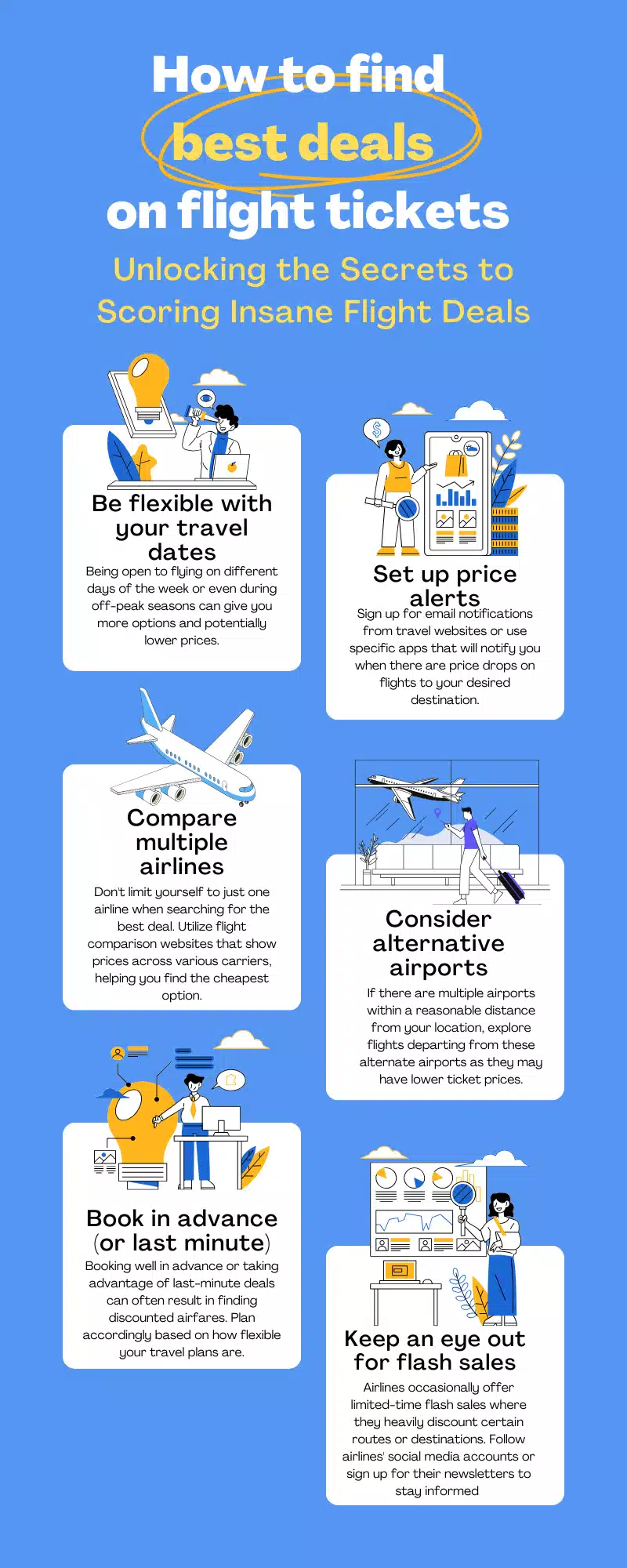
Perhaps the single most powerful financial lever you have when searching for flights is flexibility. Being open to adjusting your departure and return dates by a few days, or even considering alternative nearby airports, can unlock hundreds of dollars in savings. Flight search engines often have “flexible dates” or “anywhere” options that highlight the cheapest days to fly within a given month or even year. From a budgeting perspective, embracing flexibility allows you to align your travel plans with periods of lower demand and therefore lower prices, maximizing the financial value of your trip.
Utilizing Flight Comparison Engines Effectively
Flight comparison engines like Google Flights, Skyscanner, Kayak, and Expedia are invaluable financial tools. They aggregate data from countless airlines and online travel agencies, allowing you to compare prices efficiently. For optimal financial hygiene, always use these tools in an incognito or private browsing window. Airlines and booking sites sometimes track your searches and may subtly increase prices for routes you’ve repeatedly viewed, creating a false sense of urgency. Clearing cookies or using incognito mode ensures you’re always seeing the freshest and potentially lowest prices available, protecting your financial interest.
The Power of Price Alerts and Fare Trackers
Constantly monitoring flight prices can be time-consuming and mentally taxing. This is where automated price alerts and fare trackers become invaluable financial assistants. Most major comparison engines offer the option to set up alerts for specific routes and dates. When the price drops, you receive an email notification, allowing you to pounce on a deal without perpetual manual checking. Tools like Google Flights or Hopper can even predict future price movements with a reasonable degree of accuracy, advising you whether to “buy now” or “wait.” This systematic approach ensures you capitalize on price drops, optimizing your investment in travel.
Exploring Alternative Airports and Stopovers
Don’t limit your search to just the most convenient airport. Major cities often have multiple airports, and sometimes flying into a smaller, less popular one (e.g., Oakland instead of SFO, or Newark instead of JFK) can yield substantial savings. Similarly, direct flights are often the most expensive. Opting for a flight with a layover, especially if it adds minimal travel time, can significantly reduce the fare. From a financial perspective, these small inconveniences can be a worthwhile trade-off for hundreds of dollars saved, which can then be allocated to experiences at your destination.
Leveraging Financial Instruments for Travel Savings

Beyond just finding cheap tickets, smart financial planning involves strategically using credit cards and loyalty programs to further reduce travel costs or even fund entire trips.
Maximizing Credit Card Rewards and Welcome Bonuses
Travel-specific credit cards are a cornerstone of advanced travel hacking and can be powerful financial assets when used responsibly. Many offer substantial welcome bonuses (e.g., 50,000 to 100,000 points) after meeting an initial spending requirement. These points can often be redeemed for hundreds, if not thousands, of dollars in free flights. Furthermore, ongoing spending on these cards often accrues points that can be converted into airline miles. It’s crucial, however, to manage these cards prudently: pay off balances in full each month to avoid interest charges that would negate any rewards, and understand the annual fees. Strategic credit card use is a high-yield financial strategy for travel, provided it’s integrated into a sound personal finance plan.
Understanding Airline Loyalty Programs and Elite Status
Loyalty programs, offered by individual airlines or airline alliances (e.g., Star Alliance, SkyTeam, Oneworld), reward frequent flyers. By consistently flying with the same airline or alliance, you accumulate miles and potentially earn elite status. Elite status can provide tangible financial benefits: complimentary checked bags (saving baggage fees), priority boarding, upgrades, and access to airport lounges (saving on food and drink). Even if you’re not a super-frequent flyer, signing up for the free loyalty program of any airline you fly is a no-brainer for accumulating miles that can eventually be redeemed for free flights or discounted upgrades, representing a direct financial return on your travel spending.
The Strategic Use of Miles and Points Redemption
Accumulating miles and points is only half the battle; the other half is redeeming them for maximum value. Not all redemptions are created equal. Redeeming points for a $50 gift card, for instance, is often a poor financial decision compared to using them for a flight that might cost $500 cash. Look for “sweet spots” in redemption charts, often found when booking international business or first-class flights, where the cash value of the ticket is significantly higher than the number of points required. Be mindful of fuel surcharges and taxes that can accompany award tickets. Viewing your miles and points as a liquid financial asset that requires strategic deployment ensures you’re always getting the best return on your loyalty.
Timing Your Purchase: The Financial Sweet Spot
When you book your flight can be just as important as where or how you search. There’s a strategic window that often yields the best prices, a concept crucial for effective financial planning.
The “Goldilocks Zone” for Booking Flights
There’s often a “Goldilocks Zone” for booking flights – not too early, not too late, but just right. For domestic flights, this is generally 1-3 months out, while for international travel, it extends to 2-8 months. Booking too far in advance can mean you miss out on sales and price drops as airlines adjust to demand. Booking too late, especially within a few weeks of departure, usually results in significantly higher fares as the cheaper fare classes sell out. This timing strategy is a critical financial discipline, ensuring you’re purchasing when airlines are most competitive, not when they’re exploiting last-minute demand.
Best Days of the Week to Book and Fly
Conventional wisdom, supported by some data, suggests that Tuesdays and Wednesdays are often the cheapest days to purchase flights. Airlines frequently launch sales early in the week, and by Tuesday afternoon, competitor airlines typically match those prices. For flying, mid-week flights (Tuesdays, Wednesdays, and sometimes Saturdays for international) are generally cheaper than flying on peak travel days like Fridays and Sundays. Early morning and late-night flights also tend to be less expensive due to lower demand. Aligning your travel schedule with these patterns is a simple yet effective way to shave dollars off your fare.
Navigating Peak and Off-Peak Seasons
The season in which you travel dramatically impacts flight costs. Peak seasons – such as summer holidays, Christmas, New Year’s, and major public holidays – command premium prices due to high demand. Conversely, traveling during the “shoulder season” (just before or after peak season) or true off-peak periods (e.g., January/February or late fall) can result in substantial savings. While your travel window might be constrained, exercising financial discipline by avoiding peak periods whenever possible is one of the most significant cost-reduction strategies available to travelers.
Beyond the Basics: Advanced Money-Saving Tactics
For the truly dedicated financial optimizer, there are more nuanced, sometimes complex, strategies to unearth exceptional airline deals. These require a bit more effort and understanding but can yield extraordinary savings.
The Art of “Hidden City” Ticketing and Multi-City Flights
“Hidden city” ticketing involves booking a flight with a layover in your actual desired destination, but with a final destination beyond it. For example, booking a flight from A to C with a layover in B (your actual destination), and simply exiting the airport at B, skipping the last leg. This can sometimes be cheaper than a direct flight from A to B. Similarly, multi-city flights, where you plan multiple segments with different destinations, can sometimes be cheaper than booking separate one-way tickets. However, these tactics come with caveats: you generally cannot check luggage (as it goes to the final destination) and airlines frown upon this practice, so it should be used with caution and discretion. It’s a form of advanced financial arbitrage for flights.
Bundle Deals and Package Holidays
Sometimes, booking a flight as part of a package deal that includes accommodation or car rental can offer superior financial value compared to booking each component separately. Online travel agencies (OTAs) often negotiate bulk rates with airlines and hotels, allowing them to offer attractive bundles. It’s not always the case, so always compare the total cost of a package against the sum of individually booked flight, hotel, and car rental. This meticulous comparison is a hallmark of intelligent financial decision-making, ensuring you only opt for bundles when they truly represent a saving.

Error Fares and Flash Sales: Being Prepared to Pounce
Occasionally, airlines or OTAs make mistakes, posting “error fares” that are ridiculously cheap. These are rare but genuine opportunities for massive savings. Similarly, flash sales, often unannounced and very short-lived, can offer significant discounts. The key to capitalizing on these is readiness: having your travel dates in mind, passport details handy, and financial resources ready to book immediately. Subscribing to deal alert services (e.g., Scott’s Cheap Flights, Secret Flying) that specifically track these types of fares can give you the edge needed to snag a truly exceptional deal.
In conclusion, finding airline deals is far more than a casual search; it’s a critical aspect of effective personal financial management for travel. By understanding the intricacies of airline pricing, adopting strategic search techniques, leveraging financial instruments like credit cards and loyalty programs, timing your purchases wisely, and exploring advanced tactics, you can transform your travel budget. This disciplined approach not only saves you money but also empowers you to travel more, experience new destinations, and achieve your travel aspirations without compromising your financial well-being. It’s an investment in your experiences, made smarter by sound financial strategy.
aViewFromTheCave is a participant in the Amazon Services LLC Associates Program, an affiliate advertising program designed to provide a means for sites to earn advertising fees by advertising and linking to Amazon.com. Amazon, the Amazon logo, AmazonSupply, and the AmazonSupply logo are trademarks of Amazon.com, Inc. or its affiliates. As an Amazon Associate we earn affiliate commissions from qualifying purchases.