
Relocating with a beloved canine companion can be one of the most rewarding yet logistically challenging aspects of moving, especially when distances are significant. For many pet owners, the primary concern, after their dog’s safety and well-being, is the financial outlay involved. Shipping a dog is not a one-size-fits-all expense; it’s a complex equation influenced by a multitude of variables, from the dog’s physical attributes to the intricacies of international regulations. Understanding these factors is crucial for accurate budgeting and informed decision-making, ensuring a financially sound and stress-free journey for both you and your furry friend. This comprehensive guide will dissect the costs associated with dog shipping, providing a clear financial roadmap for pet owners.

Deconstructing the Core Factors Influencing Dog Shipping Costs
The “how much” question is rarely straightforward when it comes to pet relocation. The final price tag is a composite of several key variables, each contributing significantly to the overall expense. Savvy budgeting begins with understanding these fundamental cost drivers.
Pet Size and Breed: A Major Determinant
Unsurprisingly, the size and weight of your dog play a monumental role in determining shipping costs. Airlines and ground transporters often categorize pets by crate size and weight, with larger animals naturally requiring more space and resources. A Chihuahua shipped domestically will incur vastly different costs compared to a Great Dane traveling across continents. Furthermore, certain brachycephalic (snub-nosed) breeds, such as Pugs, Bulldogs, and Boston Terriers, often face breed-specific restrictions or require specialized transport due to increased respiratory risks during travel, which can lead to higher fees or necessitate more expensive private transport options. Understanding your dog’s size, weight, and breed-specific needs is the first step in estimating costs.
Distance and Destination: Geographical Impact on Price
Just like human travel, the distance your dog needs to travel is a primary cost factor. Domestic shipments within the same country are invariably less expensive than international relocations, which involve longer flight times, potentially more complex logistics, and additional bureaucratic hurdles. The specific destination within a country also matters; shipping to a major hub airport might be cheaper than to a remote regional airport that requires additional connecting flights or specialized ground transfer. International shipments introduce an entirely new layer of cost, encompassing varying tariffs, import fees, and the necessity of meeting diverse country-specific health and entry requirements.
Shipping Method: Air Cargo vs. Ground Transport
The mode of transport you choose for your dog significantly impacts the price.
Air Cargo: This is often the quickest option for long distances, especially across countries or continents. Commercial airlines transport pets in temperature-controlled, pressurized cargo compartments. Costs here depend on the airline, route, crate size, and pet weight. While efficient, it can be stressful for some pets and comes with specific rules and seasonal restrictions (e.g., extreme temperature embargoes).
Professional Ground Transport: For shorter to medium distances, or for owners who prefer to avoid air travel, dedicated pet transport companies offer ground services. These can range from shared vans with multiple pets (more economical) to private, door-to-door services (more expensive but highly personalized). Ground transport often allows for more frequent stops, hydration, and attention, which can be beneficial for anxious pets.
Specialized Air Charter/Private Jet: For high-value pets, very anxious animals, or complex international moves, private pet relocation services might utilize air charters. This is the most expensive option but offers the highest level of customization, care, and flexibility.
Time of Year and Urgency: Seasonal and Expedited Fees
Demand and environmental conditions can also sway pricing. Shipping during peak travel seasons (e.g., holidays, summer vacation periods) can lead to higher prices due to increased demand and potentially limited availability. Similarly, extreme weather conditions, such as very hot summers or cold winters, can trigger airline embargoes on pet travel for safety reasons, forcing pet owners to wait or seek more expensive specialized transport options. Expedited shipping, while sometimes necessary, will almost always come with a premium fee compared to booking well in advance. Planning ahead can yield significant financial savings.
A Closer Look at Shipping Method Options and Their Financial Implications
Once the core factors are understood, delving into the specifics of each shipping method reveals the nuanced financial commitments required. Each option presents a different balance of cost, speed, and level of service.
Commercial Airline Cargo Services: The Standard Approach
For many pet owners, especially those moving domestically or to easily accessible international destinations, commercial airline cargo is the most common and often the most cost-effective solution for air travel. Dogs travel in the aircraft’s cargo hold, which is pressurized and temperature-controlled.
-
Costs: Typically range from $250 to $1,000+ for domestic flights, depending on size, distance, and airline. International flights can range from $1,000 to $5,000+, not including customs, quarantine, or veterinary fees at the destination.
-
Pros: Generally faster and more affordable than private services for long distances.
-
Cons: Can be restrictive (brachycephalic breeds, temperature embargoes), may require drop-off/pickup at cargo facilities, and offers less direct oversight during transit. Requires adherence to airline-specific and IATA (International Air Transport Association) Live Animal Regulations.
Professional Pet Transport Companies (Ground and Air Charters): White-Glove Service
These companies specialize in pet relocation, offering a spectrum of services from door-to-door ground transport to managing complex international air travel logistics. They act as intermediaries, handling bookings, veterinary appointments, customs paperwork, and sometimes even temporary boarding.
-
Costs: Ground transport can range from $500 to $2,500+ for cross-country moves, depending on exclusivity (shared vs. private). Full-service international relocation, which might include air cargo bookings, customs clearance, and ground transfers, can easily range from $2,000 to $10,000+, especially for larger breeds or complex destinations. Air charters are significantly higher, potentially $10,000 to $30,000+.
-
Pros: Reduces stress for owners, expertise in regulations, often provides door-to-door service, and potentially better care during transit for ground options.
-
Cons: Significantly more expensive than managing the process yourself with commercial airlines.
Personal Pet Relocation Services: The DIY or Assisted Route
Some owners opt to manage much of the process themselves to save money, particularly for domestic moves. This involves directly contacting airlines, purchasing crates, and handling all veterinary appointments and paperwork. Alternatively, an “assisted” route might involve a pet transport company handling just the air booking, with the owner managing pre-travel logistics.
-
Costs: This is the most variable. If done entirely DIY, costs are primarily for air cargo fees, veterinary services, and crate purchase, potentially $500 – $2,000 for a domestic flight. Adding partial assistance (e.g., flight booking only) might add a few hundred dollars in service fees.
-
Pros: Potentially the most budget-friendly if you have the time and expertise to manage all aspects.
-
Cons: Requires significant time, research, and meticulous attention to detail to avoid costly errors or delays, especially for international travel.
Considerations for International Dog Shipping: Added Layers of Expense
International pet relocation is inherently more expensive due to heightened regulatory complexity. Beyond the standard transport fees, you must budget for:
-
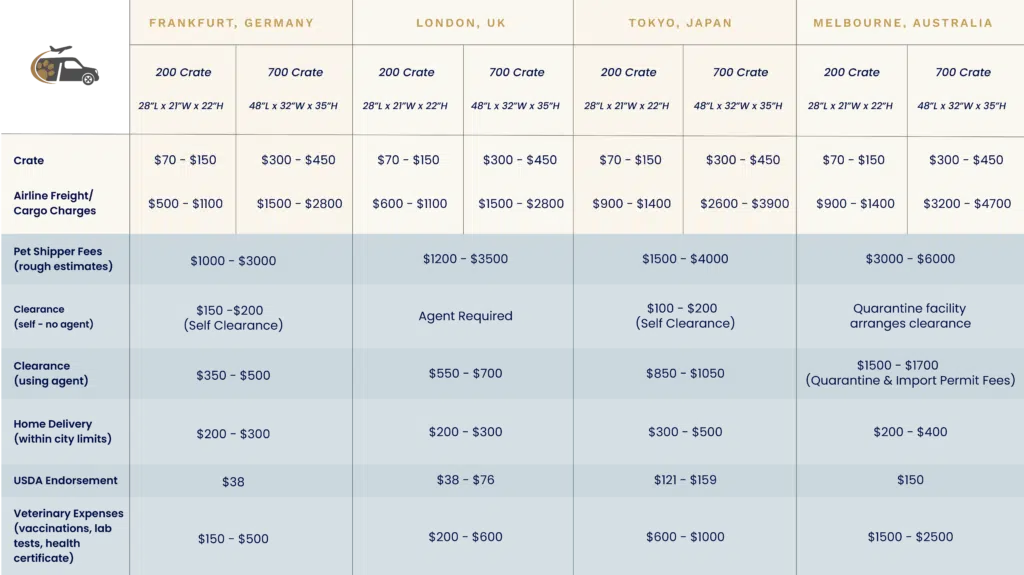
Quarantine Fees: Many countries (e.g., Australia, New Zealand, Japan, UK) have strict quarantine periods for incoming pets, which can last weeks or even months, incurring daily boarding fees that quickly add up to thousands of dollars.
-
Import Permits and Customs Duties: Some countries require import permits (which have application fees) and may levy customs duties or taxes on the “value” of your pet.
-
Specialized Veterinary Treatments/Tests: Specific vaccinations, blood tests (e.g., rabies titer test), microchipping requirements, and parasite treatments are often mandatory and must be performed within strict timeframes, adding to veterinary bills.
-
Customs Broker Fees: For complex international shipments, a customs broker may be necessary to navigate the import process, adding another layer of professional service cost.
Beyond the Base Fee: Unveiling Hidden and Ancillary Expenses
While the shipping method and distance are core cost drivers, numerous other expenses often go unnoticed until the planning phase, significantly inflating the final bill. Ignoring these can lead to major budget overruns.
Veterinary Costs and Health Certificates: Non-Negotiable Pre-Travel Expenses
Before any travel, domestic or international, your dog will require a thorough veterinary check-up and specific health documentation.
-
Health Certificate: A mandatory document issued by a licensed veterinarian, stating your pet is healthy enough for travel and free of contagious diseases. This typically needs to be issued within a specific timeframe (e.g., 10 days) before travel and may need endorsement by a government agency (USDA in the U.S.). Fees range from $50 to $200+ for the exam and certificate.
-
Vaccinations and Parasite Treatments: Ensuring all required vaccinations (Rabies, DHLPP, etc.) are up-to-date is critical. International travel often demands additional vaccinations and specific parasite treatments, costing $50 to $300+ depending on requirements.
-
Rabies Titer Test: For many rabies-free or low-risk countries, a rabies antibody titer test is mandatory to prove the rabies vaccine’s efficacy. This is a blood test performed at a specialized lab and can cost $150 to $300, with results taking weeks.
-
Microchipping: An ISO-compliant microchip is a universal requirement for international pet travel and often a prerequisite for health certificates. If your dog isn’t already chipped, this is an additional $30 to $70.

Crate and Travel Accessories: Ensuring Comfort and Compliance
A proper travel crate is not just about comfort; it’s a safety requirement dictated by airline and IATA regulations.
-
IATA-Compliant Crate: Must be airline-approved, sturdy (plastic or wood), well-ventilated, with adequate space for the dog to stand, turn around, and lie down naturally. Costs vary significantly by size, from $70 for a small crate to $500+ for an extra-large airline-approved model. Specialty crates for giant breeds can be even more.
-
Comfort Accessories: Absorbent bedding, water and food dishes that attach to the crate door, “Live Animal” stickers, and identification tags are all necessary. These are generally minor costs, perhaps $20 to $100, but essential for your dog’s welfare and compliance.
Insurance for Your Pet: Weighing the Financial Risk
While optional, pet travel insurance can be a wise financial investment, especially for long or international journeys. It provides coverage for unexpected veterinary emergencies during transit, lost baggage, or even trip cancellations due to pet-related issues.
-
Costs: Policies vary widely but can range from $50 to $200+ for a single trip, depending on coverage limits, your dog’s breed/age, and the travel destination.
-
Benefit: Offers peace of mind and protection against potentially astronomical emergency vet bills in an unfamiliar location.
Quarantine Fees and Customs Duties: Specific to International Moves
As mentioned, countries like Australia, New Zealand, and others require pets to undergo a period of quarantine upon arrival.
-
Quarantine Fees: These are non-negotiable and typically charged daily by government-approved quarantine facilities. A 10-day quarantine could cost $1,000 – $2,000+, while longer periods can escalate into several thousands.
-
Customs Duties/Import Taxes: Some countries may assess import duties on pets, viewing them as goods, especially if they are purebred or acquired for a significant sum. This is less common for family pets but worth investigating for your specific destination.
Budgeting and Financial Planning for a Smooth Pet Relocation
Effective financial planning is paramount to avoid last-minute stress and ensure all costs are accounted for. This involves meticulous research, comparing services, and preparing for contingencies.
Obtaining Accurate Quotes: The Importance of Detail
When requesting quotes from airlines or pet transport companies, provide as much detail as possible: your dog’s exact breed, weight, height, and length; the precise origin and destination addresses; desired travel dates; and any specific health conditions. Ambiguous information will lead to inaccurate estimates. Request itemized quotes to understand what each service covers.
Comparing Services and Pricing Structures: Value vs. Cost
Don’t settle for the first quote. Obtain multiple quotes from different airlines and pet relocation companies. Compare not just the bottom-line price but also what’s included in that price. A cheaper initial quote might exclude critical services (like customs clearance or ground transfer at the destination) that a more expensive quote bundles in. Evaluate the “value” beyond just the “cost” – considering factors like reputation, expertise with your specific route, and customer service quality.
Payment Schedules and Cancellation Policies: Understanding Financial Commitments
Understand the payment terms. Do you need to pay upfront? Are deposits required? What are the cancellation policies and associated fees? Knowing these details can protect you financially if your travel plans change unexpectedly. Some companies may offer installment plans for large international moves, which can help manage cash flow.
Contingency Fund: Preparing for the Unexpected
Despite the best planning, unforeseen circumstances can arise. A flight delay might necessitate an overnight kennel stay, an unexpected vet visit might be required upon arrival, or customs might demand an extra fee. It’s prudent to set aside an additional 10-20% of your estimated total cost as a contingency fund. This financial cushion can alleviate stress and prevent financial strain should the unexpected occur.
Strategies for Economizing Your Dog Shipping Expenditure
While pet shipping is an investment, there are smart ways to reduce costs without compromising your dog’s safety or comfort. Thoughtful planning and execution can lead to significant savings.
Early Planning and Booking: Avoiding Last-Minute Premiums
Perhaps the most effective cost-saving strategy is to start planning months in advance.
-
Airline Bookings: Airlines typically release pet cargo space 1-3 months out. Booking early secures space and often better rates, as last-minute bookings can incur premium fees or be unavailable.
-
Veterinary Appointments: Schedule vet visits, vaccinations, and tests well in advance to avoid expedited fees or the need for emergency appointments.
-
Paperwork: Allow ample time for any government endorsements or import permit applications; rushing these can lead to costly errors or delays.
Exploring Off-Peak Travel: Seasonal Savings
If your schedule allows, consider shipping your dog during off-peak seasons or less popular travel days (e.g., weekdays instead of weekends, mid-week flights). This can often result in lower airline cargo rates due to reduced demand. Additionally, avoiding extreme summer or winter months can prevent potential temperature embargoes, which could force you to delay travel or seek more expensive specialized transport.
DIY Preparations: Sourcing Your Own Crate and Health Checks
Taking on some tasks yourself can cut down on professional service fees.
-
Crate Purchase: Buy your own IATA-compliant crate directly from pet supply stores or online retailers. Pet transport companies might charge a markup. Look for second-hand crates in good condition if allowed by regulations, but ensure they meet all safety standards.
-
Veterinary Care: Manage all vet appointments and paperwork yourself rather than relying on a relocation company to coordinate them. While more time-consuming, this directly covers only the vet’s fees, not an intermediary’s service charge.
-
Local Transport: If possible, transport your dog to and from the origin and destination airports yourself, rather than paying for a pet taxi or ground transfer service.
Considering Breed-Specific Restrictions and Alternatives
If you own a brachycephalic breed, research airline restrictions before planning anything. Many airlines have outright bans or strict limitations. This might necessitate exploring more expensive, specialized private ground transport or even air charter options if air travel is essential. Understanding these restrictions early can prevent wasted time and money on unsuitable options. For some breeds, a longer, multi-leg ground journey might be safer and more cost-effective than a risky air shipment or an expensive private air charter.
Shipping a dog is a significant financial undertaking that demands careful planning and a thorough understanding of the various cost components. By meticulously researching, comparing options, and proactively managing the process, pet owners can effectively budget for this journey, ensuring their beloved companion arrives safely and comfortably, without unforeseen financial strain. It’s an investment in your pet’s well-being and your peace of mind.
aViewFromTheCave is a participant in the Amazon Services LLC Associates Program, an affiliate advertising program designed to provide a means for sites to earn advertising fees by advertising and linking to Amazon.com. Amazon, the Amazon logo, AmazonSupply, and the AmazonSupply logo are trademarks of Amazon.com, Inc. or its affiliates. As an Amazon Associate we earn affiliate commissions from qualifying purchases.