
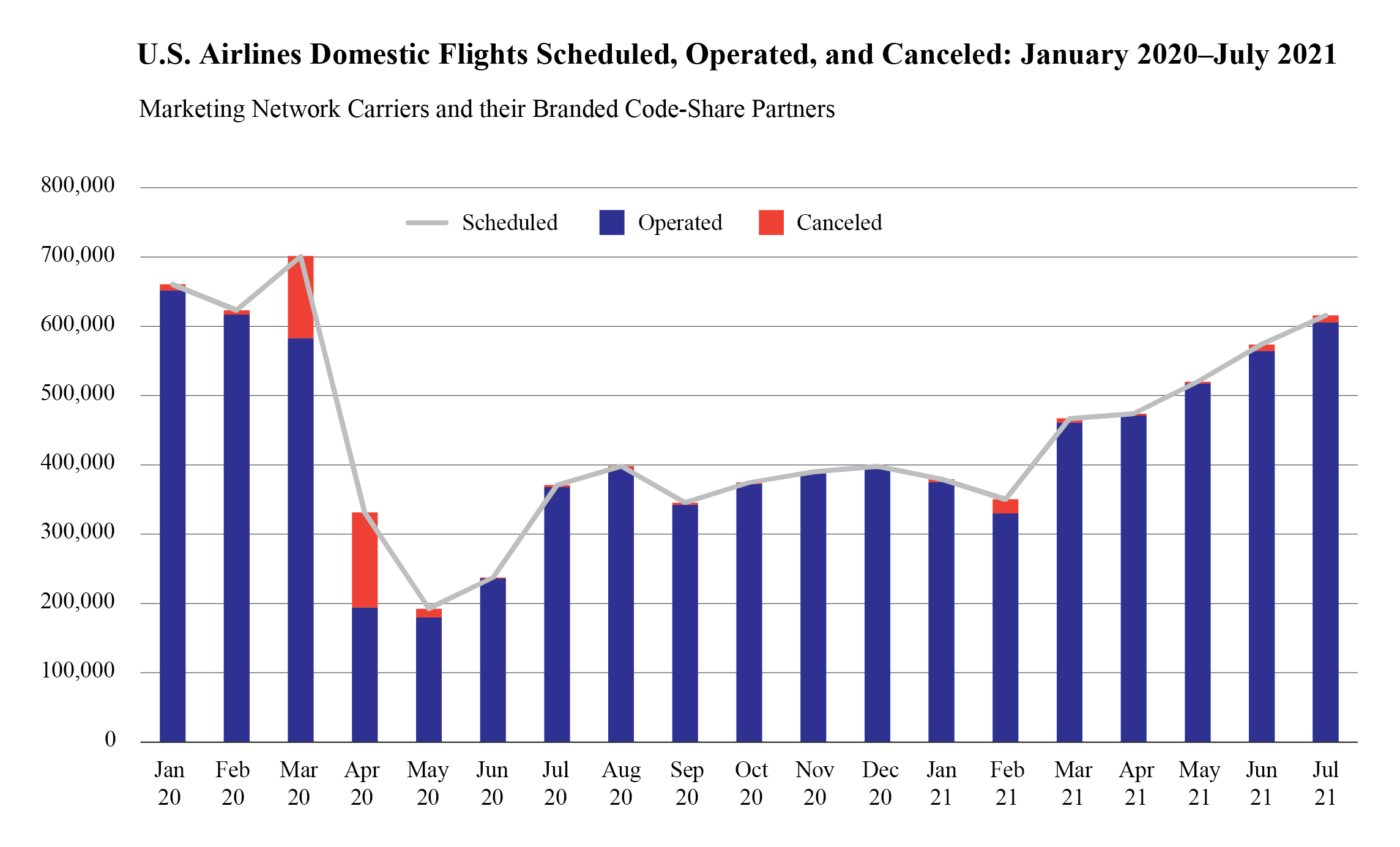
In the modern era of hyper-connectivity, the question of “how many domestic flights per day” is more than just a curiosity for travelers; it is a vital data point for logistics experts, environmental scientists, and software engineers. On any given day, the United States alone facilitates approximately 28,000 to 30,000 domestic flights. On a global scale, that number swells significantly, often exceeding 100,000 total daily departures when accounting for all short-haul internal routes across continents.
Managing this staggering volume of hardware in the sky requires a sophisticated tech stack that integrates satellite navigation, cloud computing, and high-level automation. Behind every single flight number is a complex architecture of software designed to ensure that tens of thousands of aircraft can share the same airspace without incident. To understand the scale of domestic aviation, one must look at the digital infrastructure that makes these numbers possible.

The Data Engines Tracking Global Domestic Aviation
The ability to answer exactly how many domestic flights are in the air at any moment relies on a global network of sensors and data-sharing protocols. For decades, aviation relied on primary radar, which was limited by line-of-sight and geographic obstacles. Today, the tech landscape has shifted toward a more precise, data-rich environment.
Real-Time ADS-B Tracking and Satellite Integration
The backbone of modern flight tracking is ADS-B (Automatic Dependent Surveillance-Broadcast) technology. Unlike traditional radar, which “pings” an aircraft to find its location, ADS-B equipped aircraft use GPS to determine their precise position and then broadcast that data—along with altitude, velocity, and flight identification—to ground stations and other aircraft.
The rise of space-based ADS-B has revolutionized this data collection. Companies like Spire and Aireon have deployed constellations of nanosatellites that can track domestic flights over remote areas, such as the Australian Outback or the vast expanse of the Canadian North, where ground stations are non-existent. This satellite-integrated tech allows flight tracking platforms to provide a 100% accurate count of daily domestic operations, regardless of terrain.
The Role of Big Data in Flight Statistics
Aggregating the telemetry from 30,000 daily flights generates petabytes of data. This is where Big Data analytics comes into play. Tech platforms like FlightAware and FlightRadar24 use sophisticated algorithms to filter “noise” from the data—such as military operations or private drones—to provide a clear picture of commercial domestic traffic.
These platforms do not just count flights; they analyze them. By processing historical data against real-time feeds, these systems can predict delays before they happen. For tech-savvy travelers and airline operators, this means the “number of flights” is less important than the “state of the network.” Big Data allows for the visualization of congestion patterns, helping airlines adjust their software-driven scheduling to avoid bottlenecks in high-traffic corridors like the Northeast Triangle in the U.S. or the busy routes between Beijing and Shanghai.
AI and Machine Learning: Optimizing Daily Flight Schedules
With thousands of domestic flights taking off every hour, the task of scheduling is far beyond human capability. Airlines utilize advanced Artificial Intelligence (AI) and Machine Learning (ML) models to determine which aircraft goes where, when, and how.
Algorithmic Routing and Fuel Efficiency
A significant portion of the technology budget for major carriers is dedicated to flight planning software. These AI-driven tools ingest variables such as upper-level wind speeds, temperature, air pressure, and current air traffic control (ATC) restrictions. By running thousands of simulations per second, the software identifies the “optimum flight path” for each of the day’s domestic legs.
The goal is twofold: punctuality and fuel efficiency. Even a 1% reduction in fuel burn across 4,000 daily flights (the scale of a major carrier like Delta or American Airlines) results in millions of dollars in savings and a significant reduction in carbon footprint. These algorithms are dynamic; if a thunderstorm develops over a domestic hub like Atlanta or Chicago, the ML models instantly reroute the subsequent “wave” of flights to maintain the integrity of the daily count.
Predictive Maintenance: Keeping Planes in the Air
The high number of domestic flights is only possible if the fleet remains operational. In the past, aircraft were serviced based on fixed schedules—every few months or after a set number of flight hours. Today, the industry has pivoted to “Predictive Maintenance” powered by the Internet of Things (IoT).
Modern jet engines, such as those produced by GE or Rolls-Royce, are embedded with thousands of sensors that stream data in real-time to the cloud. Software platforms analyze this data to detect microscopic anomalies in vibration or heat that might suggest a part will fail in 50 hours of flight time. By identifying these issues before they cause a grounding, airlines can ensure their daily flight volume remains high. This “Digital Twin” technology—where a digital version of the engine is monitored in a virtual environment—is a cornerstone of modern aviation tech.
The Next Frontier: Automation in Air Traffic Management (ATM)
As the demand for domestic travel grows, the limiting factor isn’t the number of planes, but the capacity of the air traffic management systems. To handle an increase in the “how many flights per day” metric, the tech industry is overhauling the way we manage the sky.
Digital Towers and Remote Operations
One of the most significant shifts in aviation tech is the move toward digital or “virtual” air traffic control towers. Traditionally, controllers sat in a high tower with binoculars. Now, airports in London, Scandinavia, and parts of the U.S. are implementing masts equipped with high-definition 360-degree cameras and infrared sensors.
The video feed is transmitted via high-speed fiber to a centralized control center, where AI overlays the footage with flight data, weather information, and hazard alerts. This technology allows a single centralized hub to manage multiple low-traffic domestic airports, increasing the efficiency of regional flight networks and allowing more domestic routes to exist profitably.
Cloud-Based Communication Platforms
Communication between pilots and controllers is also moving from analog to digital. Data Link Services, such as Controller-Pilot Data Link Communications (CPDLC), allow for text-based instructions to be sent directly to the aircraft’s flight management system. This reduces the risk of voice communication errors and frees up radio frequencies. In a system handling 30,000 domestic flights a day, removing the “human-to-human” bottleneck through automated data exchange is essential for maintaining safety at scale.
Passenger-Facing Tech: Managing the Inflow of Thousands
The “domestic flights per day” figure isn’t just a challenge for pilots and controllers; it is a massive UX challenge for airports. Technology is being used to streamline the movement of millions of passengers through terminals to match the high frequency of departures.
Biometric Boarding and Automated Security
To keep up with the volume of domestic departures, airports are increasingly turning to biometrics. Facial recognition software is replacing physical boarding passes and ID checks in many domestic terminals. By linking a passenger’s “digital identity” to their flight record, the time spent at the gate is reduced from 20 minutes per flight to under 10.
Furthermore, AI-enhanced security scanners use computer vision to identify prohibited items without requiring passengers to remove electronics or liquids. These software improvements allow airports to handle a higher density of domestic flights per hour, directly contributing to the total daily volume of air traffic.
App-Driven Itinerary Management
For the individual traveler among the thousands of daily flights, the mobile app has become the primary interface for aviation tech. These apps are not just for booking; they are sophisticated nodes in a global data network. Through APIs (Application Programming Interfaces), airline apps connect to TSA wait-time data, gate management software, and real-time aircraft tracking. This transparency ensures that even when the domestic flight count is at its peak, the individual user has a personalized, manageable experience.

Scaling for the Future: Sustainable Tech and Increased Volume
As we look toward the future, the “how many domestic flights per day” metric is expected to rise. To accommodate this growth without overwhelming the environment or the infrastructure, two major tech trends are emerging: electrification and autonomous flight.
Short-haul domestic routes (those under 500 miles) are the primary candidates for the next generation of electric vertical takeoff and landing (eVTOL) aircraft. The software required to manage these autonomous air taxis will represent the next great leap in aviation technology. We are moving toward a “System of Systems” where traditional domestic jets and autonomous electric craft share a digitally-managed airspace.
The integration of these new technologies ensures that the aviation industry can continue to scale. While the current number of domestic flights per day is impressive, the software-driven innovations in AI, satellite tracking, and automated management are paving the way for a future where the sky is busier, safer, and more efficient than ever before. In the world of aviation, the number is just the beginning; the technology is what keeps the world moving.
aViewFromTheCave is a participant in the Amazon Services LLC Associates Program, an affiliate advertising program designed to provide a means for sites to earn advertising fees by advertising and linking to Amazon.com. Amazon, the Amazon logo, AmazonSupply, and the AmazonSupply logo are trademarks of Amazon.com, Inc. or its affiliates. As an Amazon Associate we earn affiliate commissions from qualifying purchases.