
The emergence of cryptocurrency has fundamentally challenged our traditional understanding of money, value, and the mechanisms of exchange. For decades, the global financial system has operated on the basis of fiat currency—money backed by government decree rather than a physical commodity like gold. In this context, the rapid ascent of digital assets often leaves investors asking a fundamental question: What actually gives a decentralized, intangible string of code its value?
To understand the valuation of cryptocurrency, one must look past the price volatility and examine the underlying economic principles, technological utility, and social dynamics that govern these assets. From an investment perspective, the value of a cryptocurrency is derived from a complex interplay of scarcity, utility, network effects, and the cost of production.

The Economics of Scarcity and Supply Dynamics
At the heart of the “Money” niche is the concept of scarcity. In traditional finance, central banks can increase the money supply through quantitative easing or by adjusting interest rates. While this can stimulate the economy, it often leads to the devaluation of the currency over time. Cryptocurrency introduces a radical alternative: programmatic scarcity.
Hard Caps and Deflationary Pressure
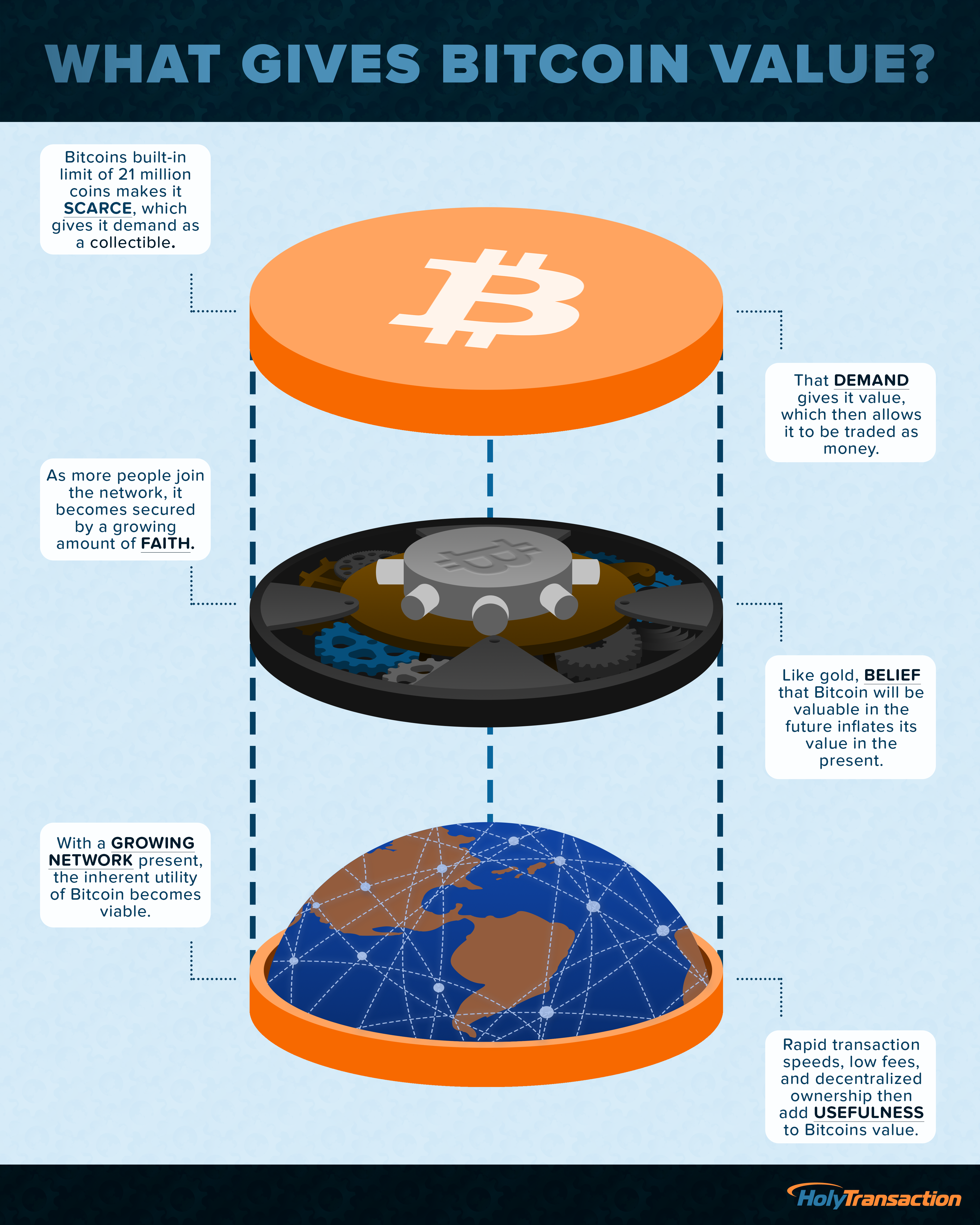
Most prominent cryptocurrencies, most notably Bitcoin, have a fixed maximum supply. There will only ever be 21 million Bitcoins in existence. This hard cap is written into the software’s source code and enforced by a global network of nodes. For investors, this creates a “digital gold” narrative. When the demand for an asset increases while the supply remains fixed, the price must theoretically rise to reach a new equilibrium.
Other assets utilize “burning” mechanisms to create value. For instance, some platforms take a portion of transaction fees and permanently remove those tokens from circulation. By reducing the circulating supply, the remaining tokens represent a larger share of the network’s total value, providing a direct economic benefit to long-term holders.
Halving Events and Controlled Issuance
Unlike fiat currencies, which can be printed at will, many cryptocurrencies have a pre-defined issuance schedule. Bitcoin, for example, undergoes a “halving” roughly every four years, where the reward for mining new blocks is cut in half. This reduces the rate at which new supply enters the market. From an investing standpoint, these events act as supply shocks that historically lead to significant price appreciation, as the “new” supply fails to meet the existing or growing demand.
Utility and the Programmability of Value
While scarcity creates the potential for value, utility is what sustains it. A currency that cannot be used for anything is ultimately a speculative bubble. In the digital age, the value of a cryptocurrency is often tied to what its underlying blockchain can actually do.
Decentralized Finance (DeFi) and Smart Contracts
Platforms like Ethereum, Solana, and Avalanche have value because they function as global, permissionless computers. Through smart contracts—self-executing contracts with the terms of the agreement directly written into code—these networks facilitate a new brand of financial services.
Investors find value in these tokens because they are the “gas” required to power the network. If you want to take out a loan without a bank, trade assets on a decentralized exchange, or earn interest through yield farming, you must use the native token of that ecosystem. This creates a constant, utility-driven demand for the asset, independent of pure speculation.
Cross-Border Efficiency and Remittances
From a personal finance perspective, the value of cryptocurrency lies in its ability to move wealth across borders faster and cheaper than the traditional SWIFT system. In many developing nations, the cost of sending money home can eat up a significant percentage of a worker’s earnings. Cryptocurrencies like Ripple (XRP) or various stablecoins provide a medium of exchange that bypasses the friction of intermediary banks, settlement delays, and high conversion fees. The “value” here is measured in the time and money saved by the end-user.
The Network Effect and Social Consensus
In the world of investing, an asset is often worth what the collective market agrees it is worth. This is known as social consensus, and in the digital space, it is amplified by Metcalfe’s Law. Metcalfe’s Law states that the value of a telecommunications network is proportional to the square of the number of connected users of the system.
Adoption Curves and Institutional Integration
The more people who own, trade, and accept a cryptocurrency, the more valuable that cryptocurrency becomes to every individual participant. This is why the entry of institutional giants like BlackRock, Fidelity, and PayPal into the crypto space was a watershed moment for the industry’s valuation. When major financial institutions integrate digital assets into their offerings, it signals a level of legitimacy and liquidity that attracts further capital.
For the retail investor, this network effect provides a degree of security. As the ecosystem grows to include merchants, payment processors, and tax frameworks, the risk of the asset “going to zero” diminishes, and its status as a recognized store of value is cemented.
Trust in Decentralization
Traditional money requires trust in central banks and governments. Cryptocurrency shifts that trust to mathematics and cryptography. The value of a decentralized network is that no single entity can freeze your funds, reverse a transaction, or manipulate the supply for political gain. In regions experiencing hyperinflation or political instability, the value of an asset that exists outside the reach of local government is immeasurable. This “censorship resistance” is a core value proposition that drives demand in global markets.
Production Cost and Network Security
Just as gold has value partly because it is difficult and expensive to mine, many cryptocurrencies derive value from the resources required to produce and secure them. This is often referred to as the “cost of production” theory of value.
Proof of Work and Energy Expenditure
In Proof of Work (PoW) systems, miners must expend vast amounts of computational power and electricity to solve complex puzzles and secure the network. This energy expenditure creates a “floor” for the asset’s value. If the market price of Bitcoin falls below the cost of the electricity required to mine it, miners may shut down their machines, reducing the hash rate and eventually leading to a difficulty adjustment. This link between the physical world (energy) and the digital world (coins) provides a tangible basis for valuation.
Proof of Stake and Capital Commitment
Modern blockchains are increasingly moving toward Proof of Stake (PoS). In this model, the network is secured by participants who “stake” or lock up their tokens as collateral. The value here is derived from the capital commitment of the participants. By staking their assets, investors earn rewards, effectively functioning like a high-yield savings account or a dividend-paying stock. The inherent value of the token is thus tied to the cash flow it can generate for its holders, a classic metric in business finance.
Cryptocurrency as a Financial Tool and Inflation Hedge
Finally, the value of cryptocurrency must be viewed through the lens of modern portfolio theory. For the savvy investor, cryptocurrency is not just a digital coin; it is a financial tool used for diversification and hedging.
A Hedge Against Monetary Expansion
As global debt levels rise and fiat currencies face inflationary pressure, investors look for “uncorrelated assets.” While the crypto market often moves in tandem with tech stocks in the short term, its long-term drivers—halving cycles, technological upgrades, and adoption rates—are independent of the traditional banking system. This makes it an attractive “insurance policy” against the failure or devaluation of traditional financial structures.
Liquidity and 24/7 Market Access
Traditional stock markets have opening and closing bells, weekends off, and bank holidays. Cryptocurrency markets never sleep. The value of 24/7 liquidity cannot be overstated in a globalized economy. The ability to liquidate an investment or move capital at 3:00 AM on a Sunday provides a level of financial freedom and flexibility that traditional brokerage accounts cannot match. This constant accessibility ensures that the price of the asset is always a real-time reflection of global supply and demand.
In conclusion, the value of cryptocurrency is not derived from a single source but from a multi-faceted foundation of economic principles. It is the combination of mathematical scarcity, real-world utility in a digital economy, the compounding power of network effects, and its role as a decentralized hedge against traditional financial volatility. As the world continues to digitize, the “value” of these assets will likely continue to transition from speculative interest to fundamental necessity in the global financial toolkit.
aViewFromTheCave is a participant in the Amazon Services LLC Associates Program, an affiliate advertising program designed to provide a means for sites to earn advertising fees by advertising and linking to Amazon.com. Amazon, the Amazon logo, AmazonSupply, and the AmazonSupply logo are trademarks of Amazon.com, Inc. or its affiliates. As an Amazon Associate we earn affiliate commissions from qualifying purchases.