
In the intricate world of business finance and manufacturing, understanding the various cost components is paramount to success. Among these, “prime cost” stands as a foundational concept, representing the direct expenses tied to the production of goods or services. For any business involved in creating a tangible product or delivering a direct service, grasping prime cost is not merely an accounting exercise; it’s a critical tool for strategic decision-making, pricing, and profitability analysis. It acts as the bedrock, revealing the absolute minimum a company must spend to produce a single unit before any indirect costs or profit margins are considered. By peeling back the layers of a business’s expenditures, prime cost offers a clear, unvarnished view of the direct inputs required, enabling managers and stakeholders to make informed choices that drive efficiency and sustainable growth.

Deconstructing Prime Cost: Components and Definition
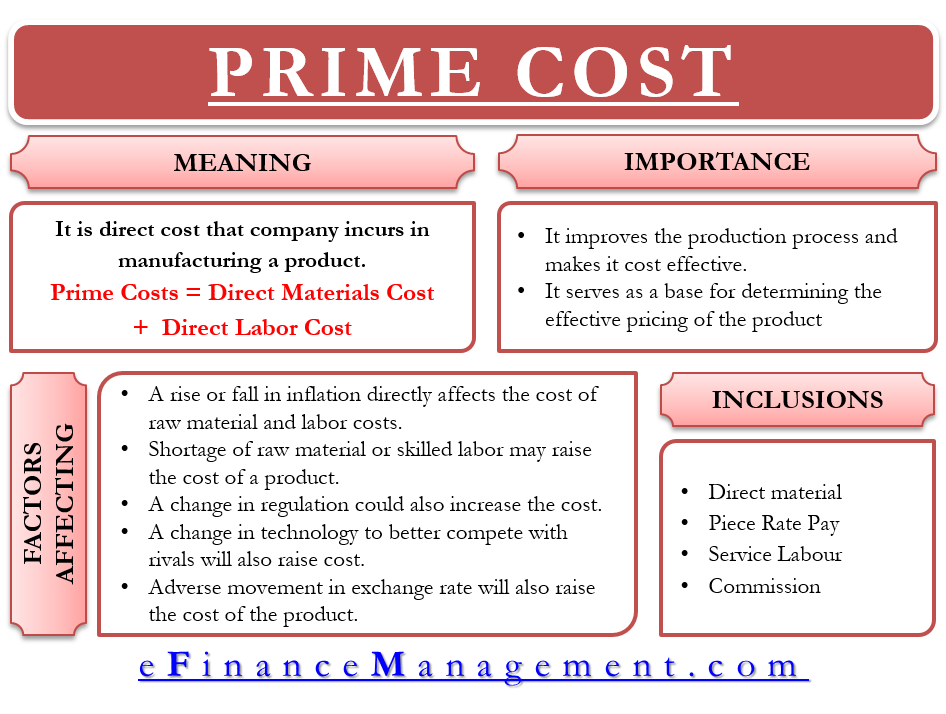
At its core, prime cost is a simple yet powerful formula that combines the two most direct and traceable costs associated with production: direct materials and direct labor. These are the expenses that can be unequivocally attributed to a specific product or service unit, without which the output could not exist in its current form.
Direct Materials
Direct materials are the raw goods and components that become an integral part of the finished product. These are the tangible inputs whose consumption can be directly measured and allocated to each unit produced. The key characteristic here is their direct traceability – you can literally point to the material in the final product.
For instance, in a furniture manufacturing company, the wood, fabric, and fasteners used to construct a chair are direct materials. For a bakery, flour, sugar, eggs, and butter are direct materials for its cakes. In an electronics company, the circuit boards, microchips, and casing for a smartphone are direct materials. The cost of these materials includes not only their purchase price but also any associated costs like freight-in, customs duties, or taxes that are necessary to bring them to the production facility in a usable condition. Accurate tracking of direct material costs is crucial, as even small fluctuations in these prices can significantly impact the final prime cost and, consequently, the profitability of a product.
Direct Labor
Direct labor refers to the wages, salaries, and associated benefits paid to employees who are directly involved in the manufacturing or production process. These are the hands-on workers who transform raw materials into finished goods, or directly deliver the core service. Their work is essential for the creation of the product.
Examples include assembly line workers in an automobile plant, bakers in a bakery, carpenters in a furniture factory, or the technicians directly installing a complex system for a client. It’s important to distinguish direct labor from indirect labor, such as supervisors, quality control inspectors, administrative staff, or sales personnel. While these roles are vital to the overall operation of the business, their wages are not directly tied to the creation of a specific unit of product in the same way an assembly worker’s time is. Direct labor costs encompass not just hourly wages but also any overtime pay, benefits, and payroll taxes directly attributable to these production-focused employees.
The Core Formula
The definition of prime cost is elegantly straightforward:
Prime Cost = Direct Materials + Direct Labor
This formula highlights the fundamental costs that must be incurred to bring a product into existence. It’s a measure of the primary, frontline expenditures. Understanding this relationship is the first step towards effective cost management and strategic financial planning for any production-oriented business.
Prime Cost vs. Conversion Cost vs. Total Production Cost
To fully appreciate the role of prime cost, it’s helpful to understand how it relates to other critical cost classifications in a manufacturing or service environment. These distinctions are vital for different types of analysis and decision-making.
Prime Cost in Contrast to Conversion Cost
While prime cost focuses on the direct inputs (materials and labor) that create a product, conversion cost centers on the expenses incurred to convert raw materials into a finished product.
The formula for conversion cost is:
Conversion Cost = Direct Labor + Manufacturing Overhead
Here, we see that direct labor is a common element to both prime cost and conversion cost. This makes intuitive sense: direct labor is both a primary input and a key factor in transforming materials. However, conversion cost replaces direct materials with manufacturing overhead. Manufacturing overhead includes all indirect costs associated with the production process – think factory rent, utilities, depreciation of factory machinery, indirect labor (like supervisors or maintenance staff), and factory supplies.
The distinction lies in their focus:
-
Prime Cost: What does it cost to get the basic ingredients and direct hands-on effort for a product? (Cost of stuff and direct doing).
-
Conversion Cost: What does it cost to transform the raw materials into a finished product? (Cost of doing and supporting the doing).
For highly automated industries with high indirect costs, conversion cost might be more scrutinized, while labor-intensive industries might pay closer attention to prime cost.
Prime Cost as a Component of Total Production Cost
Total production cost provides the most comprehensive view of what it costs to manufacture a product. It encompasses all costs directly and indirectly related to the production process.
The formula for total production cost is:
Total Production Cost = Direct Materials + Direct Labor + Manufacturing Overhead
Alternatively, it can also be expressed as:
Total Production Cost = Prime Cost + Manufacturing Overhead
or
Total Production Cost = Conversion Cost + Direct Materials

From these equations, it’s clear that prime cost is a significant component of total production cost. It represents the direct portion, the identifiable core expenses that form the product’s foundation. Manufacturing overhead then adds the necessary indirect support costs to complete the picture. By understanding how prime cost fits into the larger framework of total production costs, businesses can gain a holistic view of their expenditures, aiding in more accurate costing, pricing, and financial reporting.
The Strategic Importance of Understanding Prime Cost
Beyond its definitional simplicity, prime cost serves as a powerful analytical tool with far-reaching implications for a business’s operational efficiency, financial health, and strategic direction. Its importance extends across multiple facets of management.
Pricing Decisions
Prime cost often acts as the absolute floor for product pricing. To sell a product below its prime cost means incurring a direct loss on every unit sold, as the revenue wouldn’t even cover the direct materials and direct labor needed to create it. Understanding prime cost helps businesses:
-
Set Minimum Prices: Ensures that prices cover the variable costs directly associated with production.
-
Calculate Gross Profit Margins: Prime cost is a crucial input for calculating gross profit (Sales Revenue – Cost of Goods Sold), which is often derived from prime cost plus manufacturing overhead. A healthy gross margin is essential for covering operating expenses and generating profit.
-
Respond to Market Fluctuations: When raw material prices or labor costs change, knowing the prime cost allows for quick adjustments to pricing strategies to maintain profitability.
Cost Control and Efficiency
Analyzing prime cost provides a clear pathway to identifying and implementing cost control measures. Because these costs are directly traceable, they offer tangible opportunities for improvement:
-
Direct Material Optimization: Businesses can scrutinize their procurement processes, negotiate better deals with suppliers, reduce waste, optimize inventory levels to minimize spoilage or obsolescence, and explore alternative, more cost-effective materials without compromising quality.
-
Direct Labor Efficiency: Monitoring direct labor costs allows companies to assess worker productivity, identify bottlenecks in the production process, invest in training to improve efficiency, or implement automation where cost-effective. Reducing rework and improving quality also directly lowers labor costs associated with fixing errors.
-
Benchmarking: Comparing a product’s prime cost against industry benchmarks or competitors can highlight areas where a business is less efficient and guide efforts towards improvement.
Profitability Analysis
Prime cost is a fundamental metric for evaluating the profitability of individual products, product lines, or even entire business segments.
-
Contribution Margin Analysis: Knowing prime cost allows for the calculation of the contribution margin per unit (Selling Price Per Unit – Prime Cost Per Unit – Other Variable Costs Per Unit). This metric indicates how much revenue is left after covering direct variable costs to contribute towards fixed costs and profit. Products with higher contribution margins are generally more attractive.
-
Product Portfolio Management: Businesses can use prime cost analysis to decide which products to emphasize, which to de-emphasize, or even which to discontinue if their prime cost makes them consistently unprofitable or too challenging to compete with in the market.
-
Scenario Planning: By modeling changes in direct material prices or labor rates, businesses can forecast the impact on prime cost and overall profitability, aiding in strategic planning.
Budgeting and Forecasting
Accurate prime cost calculations are indispensable for robust financial planning.
-
Production Budgets: Prime cost directly informs the budgeting process for raw material purchases and labor expenditures required for planned production levels.
-
Cash Flow Projections: Understanding when direct material payments are due and when direct labor wages must be paid helps in managing cash flow and ensuring liquidity.
-
Resource Allocation: By predicting future prime costs, companies can allocate financial resources more effectively, ensuring sufficient capital for production needs.
Real-World Applications and Examples
The concept of prime cost is universally applicable across various industries, though its specific manifestations and relative importance can differ.
Manufacturing Industry
In manufacturing, prime cost is often a dominant factor.
Example: Automotive Manufacturing. Consider a car manufacturer.
-
Direct Materials: Steel for the chassis, rubber for tires, complex electronic components, glass for windows, upholstery fabrics, engine parts, etc. These are all purchased, sometimes from hundreds of suppliers, and directly integrated into the vehicle.
-
Direct Labor: The wages of the assembly line workers who put the car together, the welders, the painters, and the technicians installing specific components are all direct labor.
The prime cost per vehicle in the automotive industry is substantial and forms the lion’s share of the variable cost, making its careful management critical for competitive pricing and profitability.
Service Industry (with a Twist)
While traditionally associated with manufacturing, the principles of prime cost can be adapted to the service industry, especially when there are clear direct inputs.
Example: Custom Software Development Firm.
-
Direct Materials (adapted): While there aren’t physical raw materials, certain project-specific resources might be considered direct. This could include licenses for specialized third-party software tools used exclusively for a particular client project, or unique data sets purchased for a single project’s execution.
-
Direct Labor: This is typically the dominant component in service prime costs. It includes the hourly wages or pro-rated salaries of the software engineers, developers, UI/UX designers, and project managers who are directly billing their time to a specific client project.
For service businesses, controlling direct labor utilization and rates is paramount to managing their “prime cost” and ensuring project profitability.
Small Businesses and Startups
For small businesses and startups, understanding prime cost is not just about academic accounting; it’s about survival and growth.
Example: Artisan Bakery.
-
Direct Materials: Flour, sugar, butter, eggs, unique flavorings, packaging for each specific pastry or loaf.
-
Direct Labor: The wages of the bakers who mix, knead, bake, and decorate each item.
For a small bakery, knowing the prime cost of each product helps in setting menu prices, evaluating the profitability of different items (e.g., a custom cake vs. a daily muffin), managing ingredient inventory to reduce waste, and deciding when to hire additional staff or invest in more efficient equipment. Without this knowledge, a startup might unintentionally sell products below cost, leading to rapid cash depletion and potential failure.
Challenges and Considerations in Calculating Prime Cost
While the definition of prime cost is straightforward, its practical application can present several challenges that require careful consideration and robust accounting practices.
Distinguishing Direct from Indirect Costs
One of the most common hurdles is accurately classifying certain costs as direct or indirect. The line can sometimes be blurry, and misclassification can lead to inaccurate prime cost figures.
-
Ambiguous Labor: For example, is a quality control inspector’s wage direct labor? If they inspect every single unit on an assembly line as part of the core production flow, arguably yes. If they oversee the general quality process for an entire department, they might be considered indirect labor (manufacturing overhead).
-
Shared Materials: What about common consumables like glue or basic screws? If they are used in very small, untraceable quantities across many products, they are often classified as indirect materials within manufacturing overhead. However, if a specific type of glue or a unique screw is essential and measurable for a particular product, it becomes a direct material.
Developing clear, consistent accounting policies and cost allocation rules is essential to ensure accuracy and prevent arbitrary classifications.
Inventory Valuation
The way a company values its inventory can impact the cost of direct materials flowing into the prime cost calculation.
-
Inventory Methods: Methods like First-In, First-Out (FIFO), Last-In, First-Out (LIFO – though less common internationally), or Weighted-Average can yield different cost of goods sold figures, which directly affects the cost of direct materials used in production.
-
Price Fluctuations: Volatility in raw material prices (e.g., commodities like oil, metals, agricultural products) means that the cost of direct materials can change significantly over time. Businesses need robust systems to track actual material costs or use standard costing methods and variances to manage these fluctuations.
Variable vs. Fixed Nature
While prime costs are predominantly variable (meaning they change in direct proportion to the volume of production), there can be nuances.
-
Minimum Direct Labor: Some direct labor might have a fixed component, such as a minimum guaranteed salary for a production worker, even if production temporarily slows down. This creates a semi-variable cost.
-
Bulk Discounts on Materials: Direct material costs per unit might decrease with larger purchase volumes due to bulk discounts, making them not perfectly linear in their variability.
Understanding these subtle variations helps in creating more accurate cost models and making more informed decisions about economies of scale or operational capacity.
Addressing these challenges requires strong internal controls, detailed record-keeping, and often, the expertise of cost accountants who can navigate the complexities of cost attribution.
Conclusion
The concept of prime cost, comprising direct materials and direct labor, stands as an indispensable cornerstone of sound financial management for any business engaged in production or direct service delivery. It strips away the complexities of overhead and indirect expenditures, offering a clear, fundamental understanding of the direct cost of bringing a product or service to fruition.
From setting intelligent pricing strategies that ensure profitability to driving operational efficiencies through targeted cost control, and from conducting granular profitability analysis to building robust financial budgets and forecasts, prime cost serves as a constant, guiding metric. While its calculation can present challenges, particularly in distinguishing direct from indirect costs and managing inventory valuation, a meticulous approach to these areas unlocks profound strategic insights.
Ultimately, mastering the identification, calculation, and analysis of prime cost is not just an accounting best practice; it is a fundamental pillar of sustainable business growth and competitive advantage in a dynamic marketplace. For managers, entrepreneurs, and financial professionals, a deep understanding of what constitutes prime cost is the first step toward building a more profitable, efficient, and resilient enterprise.
aViewFromTheCave is a participant in the Amazon Services LLC Associates Program, an affiliate advertising program designed to provide a means for sites to earn advertising fees by advertising and linking to Amazon.com. Amazon, the Amazon logo, AmazonSupply, and the AmazonSupply logo are trademarks of Amazon.com, Inc. or its affiliates. As an Amazon Associate we earn affiliate commissions from qualifying purchases.