
For over a decade, Amazon Prime’s promise of free two-day shipping was not merely a service feature; it was the cornerstone of a global brand identity, a revolutionary convenience that reset consumer expectations and cemented Amazon’s dominance in e-commerce. It was a commitment that resonated deeply with its ever-growing subscriber base, transforming online shopping from a waiting game into an instant gratification ritual. However, in recent years, many Prime members have observed a noticeable shift, questioning whether the iconic two-day delivery promise still holds the same unwavering certainty it once did. The query “what happened to Amazon Prime 2-day shipping?” isn’t just about logistics; it’s a reflection on the evolution of a brand promise, the impact of operational realities on corporate identity, and the delicate balance of managing customer perception in a rapidly changing world.
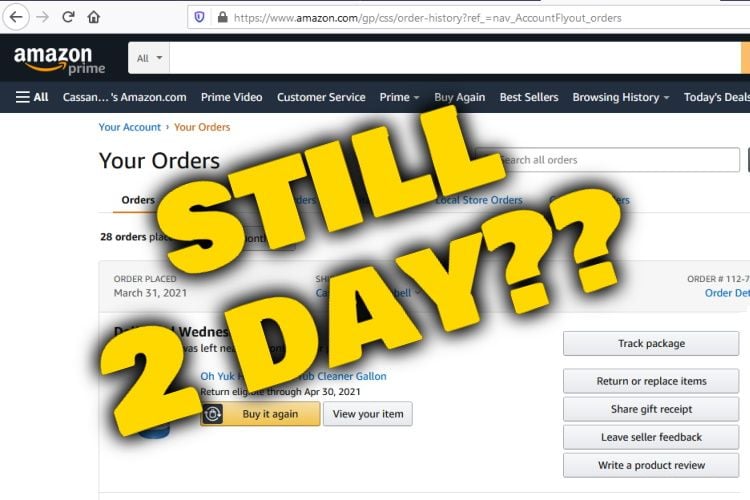
This article will delve into the strategic shifts, market pressures, and brand implications behind the perceived changes to Amazon Prime’s signature shipping service, analyzing how these developments challenge Amazon’s established brand narrative and shape its future trajectory.
The Erosion of a Core Brand Promise: Amazon Prime’s Shipping Legacy
Amazon Prime launched in 2005, initially offering unlimited two-day shipping for a flat annual fee. This simple, yet audacious, proposition was a game-changer. It eliminated the psychological barrier of shipping costs and the frustration of variable delivery times, creating an unparalleled value proposition that quickly became synonymous with the Amazon brand itself.
The Genesis of the 2-Day Shipping Standard
Before Prime, online shopping often involved a calculation of shipping costs against the convenience of home delivery, often with an unpredictable delivery window. Amazon Prime shattered this paradigm. By guaranteeing two-day delivery, Amazon wasn’t just selling products; it was selling speed, reliability, and peace of mind. This was a bold move that required immense investment in logistics, warehousing, and technology, yet it paid off handsomely by building an incredibly loyal customer base. The “Prime effect” meant that once consumers experienced the convenience, they were less likely to shop elsewhere, reinforcing a powerful cycle of brand loyalty. It wasn’t merely a service; it was a psychological anchor, establishing a new baseline for what fast delivery meant across the entire retail industry.
How the Promise Shaped Amazon’s Brand Identity
The 2-day shipping promise became inextricably linked with Amazon’s brand identity. It projected an image of efficiency, customer-centricity, and technological prowess. This brand narrative was so potent that “Prime” became more than just a membership; it was a status symbol, an assurance of premium service. This perception was carefully cultivated through consistent messaging and execution, convincing millions that the annual fee was a worthwhile investment for unparalleled convenience. The swift and reliable delivery became a competitive moat, differentiating Amazon from competitors who struggled to match its logistical might. This brand-building exercise allowed Amazon to expand into other services like video streaming, music, and cloud computing, all under the umbrella of trust and efficiency established by its shipping promise.
Customer Expectations and Brand Loyalty
The success of 2-day shipping created a double-edged sword: it elevated customer expectations to unprecedented levels. Consumers grew accustomed to the predictability and speed, integrating it into their daily lives and purchasing decisions. This predictability fostered immense brand loyalty. When Prime members started noticing their packages arriving beyond the two-day window, or saw slower shipping estimates during checkout, it wasn’t just an inconvenience; it felt like a betrayal of a core brand promise. This shift in perception posed a significant challenge to Amazon’s carefully constructed brand equity, potentially eroding trust and loyalty that took years to build. The unspoken contract between Amazon and its Prime members was that for a recurring fee, the two-day delivery was a given, and any deviation required careful brand messaging and strategic communication.
Navigating Supply Chain Volatility and its Brand Impact
The consistency of Amazon’s 2-day shipping promise faced its sternest test in recent years, grappling with unprecedented global disruptions and an exponential surge in demand. These external pressures forced Amazon to make difficult operational adjustments, which in turn had a direct impact on its brand perception.
Pandemic Pressures and Operational Realities
The COVID-19 pandemic, in particular, presented a “black swan” event for global supply chains. Lockdowns, labor shortages, increased safety protocols, and a dramatic surge in online orders overwhelmed even Amazon’s sophisticated logistics network. Faced with an impossible demand curve and severely hampered operational capacity, Amazon prioritized essential items and adjusted delivery windows. While understandable given the circumstances, these delays marked a significant departure from the consistent 2-day standard, prompting a wave of customer concern and questioning of the Prime value proposition. The brand message during this period shifted from guaranteed speed to prioritizing safety and essential goods, a necessary pivot but one that temporarily diluted the core Prime promise.
Shifting Logistics Strategies and Brand Perception
In response to these challenges, Amazon has significantly diversified its logistics strategies. This includes investing heavily in its own air cargo fleet, expanding its fulfillment center network closer to urban areas, and implementing advanced AI-driven routing systems. More recently, Amazon has emphasized a “regionalized fulfillment” model, stocking products in fulfillment centers closer to customers to enable faster, sometimes even same-day, delivery for certain items. While this strategy aims for overall faster delivery, it inherently means that the blanket “2-day” promise might be replaced by variable speeds depending on product availability in local warehouses. From a brand perspective, this shift requires a more nuanced communication strategy. The brand can no longer simply promise “2-day”; it must now articulate “fastest possible delivery, which may be 2-day, 1-day, or even same-day, depending on your location and item.” This complexity can dilute the simplicity and power of the original brand message.
The Customer Experience Gap: Promises vs. Reality
The cumulative effect of these operational shifts has created a discernible gap between the historical brand promise of “2-day shipping” and the current customer experience. While many deliveries still arrive quickly, the inconsistency and the frequent observation of delivery estimates extending beyond two days have led to frustration. For many, the “2-day shipping” has become more of a target than a guarantee. This gap directly impacts brand trust. When a brand’s actions don’t consistently align with its core promises, even if due to valid operational reasons, it risks eroding the loyalty it worked so hard to cultivate. The perceived unreliability can lead customers to re-evaluate the value of their Prime membership, posing a significant challenge to customer retention.
Rethinking the Prime Value Proposition: Beyond Just Speed
As the operational realities made a consistent, universal 2-day shipping guarantee increasingly difficult, Amazon has strategically diversified and emphasized other aspects of its Prime membership, subtly shifting the brand’s core value proposition.

Diversifying Prime’s Brand Offerings (Video, Music, Groceries)
From its inception, Prime was designed to be more than just shipping. It began bundling services like Prime Video, Prime Music, Prime Reading, and more recently, Prime Gaming, discounts at Whole Foods Market, and pharmacy benefits. This diversification was a clever brand strategy, turning Prime into a comprehensive lifestyle subscription. By adding these myriad benefits, Amazon aimed to embed itself deeper into customers’ daily lives, making the membership feel indispensable even if shipping wasn’t always strictly two-day. The brand message evolved from “fast shipping” to “an all-encompassing suite of premium services.” This strategy allows Amazon to mitigate the impact of any perceived erosion in its shipping promise, by ensuring customers still perceive overwhelming value in the overall package.
Communicating Value in a Post-2-Day World
The challenge for Amazon’s marketing and brand teams is to effectively communicate this expanded value in a world where the 2-day shipping promise is no longer absolute. The narrative has shifted to highlighting the totality of Prime benefits, emphasizing the savings on streaming, groceries, and other perks, rather than solely focusing on shipping speed. This requires sophisticated brand storytelling, moving away from a singular, easily digestible promise to a more complex, multi-faceted value proposition. Amazon now stresses the overall speed of its network, often promoting same-day or next-day delivery for specific items and regions, effectively repositioning “2-day” as a minimum standard rather than the universal maximum. The brand is now selling “ultimate convenience and entertainment” rather than just “fast delivery.”
The Challenge of Managing Brand Perception Amidst Changes
Managing brand perception during such a significant shift is a delicate act. While the added services undoubtedly provide value, the initial draw for many Prime members was the shipping speed. When that speed becomes less consistent, it can lead to friction. Amazon faces the ongoing challenge of reassuring existing members that their investment is still worthwhile while attracting new subscribers with a more complex value proposition. The brand must actively work to redefine what “Prime” means to its customers, ensuring that the new benefits are perceived as robust enough to compensate for any perceived decline in shipping consistency. This involves carefully crafted marketing campaigns, transparent communication, and continuous reinforcement of the breadth of the Prime ecosystem.
Competitive Landscape and Brand Differentiation in E-commerce
The landscape of e-commerce has grown increasingly competitive, with rivals taking cues from Amazon’s past successes and actively challenging its dominance, particularly in the realm of fast delivery.
Rivals Capitalizing on Shipping Speed and Reliability
Competitors like Walmart, Target, and various direct-to-consumer (DTC) brands have significantly ramped up their own logistics capabilities, often offering competitive shipping speeds, including free two-day or even same-day delivery for eligible orders, sometimes without a subscription fee. Walmart+, for instance, directly challenges Prime with free delivery from stores, fuel discounts, and streaming perks. These moves directly target Amazon’s historical differentiator, making its original “2-day shipping” less unique. These rivals leverage their physical store footprints for quicker local fulfillment or invest heavily in their own distribution networks, effectively eroding Amazon’s unique selling proposition. This forces Amazon to constantly innovate and re-evaluate its brand positioning.
Amazon’s Long-Term Brand Strategy for Customer Retention
In response, Amazon’s long-term brand strategy is clearly focused on deepening customer loyalty through sheer breadth of service and ecosystem integration, alongside continuous innovation in logistics. It aims to make Prime so indispensable that membership renewal becomes a default. This means not only optimizing shipping for speed but also enriching Prime Video with exclusive content, expanding Whole Foods and Amazon Fresh grocery delivery, and developing new benefits like virtual try-ons or enhanced smart home integration. The goal is to build a “sticky” brand where customers feel they get so much value that the annual fee is a no-brainer, even if an occasional package takes three days. The brand is betting on the entire Prime experience to retain its members, rather than relying on a single, albeit powerful, benefit.
Rebuilding Trust and Reinforcing the Brand Promise
To address the perceived decline in shipping consistency, Amazon must actively work to rebuild and reinforce its brand promise. This involves transparency about shipping times, clear communication regarding regional capabilities, and focusing marketing efforts on instances of exceptional delivery speed (e.g., same-day or next-day options) rather than simply “2-day.” It also means continuing to invest in technology and infrastructure to meet evolving customer expectations. The brand has a massive challenge: how to maintain its reputation for reliability and speed when the “2-day” guarantee is no longer universal. This requires a commitment to customer service that addresses delivery issues promptly and effectively, demonstrating that Amazon still values the Prime member experience above all else. Rebuilding trust means consistently delivering on whatever specific promise is made at checkout, even if that promise is “3-day shipping” rather than “2-day.”
The Future of Amazon’s Brand Identity and Prime’s Evolution
The evolving landscape of e-commerce and changing consumer expectations mean that Amazon’s brand identity, particularly regarding its Prime service, is in a continuous state of adaptation. The future of “what happened to Amazon Prime 2-day shipping” lies in how Amazon strategically navigates these shifts.
Strategic Investments in Infrastructure and Technology
Amazon continues to pour billions into its logistics infrastructure, including a vast network of fulfillment centers, sorting centers, regional hubs, and delivery stations. It’s also heavily investing in automation, AI-driven route optimization, and even drone delivery technology. These investments are not just about efficiency; they are about maintaining a competitive edge and reinforcing Amazon’s brand image as a leader in innovation and customer service. The goal is to achieve true “hyper-local” delivery, bringing fulfillment closer to the customer, thereby making same-day or next-day delivery a widespread reality, effectively leapfrogging the original “2-day” standard. This forward-looking approach ensures that while the old promise might fade, a new, even faster, brand promise is in the making.
Adapting to Evolving Consumer Demands
Consumer demands are not static; they are constantly evolving. While speed remains critical, factors like sustainability, transparency, and ethical practices are gaining prominence. Amazon is beginning to integrate these considerations into its brand narrative, focusing on initiatives like packaging reduction, electric delivery vehicles, and carbon-neutral shipping goals. This adaptation is crucial for maintaining relevance and resonance with a new generation of consumers who prioritize more than just price and speed. The brand must evolve its messaging to align with these broader societal values, demonstrating responsible corporate citizenship alongside unparalleled convenience.

The Imperative of Brand Storytelling and Transparency
Ultimately, the future success of Amazon Prime, and indeed the Amazon brand, hinges on compelling brand storytelling and unwavering transparency. Amazon needs to proactively communicate its evolving value proposition, clearly articulate the reasons behind any changes to shipping times, and highlight the extensive efforts it undertakes to deliver value across the entire Prime ecosystem. This means moving beyond generic statements and engaging customers with the complexities of modern logistics while showcasing the continuous innovation that benefits them. By being open and honest about its capabilities and commitments, Amazon can manage expectations, rebuild trust where it has wavered, and solidify its brand identity as the indispensable partner in the lives of its customers – a partner that delivers not just products, but also unparalleled convenience, entertainment, and value, however fast the package arrives. The legacy of “2-day shipping” may transform, but the brand promise of being “Earth’s Most Customer-Centric Company” must endure.
aViewFromTheCave is a participant in the Amazon Services LLC Associates Program, an affiliate advertising program designed to provide a means for sites to earn advertising fees by advertising and linking to Amazon.com. Amazon, the Amazon logo, AmazonSupply, and the AmazonSupply logo are trademarks of Amazon.com, Inc. or its affiliates. As an Amazon Associate we earn affiliate commissions from qualifying purchases.