
In the modern landscape of personal finance, every recurring expense and micro-transaction warrants scrutiny. For the average household, Amazon has transitioned from a convenience to a utility, often accounting for a significant portion of monthly discretionary spending. Understanding the financial mechanics behind Amazon’s shipping tiers is more than just a matter of convenience; it is a strategic necessity for anyone looking to optimize their household budget. Whether you are navigating the minimum spend requirements for non-Prime members or evaluating the return on investment (ROI) of a Prime subscription, the “cost” of free shipping is rarely zero.

Understanding the Thresholds: The Economics of Amazon’s Shipping Tiers
To master your e-commerce spending, you must first understand the current landscape of Amazon’s shipping requirements. For those without a Prime membership, the threshold for free shipping generally sits at a $35 minimum for eligible items. However, this figure is not static and can fluctuate based on regional promotions or specific product categories.
Non-Prime Minimums and Strategic Spending
For the budget-conscious consumer who avoids subscription models, the $35 threshold serves as a psychological and financial barrier. From a personal finance perspective, the goal is to hit this number exactly—or as close to it as possible—without purchasing items you do not need. When your cart sits at $28, the impulse is to add a $10 item to “save” $6 on shipping. In reality, you have increased your total outlay by $4. True financial optimization requires a “waiting room” approach: keeping a running list of non-urgent household essentials (batteries, detergent, toiletries) to bridge the gap only when a primary purchase is necessary.
The Prime Subscription: A Cost-Benefit Analysis
At its current price point—typically $149 annually or $14.99 monthly in the United States—Amazon Prime is a significant line item in a personal budget. To determine if the subscription is financially viable, one must calculate the “break-even point.” If the average shipping cost for a non-Prime order is roughly $7, a consumer must place at least 22 orders per year to justify the annual fee on shipping alone.
However, a sophisticated financial analysis includes the ancillary benefits: Prime Video, Amazon Music, and the 5% cash back available via the Amazon Store Card. If these services replace other paid subscriptions (such as Netflix or Spotify), the ROI of the Prime membership increases substantially. Conversely, if these features go unused, the “free shipping” becomes an expensive luxury.
Strategies to Avoid Shipping Fees Without Overspending
The quest for free shipping often leads to “cart padding,” a phenomenon where consumers spend more to avoid a fee. While this seems counterintuitive, there are ways to manage this behavior to favor your bottom line.
The “Filler Item” Strategy: Budgeting for Utility
When you are a few dollars short of the free shipping threshold, the worst financial move is to buy a “junk” item. Instead, use tools and browser extensions designed to find “filler items”—products that cost exactly the amount you need to reach the limit. The key here is to select “evergreen” goods. Items like shelf-stable pantry staples, office supplies, or basic hygiene products are essentially pre-paid future expenses. By shifting future spending forward to hit a current shipping threshold, you are not increasing your long-term costs; you are simply managing your cash flow.
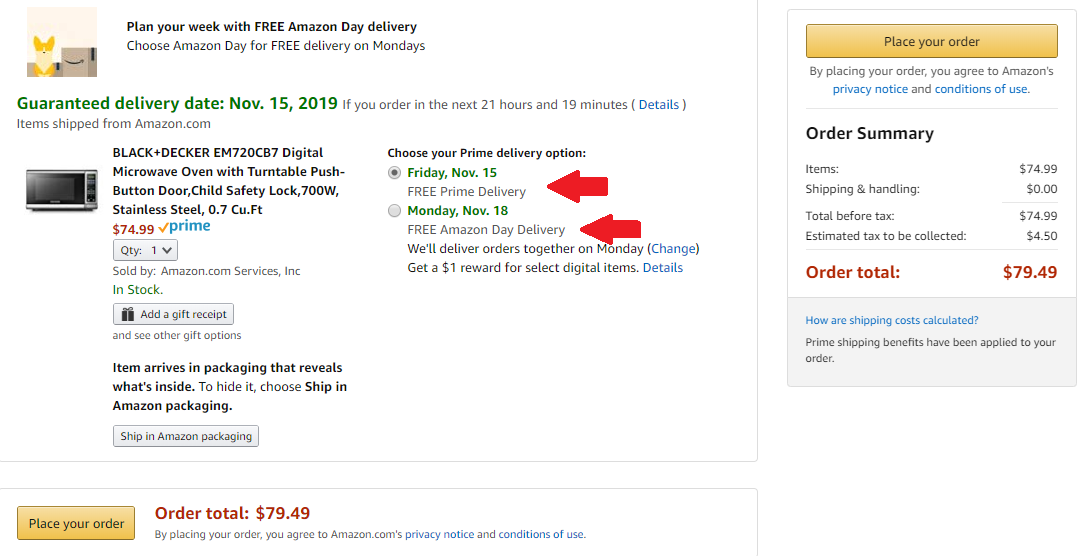
Leveraging Amazon Day and No-Rush Rewards
For Prime members, the concept of “free shipping” can be further optimized into “profitable shipping.” Amazon frequently offers “No-Rush Shipping” incentives, providing digital credits for ebooks, movies, or grocery deliveries in exchange for a longer wait time. From a side-hustle or micro-income perspective, these credits represent real value. Over a year, a frequent shopper can accumulate $50 to $100 in digital credits, effectively subsidizing their entertainment budget and lowering the effective cost of the Prime membership.
The Hidden Costs of “Free”: Psychology and Consumer Spending
In the realm of behavioral economics, “free” is a powerful emotional trigger. The removal of a shipping fee often leads consumers to ignore the actual price of the goods they are purchasing.
The Threshold Effect on Budgeting
Research in consumer behavior suggests that free shipping thresholds lead to higher “Average Order Value” (AOV). While this is a win for the retailer, it can be a pitfall for personal budgeting. The desire to reach a $35 or $25 limit often causes “budget creep,” where a user buys three items instead of the one they actually needed. To combat this, treat your Amazon cart as a holding cell. Adding items to a “Save for Later” list rather than the active cart allows for a cooling-off period, reducing impulsive spending driven by the pursuit of free shipping.
Opportunity Cost and Subscription Fatigue
Beyond the direct monetary cost, there is the opportunity cost of subscription loyalty. By committing to the Prime ecosystem for the sake of free shipping, consumers often stop price-shopping at other retailers. A “free shipping” item on Amazon might be $5 more expensive than the same item at a local wholesaler or a competing digital storefront. A disciplined financial strategy involves checking at least two other sources before assuming the Amazon Prime price is the most cost-effective option.
Alternative Logistics: Pick-up Points and Third-Party Sellers
Not all free shipping requires a subscription or a high minimum spend. Savvy shoppers utilize Amazon’s expanding logistics network to bypass traditional costs.
Amazon Hub and Locker Benefits
In certain markets, Amazon offers reduced shipping rates or lower thresholds for items delivered to an Amazon Locker or Hub. This is particularly valuable for urban dwellers or those concerned about “porch piracy.” From a financial risk management perspective, using a secure locker eliminates the potential loss of capital associated with stolen packages, which is an often-overlooked cost of online shopping.
Navigating Marketplace Fees
It is vital to distinguish between items “Shipped and Sold by Amazon” and third-party marketplace sellers. Third-party sellers set their own shipping rates, which do not always align with Amazon’s standard free shipping tiers. When analyzing your business or personal finance spreadsheets, ensure you are accounting for these variances. Sometimes, an item with a higher base price but “Free Prime Shipping” is more economical than a cheaper item with a $15 independent shipping fee.
Long-Term Financial Planning for Digital Household Management
As e-commerce continues to evolve, the way we budget for shipping and delivery must evolve with it. Integrating these costs into a comprehensive financial plan ensures that convenience does not come at the expense of long-term wealth building.
Consolidating Subscriptions for Maximum Value
Periodically auditing your subscriptions is a cornerstone of healthy personal finance. If you find yourself paying for Prime, Walmart+, and Target Circle 360, you are likely over-leveraged in delivery services. Choose the one that best fits your geographic location and shopping habits. For most, one primary e-commerce ecosystem is sufficient. Consolidating your shopping into one platform makes it easier to hit free shipping thresholds without buying unnecessary items.
Integrating E-commerce into Your Annual Budget
Instead of viewing Amazon purchases as a series of isolated expenses, categorize them within your annual budget. Use a dedicated credit card—preferably one that offers high rewards for online shopping—to track these expenditures. By reviewing your year-end statements, you can clearly see if the $149 Prime fee saved you more than it cost. If your total shipping savings and cash-back rewards exceed the membership fee, the system is working in your favor. If not, it may be time to revert to the $35 minimum threshold strategy.
In conclusion, “free shipping” at Amazon is a tool that can either be used to streamline a budget or serve as a leak through which capital escapes. By understanding the thresholds, leveraging rewards, and staying mindful of the psychological traps of “free” offers, you can ensure that your digital shopping habits support, rather than hinder, your financial goals. Professional management of these small costs is what separates a disciplined budgeter from a casual spender in the digital age.
aViewFromTheCave is a participant in the Amazon Services LLC Associates Program, an affiliate advertising program designed to provide a means for sites to earn advertising fees by advertising and linking to Amazon.com. Amazon, the Amazon logo, AmazonSupply, and the AmazonSupply logo are trademarks of Amazon.com, Inc. or its affiliates. As an Amazon Associate we earn affiliate commissions from qualifying purchases.