
In the modern landscape of consumer finance, the recurring subscription model has transitioned from a niche convenience to a dominant budgetary pillar. At the forefront of this shift is Amazon Prime, a service that has evolved from a simple expedited shipping program into a multifaceted ecosystem impacting how millions of households manage their discretionary spending. For the savvy consumer, the question is no longer just “how much does it cost,” but rather “what is the financial return on this investment?”
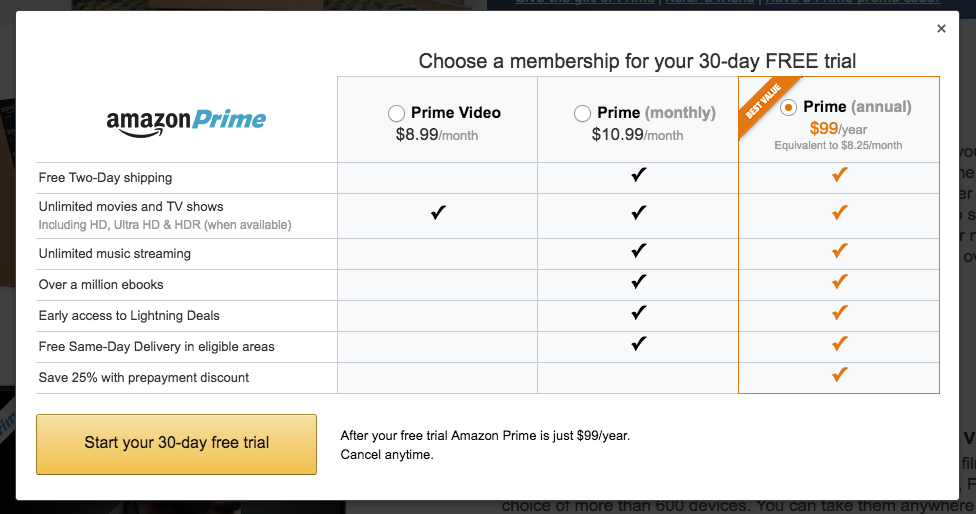
Understanding the current cost structure of Amazon Prime is the first step in a broader cost-benefit analysis. As of the current fiscal period, the standard membership rates reflect the inflationary pressures seen across the global economy. For most individual consumers, the membership is priced at $14.99 per month or a discounted annual rate of $139. While these figures represent the baseline, the true financial narrative of Amazon Prime lies in its tiered pricing, its impact on liquid capital, and the strategic savings it can offer to specific demographic segments.

The Direct Cost: Current Pricing Tiers and Consumer Entry Points
When evaluating the cost of joining Amazon Prime, it is essential to look beyond the standard retail price. Amazon has developed a tiered pricing strategy designed to capture various segments of the market, each with its own financial implications.
Standard Membership and the Annual vs. Monthly Debate
The choice between the $14.99 monthly fee and the $139 annual fee is a classic lesson in personal finance: the trade-off between liquidity and long-term savings. Choosing the annual payment results in a yearly saving of approximately $40.88 compared to the monthly commitment. For a household with stable cash flow, the annual payment represents a nearly 23% “return” on that capital compared to the monthly cost. However, for those operating on a tight month-to-month budget, the $14.99 entry point provides the flexibility to cancel during low-spending months, effectively managing short-term overhead.
Discounted Tiers: Students and Targeted Assistance
Amazon offers significant subsidies for specific groups, which drastically alters the ROI calculation. Prime Student is currently priced at $7.49 per month or $69 per year. This 50% discount is a strategic move to build brand loyalty among a demographic with high future lifetime value.
Furthermore, the “Prime Access” program offers a discounted rate of $6.99 per month for recipients of specific government assistance programs, such as SNAP, EBT, or Medicaid. From a personal finance perspective, this reduces the barrier to entry for lower-income households, allowing them to access the same logistical efficiencies and bulk-buying opportunities as higher-income earners.
Calculating the ROI: Is the Membership Fee a Sunk Cost or a Strategic Saving?
To determine if the cost of joining Amazon Prime is justifiable, one must move beyond the sticker price and conduct a break-even analysis based on shipping costs and time-valuation.
The Shipping Break-Even Point
Historically, the primary value proposition of Prime was “free” two-day shipping. For a non-member, standard shipping for a single item typically ranges from $5.00 to $9.95. If we take the annual membership cost of $139, a consumer needs to place approximately 14 to 28 orders per year to break even on shipping costs alone. In a digital-first economy where households frequently order household staples, pet supplies, and electronics, hitting this threshold is often a low bar. However, for the infrequent shopper, the $139 fee becomes a “sunk cost”—money spent that provides no actual utility.
The Hidden Cost of “Free” Shipping
From a behavioral finance standpoint, the cost of Prime isn’t just the membership fee; it is the potential for increased impulse spending. The psychological “friction” of a shipping fee often acts as a deterrent to unnecessary purchases. When that friction is removed, consumers tend to shop more frequently and in smaller increments. Studies in consumer behavior suggest that Prime members spend significantly more annually on the platform than non-members. Therefore, when calculating the cost of joining, a disciplined budgeter must account for the “Prime effect” on their discretionary spending habits.
The Ecosystem of Savings: Leveraging Prime for Financial Gain

For those who treat Amazon Prime as a financial tool rather than just a convenience, the membership fee can be offset by leveraging the broader ecosystem of discounts and perks.
The Prime Visa and Cash-Back Strategies
One of the most potent financial tools within the Prime umbrella is the Amazon Prime Visa card. This card offers 5% back on all Amazon and Whole Foods Market purchases. For a household that spends $3,000 annually on these platforms, the cash-back reward totals $150—effectively covering the entire cost of the annual Prime membership and leaving a small surplus. This creates a “closed-loop” financial benefit where the cost of the subscription is neutralized by the rewards earned through necessary spending.
Grocery Savings and Rx Discounts
The acquisition of Whole Foods Market integrated physical retail into the Prime value proposition. Members receive an additional 10% off sale items and access to exclusive weekly “member deals.” For those who prioritize high-quality groceries, these savings can shave hundreds of dollars off an annual grocery budget.
Additionally, the Amazon Pharmacy benefit offers Prime members deep discounts on prescription medications—sometimes up to 80% off generic drugs when paying without insurance. For individuals with high-deductible health plans or those whose medications aren’t covered by traditional insurance, the pharmacy benefit alone can provide a return on investment that far exceeds the $139 annual fee.
The Opportunity Cost of Subscription Creep
In the context of personal finance, every dollar committed to a subscription is a dollar that cannot be invested or saved. This is known as opportunity cost. As the cost of joining Amazon Prime has risen over the years—from $79 to $99, then $119, and now $139—it has become a significant line item in the average American budget.
Subscription Fatigue and Budgetary Bloat
“Subscription creep” occurs when a consumer accumulates multiple monthly fees that, in isolation, seem negligible but in aggregate represent a substantial portion of net income. When evaluating the cost of Prime, it is vital to compare it against other services. Does Prime Video replace a $15/month Netflix subscription? Does Prime Music replace a $10/month Spotify plan? If a consumer uses Prime as a consolidated entertainment and utility hub, the $139 annual fee can actually lead to a net reduction in total subscription spending. However, if these services are underutilized, the Prime fee simply adds to the “bloat.”
The Rise of Competitors
The financial landscape of 2024 offers more alternatives than ever before. Walmart+, priced at $98 per year, presents a direct challenge to the Prime model, often including perks like fuel discounts and Paramount+. For the budget-conscious consumer, the decision to join Amazon Prime now requires a comparative analysis. Is the $41 premium for Amazon Prime justified by the superior logistics, broader product selection, or the digital content library? From a purely financial standpoint, if your primary goal is low-cost grocery delivery and basic shipping, cheaper alternatives may offer a better “cost-per-utility” ratio.
Making the Final Financial Decision: Who Actually Saves Money?
Ultimately, the decision to join Amazon Prime should be based on a cold, hard look at your transaction history and future consumption needs. It is a financial tool that yields the highest returns for specific profiles.
The “Power User” profile—those who live in urban areas with access to Same-Day delivery, use the Prime Visa card for all household purchases, and utilize Prime Video as their primary entertainment source—sees a massive return on investment. For this group, the membership pays for itself many times over in the form of time saved, cash back earned, and consolidated service costs.
On the other hand, the “Occasional Shopper”—those who prefer local retail, do not use the streaming services, and spend less than $500 annually on the platform—will find the cost of joining to be a net negative for their personal wealth. For these individuals, paying the one-off shipping fee on the rare occasion they need an item delivered is the more fiscally responsible path.
In conclusion, “how much to join Amazon Prime” is a question with two answers. The nominal answer is $139 per year. The real answer depends on your ability to integrate the service’s various financial perks into your existing budget. In an era where every recurring expense is under scrutiny, treating Amazon Prime as a strategic financial commitment rather than a passive convenience is the hallmark of modern fiscal intelligence.
aViewFromTheCave is a participant in the Amazon Services LLC Associates Program, an affiliate advertising program designed to provide a means for sites to earn advertising fees by advertising and linking to Amazon.com. Amazon, the Amazon logo, AmazonSupply, and the AmazonSupply logo are trademarks of Amazon.com, Inc. or its affiliates. As an Amazon Associate we earn affiliate commissions from qualifying purchases.